Windhorse Orchard

BACK TO FULL TOUR

Garden Features

1

Drought Tolerant

2

Edible Garden

3

Graywater System

4

California Natives

5

Deer Resistant

6

Drip Irrigation

7

Pesticide Free

8

Rain Garden

9

Reclaimed/Recycled Materials

10

Sheet Mulching

11

Lawn-Free Landscaping

12

Permeable Surfaces

13

Wildlife Habitat

14

Berms/Swales for Stormwater Management

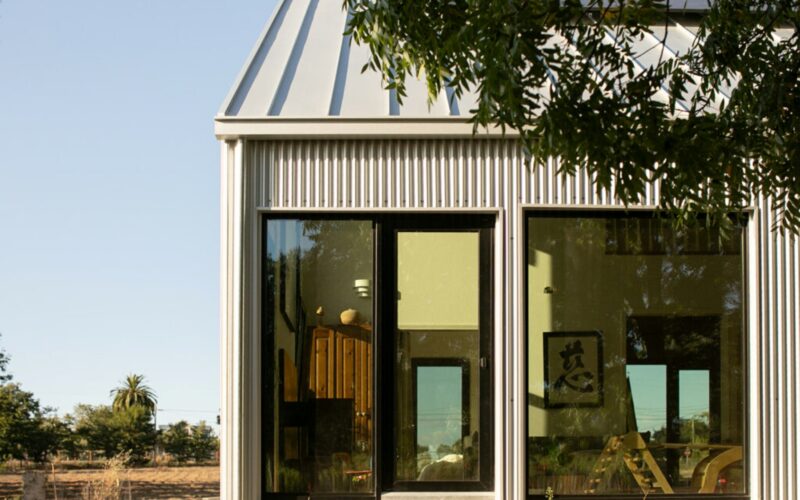
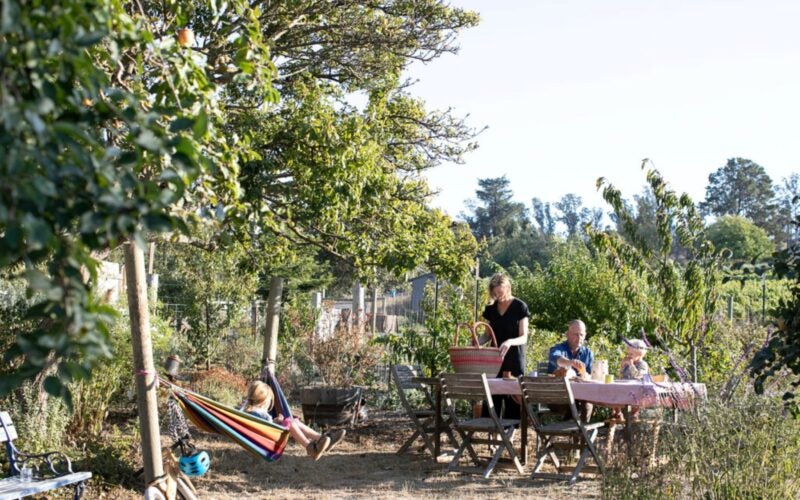
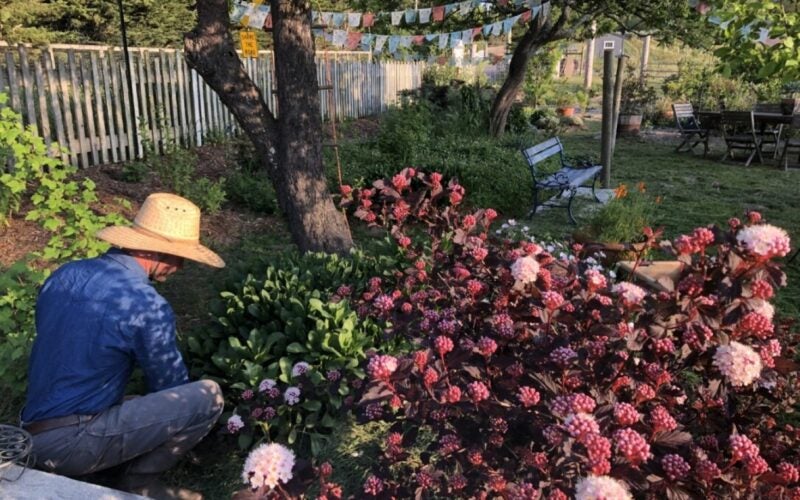
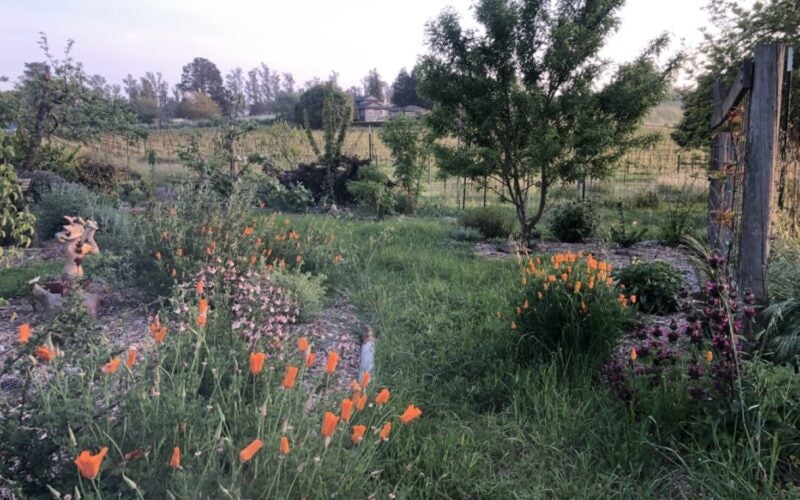
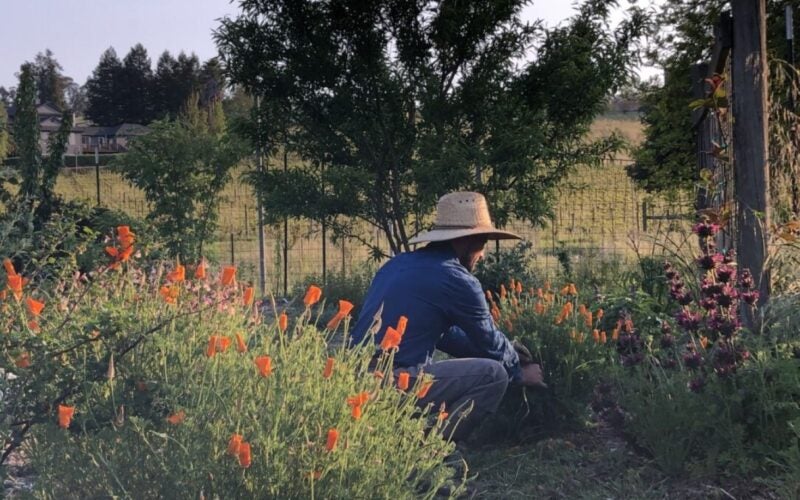
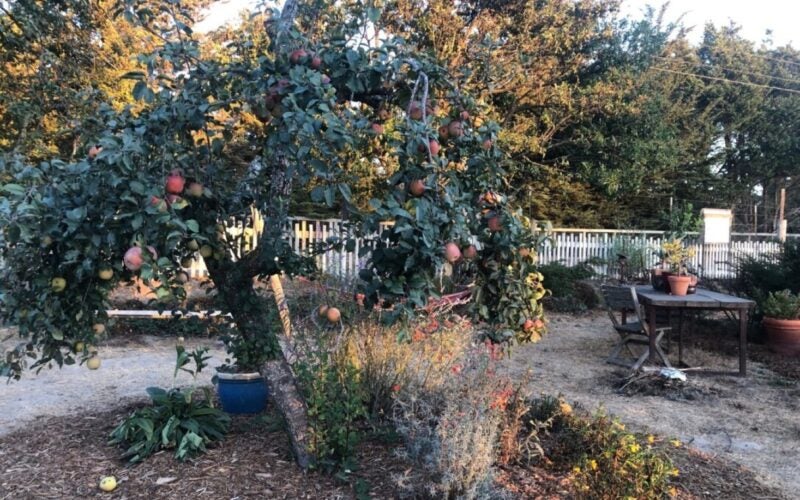
Windhorse Orchard is a family-led, single-family residential renovation and land restoration project in Northern California that is resulting in one of the most sustainable and ecological homes in the country. Our gardens were begun in late 2020 to meet our commitment to standards set by the International Living Future Institute’s Living Building Challenge for home food production and ecological land restoration. We established a food forest with over 100 fruit trees and fruiting shrubs surrounded by California native plants on the east side of the property. We also created small native plant community garden spaces in other areas exhibiting Redwood Forest, Chaparral and Riparian species among others.

All the plants in the orchard and other gardens are supported by generous applications of locally-produced compost and mulch that are currently hand-watered and have no irrigation systems installed. Our house bathrooms and washing machine have been plumbed for greywater-to-landscape irrigation during our house renovation in 2023-24, and we are in the process of completing outdoor greywater irrigation lines for moisture-loving native plants and a new citrus tree grove to be planted next year. We used non-toxic wood-based insulation and dimensional lumber left from our house renovation for building swales and berms for stormwater management. All of our household food scraps are composted on site and our tree trimming debris has been set aside for biochar conversion next year.

In late 2024, with financial and technical support from Point Blue Conservation Science and the California Wildlife Conservation Board, we planted a 750-foot, 2-row native plant hedgerow along the east and west property boundaries, which is supported by drip irrigation. As part of this project, we also planted 25 new native oak seedlings and the property now hosts nine different native oak species, instead of one originally. These oak species are the foundation of future oak woodland native plant community gardens. In 2025, the Xerces Society for Invertebrate Conservation awarded us a grant to add 250 feet to our hedgerow along the north property boundary. Windhorse Orchard is grateful for all sponsors and for everyone at Cal Flora Nursery in Fulton for their diverse selection of native plants and for sharing their invaluable plant expertise.

Special Events
Walking Tours

Plants in this Garden
Plant Picker
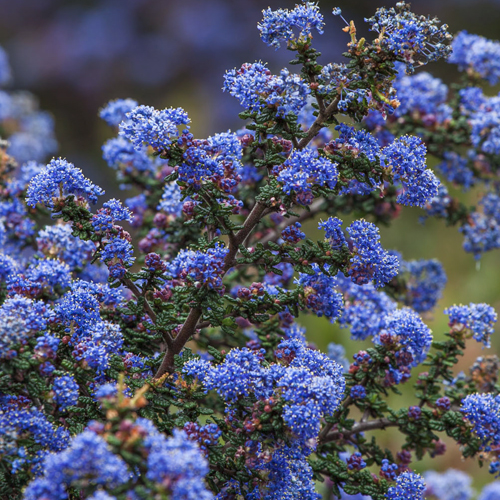
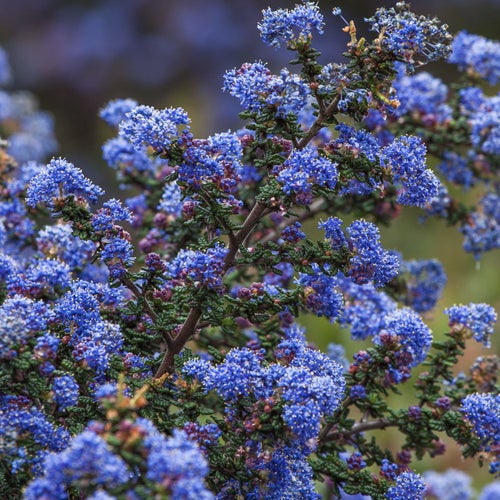
California Lilac ceanothus variety with clusters of small, vibrant blue flowers and dark green leaves

Ceanothus spp & cvs

Ceanothus
Organization

Ceanothus is a group of fast-growing, evergreen shrubs that vary from groundcovers to small trees, many of which are native to California. They provide a spectacular display of flowers in spring that will attract a multitude of pollinators. Flowers are followed by seeds that provide food for birds. The clusters of tiny flowers range from white to deep violet. Plants perform best with good drainage and minimal irrigation once established. Some do best in cooler coastal climates, but many thrive in hotter inland climates. Pay close attention to the mature size when selecting ceanothus to ensure that it has sufficient space for its natural form.

Groundcovers: C. ‘Centennial’ (1’ x 8’), C. gloriosus var. gloriosus ‘Anchor Bay’ (2’ x 8’), C. griseus var. horizontalis ‘Diamond Heights’ (variegated, 1’ x 4’), C. griseus var. horizontalis ‘Yankee Point’ (3’ x 12’), C. maritimus (2’ x 6’).

Shrubs: C. ‘Blue Jeans’ (6’ x 6’), C. Concha (6’ x 6’), C. ‘Dark Star’ (6’ x 8’), C. ‘Joyce Coulter’ (4’ x 12’), C. ‘Julia Phelps’ (8’ x 10’), C. cuneatus (8’ x 8’), C. thyrsiflorus ‘Skylark’ (4’ x 6’).

Large shrubs: C. ‘Frosty Blue’ (10’ x 12’), C. thyrsiflorus (20’ x 20’), C. t. ‘Snow Flurry’ (white flower, 20’ x 20’).

Trees: C. ‘Ray Hartman’ (15′ x 15′)

  • Water: Very LowLow
  • Light: Full SunPartial Shade
  • Soil: Well Drained
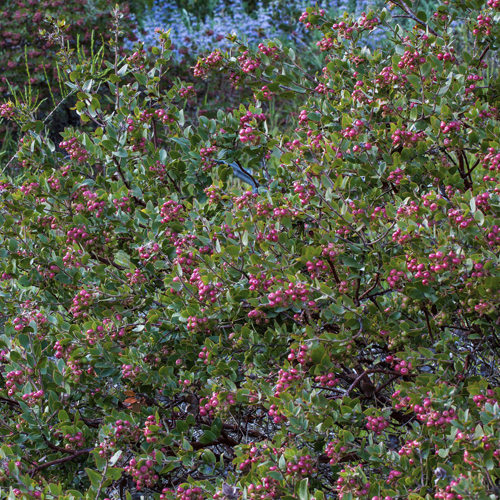
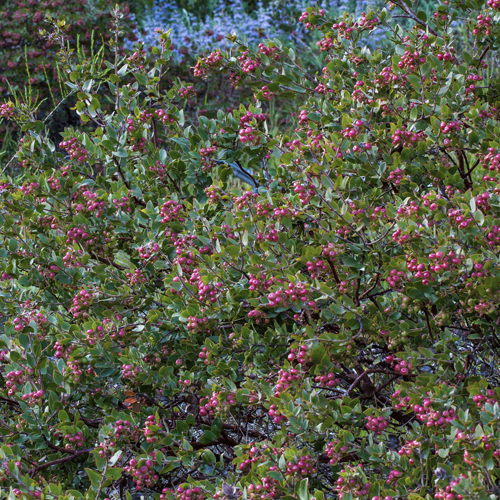
Manzanita bush with deep red fruits

Arctostaphylos spp & cvs

Manzanita, 'Dr. Hurd'
Organization

Manzanitas vary from carpet-forming groundcovers to small trees. Manzanitas have varying shades of striking, reddish brown bark and can provide structure to a garden. These plants have evergreen foliage, small white-to-pink, urn-shaped blossoms in late winter to early spring, and then small fruits that resemble tiny apples.

Groundcovers: A. ‘Emerald Carpet’ (1’ x 3-6’), A. ‘Pacific Mist’ (2-3’ x 6-8’), A. nummularia ‘Bear Belly’ (1’ x 3’), A. uva ursi ‘Radiant’ (6” x 4-6’), A. uva ursi ‘Wood’s Compct’ (1’ x 3’).

Shrubs: A. ‘Howard McMinn’ (5-7’ x 6-10’), A. ‘John Dourly’ (3-4’ x 5-6’), A. ‘Lester Rowntree’ (8-10’ x 10-15’), A. ‘Sunset‘ (5-7’), A. bakeri ‘Louis Edmunds’ (8-10’), A. manzanita ‘Sentinel’ (6-8’ x 5’), A. hookeri ‘Wayside’ (3′ x 8′).

Trees: A. manzanita ‘Dr. Hurd’ (10-15′)

  • Water: Very LowLow
  • Light: Full SunPartial Shade
  • Soil: Well Drained
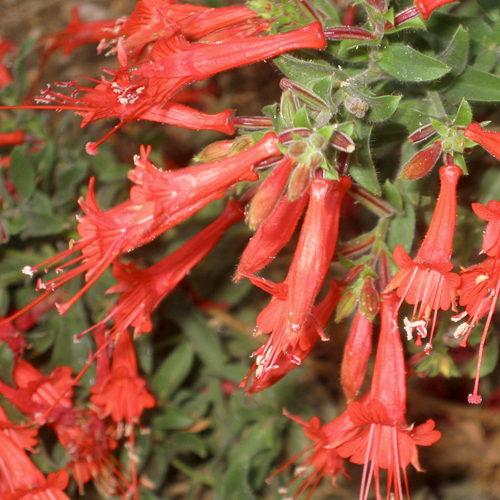
Red tubular flowers with white-tipped stamens sticking out

Zauschneria [Epilobium] spp

California Fuchsia
Organization

Group of highly variable, semi-evergreen subshrubs and herbaceous perennials distributed over a wide geographic area, including California. Epilobiums bloom in late summer with tubular flowers providing a food source for hummingbirds migrating south and are also attractive to bees and butterflies. Epilobiums range from low-growing groundcovers to upright plants of several feet. Flower colors include orange-red, white, pink, and salmon. Most can be pruned back in late autumn to maintain a more compact form and be rejuvenated for the following year.

Low-growing examples: E. ‘Schieffelin’s Choice’; E. canum ‘Calistoga’, a selection from Phil Van Soelen from California Flora Nursery from the Palisades east of Calistoga; E. canum ‘Cloverdale’, a selection from U.C. Santa Cruz Arboretum from along the Russian River north of Cloverdale with exceptionally orange flowers; E. c. ‘Everett’s Choice’, E. c. ‘Summer Snow’ with white flowers, and E. septentrionale ‘Select Mattole’, a somewhat redder flowering selection that is more shade-tolerant.

Upright examples: E. c. ‘Bowman’s Hybrid’ (2-3’), E. c. ‘Catalina’ (3-4’), E. c. ‘Liz’s Choice’ (3’) selected by Milo Baker Chapter CNPS Fellow Liz Parsons, E. c. ‘Marin Pink’ (2’) with pink flowers.

  • Water: Low
  • Light: Full Sun
  • Soil: Well Drained
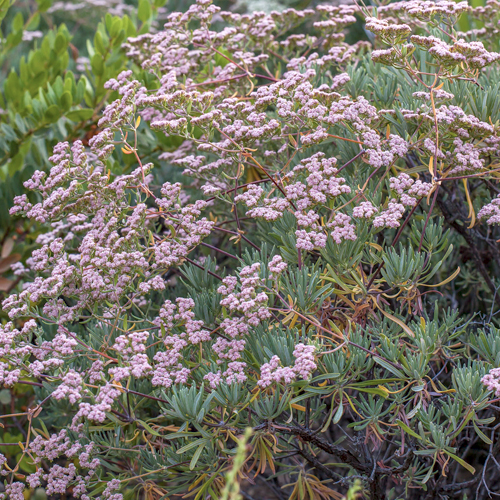
Gray green spiney leaves with dark stems forming clusters of small, light pink flowers

Eriogonum spp

Buckwheat
Organization

Diverse group of flowering, evergreen shrubs and perennials and annuals found throughout the western United States. Most available in nurseries are native to California and generally prefer drier sites. Flowers colors include yellow, white, pink, and red and are held above foliage in umbels that dry over time and are popular in flower arrangements. Buckwheats provide pollen and nectar for bees and butterflies, larval food for butterflies, seeds for birds, and cover for many creatures.

Examples:

  • Santa Cruz Island buckwheat (E. arborescens, 3-4’ x 4-5’) densely mounded with white flowers.
  • Saffron buckwheat (E. crocatum, 1-2’ x 2-3’) with chartreuse-yellow flowers and pale leaves.
  • California buckwheat (E. fasciculatum, 2-3’ x 3’) and its low-growing cultivars such as E. f. ‘Warriner Lytle.’
  • Catherine’s lace (E. giganteum, 4-8’ x 6-10’) with delicate, white flowers and soft pale leaves.
  • Red-flowered buckwheat (E. grande var. Rubescens, 1-2’ x 2-3’) low-mounding perennial with rose-pink flowers, coastal bluff buckwheat (E. latifolium, up to 12” x 1-2’.)
  • Sulfur buckwheat (E. umbellatum, 6-18” x 1-3’) with intense yellow flowers and cultivars E. u. var. aureum ‘Kannah Creek’ and E. u. Var. ‘Shasta Sulphur’.
  • Water: Very LowLow
  • Light: Full SunPartial Shade
  • Soil: Well Drained
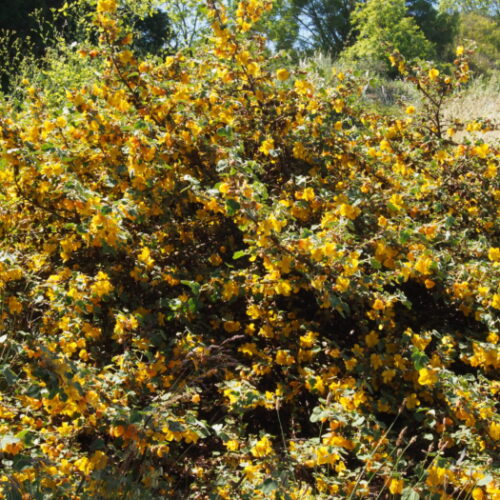
A shrub with long branches with green leaves and prominent yellow salverform flowers

Fremontodendron spp. & cvs.

California Flannelbush
Organization

Fast-growing evergreen shrub with fuzzy, flannel-like leaves. Large golden yellow to orange blossoms that bloom in the spring. Best suited in full sun with well-drained soils.

  • Water: Very Low
  • Light: Full Sun
  • Soil: Well Drained
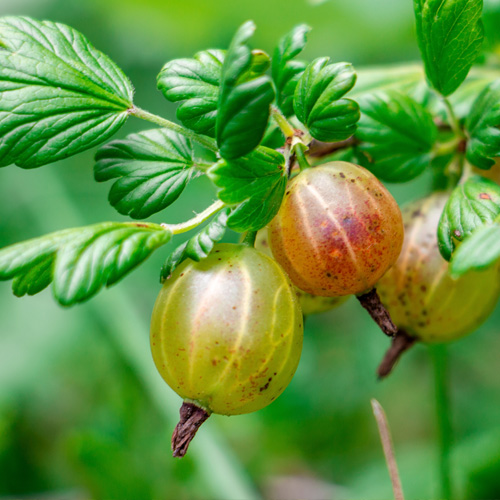
close up of yellow and red gooseberries with a dark brown spine on the bottom of each

Ribes spp

Currant, Gooseberry
Organization

Currants (without spines) and gooseberries (with spines) are grown for their graceful growth habit, attractive foliage, wonderful displays of pendulous flowers in winter-spring that are attractive to hummingbirds, and colorful fruit that provides a food source for birds. Most of the species listed are deciduous, going dormant in the summer months.

Examples: Some of the species suitable for California gardens, preferably with partial shade, are native to the Western United States:

  • aureum, golden currant (5-10’ x 3-6’), deciduous with small clusters of delicate yellow flowers and sprawling habit.
  • malvaceum, chaparral currant (4-8’ x 4-6’), deciduous with early clusters of pink flowers, a slightly vase-shaped habit, and more drought-tolerant than most species.
  • sanguineum var. glutinosum, pink-flowering currant (5-12’ x 5-12’), deciduous with maple-like leaves, a vase-shaped habit, and long pendulous clusters of pink, reddish, or white flowers in the spring; many available cultivars such as ‘Claremont’, ‘Tranquillon Ridge’, and ‘White Icicle’.
  • speciosum, fuchsia-flowered gooseberry (4-8’ x 6-10’), deciduous with spiny, arching stems and bright red fuchsia-like flowers along the stems in the spring that are attractive to hummingbirds.
  • viburnifolium, evergreen currant or Catalina perfume (2-4’ x 5-7’), evergreen groundcover that works well under oaks and can provide erosion control to slopes.
  • Water: Very LowLow
  • Light: Full SunPartial ShadeShade
  • Soil: Well Drained
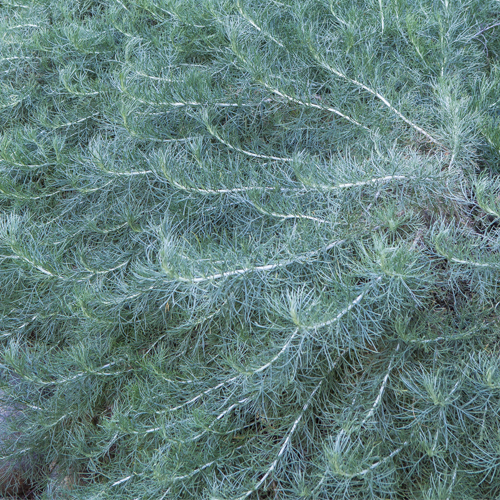
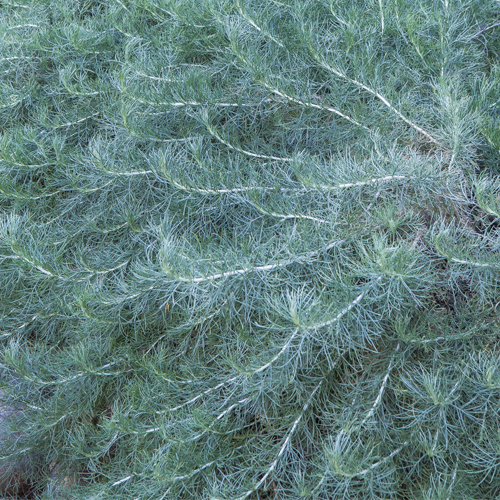
light gray green, spiny leaves of sagebrush

Artemisia ssp

Sagebrush, Wormwood
Organization

Large group of plants that includes annuals, perennials, and shrubs grown for fine, soft-textured, aromatic, gray-green foliage. Flowers are inconspicuous but provide a source of pollen, nectar, and seeds for wildlife. Shrubby varieties can be cut back to maintain a more tidy and compact appearance. Perennial varieties can be divided in fall or early spring. Excellent choice as support for more showy plants in the garden.

Examples: A. ‘Powis Castle’ (3’ x 6’), A. californica (2-5’ x 4-5’, low-growing cultivars ‘Canyon Gray’ and ‘Montara’), A. pycnocephala ‘David’s Choice’ (6” x 2’).

  • Water: Very LowLow
  • Light: Full Sun
  • Soil: Most Soils
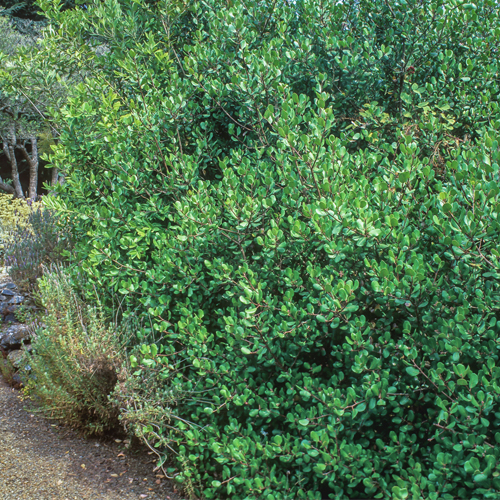
A shrub with green foliage and brown branches

Rhus spp

Lemonade Berry, Sugar Bush
Organization

Diverse group of resilient shrubs and trees, including several that are native to California, that provide form, foliage, and habitat value.

  • Lemonade berry (R. integrifolia, 4-20‘ x 4-20’) is native to coastal Southern California and Baja California. This evergreen shrub provides white-to-pink clusters of flowers in late winter and early spring followed by sticky, reddish fruits. Lemonade berry is more suitable for coastal climates, whereas sugar bush will also grow in hotter areas.
  • Sugar bush (R. ovata, 4-10’ x 4-10’) is native to dry slopes away from the coast in Southern California and Baja California. Similar to lemonade berry with more reddish flowers and leaves that are often folded down the center.
  • African sumac (R. lancea, 15-25’ x 20-30’) is an evergreen tree from South Africa with willow-like leaves and graceful weeping habit.

Note: The infamous poison oak was previously classified within the Rhus genus, but has since been reclassified to the more appropriate sounding Toxicodendron diversilobum.

  • Water: Low
  • Light: Full SunPartial Shade
  • Soil: Well Drained

Favorite Plants

1

Ceanothus 'Windhorse Orchard'

Believed to be a chance cross in our garden between Ceanothus ‘Julia Phelps’ and Ceanothus griseus ‘Kurt Zadnick’ 

2

Austin Griffiths Manzanita

Arctostaphylos manzanita x ‘Austin Griffiths’

3

Valley Oak

Quercus lobata

4

Shore Pine

Pinus contorta var. contorta

5

Bush Poppy

Dendromecon rigida

Favorite Garden Suppliers

California Flora Nursery

2990 Somers Street Fulton

Harmony Farm Supply & Nursery

3244 Gravenstein Highway North Sebastopol

Recommended Resources

Gardening Tips

1

Plant a variety of Ceanothus.

We have a large variety of Ceanothus in our garden which broadens our Ceanothus bloom timeline throughout mid-winter to late-spring. Starting with Ceanothus maritimus ‘Valley Violet’ in early February, finishing with our Ceanothus thyrsiflorus ‘Skylark’ in June, and in between we enjoy lots of light blue, violet and deep purple floral displays. Many of these shrubs, typically shorter varieties, are planted near my fruit trees to the southwest. In this orientation, Ceanothus not only offer gorgeous blooms attracting pollinating insects, they also benefit our fruit trees by acting as windbreaks, by providing shade for the surrounding soil from the late day sun and by fixing nitrogen in the soil.