Martin Gardens

BACK TO FULL TOUR

Garden Features

1

Drought Tolerant

2

Edible Garden

3

Graywater System

4

California Natives

5

Drip Irrigation

6

Pesticide Free

7

Rainwater Harvesting System

8

Rain Garden

9

Reclaimed/Recycled Materials

10

Lawn-Free Landscaping

11

Permeable Surfaces

12

Wildlife Habitat

13

Plant Labels

14

Berms/Swales for Stormwater Management

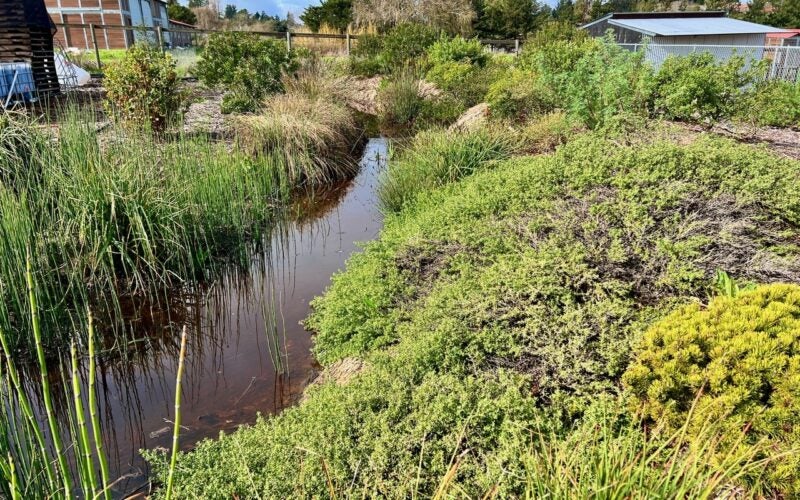
We purchased four acres of treeless, depleted horse pasture in August 2020. Dubbed “Martin Gardens”, which is both a noun and a verb, our mission is remediation and education by demonstrating our successes and failures, and, hopefully, act as an inspiration for others to take action. Our ultimate goal is to create an off-grid, no-emission, solar powered home and education center.

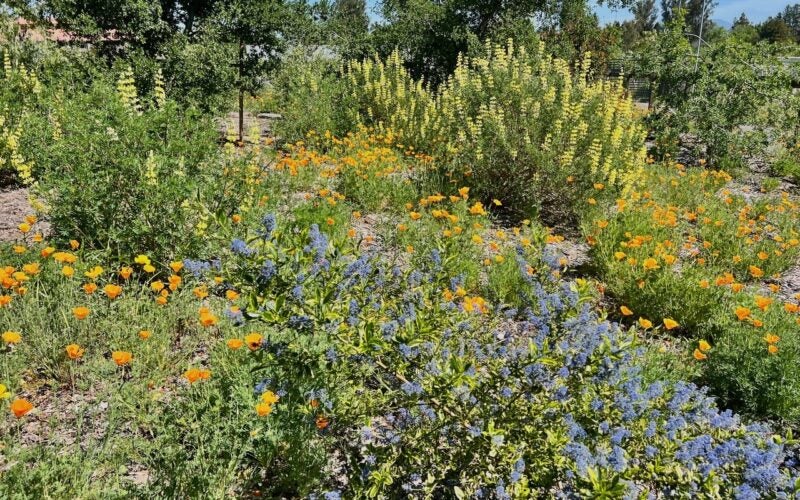
Through berms and swales with native plantings, we’re both recharging the aquifer and wildlife, having witnessed a 6x increase in California quail and Killdeer. Our small pond has resulted in an increase in dragonflies, damselflies, abundant beneficial snakes, badgers, weasels and is home to three North Western Pond Turtles which are threatened.

We make extensive use of arborist chips to help build soil, suppress invasive weeds, reduce watering while retaining moisture and re-carbonize the soil. We’ve distributed an estimated 3,000 yards or about 2 million pounds of chips in an attempt to retain any precipitation that falls on the land and reduce flooding downstream.

Special Events
Naturalist available to discuss local fauna

Plants in this Garden

Plant Picker
Pointy dark green leaves and spikes of white flowers
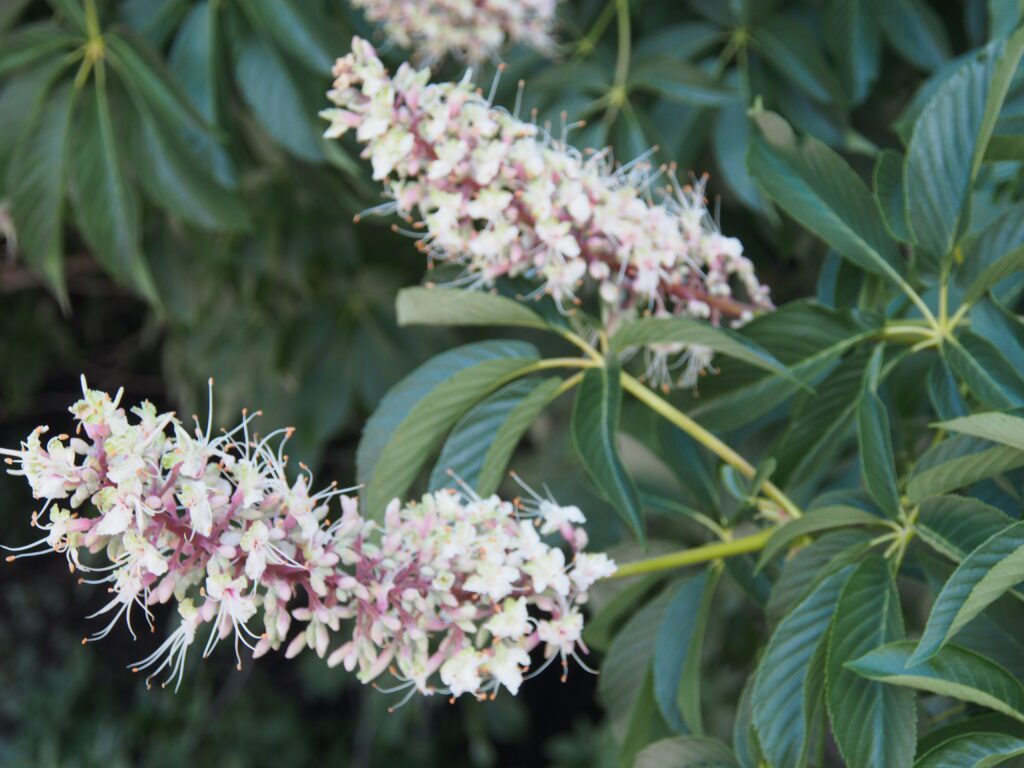
A close up of the spikes of small, white star-shaped flowers with pink centers and stems
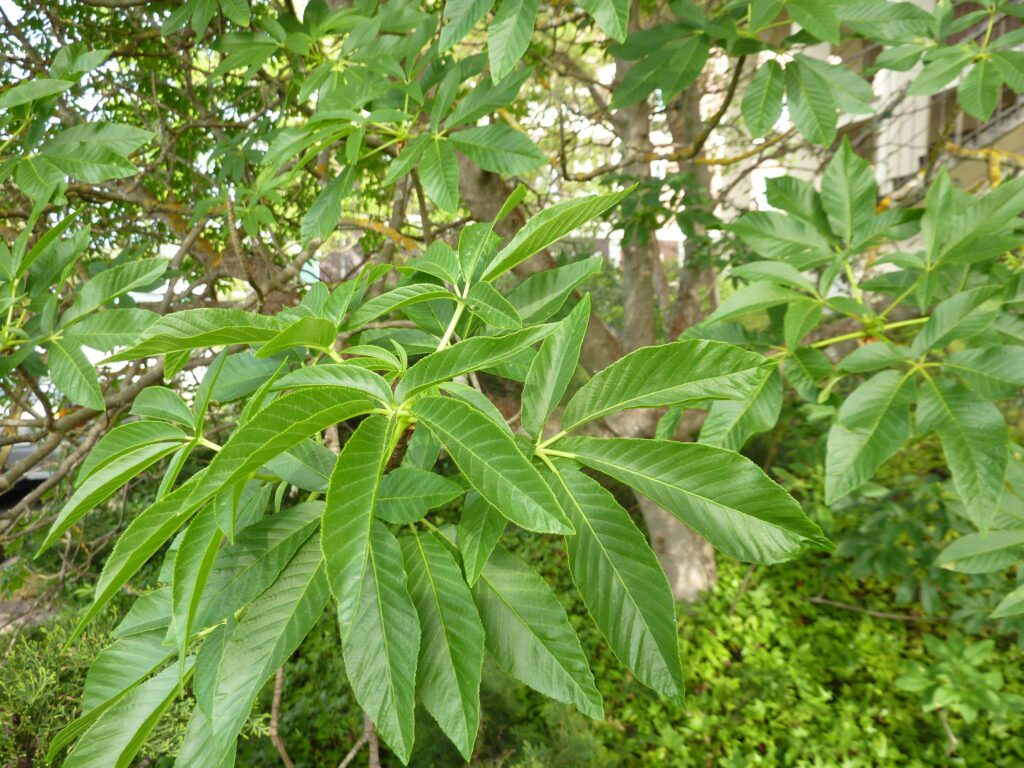
close-up of long, vibrant green leaves with pointed tips
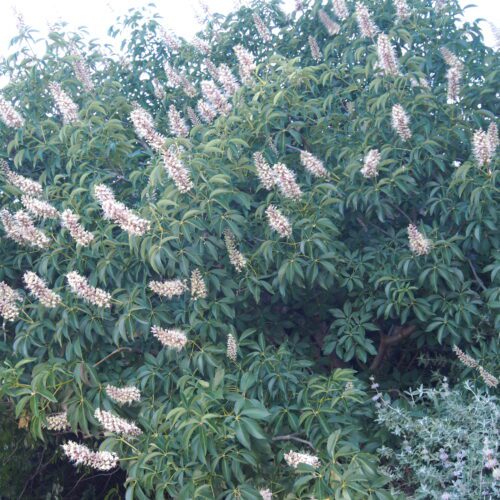
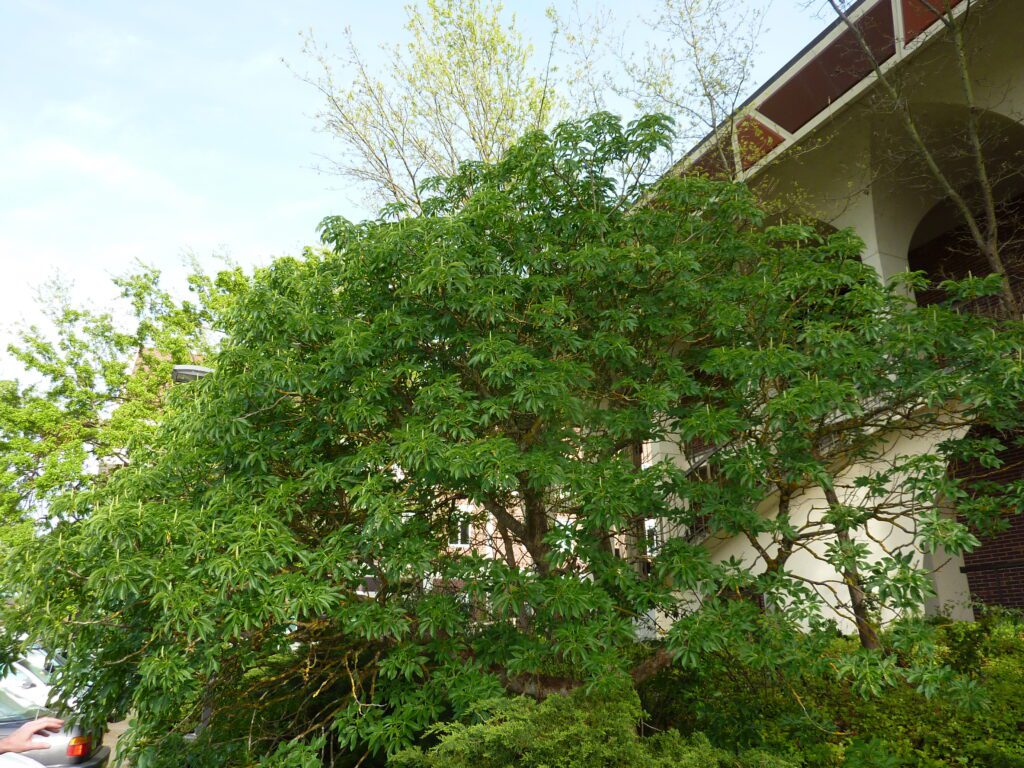
A tall buckeye shrub next to a house

Aesculus californica

California Buckeye
Organization

Large, multi-trunked shrub or small tree. Silvery gray bark with green leaves and clusters of fragrant white flowers. Summer deciduous, defoliating in early July and growing during wet winter and spring months. Only buckeye native to California, small trees are found in Southern regions while large shrubs are found in Northern regions.

  • Water: Very Low
  • Light: Full Sun
  • Soil: Well Drained
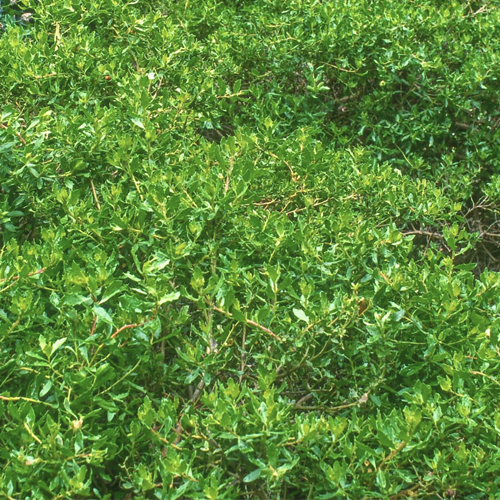
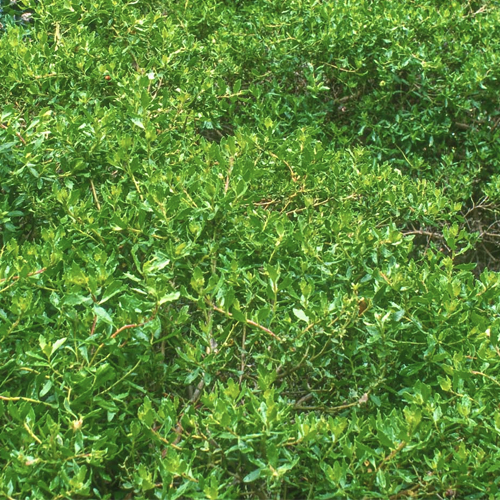
Vibrant, shiny, light green foliage of the dwarf coyote bush

Baccharis pilularis & cvs

Dwarf Coyote Bush
Organization

Flowers are inconspicuous but provide a source of pollen, nectar, and seeds for wildlife. Shrubby varieties can be cut back to maintain a more tidy and compact appearance. Perennial varieties can be divided in fall or early spring. Excellent choice as support for more showy plants in the garden.

  • Water: Low
  • Light: Full Sun
  • Soil: Most Soils
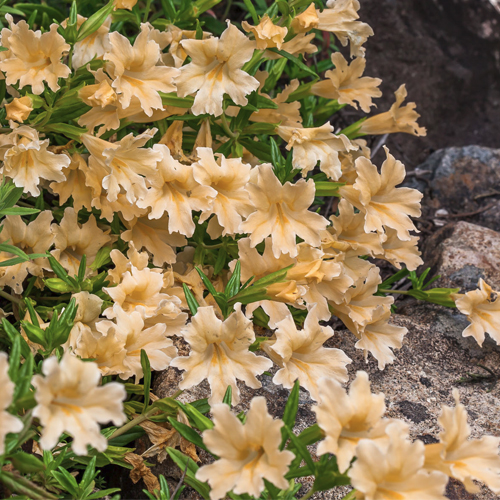
A group of small, peach-colored trumpet flowers with green leaves.

Mimulus aurantiacus and hybrids

Sticky Monkey Flower
Organization

The orange, tubular flowers of sticky monkey flower can be enjoyed in many locations throughout Sonoma and Marin counties in spring and summer, a testament to how well this plant is adapted to hot and dry conditions. The slightly sticky leaves benefit from light pinching and pruning to maintain an attractive appearance and support for the beautiful flowers. Many hybrids provide color variation. Do not confuse this plant with the red-flowered scarlet monkey flower (Mimulus cardinalis), an herbaceous riparian plant that requires regular water to thrive.

  • Water: Very Low
  • Light: Full SunPartial Shade
  • Soil: Sandy
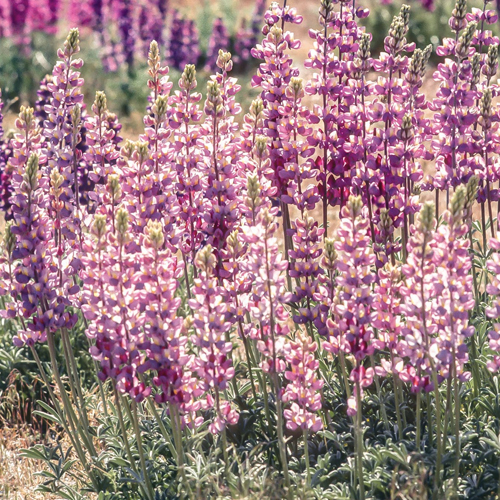
Pink-purple lupine raceme inflorescent flower clusters.

Lupinus spp

Lupine
Organization

Popular group of annuals, perennials, and shrubs with distinctive divided leaves that are common throughout the western United States, including California. Pea-like flowers are displayed on spikes and are attractive to bees and other pollinators. Most native lupines are purple-flowered, while some are yellow. Provide full sun and good drainage and watch out for slugs and snails.

Examples: Silver bush lupine (L. albifrons, 3-4’ x 3-4’), prostate lupine (L. albifrons var. collinus, 12-18” x 12-18”), coastal bush lupine (L. arboreus) available with either blue or yellow flowers but can be invasive in some north coastal dunes, and blue-and-white lupine (L. bicolor) a low-growing, annual wildflower.

  • Water: Very Low
  • Light: Full Sun
  • Soil: Well Drained
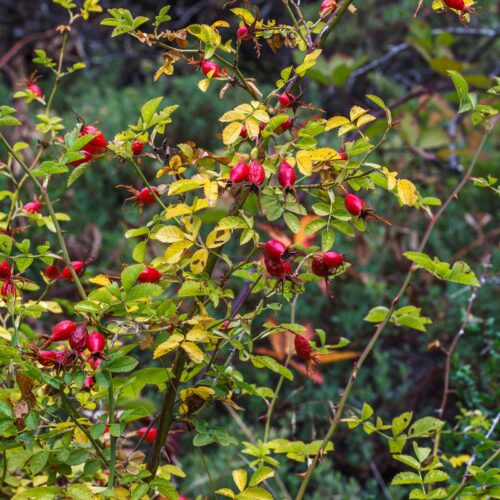
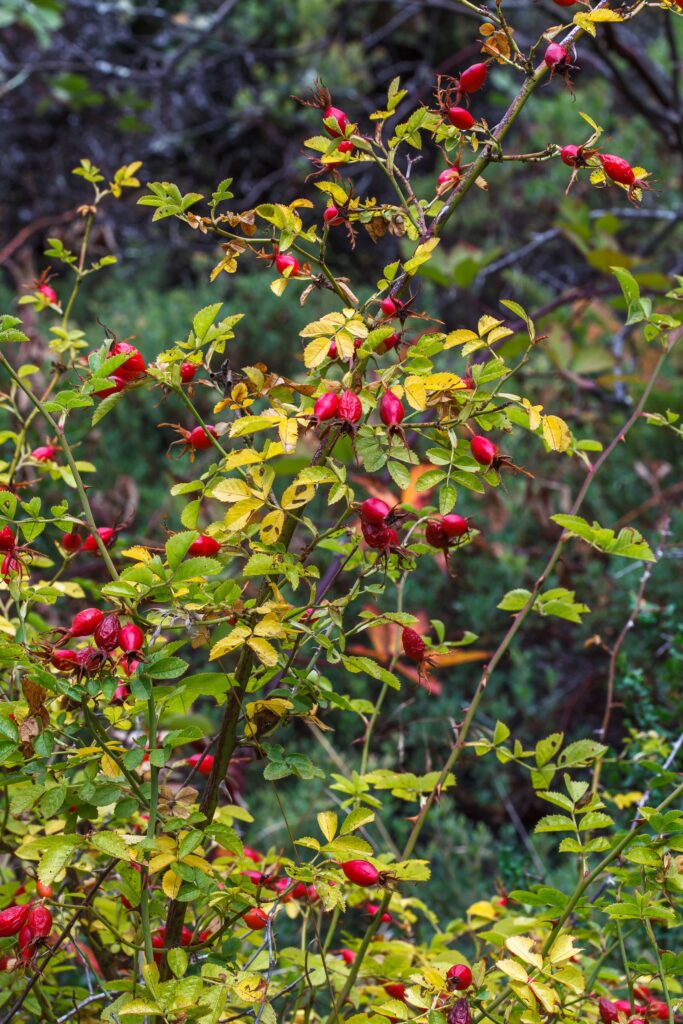
A shrub with small, scattered yellow-green leaves and deep, vibrant red bulbous flowers

Rosa californica

California Wild Rose
Organization

A native, perennial, deciduous shrub with dark green leaves divided into coarsely toothed leaflets. Rose to pink colored flowers containing yellow seeds and grows abundantly in moist soils. Natural habitat for birds and pollinator insects.

  • Water: Low
  • Light: Full SunPartial Shade
  • Soil: Loam
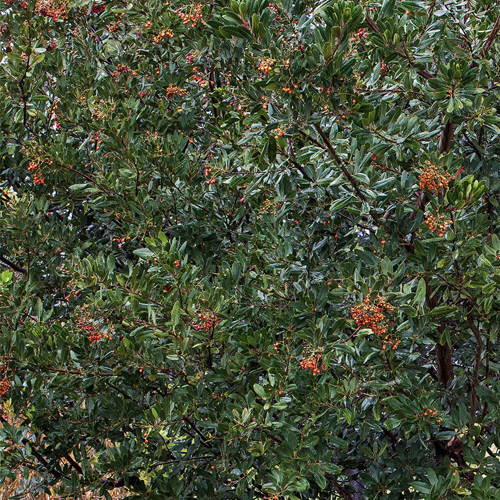
Dark green oval leaves and red berry clusters on dark brown branches

Heteromeles arbutifolia

Toyon
Organization

California native, evergreen shrub or small tree often seen growing in Sonoma and Marin county wildlands. Lacy, white flower clusters in spring attract pollinators; red berries in winter provide a splash of color and an important food source for birds. The name “Hollywood” was born from the abundance of toyon in the hills of southern California and its resemblance to European holly. The cultivar ‘Davis Gold’ has yellow berries and may be more disease-resistant than the species.

  • Water: Low
  • Light: Full SunPartial Shade
  • Soil: Well Drained
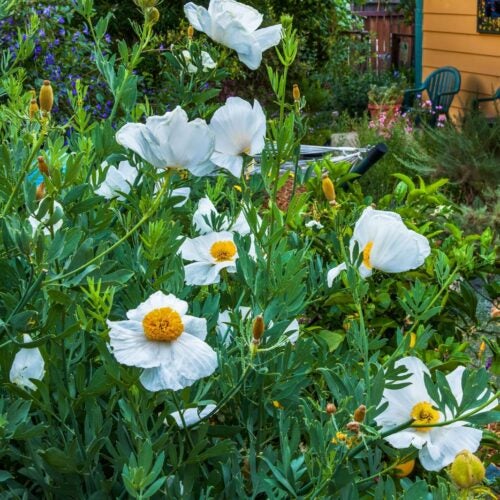
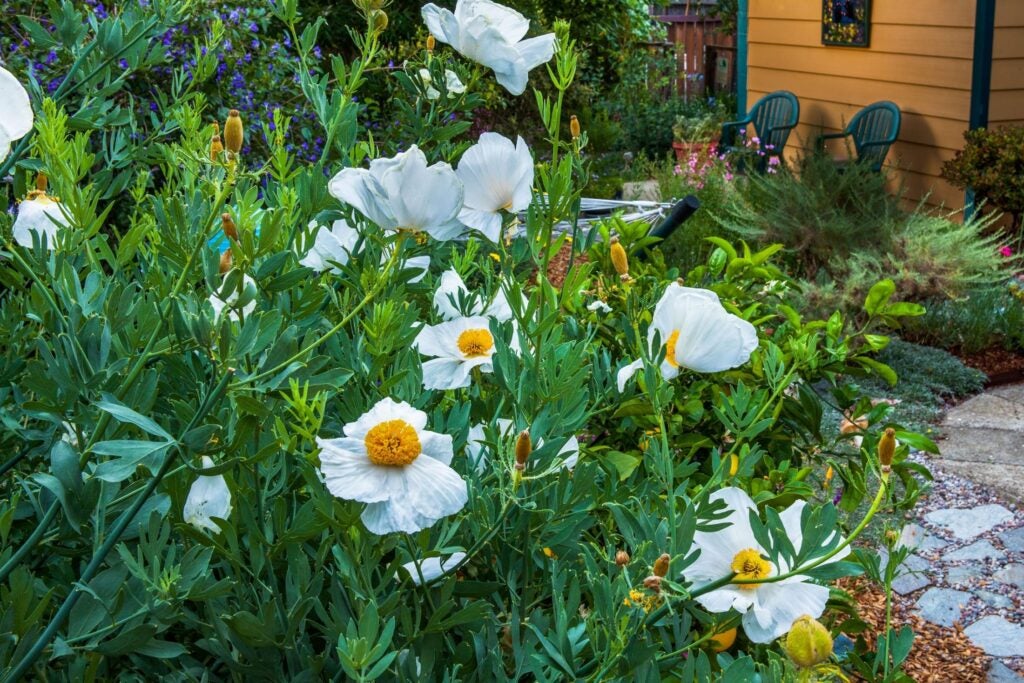
A shrub with vibrant green leaves and large, crinkled flowers with white flowers and yellow, spherical group of stamens.

Romneya coulteri

Coulter's Matilija Poppy
Organization

The Matilija poppy is a very large species of California poppy. Its flowers alone can grow to 7 inches in diameter. The shrub itself can be 6-10 feet tall and 2-4 feet wide. Plant near other shrubs that can outcompete it for space, such as ceanothus, coffeeberry, sugarbush, or flannelbush. Plant in sandy, well-drained soil and water carefully until established because it can suffer from both too much and too little once. Once established, however, the shrub is easy to grow and requires no watering at all. Can be cut back hard in late fall.

  • Water: Low
  • Light: Full Sun
  • Soil: Well Drained
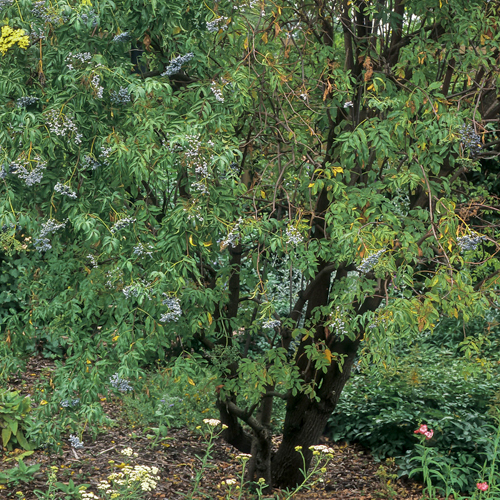
A tree with dark brown bark and willowy green leaves and blue elderberries

Sambucus spp

Elderberry
Organization

Fast-growing shrubs and small trees for sun or part shade that attract pollinators from far and wide to large clusters of cream flowers in spring, followed by berries in summer that provide food to many types of birds. Fruit can also be used for culinary purposes. While naturally fairly wild-looking, elderberries can handle being cut back to the ground in the winter or pruned to maintain size and shape.

Examples:

  • Blue elderberry (S. mexicana [nigra] spp. caerulea, 8-25’) is native from Oregon to Baja California and beyond.
  • Black elderberry (S. nigra, 20-30’) is native to Europe, North Africa, and Asia, and is available in nurseries in the form of many named cultivars. Cut leaf black elderberry (S. n. ‘Black Lace’, 8’ x 8’) has intense dark, fine foliage. Cut leaf elderberry (S. n. ‘Laciniata’, 10’ x 10’) has green leaves, and variegated black elderberry (S. n. ‘Marginata’, 6-12’) has variegated leaves.
  • Water: Low
  • Light: Full SunPartial Shade
  • Soil: Well Drained
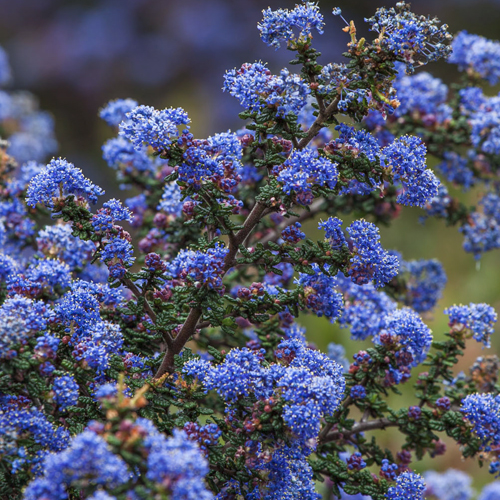
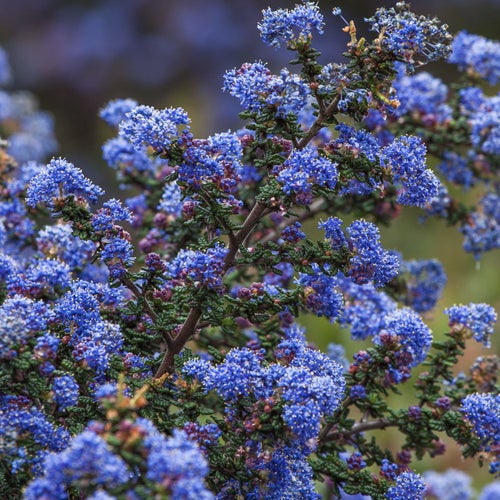
California Lilac ceanothus variety with clusters of small, vibrant blue flowers and dark green leaves

Ceanothus spp & cvs

Ceanothus
Organization

Ceanothus is a group of fast-growing, evergreen shrubs that vary from groundcovers to small trees, many of which are native to California. They provide a spectacular display of flowers in spring that will attract a multitude of pollinators. Flowers are followed by seeds that provide food for birds. The clusters of tiny flowers range from white to deep violet. Plants perform best with good drainage and minimal irrigation once established. Some do best in cooler coastal climates, but many thrive in hotter inland climates. Pay close attention to the mature size when selecting ceanothus to ensure that it has sufficient space for its natural form.

Groundcovers: C. ‘Centennial’ (1’ x 8’), C. gloriosus var. gloriosus ‘Anchor Bay’ (2’ x 8’), C. griseus var. horizontalis ‘Diamond Heights’ (variegated, 1’ x 4’), C. griseus var. horizontalis ‘Yankee Point’ (3’ x 12’), C. maritimus (2’ x 6’).

Shrubs: C. ‘Blue Jeans’ (6’ x 6’), C. Concha (6’ x 6’), C. ‘Dark Star’ (6’ x 8’), C. ‘Joyce Coulter’ (4’ x 12’), C. ‘Julia Phelps’ (8’ x 10’), C. cuneatus (8’ x 8’), C. thyrsiflorus ‘Skylark’ (4’ x 6’).

Large shrubs: C. ‘Frosty Blue’ (10’ x 12’), C. thyrsiflorus (20’ x 20’), C. t. ‘Snow Flurry’ (white flower, 20’ x 20’).

Trees: C. ‘Ray Hartman’ (15′ x 15′)

  • Water: Very LowLow
  • Light: Full SunPartial Shade
  • Soil: Well Drained
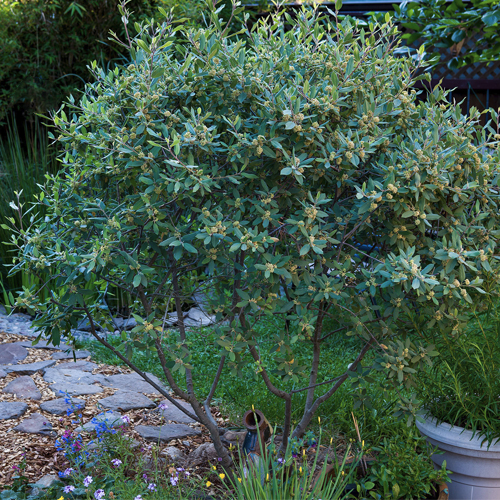
A small multi-trunked shrub with light brown bark, green leaves,, and clusters of tiny star-shaped light green flowers

Rhamnus [Frangula] californica

Coffeeberry
Organization

Evergreen shrub that has insignificant flowers followed by black berries. Flowers are attractive to pollinators, especially bees, and berries provide a food source for birds. Cultivars commonly sold in nurseries have differing growth habits and are often smaller than the species which grows 5-18’ x 10-18’.

Examples: F. c. ‘Eve Case’ (6-8’ x 6-8’), R. c. ‘Leatherleaf’ (5-6’ x 5-6’), R. c. ‘Mound San Bruno’ (6-8’ x 6-8’) with a dense, mounding growth habit.

Note: California coffeeberry was formerly classified as Rhamnus californica and is now classified as Frangula californica.

  • Water: Low
  • Light: Full SunPartial Shade
  • Soil: Most Soils
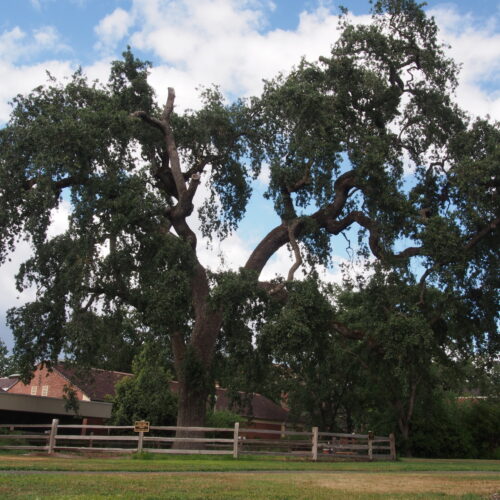
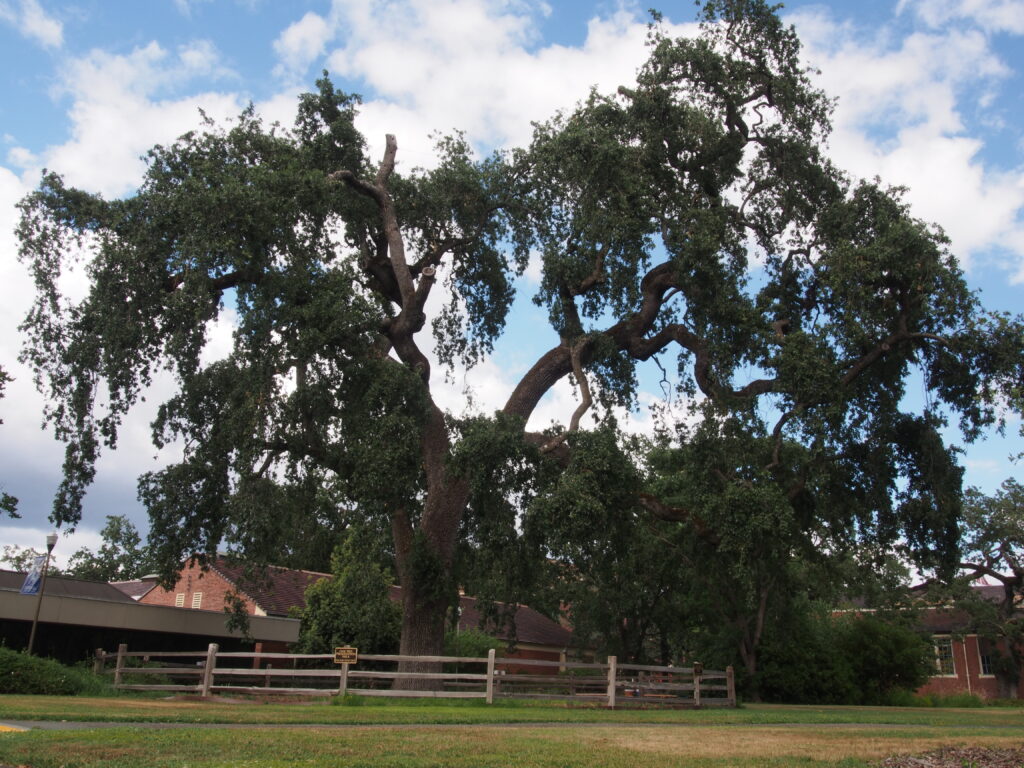
Very large oak tree with multiple large branches spreading in different directions. Dark green foliage and dark brown bark

Quercus lobata

Valley Oak
Organization

Woody perennial, deciduous tree. Fast growing and one of the best local natives for large properties. Dark green leaves and dark brown to pale gray, ridged bark. Not susceptible to Sudden Oak Death.

  • Water: Low
  • Light: Full Sun
  • Soil: Well Drained

Favorite Plants

1

Valley Oak

Quercus lobata

2

Coffeeberry

Frangula californica

3

California Poppy

Eschscholzia californica

4

Clarkia

Clarkia spp. & cvs.

5

Pacific Wax Myrtle

Myrica californica

Favorite Garden Suppliers

California Flora Nursery

2990 Somers Street Fulton

Devil Mountain Wholesale Nursery

499 Pepper Road Petaluma

Landscapes Unlimited Wholesale Nursery

4330 Bodega Avenue Petaluma

Recommended Resources

Gardening Tips

1

Nothing happens without water.

Use berms and swales plus chips to help recharge the soil and aquifer.

2

Work with neighbors.

The aquifer doesn’t end at the property line!

3

Keep a sharpening stone handy to help keep an edge on your snips.

Better cuts mean quicker healing and less hand fatigue.