Lawn Be Gone

BACK TO FULL TOUR

Garden Features

1

Drought Tolerant

2

California Natives

3

Drip Irrigation

4

Pesticide Free

5

Sheet Mulching

6

Lawn Conversion

7

Lawn-Free Landscaping

8

Permeable Surfaces

9

Wildlife Habitat

Partner: North Marin Water District

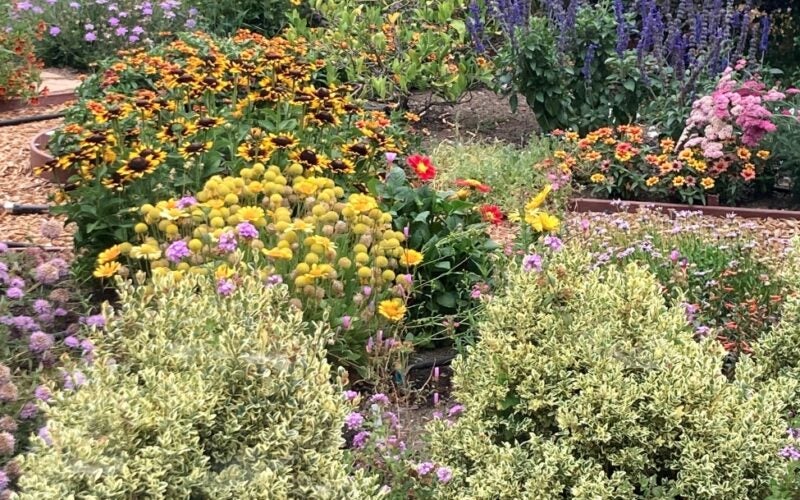
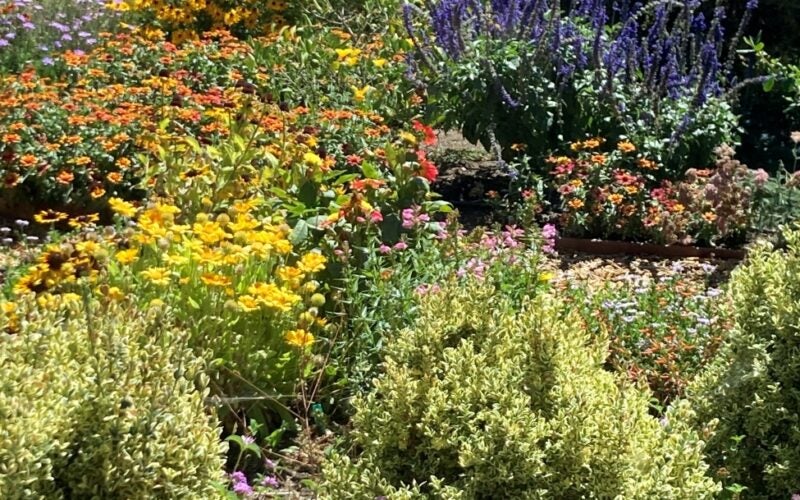
I moved to this property in June of 2023 in part due to the large flat fenced private front yard. Originally it was all lawn, irrigated with three different systems, all of which were failing.

I knew immediately what I wanted to do!

First I shut off all the irrigation and slowly went about the business of starting to sheet mulch the entire lawn area of about 1100 square feet. I used medium weight rolls of corrugated cardboard made from tree saw dust, overlapping to block all sunlight.

Then I began adding enough topsoil to hold down the carboard and keep it moist over the first winter.

My next step in spring 2024 was to begin to lay out the design for the beds and paths by installing bender-board for delineation. Then the permeable block went down on the pathways, and covered that with the least expensive blonde wood scraps from Marin Landscape I could find. I still had a long way to go!

Now that the paths and beds were defined, I brought in 5-6 cubic yards of topsoil and began to plant one year ago.

Al plants selected were 4″ starters from the California Native Plant Society (CNPS) plant sale, as well as The Watershed Nursery in Point Richmond, occasionally a few natives purchased at Summerwinds Nursery in Novato, also.

Over 17 months had passed by then. My gardener Edwin Alonzo installed a fantastic drip system first that runs 20 minutes twice a week, at least until things get established.

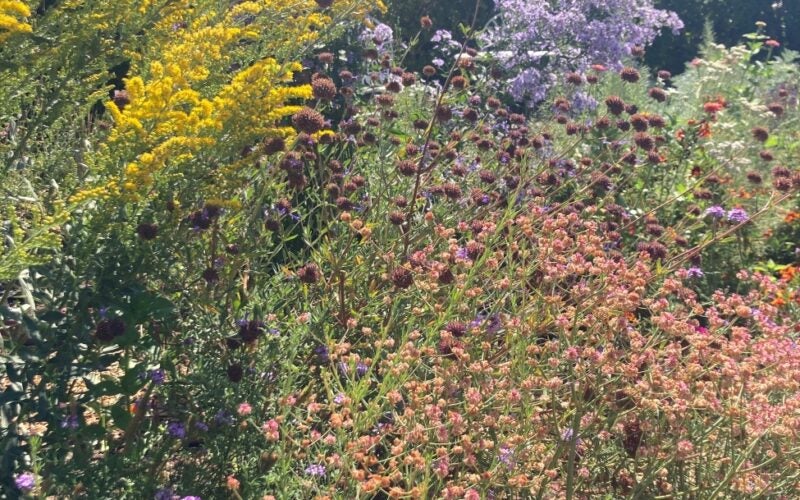
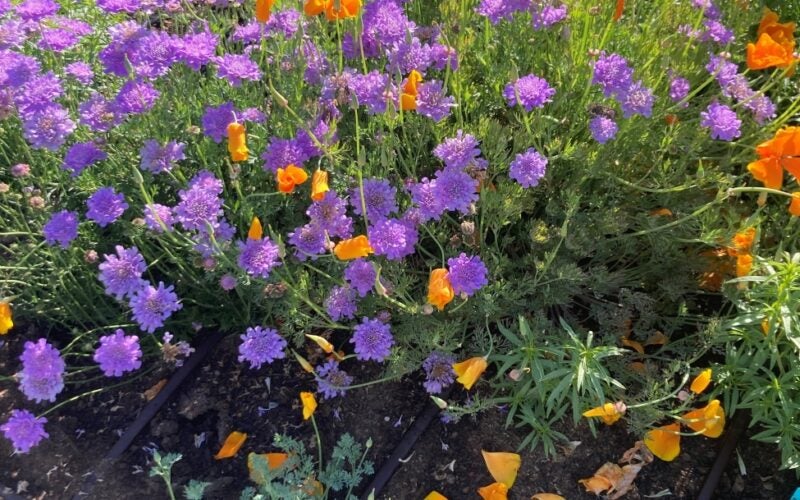
Then the planting began in December of 2024. I truly didn’t know what I was doing but I just started planting away, throwing wildflower seeds and caution to the wind. I think I overdid it a bit but I was excited to finally get things started. I was stunned at the explosion of growth and delighted to watch what was once a brown lawn devoid of life burst in flowers, bees, butterflies, and hummingbirds.

Special Events
Before and After Comparison Photos

Plants in this Garden
Plant Picker
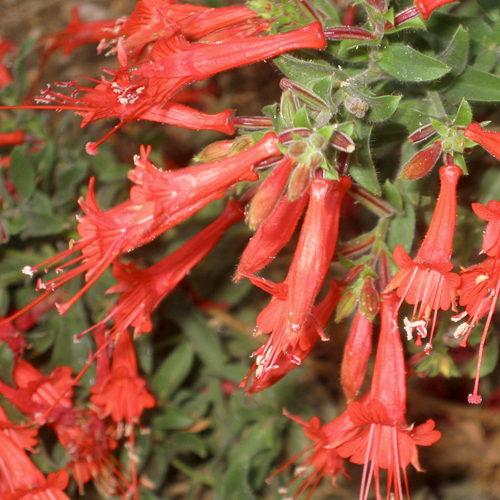
Red tubular flowers with white-tipped stamens sticking out

Zauschneria [Epilobium] spp

California Fuchsia
Organization

Group of highly variable, semi-evergreen subshrubs and herbaceous perennials distributed over a wide geographic area, including California. Epilobiums bloom in late summer with tubular flowers providing a food source for hummingbirds migrating south and are also attractive to bees and butterflies. Epilobiums range from low-growing groundcovers to upright plants of several feet. Flower colors include orange-red, white, pink, and salmon. Most can be pruned back in late autumn to maintain a more compact form and be rejuvenated for the following year.

Low-growing examples: E. ‘Schieffelin’s Choice’; E. canum ‘Calistoga’, a selection from Phil Van Soelen from California Flora Nursery from the Palisades east of Calistoga; E. canum ‘Cloverdale’, a selection from U.C. Santa Cruz Arboretum from along the Russian River north of Cloverdale with exceptionally orange flowers; E. c. ‘Everett’s Choice’, E. c. ‘Summer Snow’ with white flowers, and E. septentrionale ‘Select Mattole’, a somewhat redder flowering selection that is more shade-tolerant.

Upright examples: E. c. ‘Bowman’s Hybrid’ (2-3’), E. c. ‘Catalina’ (3-4’), E. c. ‘Liz’s Choice’ (3’) selected by Milo Baker Chapter CNPS Fellow Liz Parsons, E. c. ‘Marin Pink’ (2’) with pink flowers.

  • Water: Low
  • Light: Full Sun
  • Soil: Well Drained
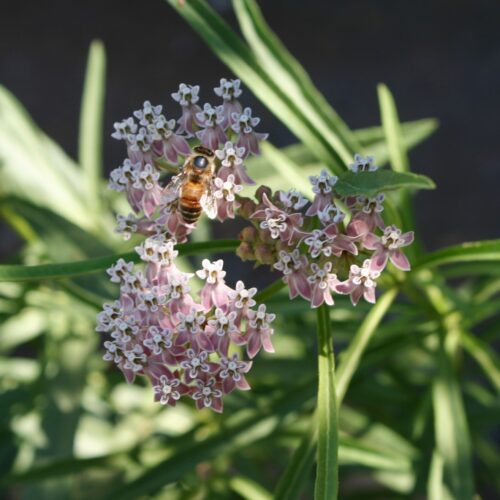
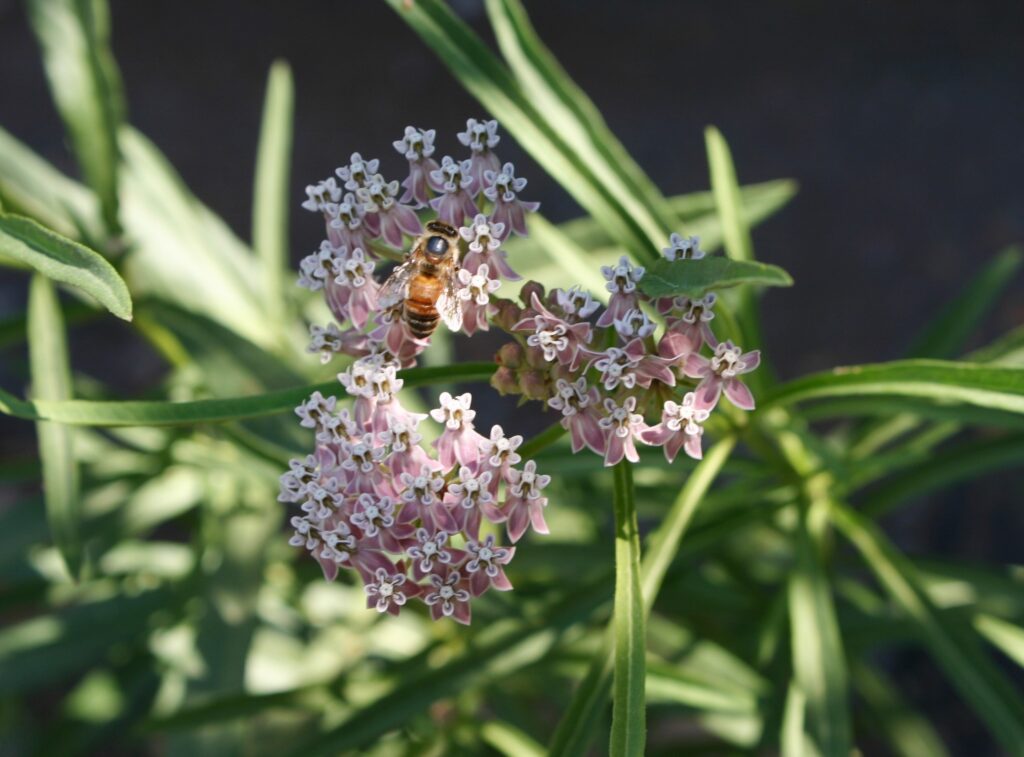
Three clusters of tiny, pink and white star-shaped flowers and long slender leaves

Asclepias spp

Milkweed
Organization

Colony-forming, herbaceous perennials with several species providing important habitat and larval food sources for the monarch butterfly while attracting a diverse array of insects.

California milkweeds remain dormant during the colder months. Stems that emerge in April or May bear clusters of small, star-like flowers in summer followed by silky-tailed seeds that are dispersed by wind. A. fascicularis (narrow-leaved milkweed, 1-3’) is the preferred food source for monarch larvae. A. speciosa (showy milkweed, 2-4’) has larger, soft foliage, showier flower clusters, and is also a food source for monarch larvae. A. cordifolia (heart leaf milkweed, 1-2′) has heart-shaped leaves and is also a food source for monarch larvae.

  • Water: Low
  • Light: Full SunPartial Shade
  • Soil: Most Soils
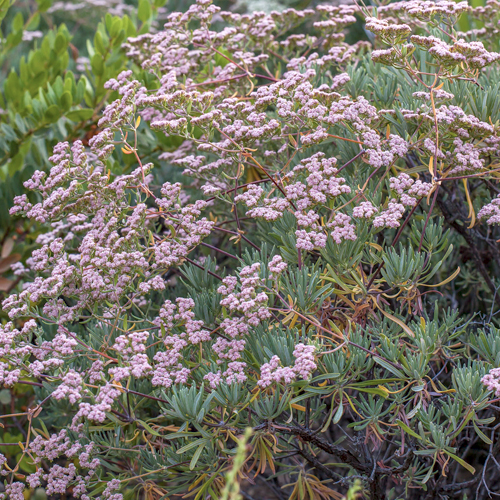
Gray green spiney leaves with dark stems forming clusters of small, light pink flowers

Eriogonum spp

Buckwheat
Organization

Diverse group of flowering, evergreen shrubs and perennials and annuals found throughout the western United States. Most available in nurseries are native to California and generally prefer drier sites. Flowers colors include yellow, white, pink, and red and are held above foliage in umbels that dry over time and are popular in flower arrangements. Buckwheats provide pollen and nectar for bees and butterflies, larval food for butterflies, seeds for birds, and cover for many creatures.

Examples:

  • Santa Cruz Island buckwheat (E. arborescens, 3-4’ x 4-5’) densely mounded with white flowers.
  • Saffron buckwheat (E. crocatum, 1-2’ x 2-3’) with chartreuse-yellow flowers and pale leaves.
  • California buckwheat (E. fasciculatum, 2-3’ x 3’) and its low-growing cultivars such as E. f. ‘Warriner Lytle.’
  • Catherine’s lace (E. giganteum, 4-8’ x 6-10’) with delicate, white flowers and soft pale leaves.
  • Red-flowered buckwheat (E. grande var. Rubescens, 1-2’ x 2-3’) low-mounding perennial with rose-pink flowers, coastal bluff buckwheat (E. latifolium, up to 12” x 1-2’.)
  • Sulfur buckwheat (E. umbellatum, 6-18” x 1-3’) with intense yellow flowers and cultivars E. u. var. aureum ‘Kannah Creek’ and E. u. Var. ‘Shasta Sulphur’.
  • Water: Very LowLow
  • Light: Full SunPartial Shade
  • Soil: Well Drained
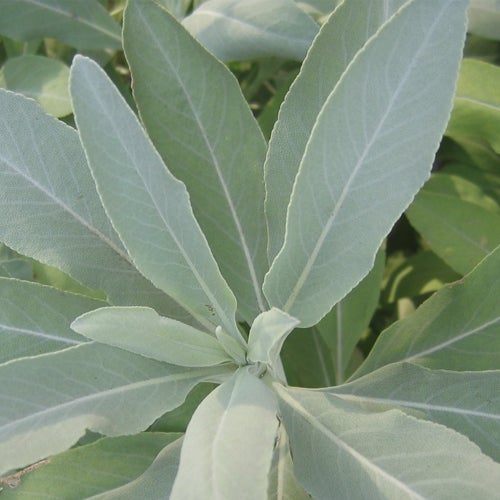
Long, slightly pointed light gray-green sage leaves

Salvia spp

Sage
Organization

Salvias are a huge group of more than 900 species that include annuals, perennials, and shrubs adapted to a variety of climates and have varying water requirements. Salvias are attractive to hummingbirds, butterflies, and bees, and are generally ignored by deer. Sages that are native to California are generally drought-tolerant, prefer full sun, and little to no fertilizer. Annual pruning in late summer or fall generally helps to keep plants tidy and healthy.

CA native sages:

  • S. apiana, white sage (3-4’ x 4-6’), silvery-white, aromatic leaves with tall flower spikes of white flowers, popular for honey production and in bundles as a natural incense.
  • ‘Bee’s Bliss’ (1-2’ x 6-8’), superb, light gray groundcover with light purple flowers on long spikes; damp conditions can cause mildew which will clear with warm weather and sunny conditions.
  • S. clevelandii, Cleveland sage (3-5’ x 3-5’), medium-sized shrub for hot, dry locations known for pleasant fragrance and deep blue whorls of flowers; popular cultivars include S. c. ‘Allen Chickering’, S. c. ‘Pozo Blue’, and S. c. ‘Winnifred Gilman’.
  • S. leucophylla, purple sage, includes plants with both an upright growth habit, such as S. l. ‘Amethyst Bluff’ (3-5’ x 3-5’) and others with a sprawling form, such as S. l. ‘Point Sal’ (2-3’ x 6’), both of which are from Santa Barbara county.
  • S. sonomaensis, Sonoma sage (1-2’ x 3-4’), groundcover that prefers light shade and will not tolerate damp conditions; cultivars include S. s. ‘Dara’s Choice’, S. s. ‘Greenberg Gray’, and S. s. ‘Hobbit Toes’.
  • S. spathacaea, hummingbird sage (1-2’ spreading), herbaceous groundcover that grows well in dry shade and spreads slowly by underground rhizomes; large leaves have a wonderful fruity fragrance; the only red-flowered native sage.
  • S. mellifera, black sage (6′ x 10′), evergreen shrub that grows well in full sun and well drained soils. Dark green leaves with pale purple flowers in late spring and early summer.

Non-native sages:

  • S. chamaedryoides, germander sage (2-3’)
  • S. chiapensis, Chiapas sage (1-2’ x 3-4’)
  • S. greggii, autumn sage (1-4’ x 1-4’)
  • S. leucantha, Mexican bush sage (3-4’ x 3-6’)
  • S. microphylla, cherry sage (3-4’ x 3-6’)
  • S. officinalis, garden sage (1-3’ x 1-3’)
  • Water: Very LowLowModerate
  • Light: Full SunPartial Shade
  • Soil: Well Drained
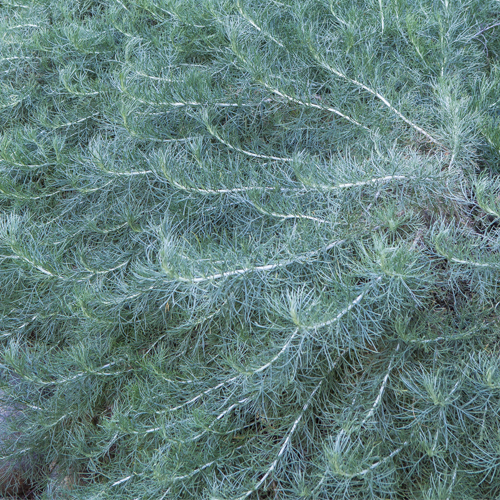
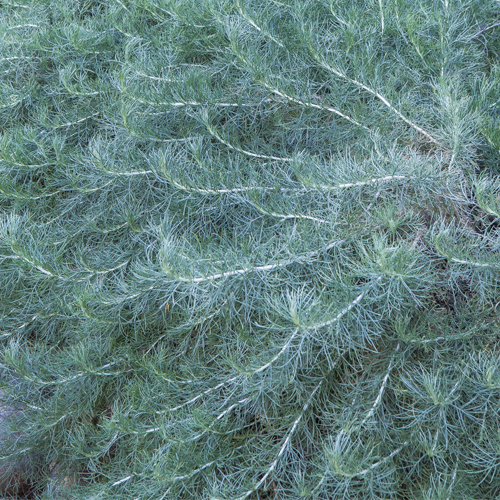
light gray green, spiny leaves of sagebrush

Artemisia ssp

Sagebrush, Wormwood
Organization

Large group of plants that includes annuals, perennials, and shrubs grown for fine, soft-textured, aromatic, gray-green foliage. Flowers are inconspicuous but provide a source of pollen, nectar, and seeds for wildlife. Shrubby varieties can be cut back to maintain a more tidy and compact appearance. Perennial varieties can be divided in fall or early spring. Excellent choice as support for more showy plants in the garden.

Examples: A. ‘Powis Castle’ (3’ x 6’), A. californica (2-5’ x 4-5’, low-growing cultivars ‘Canyon Gray’ and ‘Montara’), A. pycnocephala ‘David’s Choice’ (6” x 2’).

  • Water: Very LowLow
  • Light: Full Sun
  • Soil: Most Soils
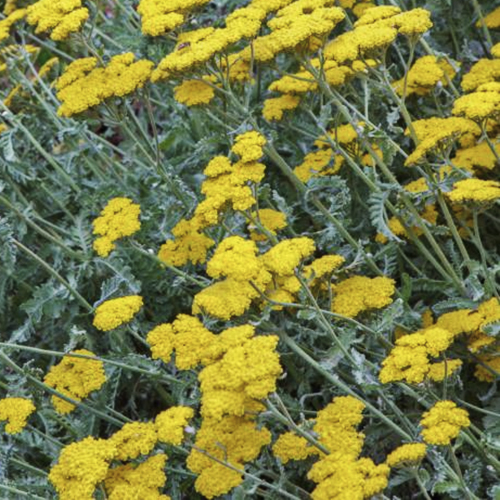
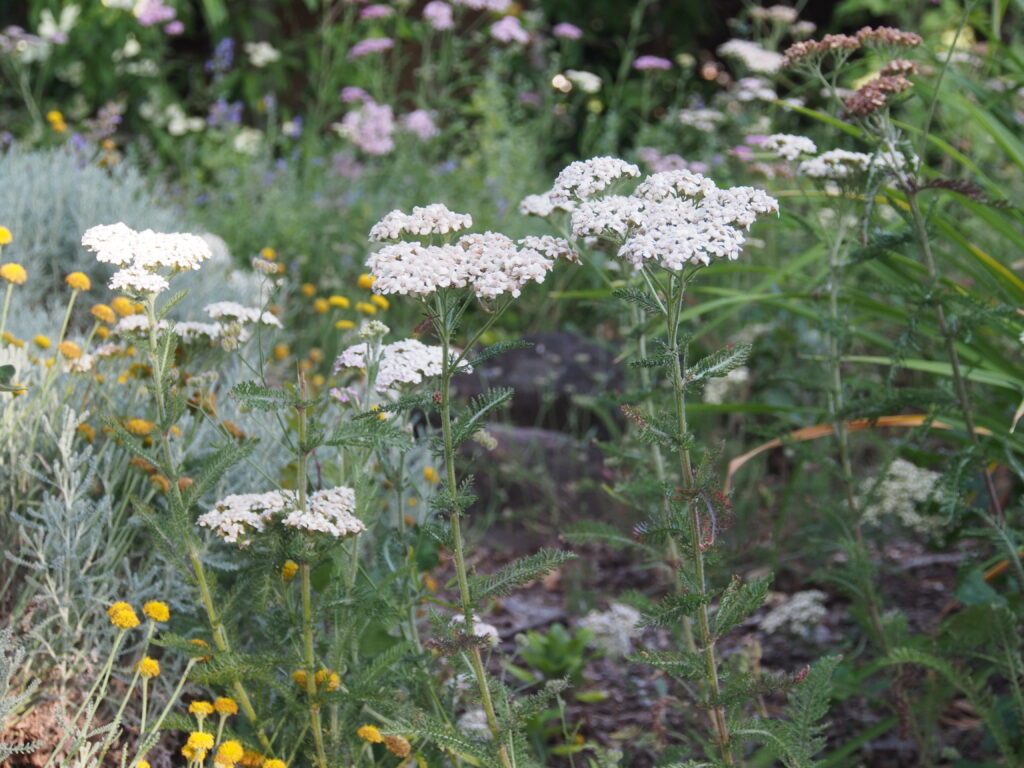
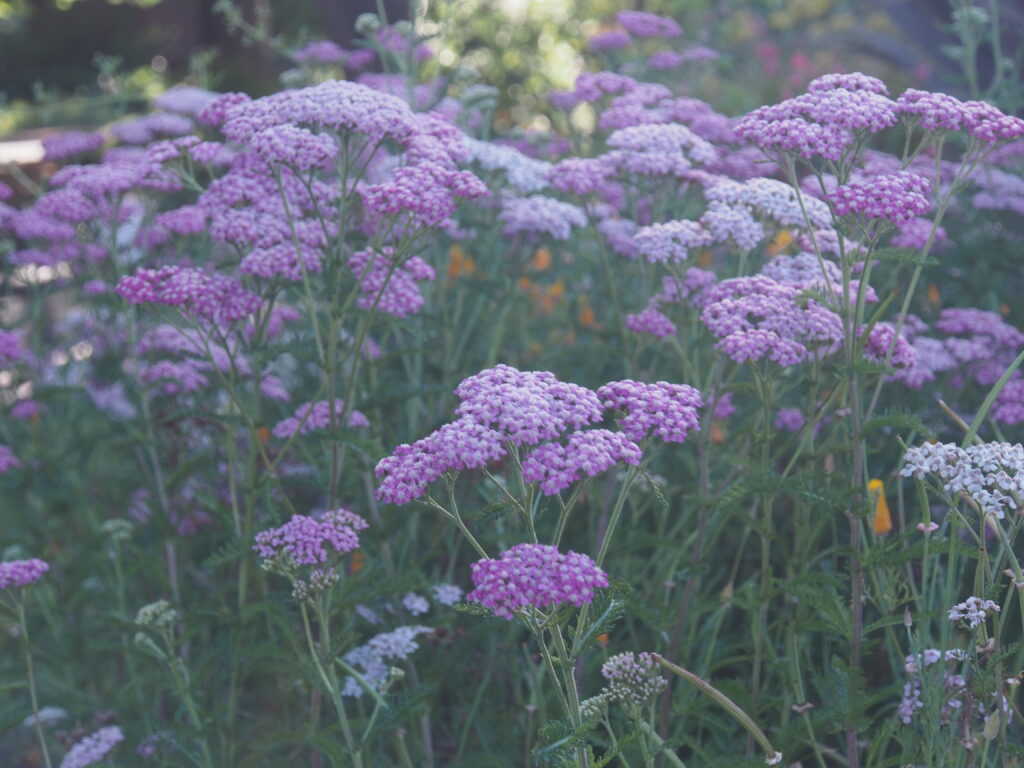
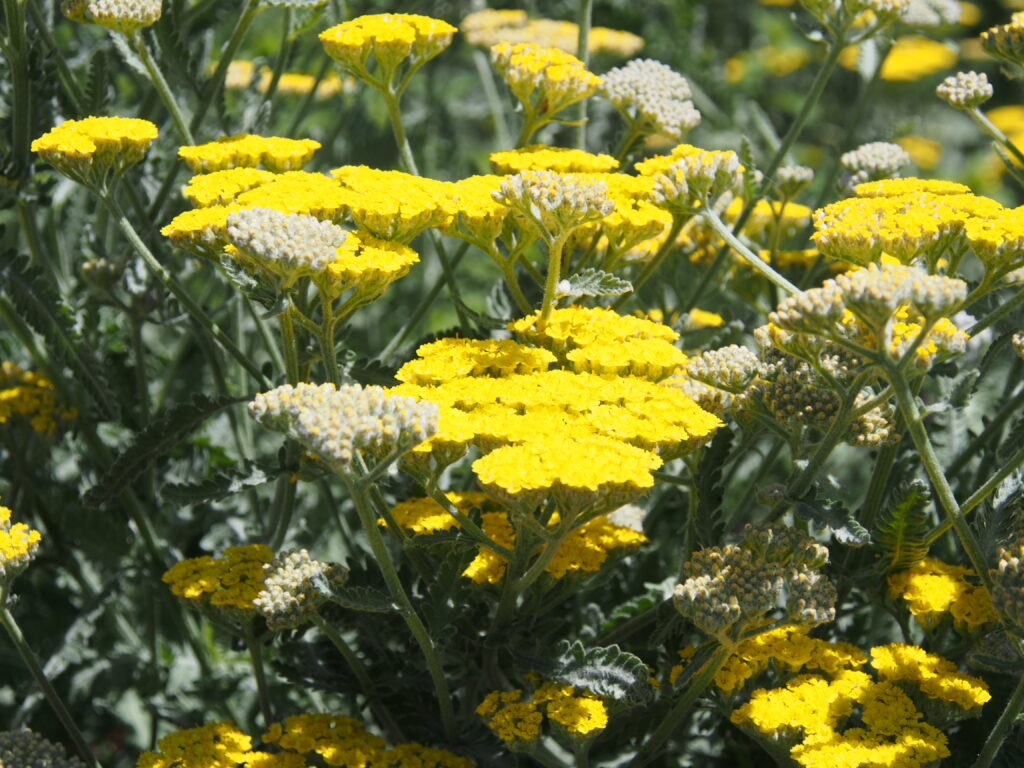
Corymb inflorescent yellow yarrow flowers on gray-green leaves and stems
White yarrow.
Purple yarrow.
Yellow and white yarrow.

Achillea spp & cvs

Yarrow
Organization

Yarrows are variable low-growing, spreading herbaceous perennials with finely divided leaves that inhabit many temperate regions in the Northern Hemisphere. Flattish clusters of flowers form in spring and well into summer and provide an important nectar source for pollinators and insects. Yarrow can help to stabilize slopes and is a good addition to the upper level of rain gardens and swales. Colors include yellow, pink, and red.

California native spp & cvs: A. millefolium (common yarrow), A. m. ‘Calistoga’, A. m. ‘Island Pink’, A. m. ‘Sonoma Coast’, A. m. ‘Terracotta’.

Other yarrows: A. filipendulina (fern leaf yarrow), A. f. ‘Coronation Gold’, A. ‘Moonshine’, A. tomentosa (woolly yarrow).

  • Water: Low
  • Light: Full SunPartial Shade
  • Soil: Most Soils
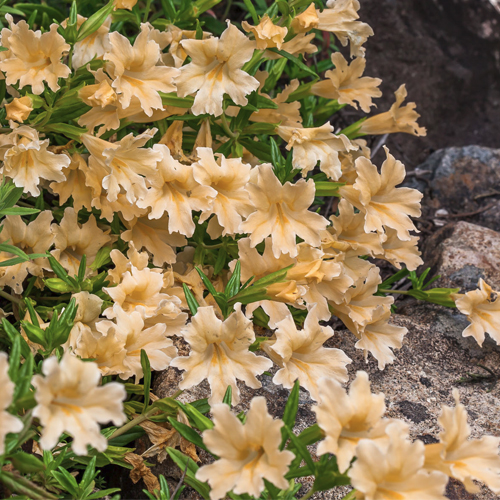
A group of small, peach-colored trumpet flowers with green leaves.

Mimulus aurantiacus and hybrids

Sticky Monkey Flower
Organization

The orange, tubular flowers of sticky monkey flower can be enjoyed in many locations throughout Sonoma and Marin counties in spring and summer, a testament to how well this plant is adapted to hot and dry conditions. The slightly sticky leaves benefit from light pinching and pruning to maintain an attractive appearance and support for the beautiful flowers. Many hybrids provide color variation. Do not confuse this plant with the red-flowered scarlet monkey flower (Mimulus cardinalis), an herbaceous riparian plant that requires regular water to thrive.

  • Water: Very Low
  • Light: Full SunPartial Shade
  • Soil: Sandy
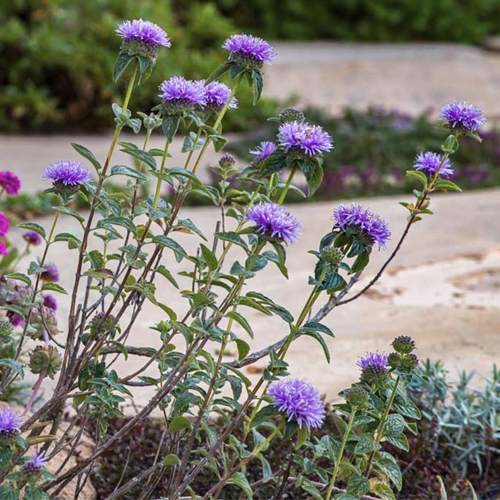
Dark brown stems with pointed green leaves and purple pompom flowers at the top of each stem

Monardella villosa

Coyote Mint
Organization

Coyote Mint is a compact perennial or sub-shrub with aromatic foliage and a sprawling habit. Dense heads of purple flowers form in spring-to-summer that are attractive to butterflies and other insects. The low-growth habit of coyote mint makes it an excellent choice for the front of a border, along the edge of a path, or beneath larger shrubs such as manzanita or ceanothus. Monardella villosa spp. franciscana ‘Russian River’ and Monardella villosa spp. villosa ‘Mark West’ are available selections from Sonoma County.

  • Water: Very Low
  • Light: Full Sun
  • Soil: Most Soils

Favorite Plants

1

Cleveland Sage

Salvia clevelandii

2

California Goldenrod

Solidago californica

3

Sticky Monkey Flower

Diplacus aurantiacus

4

Bocarosa Showy Island Snapdragon

Galvezia speciosa ‘Bocarosa’

5

Red-Flowered Buckwheat

Eriogonum grande var. rubescens

Favorite Garden Suppliers

Curious Flora Nursery

740 Market Avenue Richmond

Summerwinds Nursery

1430 South Novato Boulevard Novato

Emerisa Gardens

555 Irwin Lane Santa Rosa

Recommended Resources

Gardening Tips

1

Prepare your beds for planting

Taking extra time to prepare your beds for planting can make a big difference. I spent 1.5 years getting this garden ready to plant by sheet mulching grass and disconnecting old irrigation. I added top soil and planted in late fall early winter, after irrigation was installed.