Eva’s Eco-Eden

BACK TO FULL TOUR

Garden Features

1

Drought Tolerant

2

Edible Garden

3

California Natives

4

Deer Resistant

5

Drip Irrigation

6

Pesticide Free

7

Rain Garden

8

Reclaimed/Recycled Materials

9

Sheet Mulching

10

Lawn Conversion

11

Permeable Surfaces

12

Urban Homestead

13

Wildlife Habitat

Partner: Nucleus Design

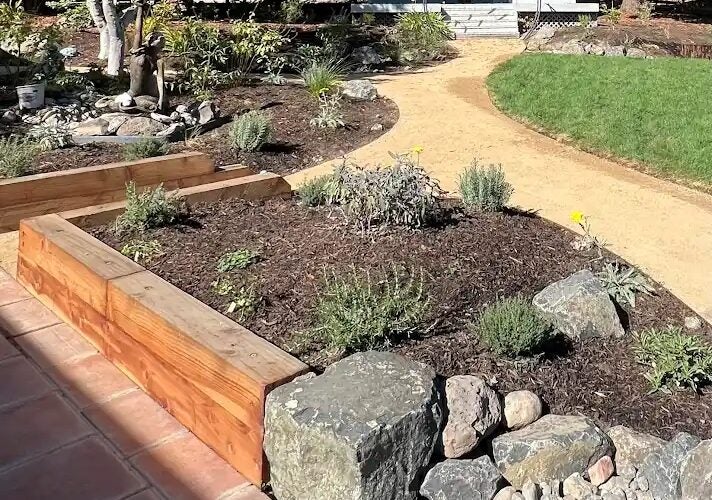
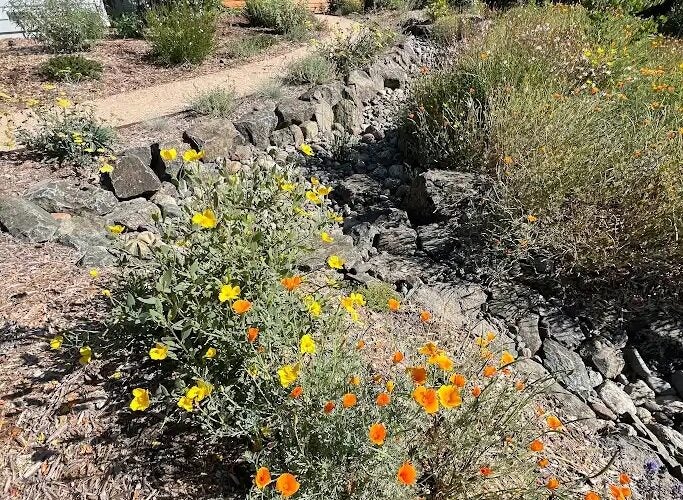
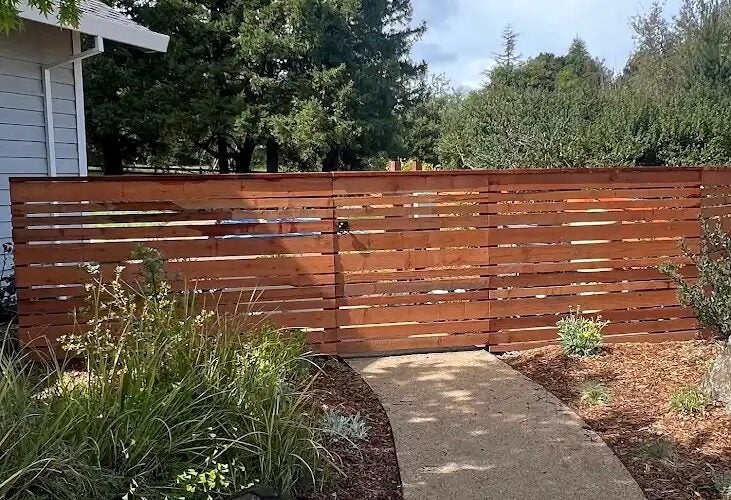
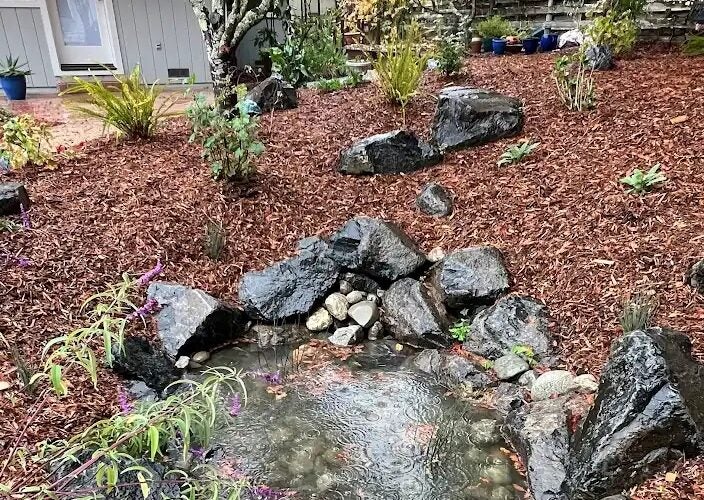
Nested at the end of a suburban Sebastopol cul-de-sac is “Eva’s Eden,” a newly installed (2024) front and backyard garden that is becoming a beacon of ecology along this traditional suburban lane. At Eva’s we’ve focused on creating a beautiful low-maintenance rain garden that will passively catch water, build soil, create habitat and beauty, and be easily cared for over time.

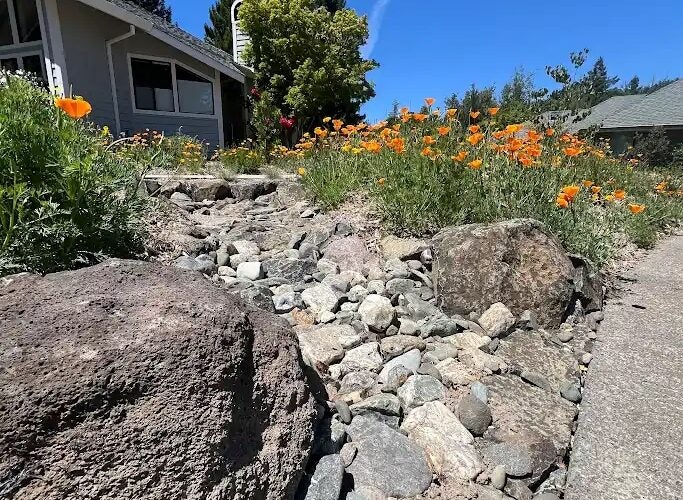
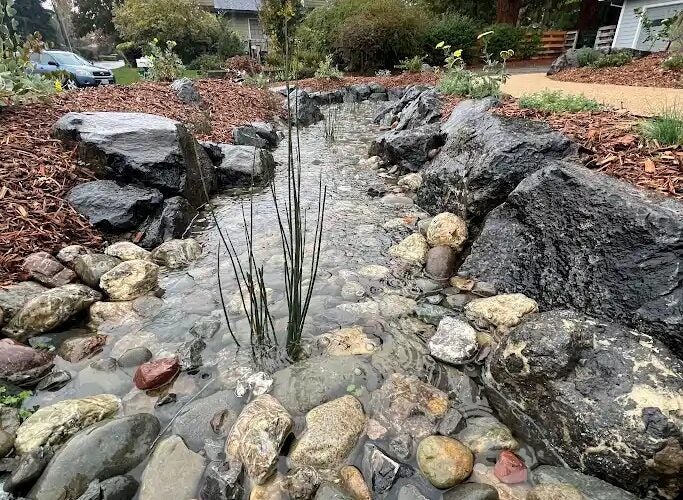
When first designing this garden, we focused on consolidating all rainwater from downspouts and surface drainage into key basins and swales. We strategically located them away from structure but still within the garden to hydrate soil, recharge groundwater, and create healthy microclimates for a more diverse and rich ecology.

This garden is held together by a solid infrastructure of locally sourced and custom-placed rock outcroppings. These outcroppings create mini vistas and views that have an ancient and timeless quality as well as a natural appeal that mimics local waterways. This “rock armoring” grounds design, prevents erosion, solidifies rain catchment, and creates abundant habitat for native lizards, spiders, and amphibians.

We also installed a drought tolerant “no-mow” lawn for poolside lounging, and created flowing pathways with permeable DG (decomposed granite) pathways and access.

The garden is watered by a centrally controlled, 9 valve irrigation system for precision watering. The system includes drip irrigation throughout garden and minimal overhead watering of the lawn.

The garden is finished with an antique heirloom “Little Mermaid” water feature, providing a perennial source of recycled water for song birds and beneficial insects, as well as creating a natural sound buffer from local road noise. 

Going on three years, Eva’s Eden is exploding with new life, creating a living example the speed at which nature regenerates when given the right ingredients. Water, access, structure, plants, soil, and beauty. A Design and Build collaboration from Eva, Nucleus Design, and Plant Wise Design.
Plants in this Garden

Plant Picker
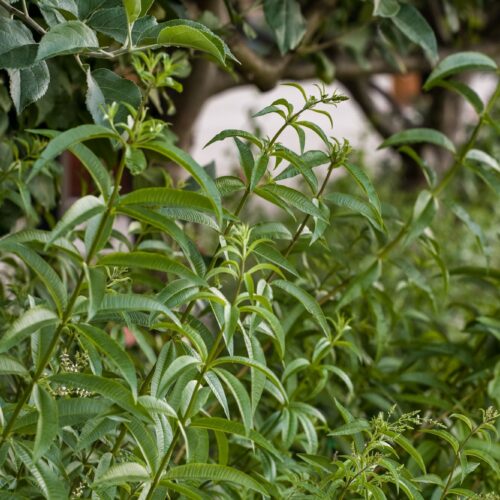
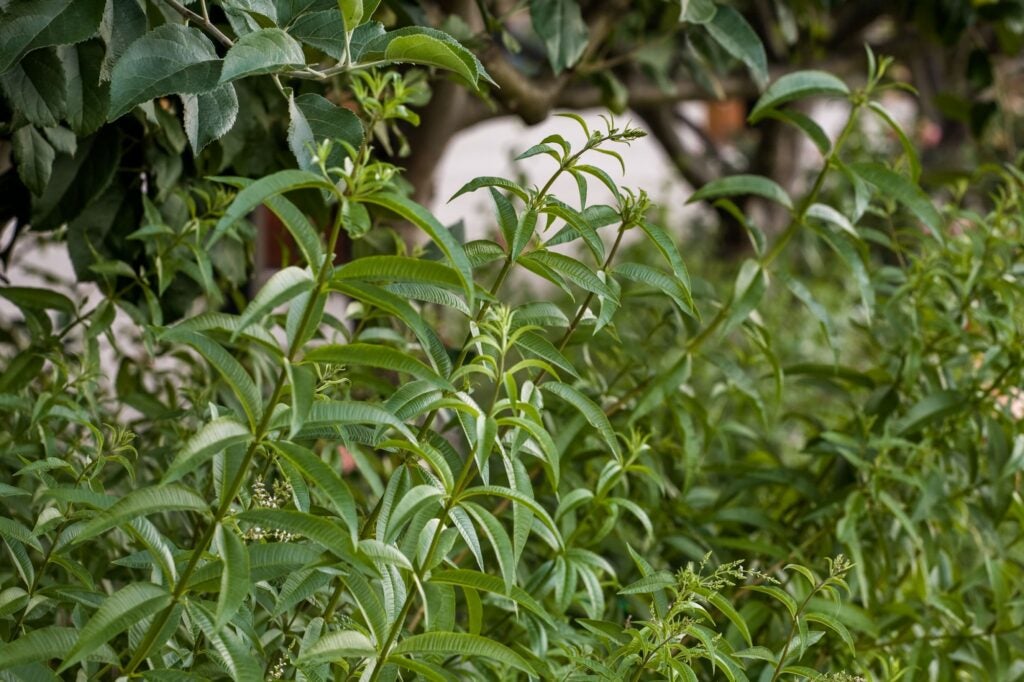
Green stems with long, slender, pointed green leaves

Aloysia citriodora

Lemon Verbana
Organization

Aloysia citriodora is a fast growing, evergreen shrub. They can reach to 6 feet or more once completely grown. These have a unique lemon scent, it brings a bright zesty smell and taste rather than other lemony herbs. The plant brings beauty to a landscape with its refreshing scent as well as the white and purple colors to compliment the scenery.

  • Water: Low
  • Light: Full Sun
  • Soil: Well Drained
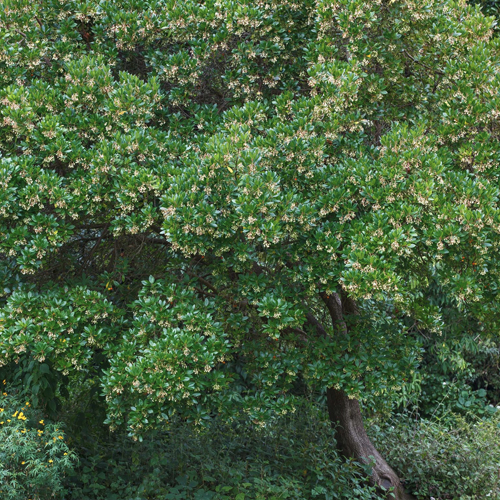
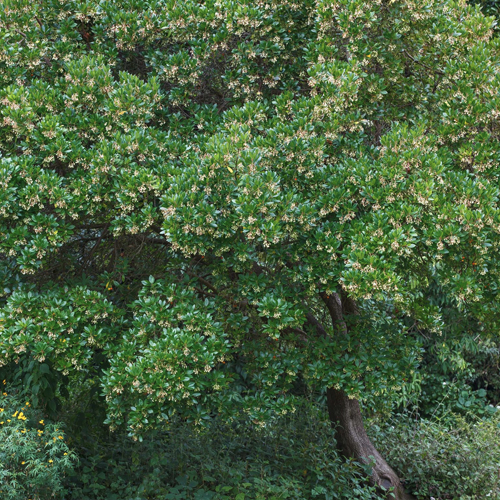
Strawberry tree with green leaves and light brown blossoms

Arbutus spp & hybrids

Arbutus, Strawberry Tree
Organization

Group of evergreen trees and large shrubs with attractive foliage and bark, small urn-shaped flowers, and reddish fruit. Prefer sunny locations and well-drained soil. A. ‘Marina’ (20-30’ – 15-30’) and A. unedo (strawberry tree, 15-30’ x 15-30’) are most commonly planted in California landscapes, either as multi-stemmed or single-stemmed, large shrubs or trees. While the two trees are similar in appearance, A. ‘Marina’ has cinnamon-brown shedding bark, whereas the bark of A. unedo is more brown. A. menziesii (madrone, 20-100’) is native to the west coast of North America, including the foothills of Sonoma and Marin counties. A. menziesii is less common in landscapes as it is notoriously difficult to establish.

  • Water: Low
  • Light: Full SunPartial Shade
  • Soil: Well Drained
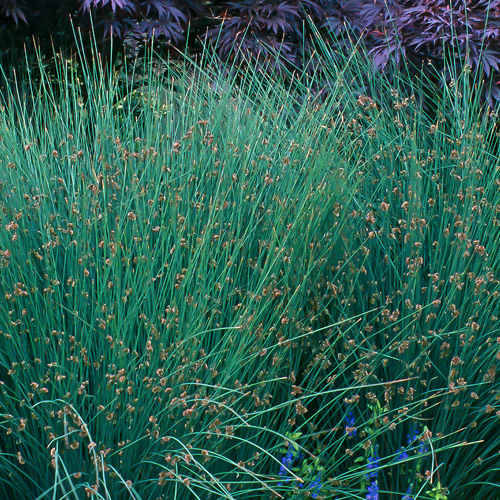
Tall blue-gray bushes of grass with small brown tips.

Juncus patens

California Grey Rush
Organization

California gray rush is a go-to species for the summer-dry rain garden. It will thrive in moist conditions and its roots will help stabilize soil and filter stormwater runoff. It is also tolerant of extended periods of drought. Clumps of stiff, upright foliage provide an interesting contrast among other perennials. ‘Elk Blue’ is a widely available selection from Mendocino County. Its bluish gray foliage is shorter than the typical gray rush.

  • Water: Low
  • Light: Full SunPartial Shade
  • Soil: Well Drained
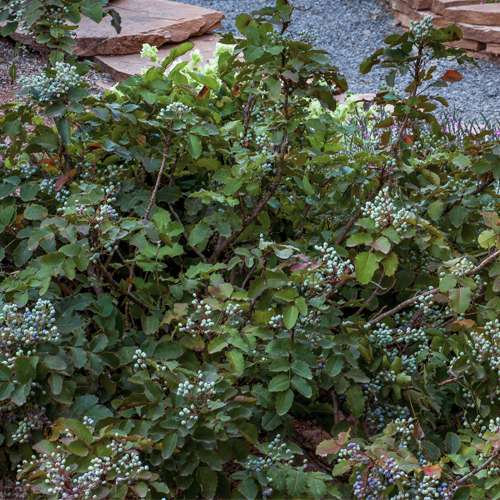
Dark green, flat and pointed leaves on brown stems with small, white-blue berry clusters.

Mahonia [Berberis] spp

Oregon Grape, Berberry
Organization

Some barberries may be referred to either as Berberis or Mahonia. The California species are a group of evergreen shrubs with glossy, spiny-edged leaves and clusters of yellow flowers in spring followed by small grape-like berries attractive to birds. Barberry foliage provides a display through the year as new leaf growth is often bronzy red that gives way to green- and finally purple-red tones in the winter months.

Examples: Oregon grape (M. repens, 1-3’ x 2-3’) is an excellent small-scale groundcover for lightly shaded understory locations; Nevin mahonia (M. nevinii, 6-8’ x 6-8’) with blue-green leaves from Southern California is a good screen plant; and California holly grape (M. pinnata, 4-6’ x 4-6’) with wavy leaves provides distinctive texture.

  • Water: Low
  • Light: Full Sun
  • Soil: Well Drained
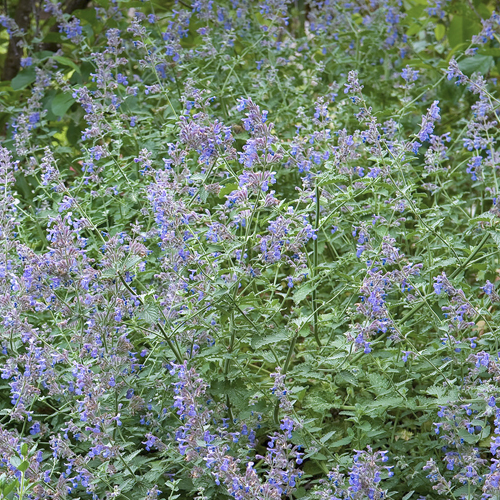
Green foliage and raceme inflorescent lavendar colored flowers.

Nepeta spp

Catmint, Catnip
Organization

Low-growing, flowering perennial from the mint family that produces many spikes of lavender flowers in the summer that are attractive to bees, butterflies, and hummingbirds. Soft, gray-green, aromatic foliage is attractive to cats. Nepeta species seed freely and may become invasive. Nepeta x faassenii is a sterile hybrid that is widely available and grows well in Northern California gardens. Available cultivars have flowers ranging from deep blue to white.

  • Water: Low
  • Light: Full SunPartial Shade
  • Soil: Most Soils
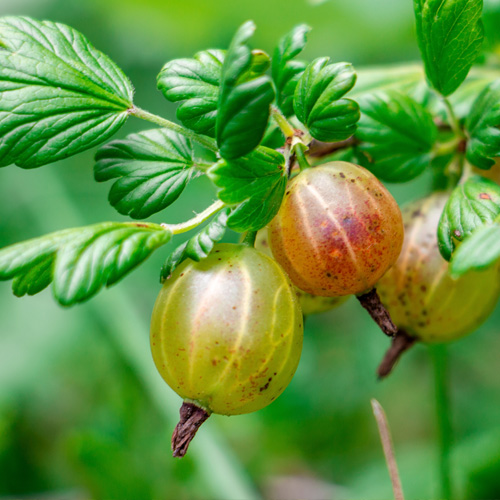
close up of yellow and red gooseberries with a dark brown spine on the bottom of each

Ribes spp

Currant, Gooseberry
Organization

Currants (without spines) and gooseberries (with spines) are grown for their graceful growth habit, attractive foliage, wonderful displays of pendulous flowers in winter-spring that are attractive to hummingbirds, and colorful fruit that provides a food source for birds. Most of the species listed are deciduous, going dormant in the summer months.

Examples: Some of the species suitable for California gardens, preferably with partial shade, are native to the Western United States:

  • aureum, golden currant (5-10’ x 3-6’), deciduous with small clusters of delicate yellow flowers and sprawling habit.
  • malvaceum, chaparral currant (4-8’ x 4-6’), deciduous with early clusters of pink flowers, a slightly vase-shaped habit, and more drought-tolerant than most species.
  • sanguineum var. glutinosum, pink-flowering currant (5-12’ x 5-12’), deciduous with maple-like leaves, a vase-shaped habit, and long pendulous clusters of pink, reddish, or white flowers in the spring; many available cultivars such as ‘Claremont’, ‘Tranquillon Ridge’, and ‘White Icicle’.
  • speciosum, fuchsia-flowered gooseberry (4-8’ x 6-10’), deciduous with spiny, arching stems and bright red fuchsia-like flowers along the stems in the spring that are attractive to hummingbirds.
  • viburnifolium, evergreen currant or Catalina perfume (2-4’ x 5-7’), evergreen groundcover that works well under oaks and can provide erosion control to slopes.
  • Water: Very LowLow
  • Light: Full SunPartial ShadeShade
  • Soil: Well Drained

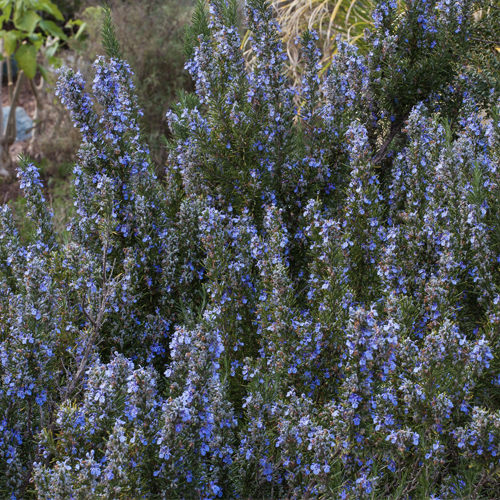
Rosmarinus officinalis

Rosemary
Organization

Classic Mediterranean flowering shrub with aromatic foliage, small blue-lavender flowers in late winter and spring that attract butterflies and bees. Thrives in full sun with well-drained soil and makes a good container plant. Rosemary is an excellent plant to have in the garden for harvesting fresh springs for use in cooking. Cuttings root readily, making it relatively easy to propagate new plants. Many named cultivars provide variation in size, growth form, flavor, and fragrance.

Examples: R. o. ‘Barbeque’ (3-5’ x 2-3’) has tall, upright stems that can be used as skewers for grilling; R. o. ‘Blue Spires’ (4-5’ x 2-3’); R. o. ‘Collingwood Ingram’ (2-3’ x 3-6’) is lower-growing with arching branches; R. o. ‘Huntington Carpet’ (1-2’ x 4-8’) is very low-growing; R. o. ‘Irene’ (1-2’ x 2-3’) has a mounding habit; R. o. ‘Prostratus’ (2’ x 4-8’) has a trailing habit that works well cascading over a retaining wall.

  • Water: Low
  • Light: Full Sun
  • Soil: Well Drained
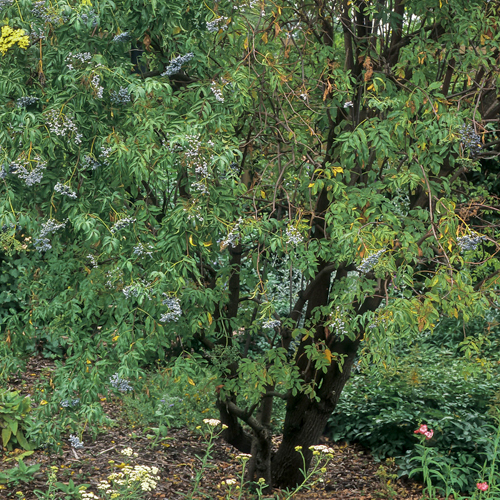
A tree with dark brown bark and willowy green leaves and blue elderberries

Sambucus spp

Elderberry
Organization

Fast-growing shrubs and small trees for sun or part shade that attract pollinators from far and wide to large clusters of cream flowers in spring, followed by berries in summer that provide food to many types of birds. Fruit can also be used for culinary purposes. While naturally fairly wild-looking, elderberries can handle being cut back to the ground in the winter or pruned to maintain size and shape.

Examples:

  • Blue elderberry (S. mexicana [nigra] spp. caerulea, 8-25’) is native from Oregon to Baja California and beyond.
  • Black elderberry (S. nigra, 20-30’) is native to Europe, North Africa, and Asia, and is available in nurseries in the form of many named cultivars. Cut leaf black elderberry (S. n. ‘Black Lace’, 8’ x 8’) has intense dark, fine foliage. Cut leaf elderberry (S. n. ‘Laciniata’, 10’ x 10’) has green leaves, and variegated black elderberry (S. n. ‘Marginata’, 6-12’) has variegated leaves.
  • Water: Low
  • Light: Full SunPartial Shade
  • Soil: Well Drained

Recommended Resources