Eagle Rock Gardens

BACK TO FULL TOUR

Garden Features

1

Drought Tolerant

2

California Natives

3

Drip Irrigation

4

Pesticide Free

5

Smart Irrigation Controller

6

Lawn-Free Landscaping

7

Wildlife Habitat

8

Fire Resistant

9

Plant Labels

10

Firescaping

Partner: Marin Water

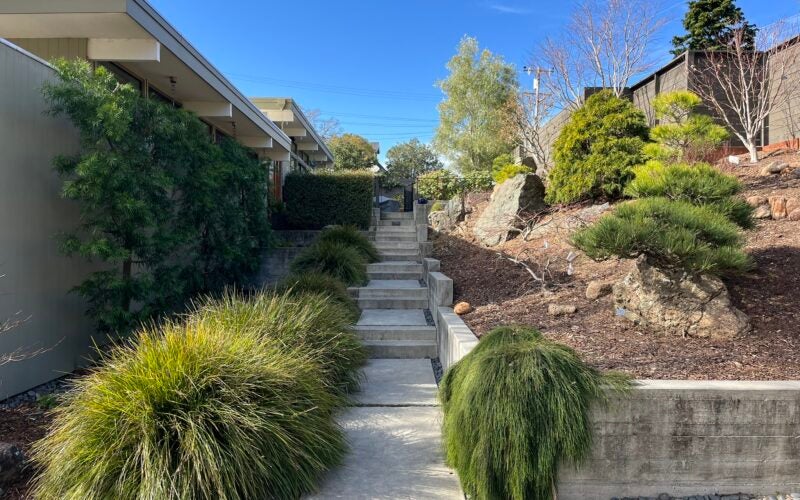
My house is a mid-century modern, which I bought in 2012 and did a complete remodel on. At that time, I was teaching the “Fire in Marin” class, a free two-hour seminar for Marin residents that I created and taught in conjunction with local fire agencies. I’d also completed my Marin Master Gardener training and had just founded its Aesthetic Pruning Guild, now in its 14th year. These were the three knowledge bases I drew upon in designing the garden of my new home.

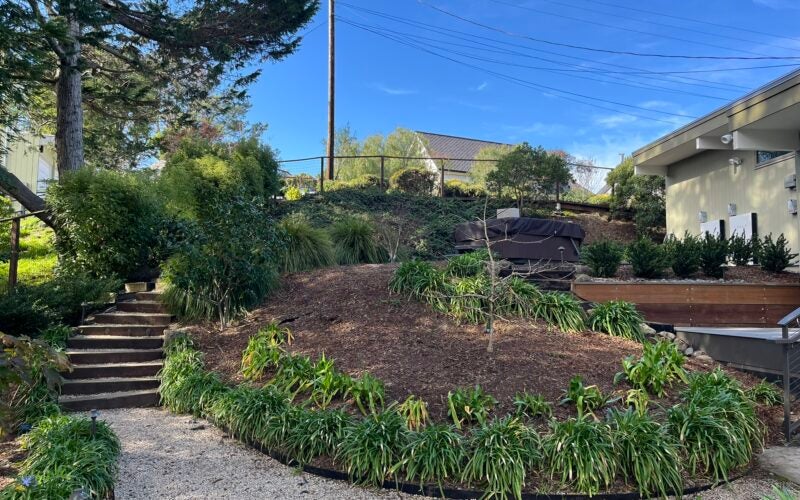
In 2014, I worked with Rich Radford of Garden Route to redesign the hardscape. The first thing we did was to remove the pool, which was old and not very functional. Secondly, I removed about 40 trees, mostly Monterey Pines and Modesto Ash that had grown up over the last 50 years when the landscape was not maintained. Denise Boughton of Boughton Landscaping, and Angel Rodriguez of Want Green Gardens, helped with plant selection and did the plant installations.

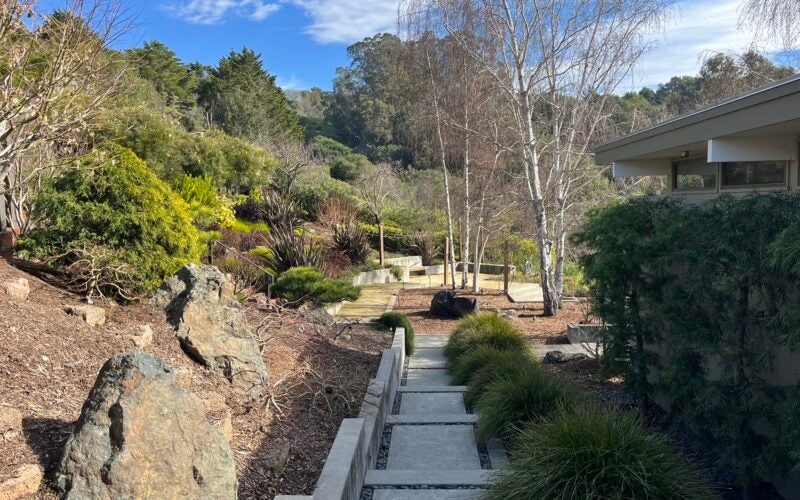
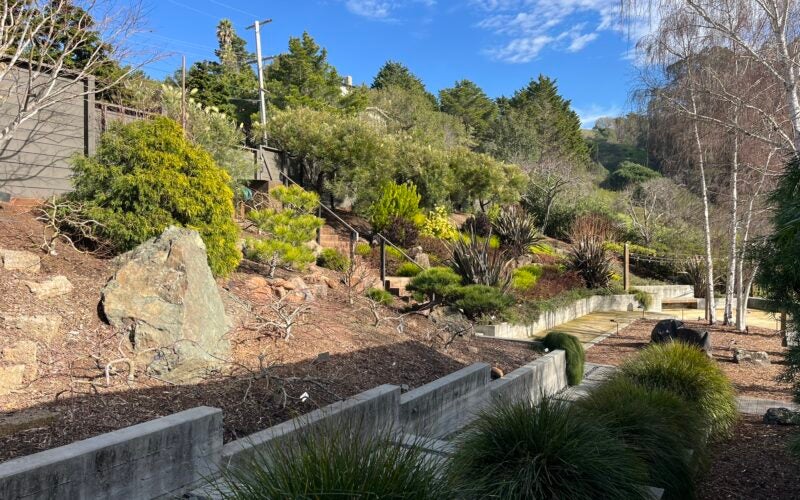
I used Bill Castellon, designer and builder of Japanese gardens to do the rock placement; he uses a crew of three and a large metal tripod to move multi-ton boulders. At first, I thought I had two or three on site but we found over 10 buried in ivy.

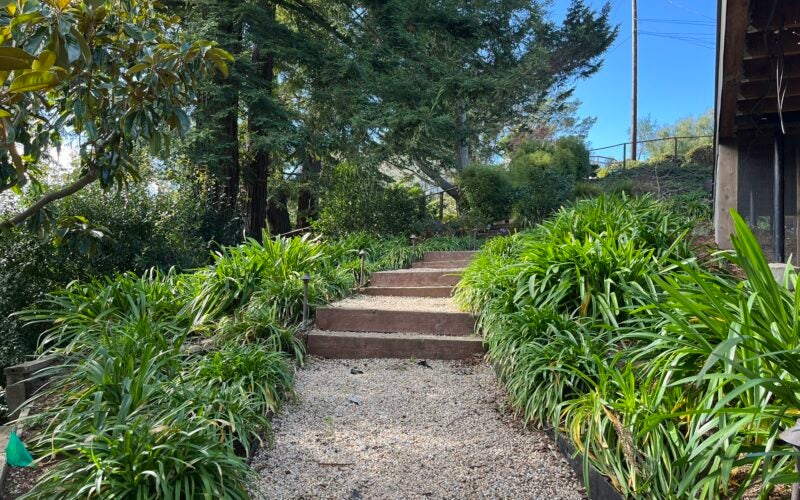
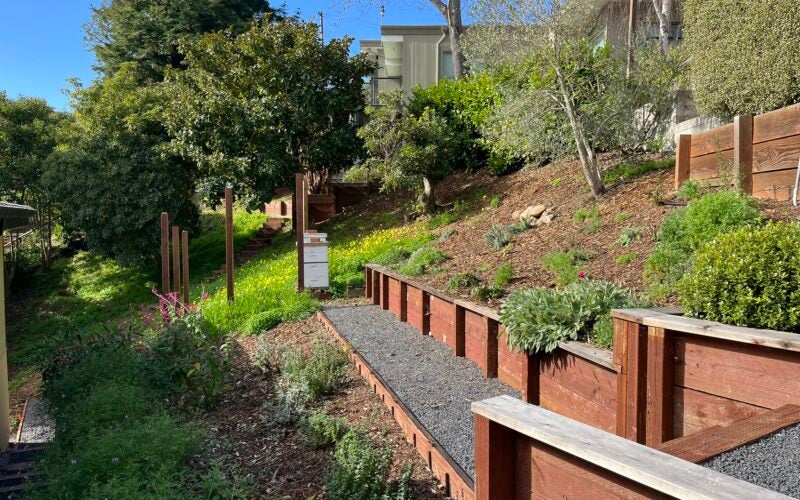
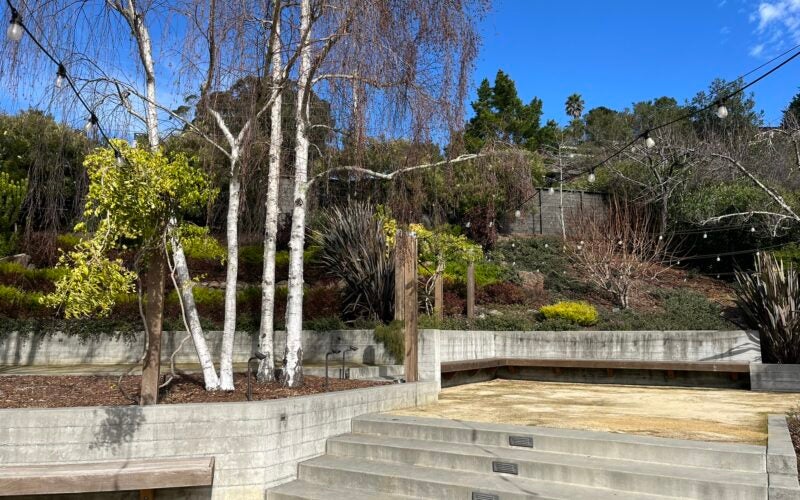
When complete, the garden contained many levels and spaces for both intimate and large gatherings. I named it Eagle Rock Gardens, and, as most gardens do, it has been evolving ever since.

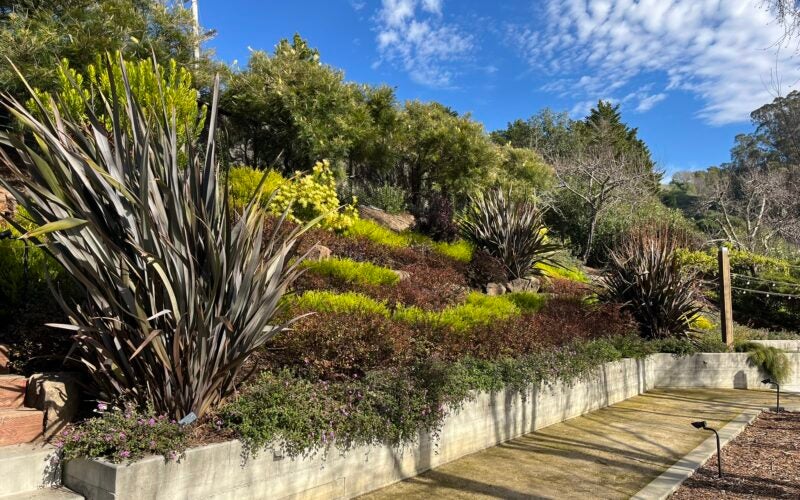
Most of the plants in the garden are drought tolerant. The garden uses a 16-valve, zoned drip irrigation system controlled by a smart clock that automatically adjusts irrigation times according to the local weather stations. That allows me to minimize water use while keeping plants healthy and attractive through our dry season.

Because I use the garden to host events in late summer, I mostly emphasize non-native flowering plants instead of natives, which go dormant in late summer.

The garden is well firescaped and loved by the local fire department. This includes a metal gate where the wooden fence connects to the garage and ¼ inch mesh screening below the deck to block embers.
Since I am an Aesthetic Pruner, many of my plants have been aesthetically pruned, including Japanese maples and Japanese black pines. I also have quite a few Grevillea Moonlight, a large Grevillea that flowers year-round and sustains hummingbirds and the honeybees from my hives. The bees also enjoy many kinds of salvia and many other long blooming perennials. A highlight of the garden is a small Japanese maple grove, which is composed of weeping and dwarf varieties. I also have a beneficials bed.

In 2024, I installed a prefab ADU which is fire-proof, with a metal roof and stucco siding.

I will have some of my professional colleagues on hand to answer questions.
Plants in this Garden
Plant Picker
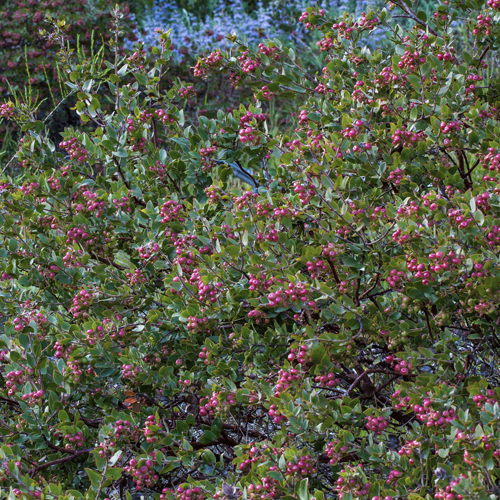
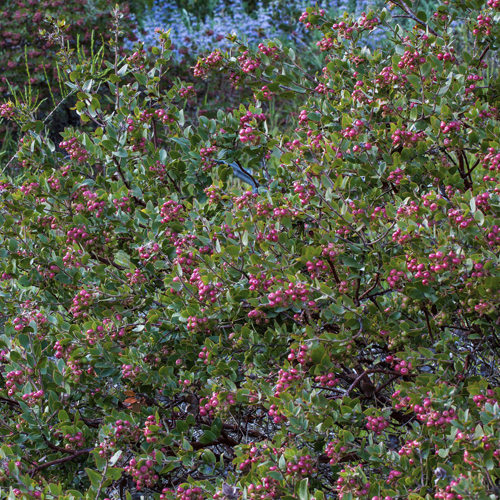
Manzanita bush with deep red fruits

Arctostaphylos spp & cvs

Manzanita, 'Dr. Hurd'
Organization

Manzanitas vary from carpet-forming groundcovers to small trees. Manzanitas have varying shades of striking, reddish brown bark and can provide structure to a garden. These plants have evergreen foliage, small white-to-pink, urn-shaped blossoms in late winter to early spring, and then small fruits that resemble tiny apples.

Groundcovers: A. ‘Emerald Carpet’ (1’ x 3-6’), A. ‘Pacific Mist’ (2-3’ x 6-8’), A. nummularia ‘Bear Belly’ (1’ x 3’), A. uva ursi ‘Radiant’ (6” x 4-6’), A. uva ursi ‘Wood’s Compct’ (1’ x 3’).

Shrubs: A. ‘Howard McMinn’ (5-7’ x 6-10’), A. ‘John Dourly’ (3-4’ x 5-6’), A. ‘Lester Rowntree’ (8-10’ x 10-15’), A. ‘Sunset‘ (5-7’), A. bakeri ‘Louis Edmunds’ (8-10’), A. manzanita ‘Sentinel’ (6-8’ x 5’), A. hookeri ‘Wayside’ (3′ x 8′).

Trees: A. manzanita ‘Dr. Hurd’ (10-15′)

  • Water: Very LowLow
  • Light: Full SunPartial Shade
  • Soil: Well Drained
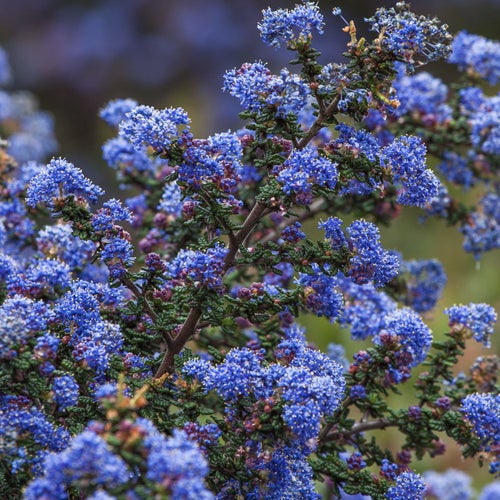
California Lilac ceanothus variety with clusters of small, vibrant blue flowers and dark green leaves

Ceanothus spp & cvs

Ceanothus
Organization

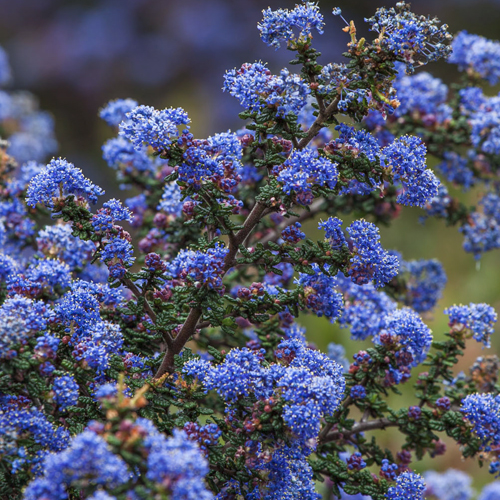
Ceanothus is a group of fast-growing, evergreen shrubs that vary from groundcovers to small trees, many of which are native to California. They provide a spectacular display of flowers in spring that will attract a multitude of pollinators. Flowers are followed by seeds that provide food for birds. The clusters of tiny flowers range from white to deep violet. Plants perform best with good drainage and minimal irrigation once established. Some do best in cooler coastal climates, but many thrive in hotter inland climates. Pay close attention to the mature size when selecting ceanothus to ensure that it has sufficient space for its natural form.

Groundcovers: C. ‘Centennial’ (1’ x 8’), C. gloriosus var. gloriosus ‘Anchor Bay’ (2’ x 8’), C. griseus var. horizontalis ‘Diamond Heights’ (variegated, 1’ x 4’), C. griseus var. horizontalis ‘Yankee Point’ (3’ x 12’), C. maritimus (2’ x 6’).

Shrubs: C. ‘Blue Jeans’ (6’ x 6’), C. Concha (6’ x 6’), C. ‘Dark Star’ (6’ x 8’), C. ‘Joyce Coulter’ (4’ x 12’), C. ‘Julia Phelps’ (8’ x 10’), C. cuneatus (8’ x 8’), C. thyrsiflorus ‘Skylark’ (4’ x 6’).

Large shrubs: C. ‘Frosty Blue’ (10’ x 12’), C. thyrsiflorus (20’ x 20’), C. t. ‘Snow Flurry’ (white flower, 20’ x 20’).

Trees: C. ‘Ray Hartman’ (15′ x 15′)

  • Water: Very LowLow
  • Light: Full SunPartial Shade
  • Soil: Well Drained
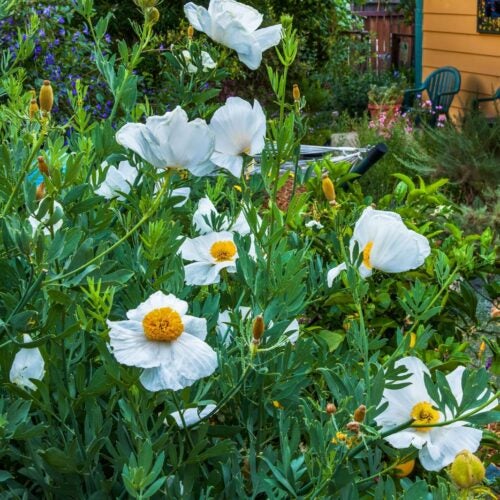
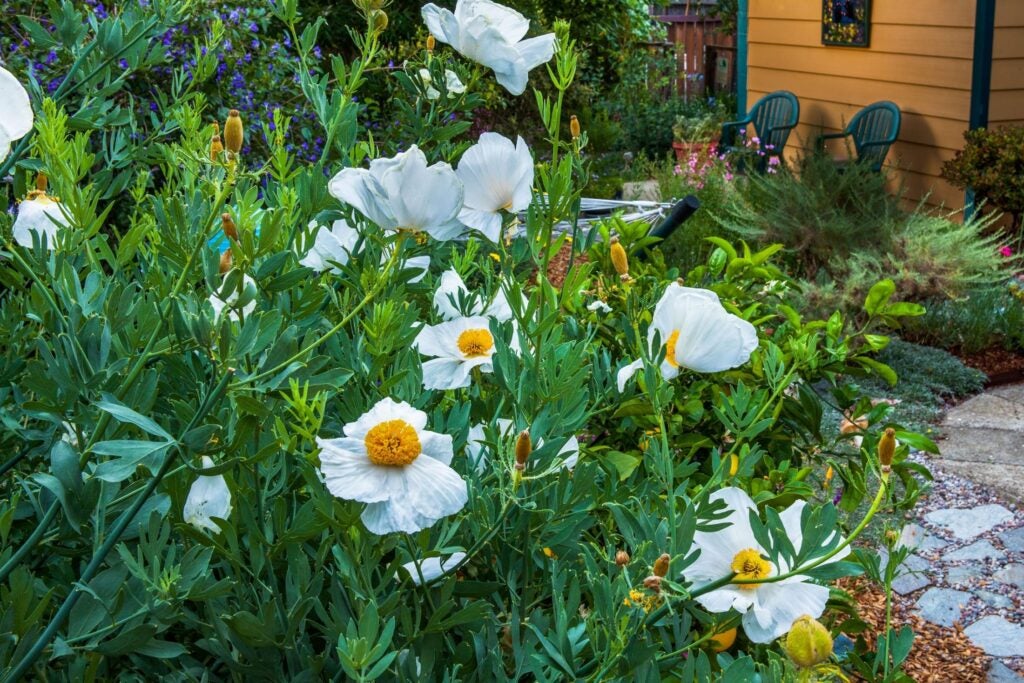
A shrub with vibrant green leaves and large, crinkled flowers with white flowers and yellow, spherical group of stamens.

Romneya coulteri

Coulter's Matilija Poppy
Organization

The Matilija poppy is a very large species of California poppy. Its flowers alone can grow to 7 inches in diameter. The shrub itself can be 6-10 feet tall and 2-4 feet wide. Plant near other shrubs that can outcompete it for space, such as ceanothus, coffeeberry, sugarbush, or flannelbush. Plant in sandy, well-drained soil and water carefully until established because it can suffer from both too much and too little once. Once established, however, the shrub is easy to grow and requires no watering at all. Can be cut back hard in late fall.

  • Water: Low
  • Light: Full Sun
  • Soil: Well Drained
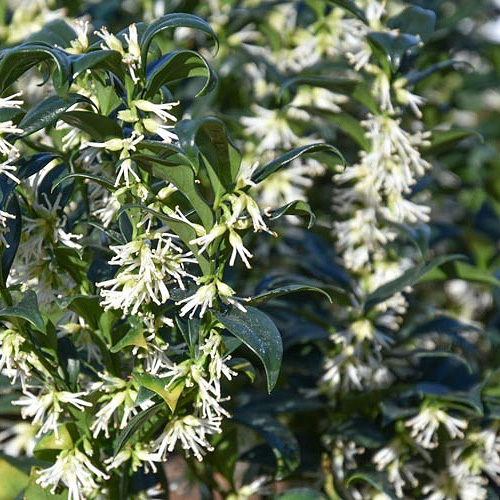
dark green leaves and clusters of tubular white flowers with long, thin petals

Sarcococca spp

Sweet Box
Organization

Shade-loving, low maintenance, evergreen shrub with glossy green leaves from the Himalayas and China. Small, fragrant, white flowers in late winter and early spring are followed by blue-black or red berries. S. hookerana humilis (1-2’ x 4-8’) is a low-growing form that spreads by underground runners. S. ruscifolia (4-6’ x 3-7’) is an upright shrub form.

  • Water: Low
  • Light: Partial ShadeShade
  • Soil: Loam

Recommended Resources

Gardening Tips

1

Test your irrigation system annually

As a professional landscaper, I emphasize testing your irrigation system at least twice a year.

2

Mulch 2" on bare ground

Mulch 2” in the garden where the ground is bare, making sure the crowns of woody trees are cleared to prevent crown rot.