California Cottage Garden
BACK TO FULL TOUR
Garden Features
Drought Tolerant
Edible Garden
California Natives
Drip Irrigation
Rainwater Harvesting System
Rain Garden
Sheet Mulching
Smart Irrigation Controller
Lawn Conversion
Lawn-Free Landscaping
Permeable Surfaces
Urban Homestead
Partner: Santa Rosa Water
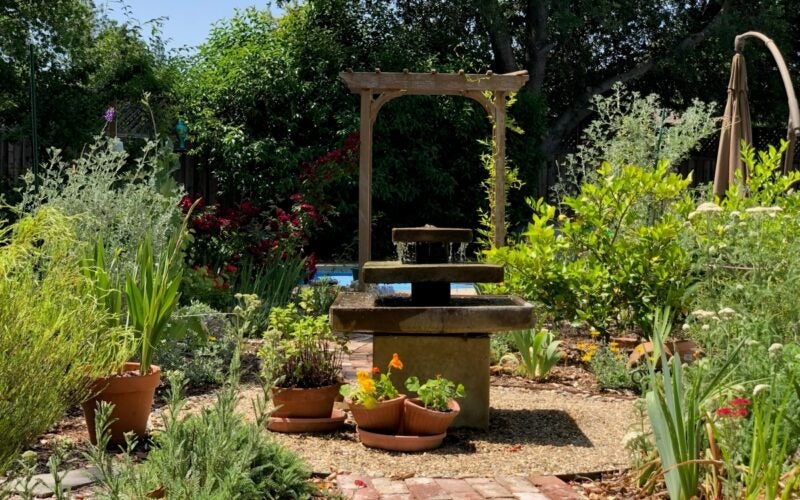
When we bought our mid-century home in east Santa Rosa in 2012, it had hardly been touched since the home was built in the ‘60s. Purchasing it from the estate of the original owner meant that we had all the original, overgrown landscaping to work with; a crab grass lawn, spindly roses in white rock beds, a thicket of overgrown brambles, and tangles of brush in every corner, none of which were being served by the ancient irrigation system.
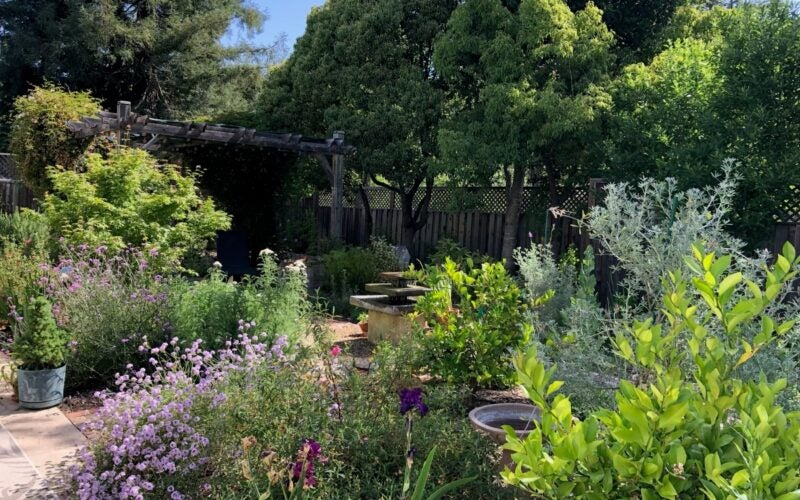
We knew that we wanted the garden to be a peaceful, soothing refuge. Someplace welcoming and restorative that would appeal to the local wildlife. We also wanted to fill it with delicious, edible flora. I have always wanted a proper kitchen garden to cut fresh herbs for cooking. So, we began the long, and slow process of the work ourselves, installing a pergola and the patio and rain barrels to capture water from the downspouts.
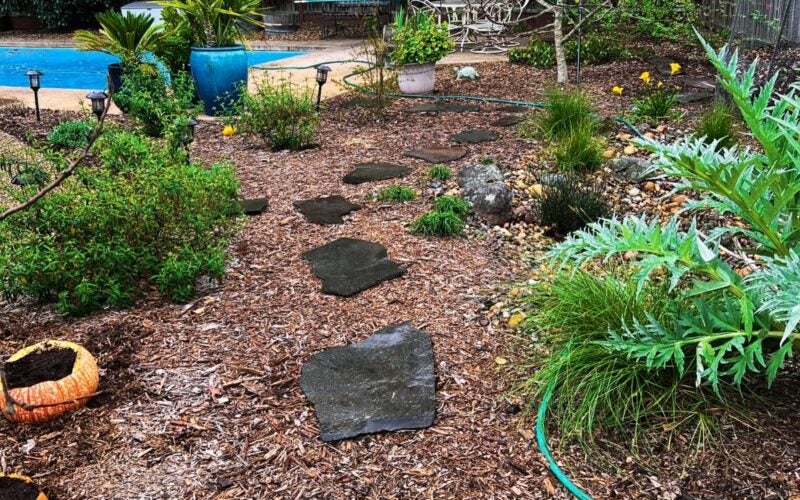
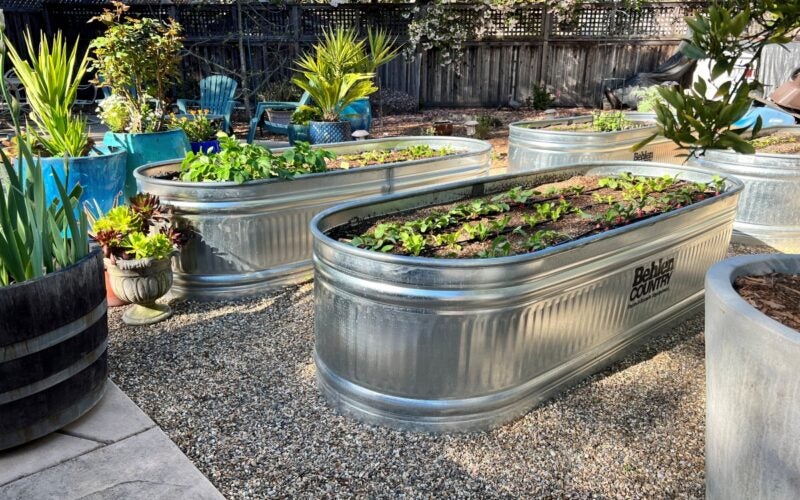
The original lawn was slowly removed over the years as we added raised beds, the kitchen garden, and fruit trees. With the ensuing droughts we traded out many of the plants for California natives and took the plunge in 2022 to work with Permaculture Artisans to bring more of our vision to life. That was when we installed the drip irrigation system, a rain basin, a fountain, the brick pathways, and added many pollinator favorites to the garden. The garden now holds over a dozen fruit trees – Mission fig, Fuyu persimmon, golden plum, persimmon, a multi-grafted apple, Eureka and Meyer lemon, Bears’ lime, ruby grapefruit, tangerine, blood orange, Hass and bacon avocados, mulberries, blackberries, California huckleberries, strawberries, blueberries, a variety of current bushes, artichokes, French sorrel, strawberry trees, pipevine, a variety of herbs, and 5 raised metal beds where we grow seasonal produce. Additionally, a friend of mine gave me a cutting from a rare miniature rose, Mableton, found at the McDonald Mansion and Ranch which we were delighted to add to the garden.
There is still more to do, more plants that will be replaced with California natives, more pathways to install, and the wait for plants to mature and thrive. It is a lesson in patience and a pleasure we are happy to share with you.
Plants in this Garden
-
Aristolochia californica California Pipevine
-
Carex spp Sedge
-
Ceanothus spp & cvs Ceanothus
-
Cercis occidentalis Western Redbud
-
Chondropetalum tectorum Cape Reed, Cape Rush
-
Dymondia margaretae Dymondia
-
Eriogonum spp Buckwheat
-
Lupinus spp Lupine
-
Ribes spp Currant, Gooseberry
-
Thymus praecox Creeping Thyme
-
Phacelia californica Rock Phacelia
-
Monardella villosa Coyote Mint
-
Eschscholzia californica California Poppy
-
Agastache spp Hyssop, Licorice Mint
-
Iris douglasiana & cvs Douglas Iris, Pacific Coast Hybrids
-
Achillea spp & cvs Yarrow
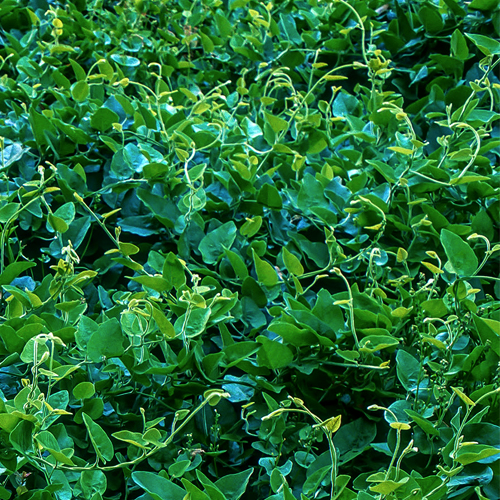
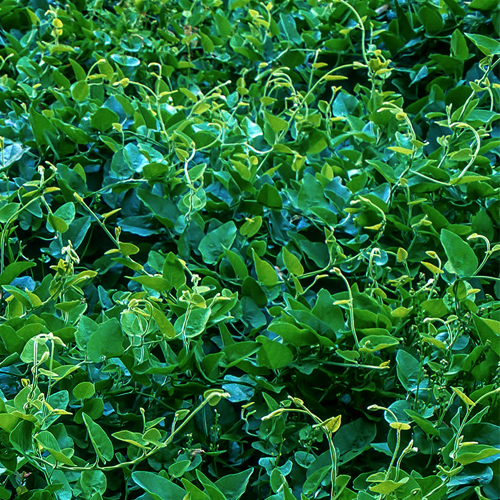
Important northern California native habitat plant that is the sole larval food source for the pipevine swallowtail butterfly. This deciduous vine grows naturally along stream banks and in woodlands and performs well under native oaks. Dutchman’s pipevine is relatively slow-growing and takes a few years to establish. Pendulous pipe-shaped flowers bloom in early spring, followed by soft, bright green, heart-shaped leaves. Best grown as a groundcover to provide protection for pipevine swallowtail larvae but will also twine up other plants and structures. The real show comes in late spring as larvae feed on the plant and grow into spectacular horned, black caterpillars with red spots!
- Water: Low
- Light: Partial ShadeShade
- Soil: Most Soils
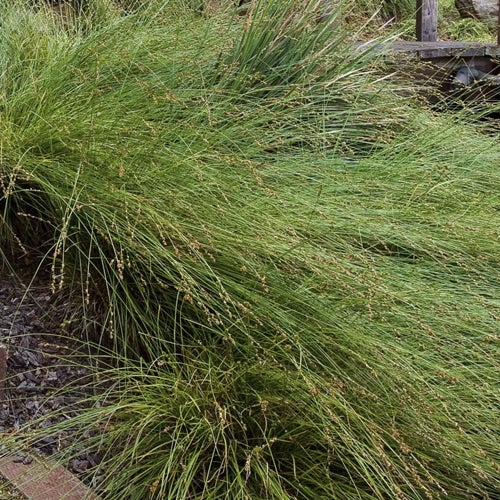
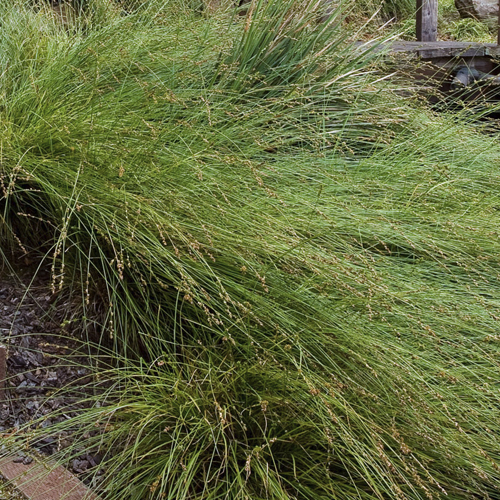
Large group of grass-like, clumping plants with low or moderate water needs that are native to many parts of the world and offer a variety of shapes, sizes, and foliage characteristics. Some sedges are ideal for use in rain gardens and swales, for stabilizing slopes, as a mass groundcover, or as part of a meadow planting. Two low-water examples that prefer some shade are Catlin sedge (C. texensis, 4-6” x 6-8”), a small, mat-like sedge native to central and southwestern North America, and Berkeley sedge (C. tumulicola, 1-2’ x 1-2’), a larger species native to western North America that tends to self-sow. Other species require more water and may be less suited to dry inland conditions. Some species can be invasive and difficult to control.
- Water: Low
- Light: Full SunPartial Shade
- Soil: Most Soils
Ceanothus is a group of fast-growing, evergreen shrubs that vary from groundcovers to small trees, many of which are native to California. They provide a spectacular display of flowers in spring that will attract a multitude of pollinators. Flowers are followed by seeds that provide food for birds. The clusters of tiny flowers range from white to deep violet. Plants perform best with good drainage and minimal irrigation once established. Some do best in cooler coastal climates, but many thrive in hotter inland climates. Pay close attention to the mature size when selecting ceanothus to ensure that it has sufficient space for its natural form.
Groundcovers: C. ‘Centennial’ (1’ x 8’), C. gloriosus var. gloriosus ‘Anchor Bay’ (2’ x 8’), C. griseus var. horizontalis ‘Diamond Heights’ (variegated, 1’ x 4’), C. griseus var. horizontalis ‘Yankee Point’ (3’ x 12’), C. maritimus (2’ x 6’).
Shrubs: C. ‘Blue Jeans’ (6’ x 6’), C. Concha (6’ x 6’), C. ‘Dark Star’ (6’ x 8’), C. ‘Joyce Coulter’ (4’ x 12’), C. ‘Julia Phelps’ (8’ x 10’), C. cuneatus (8’ x 8’), C. thyrsiflorus ‘Skylark’ (4’ x 6’).
Large shrubs: C. ‘Frosty Blue’ (10’ x 12’), C. thyrsiflorus (20’ x 20’), C. t. ‘Snow Flurry’ (white flower, 20’ x 20’).
Trees: C. ‘Ray Hartman’ (15′ x 15′)
- Water: Very LowLow
- Light: Full SunPartial Shade
- Soil: Well Drained
Western redbud is an ornamental, multi-trunked and deciduous, large shrub or small tree with year-round interest that provides a California native and very low-water alternative to the moderate-water Cercis canadensis. Magenta to rosy pink blossoms that resemble pea flowers cover bare branches in late winter to early spring. Apple green, heart-shaped leaves emerge to accompany the flowers. Over the summer, the leaves become more leathery and bluish green, and seed pods mature and remain into the winter months.
- Water: Very Low
- Light: Full SunPartial Shade
- Soil: Most Soils
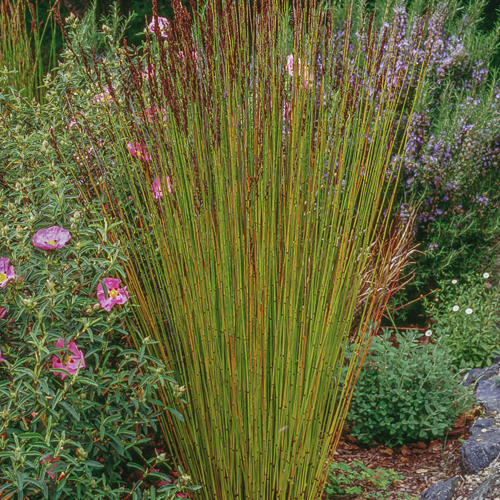
Clumping perennial with stiff, upright, jointed stems that contrast well with other plants. Tan-colored bracts form at the stem joints in summer and fall, providing a striking display. Two species from South Africa grow well in California gardens, especially in rain gardens and swales since they will tolerate both standing water and dry conditions, once established. C. elephantinum (4-5’ x 4-10’) is the larger of the two, C. tectorum (3-4’ x 3-5’) is more suitable for smaller spaces.
- Water: Low
- Light: Full SunPartial Shade
- Soil: Well Drained
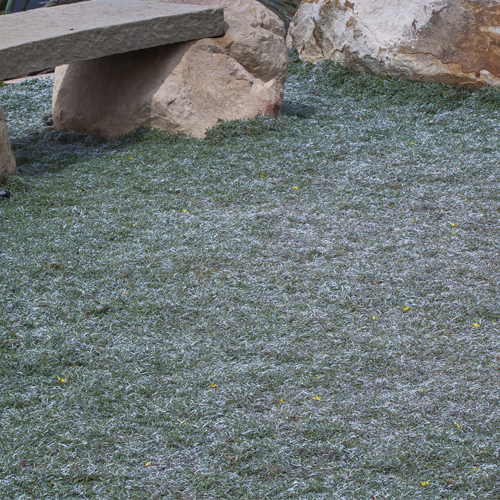
Perennial, low-growing, grayish-green groundcover from South Africa that grows to 2-3” and spreads to about 1-3’ over time. Yellow, daisy-like flowers add to the interest of this plant in the summer. Excellent between pavers or planted in mass to cover larger areas. Can withstand light foot traffic. Sensitive to frost damage in colder areas.
- Water: Low
- Light: Full SunPartial ShadeShade
- Soil: Well Drained
Diverse group of flowering, evergreen shrubs and perennials and annuals found throughout the western United States. Most available in nurseries are native to California and generally prefer drier sites. Flowers colors include yellow, white, pink, and red and are held above foliage in umbels that dry over time and are popular in flower arrangements. Buckwheats provide pollen and nectar for bees and butterflies, larval food for butterflies, seeds for birds, and cover for many creatures.
Examples:
- Santa Cruz Island buckwheat (E. arborescens, 3-4’ x 4-5’) densely mounded with white flowers.
- Saffron buckwheat (E. crocatum, 1-2’ x 2-3’) with chartreuse-yellow flowers and pale leaves.
- California buckwheat (E. fasciculatum, 2-3’ x 3’) and its low-growing cultivars such as E. f. ‘Warriner Lytle.’
- Catherine’s lace (E. giganteum, 4-8’ x 6-10’) with delicate, white flowers and soft pale leaves.
- Red-flowered buckwheat (E. grande var. Rubescens, 1-2’ x 2-3’) low-mounding perennial with rose-pink flowers, coastal bluff buckwheat (E. latifolium, up to 12” x 1-2’.)
- Sulfur buckwheat (E. umbellatum, 6-18” x 1-3’) with intense yellow flowers and cultivars E. u. var. aureum ‘Kannah Creek’ and E. u. Var. ‘Shasta Sulphur’.
- Water: Very LowLow
- Light: Full SunPartial Shade
- Soil: Well Drained
Popular group of annuals, perennials, and shrubs with distinctive divided leaves that are common throughout the western United States, including California. Pea-like flowers are displayed on spikes and are attractive to bees and other pollinators. Most native lupines are purple-flowered, while some are yellow. Provide full sun and good drainage and watch out for slugs and snails.
Examples: Silver bush lupine (L. albifrons, 3-4’ x 3-4’), prostate lupine (L. albifrons var. collinus, 12-18” x 12-18”), coastal bush lupine (L. arboreus) available with either blue or yellow flowers but can be invasive in some north coastal dunes, and blue-and-white lupine (L. bicolor) a low-growing, annual wildflower.
- Water: Very Low
- Light: Full Sun
- Soil: Well Drained
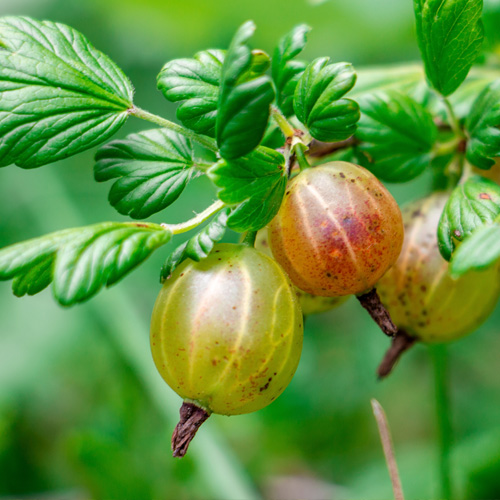
Currants (without spines) and gooseberries (with spines) are grown for their graceful growth habit, attractive foliage, wonderful displays of pendulous flowers in winter-spring that are attractive to hummingbirds, and colorful fruit that provides a food source for birds. Most of the species listed are deciduous, going dormant in the summer months.
Examples: Some of the species suitable for California gardens, preferably with partial shade, are native to the Western United States:
- aurem, golden currant (5-10’ x 3-6’), deciduous with small clusters of delicate yellow flowers and sprawling habit.
- malvaceum, chaparral currant (4-8’ x 4-6’), deciduous with early clusters of pink flowers, a slightly vase-shaped habit, and more drought-tolerant than most species.
- sanguineum var. glutinosum, pink-flowering currant (5-12’ x 5-12’), deciduous with maple-like leaves, a vase-shaped habit, and long pendulous clusters of pink, reddish, or white flowers in the spring; many available cultivars such as ‘Claremont’, ‘Tranquillon Ridge’, and ‘White Icicle’.
- speciosum, fuchsia-flowered gooseberry (4-8’ x 6-10’), deciduous with spiny, arching stems and bright red fuchsia-like flowers along the stems in the spring that are attractive to hummingbirds.
- viburnifolium, evergreen currant or Catalina perfume (2-4’ x 5-7’), evergreen groundcover that works well under oaks and can provide erosion control to slopes.
- Water: Very LowLow
- Light: Full SunPartial ShadeShade
- Soil: Well Drained
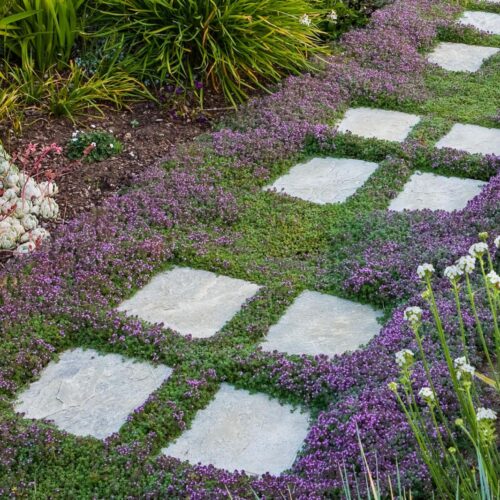
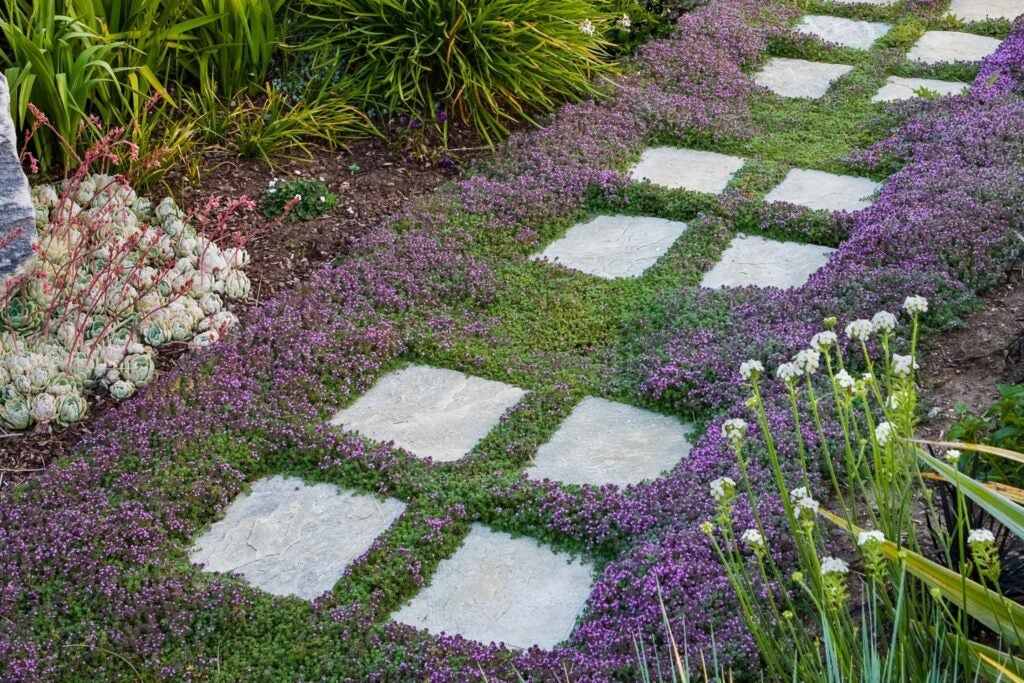
Creeping thyme grows 2-3 inches tall and spreads 1-3 feet wide and can withstand foot traffic, making it an excellent choice for a walkable groundcover or turf alternative. It has fragrant pinkish-purplish tubular flowers which bloom in the summer. It requires well-drained, preferably sandy or rocky soil.
- Water: Low
- Light: Full SunPartial Shade
- Soil: Well Drained
As a northern California coastal native, this plant is a favorite of many pollinators, including the endangered Mission blue butterfly from San Francisco. Its hairy leaves and stems give way to tiny blue or lavender flowers, each under a centimeter long. The funnel-shaped flowers grow in one-sided, coiled clusters that uncurl as the flowers open in sequence. It grows to about 1 foot tall and wide and prefers well-drained soil in sun to part shade.
- Water: Low
- Light: Full SunPartial Shade
- Soil: Well Drained
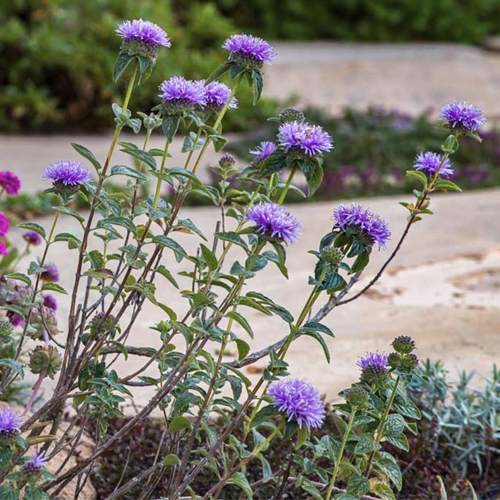
Coyote Mint is a compact perennial or sub-shrub with aromatic foliage and a sprawling habit. Dense heads of purple flowers form in spring-to-summer that are attractive to butterflies and other insects. The low-growth habit of coyote mint makes it an excellent choice for the front of a border, along the edge of a path, or beneath larger shrubs such as manzanita or ceanothus. Monardella villosa spp. franciscana ‘Russian River’ and Monardella villosa spp. villosa ‘Mark West’ are available selections from Sonoma County.
- Water: Very Low
- Light: Full Sun
- Soil: Most Soils
The California state flower, the California poppy, is a persistent native wildflower. It is best to plant seeds in fall when the rain begins. Once established, the poppy will reseed and spread across your yard. It is great for bees, birds, butterflies, and other pollinators as well as being deer resistant. Poppies prefer well-drained soils but can tolerate most soils including clay.
- Water: Very Low
- Light: Full SunPartial Shade
- Soil: Most Soils
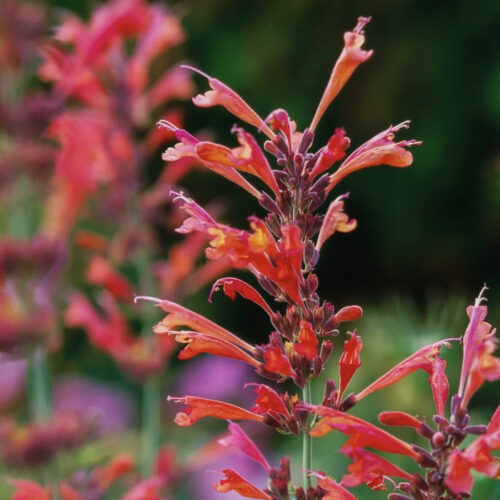
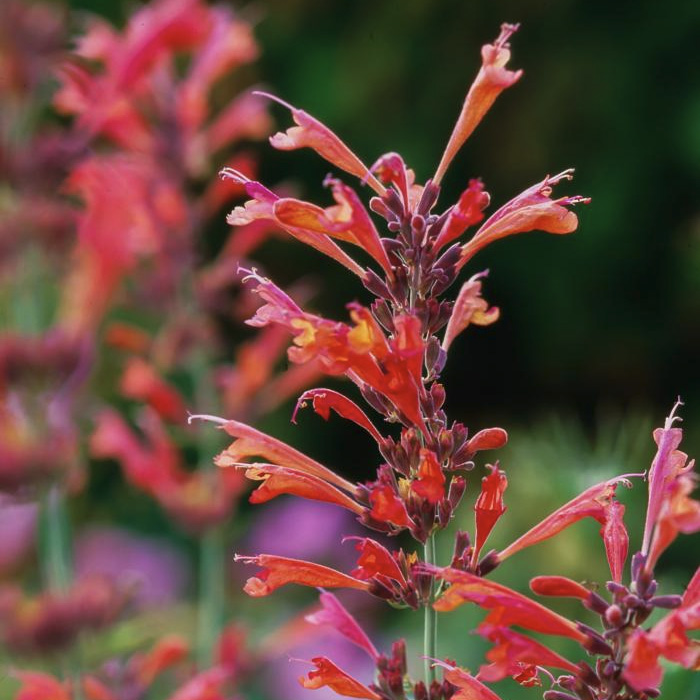
Shrubby perennial in the mint family with aromatic gray-green leaves from southern Arizona and northern Mexico. Tubular orange and lavender flowers from midsummer to fall. Can be short-lived in clay soils.
- Water: Low
- Light: Full SunPartial Shade
- Soil: Well Drained
Iris are a large and diverse group of perennials that grow from either bulbs or rhizomes. The California native Douglas iris and cultivars known as Pacific Coast Hybrids are an excellent choice for summer-dry gardens and understory plantings. Fall rain brings new growth in the form of thin, upright leaves, followed in late winter to early spring by the first blossoms. Douglas iris commonly ranges in color from lavender to purple, but cultivars are available in a range of colors including white and yellow. Established plantings can be lifted and divided after the first significant fall rain and either replanted or put into containers to share with others.
- Water: Low
- Light: Partial ShadeShade
- Soil: Most Soils
Yarrows are variable low-growing, spreading herbaceous perennials with finely divided leaves that inhabit many temperate regions in the Northern Hemisphere. Flattish clusters of flowers form in spring and well into summer and provide an important nectar source for pollinators and insects. Yarrow can help to stabilize slopes and is a good addition to the upper level of rain gardens and swales. Colors include yellow, pink, and red.
California native spp & cvs: A. millefolium (common yarrow), A. m. ‘Calistoga’, A. m. ‘Island Pink’, A. m. ‘Sonoma Coast’, A. m. ‘Terracotta’.
Other yarrows: A. filipendulina (fern leaf yarrow), A. f. ‘Coronation Gold’, A. ‘Moonshine’, A. tomentosa (woolly yarrow).
- Water: Low
- Light: Full SunPartial Shade
- Soil: Most Soils