Black House Pollinator Garden and Food Forest

BACK TO FULL TOUR

Garden Features

1

Drought Tolerant

2

Edible Garden

3

California Natives

4

Deer Resistant

5

Drip Irrigation

6

Pesticide Free

7

Rain Garden

8

Sheet Mulching

9

Smart Irrigation Controller

10

Lawn Conversion

11

Lawn-Free Landscaping

12

Permeable Surfaces

13

Wildlife Habitat

Partner: City of Petaluma

When we purchased our property in 2019, it had a grass lawn in front and a well-established garden with mature trees in back. Due to a fire later that year, we had to demolish the 1950s house and rebuild from the ground up. During the demolition and rebuild, we shut off the irrigation and let the existing water-intensive garden die. All hardscaping was removed, the entire plantable area of the property was sheet-mulched, and drip irrigation was installed. 

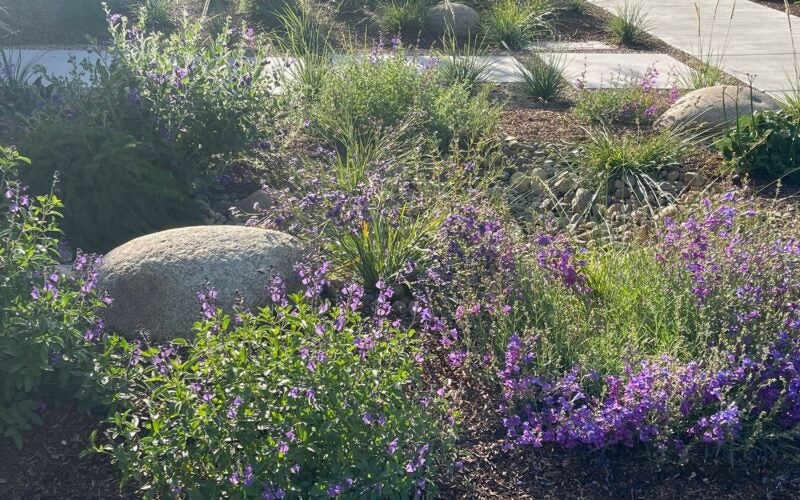
Two years later we had a brand-new home and a blank slate for planting. We hired Sebastopol’s Permaculture Artisans to help with landscape design. Though we initially envisioned a Japanese garden to complement the house’s architecture, we changed course after going on a water-wise garden tour organized by Petaluma nonprofit Daily Acts. Inspired by what we learned and guided by permaculture principles, we reimagined our property as an ecosystem. The more formal front area would become a drought-tolerant native pollinator garden, and the back would become a wilder food forest.

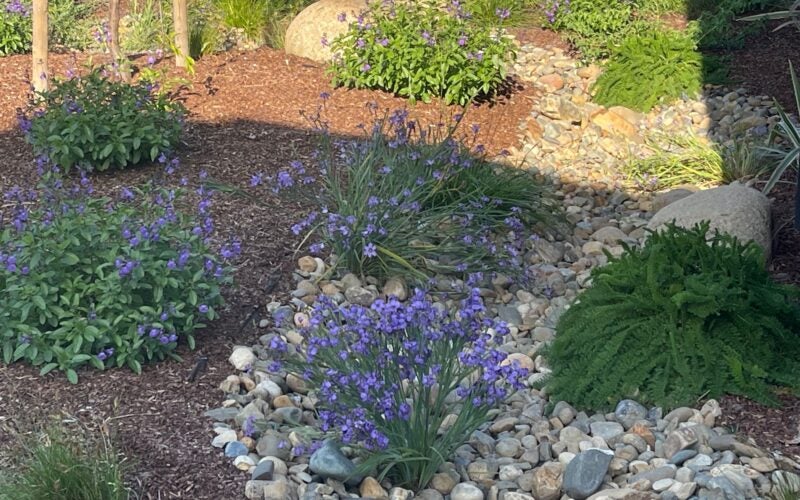
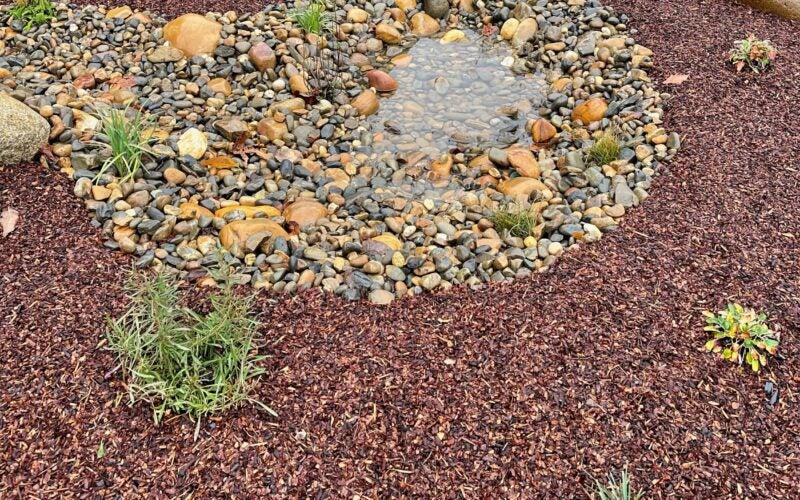
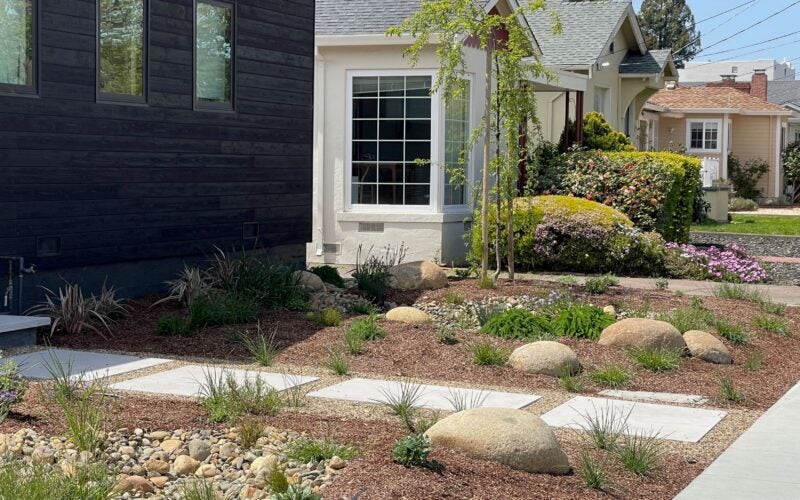
The front garden was designed around the pathway from the sidewalk to the front porch. The original concrete slabs were replaced with natural stone pavers and gravel, which minimize heat absorption and increase water absorption.  Two rain gardens fed by downspouts from the roof of the house were installed to manage stormwater. During heavy rains any overflow from the rain gardens is directed under the sidewalk and into the planted strips on the opposite side of the sidewalk. 

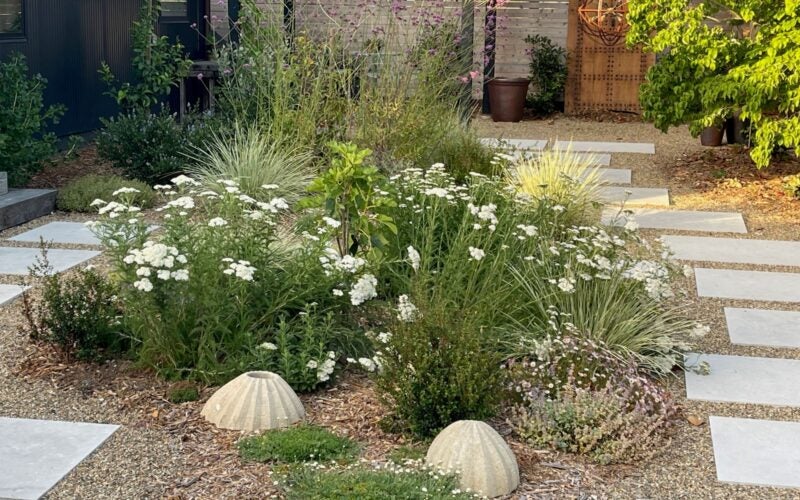
Drought-tolerant sedges and grasses in and around the rain gardens soften the edges of the hardscaping while improving soil health and stability. Hardy native perennials including yarrow, buckwheat, sage and penstemon provide year-round color and attract pollinators. The centerpiece of the front garden is a weeping Santa Rosa plum tree that explodes in spring with white flowers that pop against the black house— pollinators love it too!

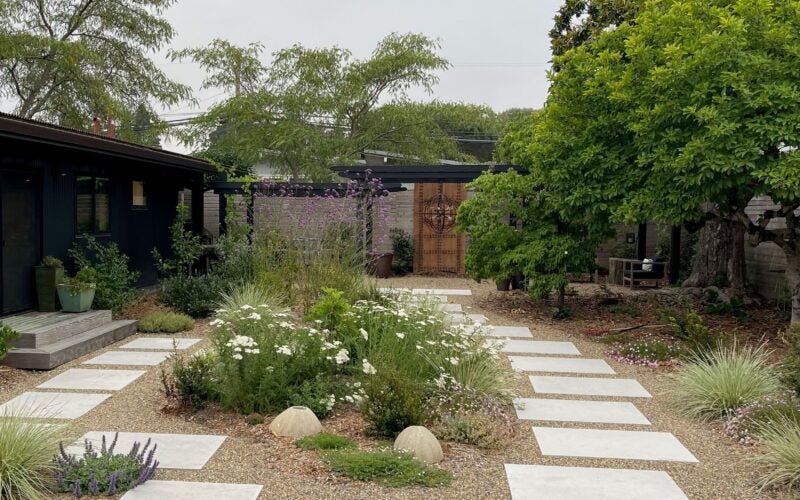
The food forest in back was laid out around the existing trees and structures. Natural stone pavers and permeable gravel are repeated here and serve to connect the guest house and pergola with the main house. Three distinct planting areas were laid out with a high density of plants in various heights in order to mimic a natural forest ecosystem.

The mature orange, dogwood and magnolia trees function as a shade canopy over the new plantings. The sub-canopy includes fruit (apple, stone, fig) and citrus trees (lemon, lime) that create shade and habitat for birds, pollinators, and insects, and improve air quality. Shrubs and edible berries including blueberry, currant, leucodendron and leucospermum thrive in the understory. The herbaceous layer features edible plants such as artichokes, comfrey, and salad burnet while culinary herbs like mentuccia, thyme and Vietnamese coriander serve as ground cover. Grape and passionfruit vines climb the structures, extending the vertical reach of the garden. Once established, these layers will act together as a carbon sink with moist, nutrient-rich soil, and produce food, flowers and herbs for our family, friends and neighbors.
Plants in this Garden

Plant Picker
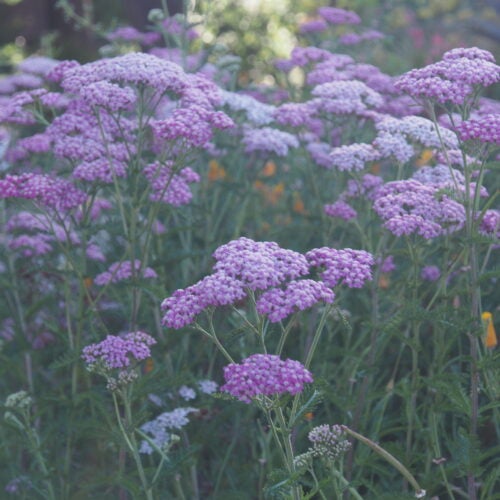
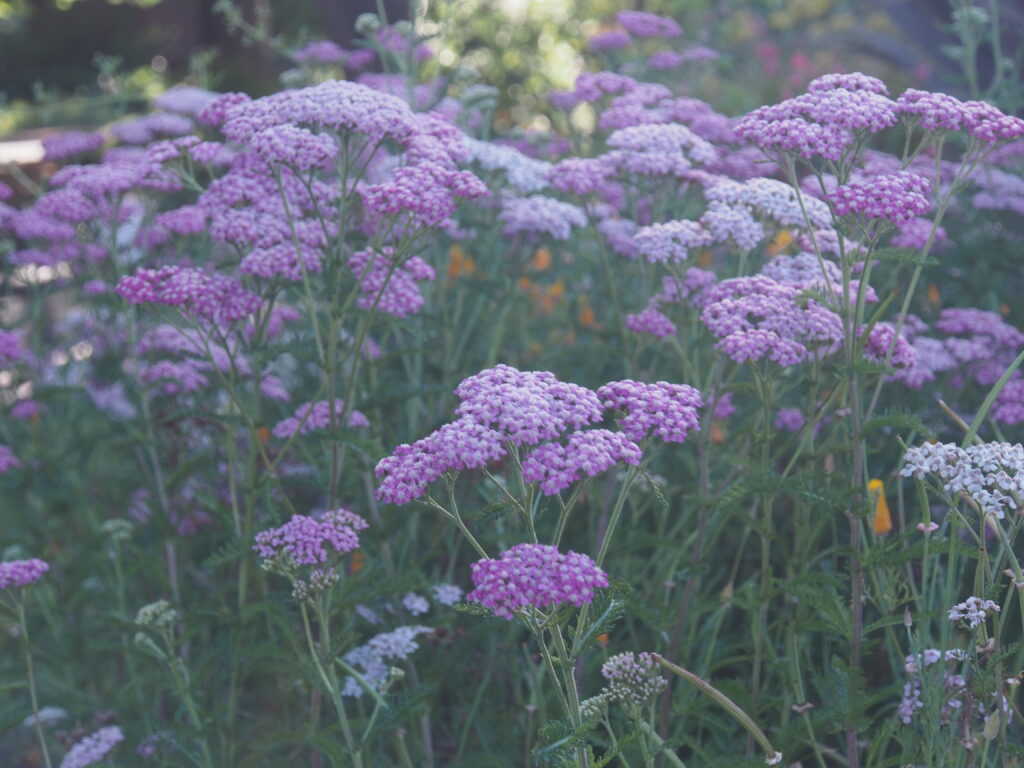
Purple yarrow.
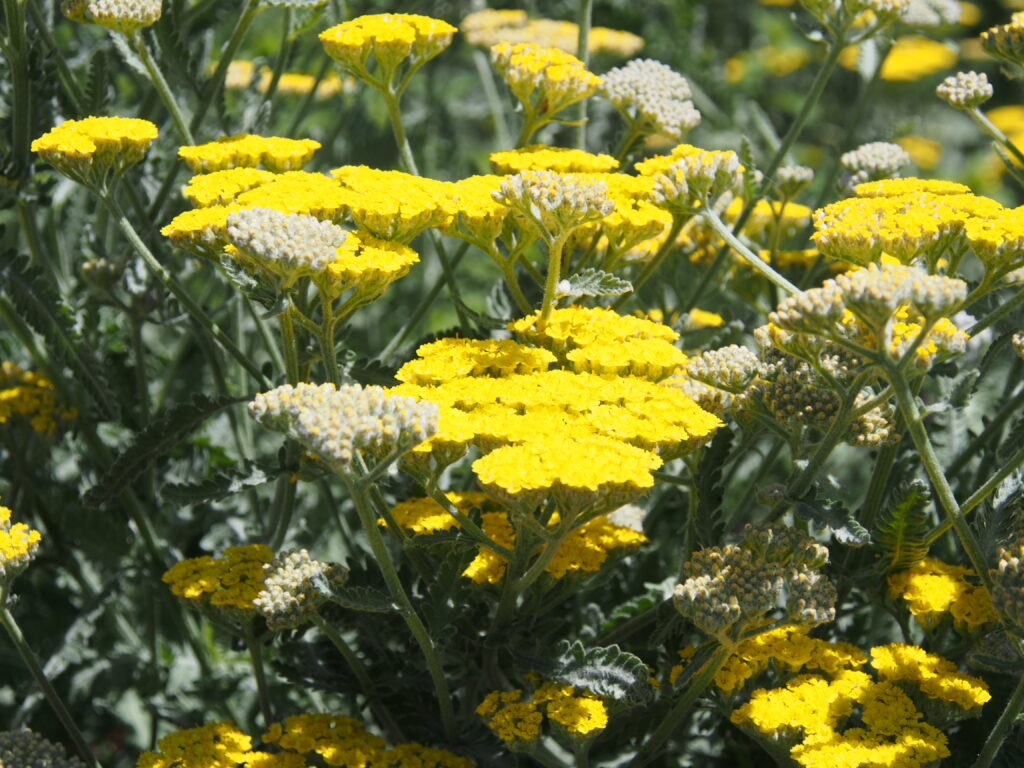
Corymb inflorescent yellow yarrow flowers on gray-green leaves and stems
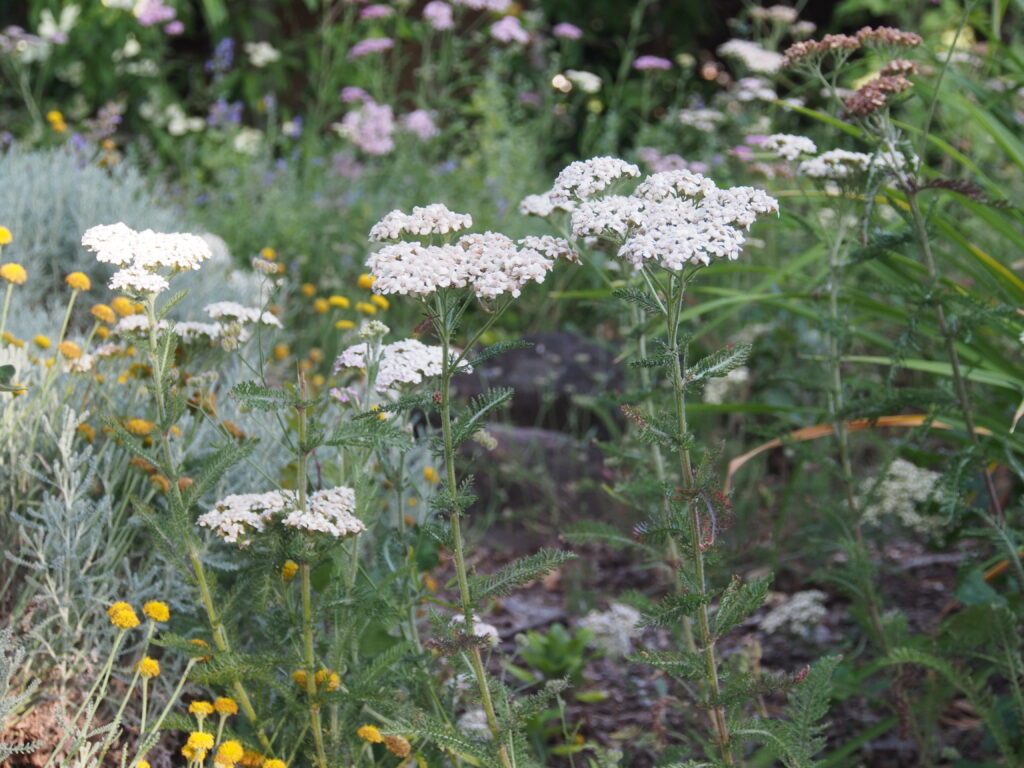
White yarrow.
Yellow and white yarrow.

Achillea spp. & cvs.

Yarrow
Organization

Yarrows are easy to grow, low-growing, spreading herbaceous perennials with finely divided aromatic leaves that inhabit many temperate regions in the Northern Hemisphere, including California. Abundant flowers rise above the foliage in spring and well into summer and provide an important nectar source for pollinators and insects. Yarrow can help to stabilize slopes and is a good addition to the upper level of rain gardens and swales. It is also a good groundcover plant for lawn replacement and creating native meadows. Colors include white, yellow, pink, and red.

California native species & cultivars: A. millefolium (common yarrow), A. m. ‘Calistoga’, A. m. ‘Island Pink’, A. m. ‘Sonoma Coast’, A. m. ‘Terracotta’.

Other yarrows: A. filipendulina (fern leaf yarrow), A. f. ‘Coronation Gold’, A. ‘Moonshine’, A. tomentosa (woolly yarrow).

  • Water: Low
  • Light: Full SunPartial Shade
  • Soil: Most Soils
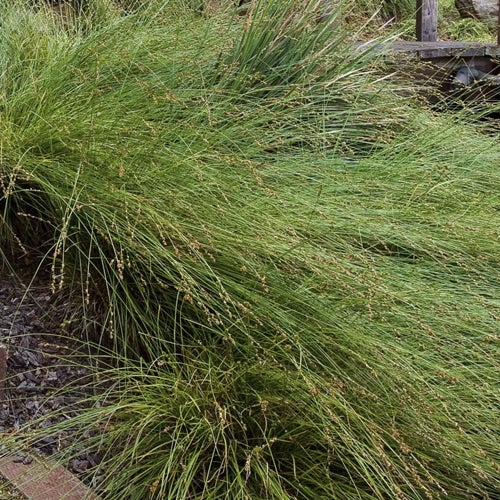
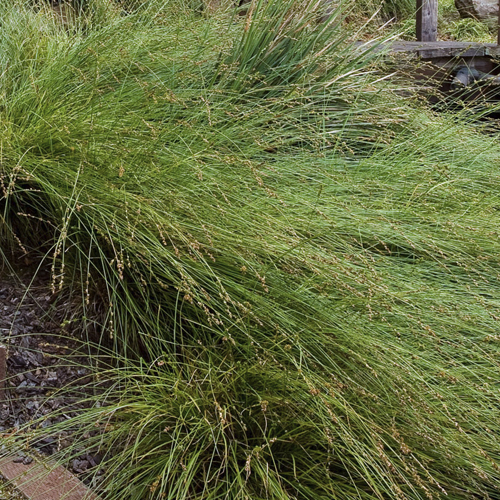
Sedge grass with light green stems and light brown tips
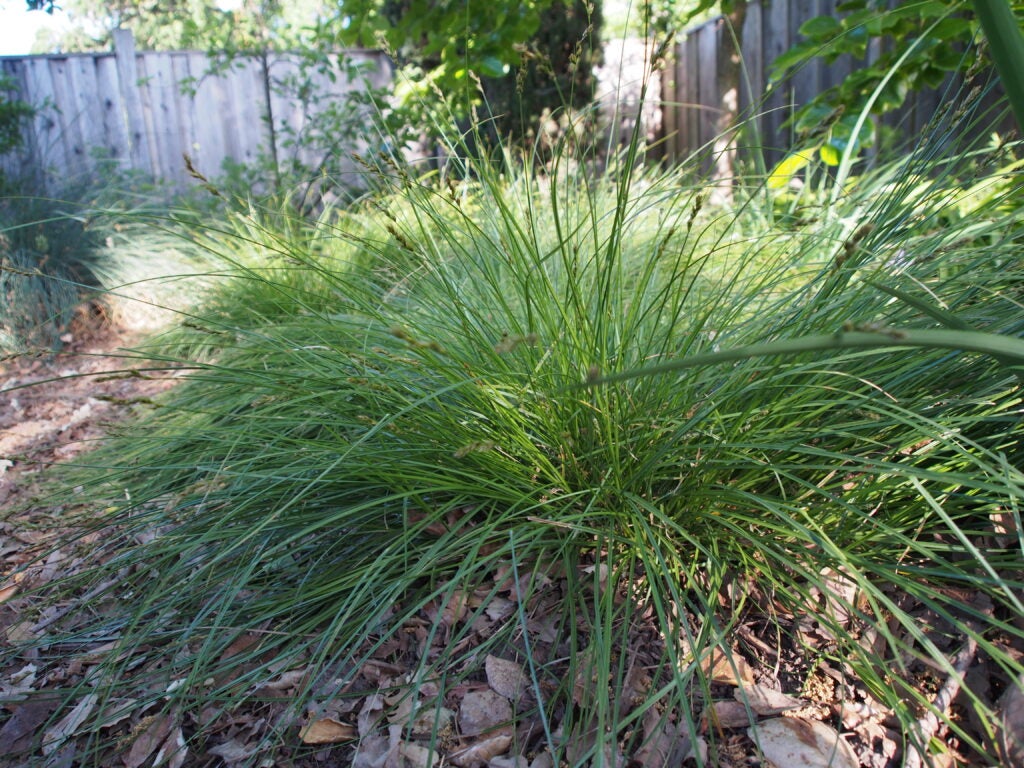
Green bunch grass shown in a backyard natural garden setting

Carex spp.

Sedge
Organization

Large group of grass-like, clumping plants with low or moderate water needs that are native to many parts of the world and offer a variety of shapes, sizes, and foliage characteristics. Some sedges are ideal for use in rain gardens and swales, for stabilizing slopes, as a mass groundcover, or as part of a meadow planting. Two low-water examples that prefer some shade are Catlin sedge (C. texensis, 4-6” x 6-8”), a small, mat-like sedge native to central and southwestern North America, and Berkeley sedge (C. tumulicola, 1-2’ x 1-2’), a larger species native to western North America that tends to self-sow. Other species require more water and may be less suited to dry inland conditions.

  • Water: Low
  • Light: Full SunPartial Shade
  • Soil: Most Soils
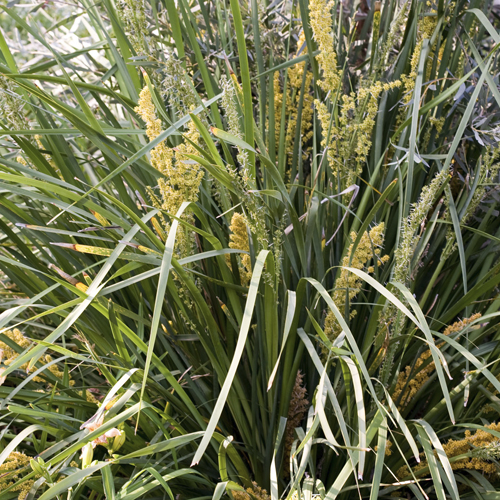
Green, slender grass-like leaves form tufts of fluffy-looking yellow fllowers
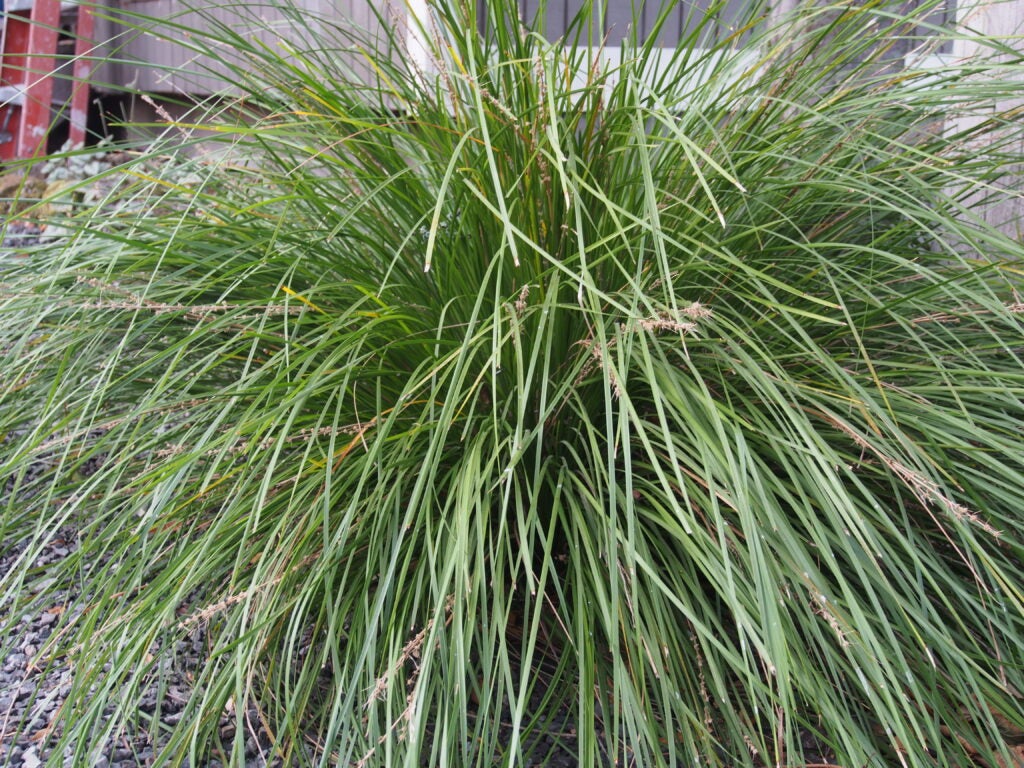
Bunch grass shown in a garden setting

Lomandra longifolia

Mat Rush
Organization

Clumping, grass-like Australian evergreen perennial that grows 4-5’ tall and wide. Adapted to various soil and sun exposure conditions. Flowers in spring and into summer with fragrant clusters of smaller yellow flowers. L. l. ‘Breeze’ is a smaller cultivar that grows 2-3’.

  • Water: Low
  • Light: Full SunPartial Shade
  • Soil: Well Drained
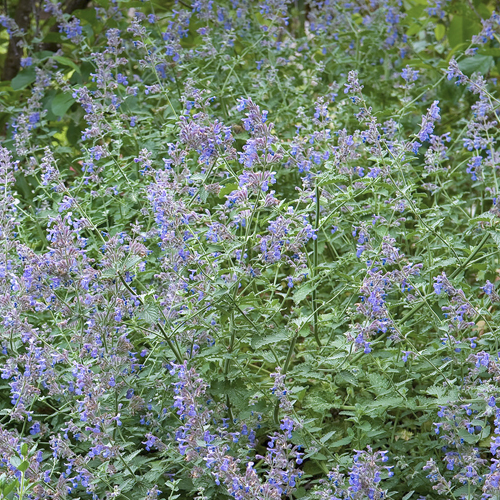
Green foliage and raceme inflorescent lavendar colored flowers.

Nepeta spp.

Catmint
Organization

Low-growing, flowering perennial from the mint family that produces many spikes of lavender flowers in the summer that are attractive to bees, butterflies, and hummingbirds. Soft, gray-green, aromatic foliage is attractive to cats. Nepeta species seed freely and may become invasive. Nepeta x faassenii is a sterile hybrid that is widely available and grows well in Northern California gardens. Available cultivars have flowers ranging from blue to purple.

  • Water: Low
  • Light: Full SunPartial Shade
  • Soil: Most Soils
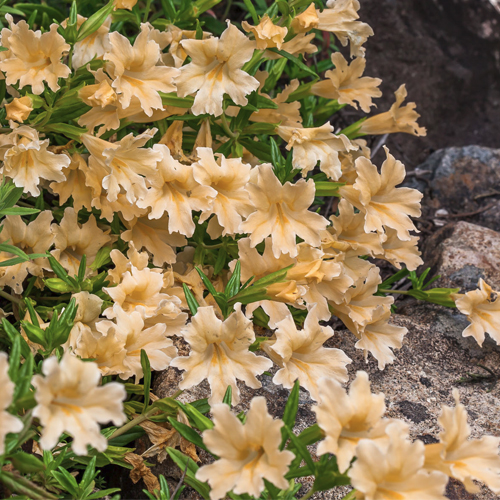
A group of small, peach-colored trumpet flowers with green leaves.
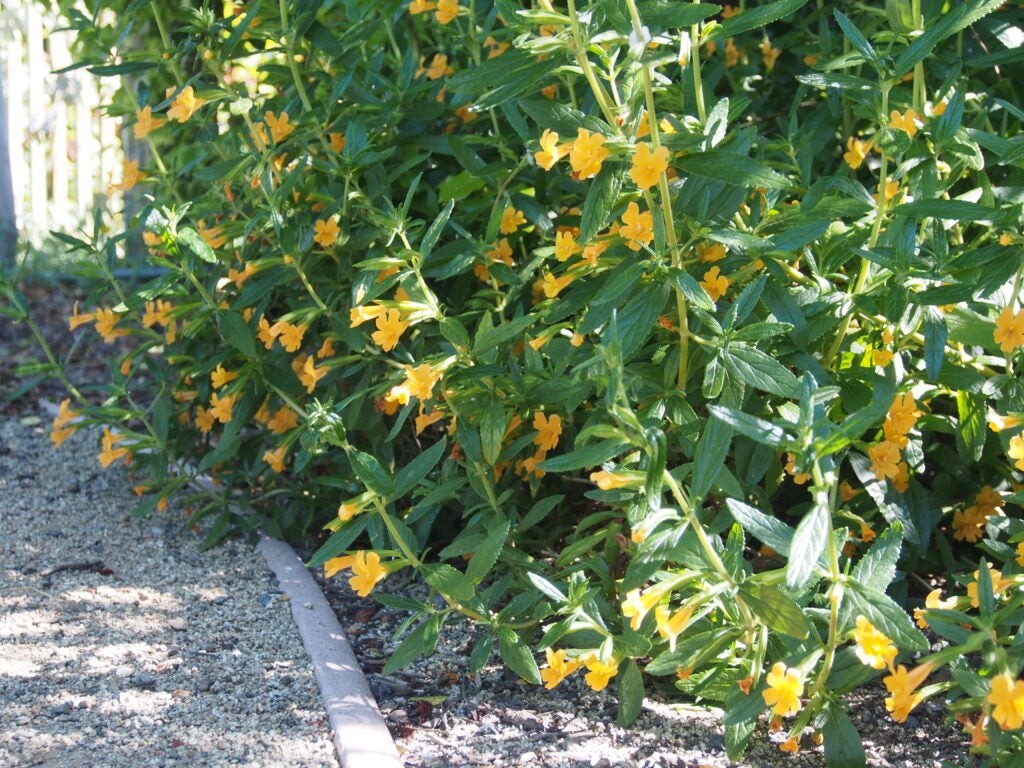
Orange flowers bloom on small shrubs along a path in a garden setting

Mimulus (Diplacus) aurantiacus and hybrids

Sticky Monkey Flower
Organization

The orange, tubular flowers of sticky monkey flower can be enjoyed in many locations throughout Sonoma and Marin counties in spring and summer, a testament to how well this plant is adapted to hot and dry conditions. The slightly sticky leaves benefit from light pinching and pruning to maintain an attractive appearance and support for the beautiful flowers. Many hybrids provide color variation. Do not confuse this plant with the red-flowered scarlet monkey flower (Mimulus cardinalis), an herbaceous riparian plant that requires regular water to thrive.

  • Water: Very Low
  • Light: Full SunPartial Shade
  • Soil: Sandy
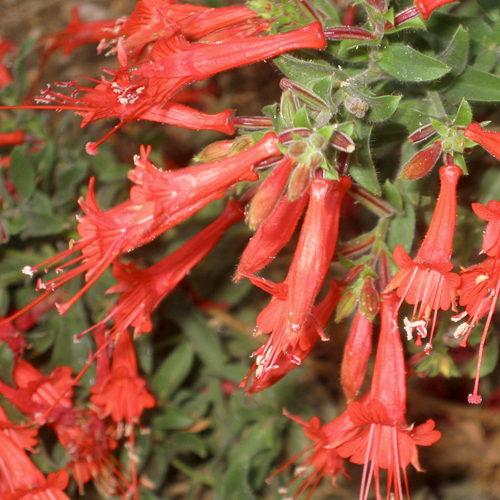
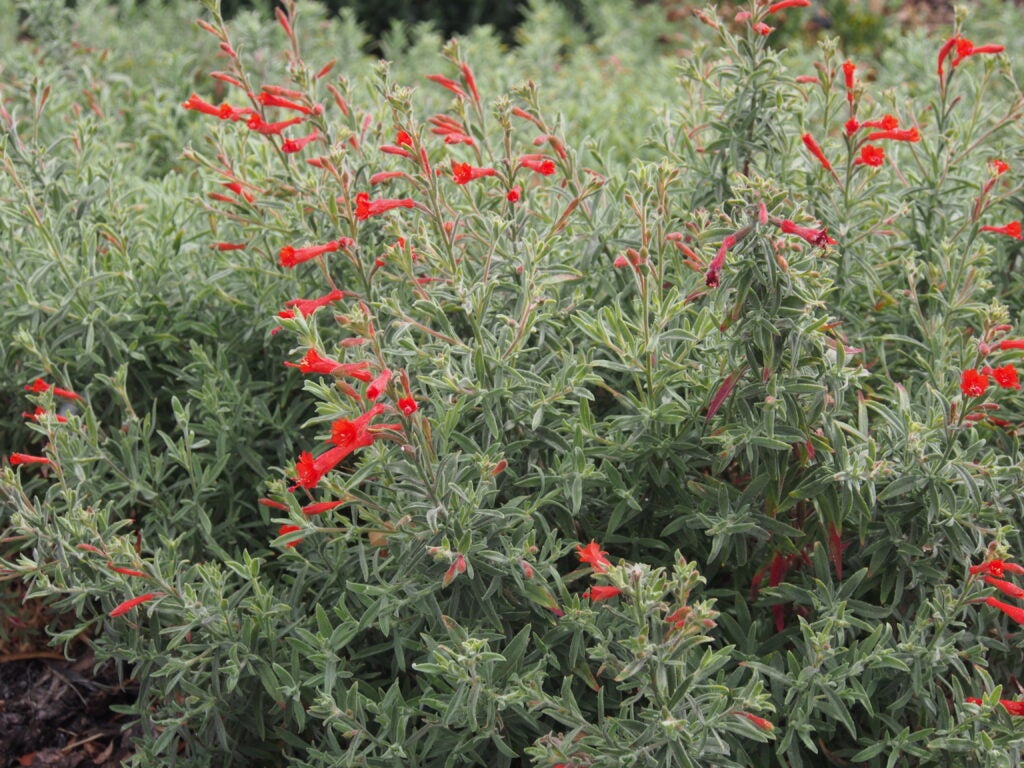
Red tubular flowers with white-tipped stamens sticking out

Epilobium [Zauschneria] canum

California Fuchsia
Organization

California Fuchsia (Epilobium canum) is a beautiful native perennial groundcover to sub-shrub of the California foothills and coastal areas. It is a perennial plant, notable for the many bright red flowers in summer and autumn. They tend to dormant in the winter, which is a good time to prune the old foliage to encourage new growth in spring. Easy to grow, will do best and flower most profusely in full sun. It can spread by seed and by rhizomes. Great for attracting hummingbirds. This plant is on several fire-resistant plant lists, including FireSafe Marin and County of San Diego.

  • Water: Low
  • Light: Full Sun
  • Soil: Well Drained
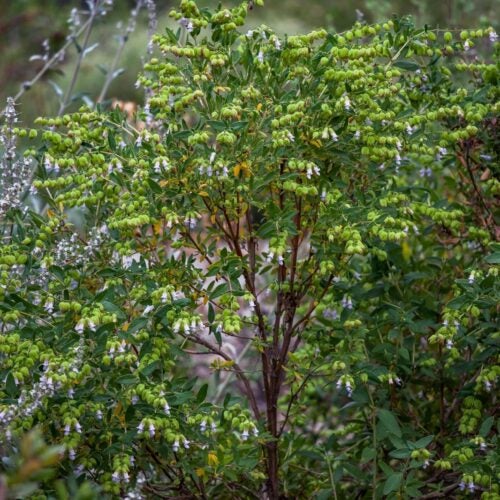
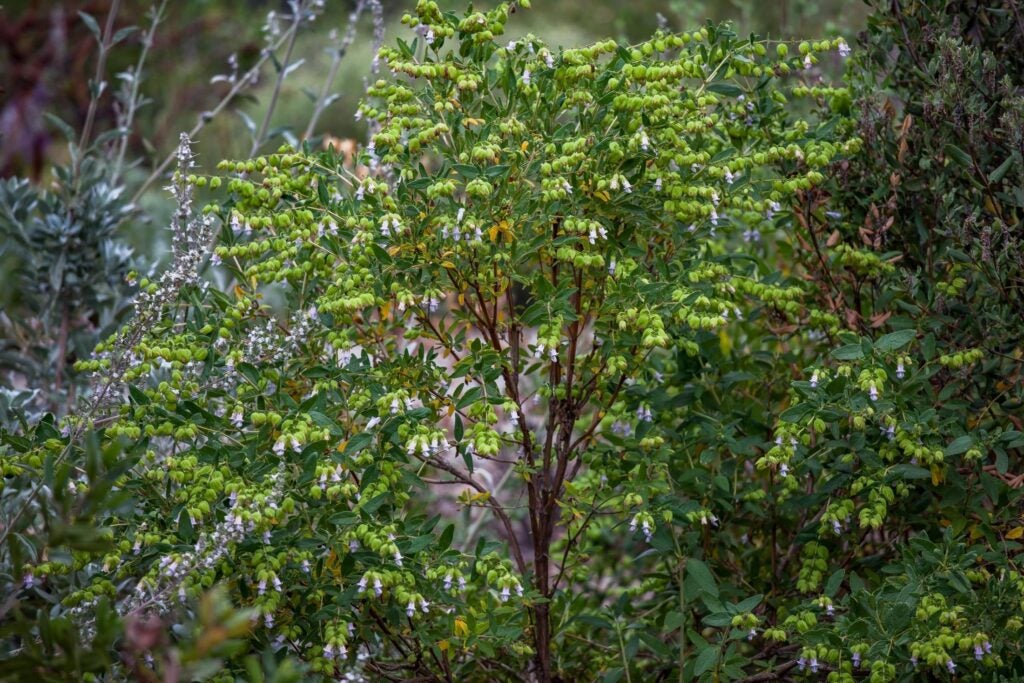
A shrub with brown-red stems and green foliage

Lepechinia calycina

Pitcher Sage
Organization

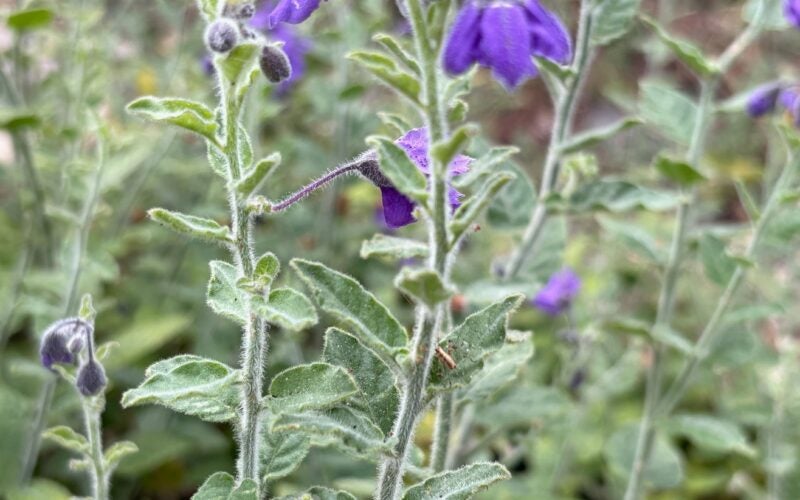
This native shrub has aromatic, softly hairy, lance-shaped to oval, gray-green to yellowish green leaves. Its flowers, which bloom in spring, are white with a lavendar tint. It grows 3-8 feet tall and 3-6 feet wide. If kept dry, it may drop leaves in the summer. It prefers sun along the coast but light shade inland and thrives in most well-drained soils.

  • Water: Low
  • Light: Full SunPartial Shade
  • Soil: Well Drained
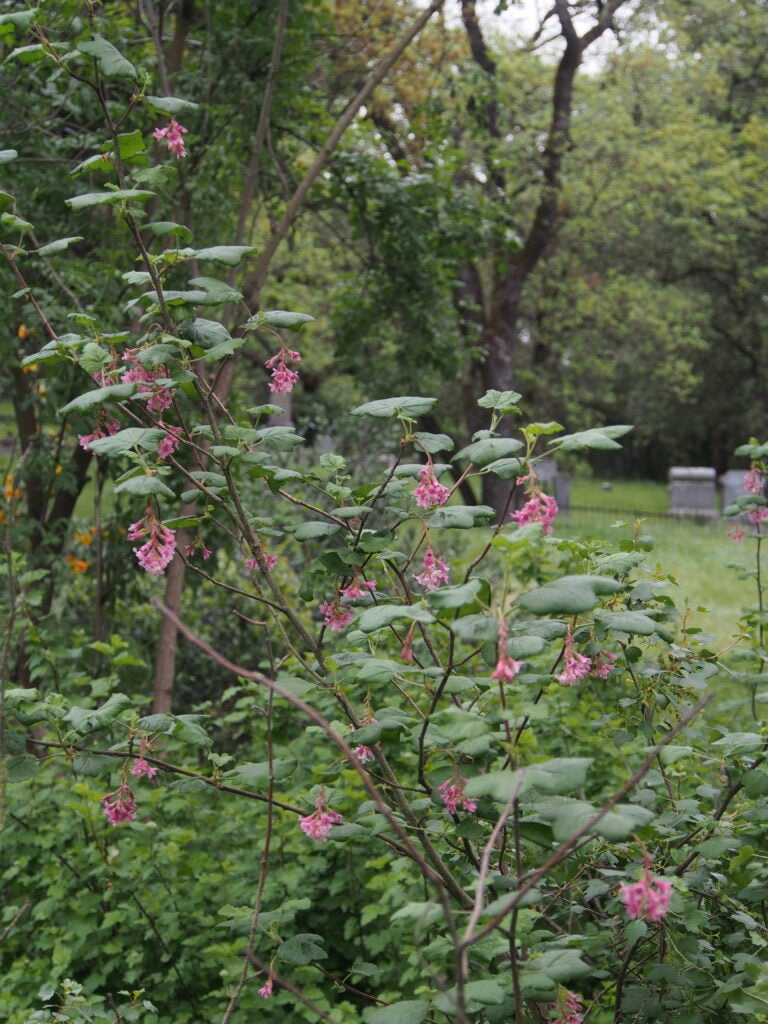
Green shrub with maple-like leaves and dangling clusters of pink flowers in a natural setting and an oak tree in the background
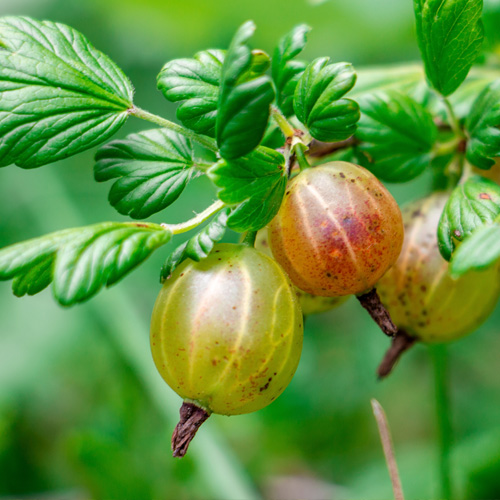
close up of yellow and red gooseberries with a dark brown spine on the bottom of each
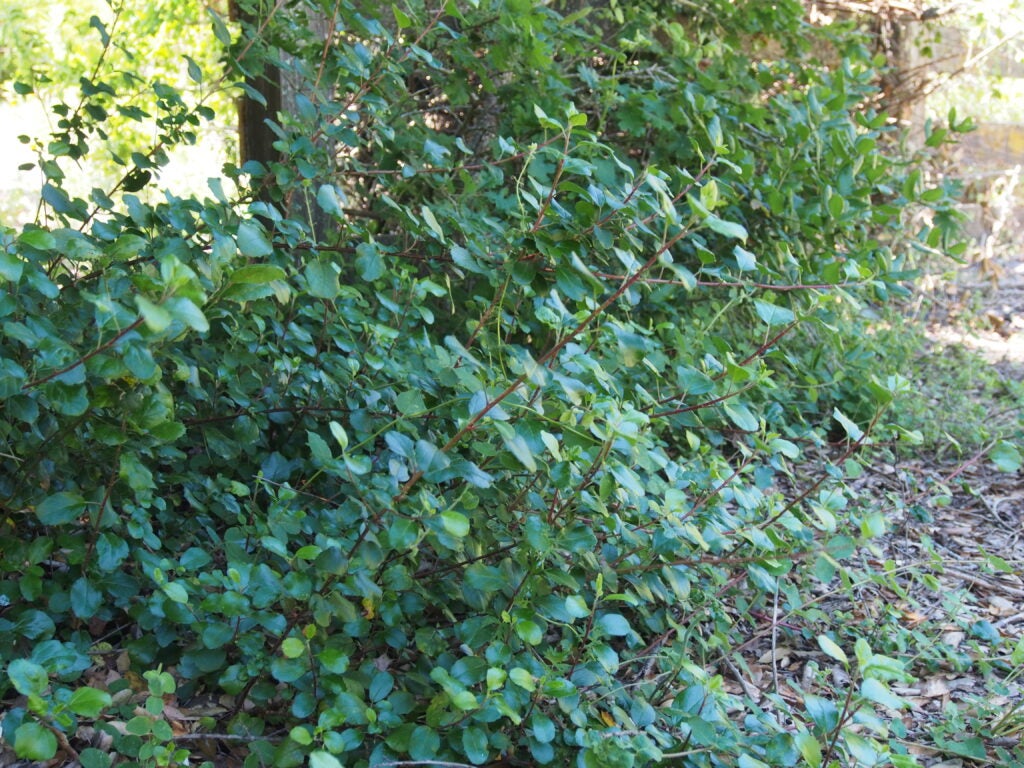
Low growing green shrub in a shaded natural setting
Close up of a cluster of pink, dangling flowers amidst green foliage in dappled shade

Ribes spp.

Currant, Gooseberry
Organization

Currants (without spines) and gooseberries (with spines) are grown for their graceful growth habit, attractive foliage, wonderful displays of pendulous flowers in winter-spring that are attractive to hummingbirds, and colorful fruit that provides a food source for birds. Most of the species listed are deciduous, going dormant in the summer months.

Examples: Some of the species suitable for California gardens, preferably with partial shade, are native to the Western United States:

  • R. aureum, golden currant (5-10’ x 3-6’), deciduous with small clusters of delicate yellow flowers and sprawling habit.
  • R. malvaceum, chaparral currant (4-8’ x 4-6’), deciduous with early clusters of pink flowers, a slightly vase-shaped habit, and more drought-tolerant than most species.
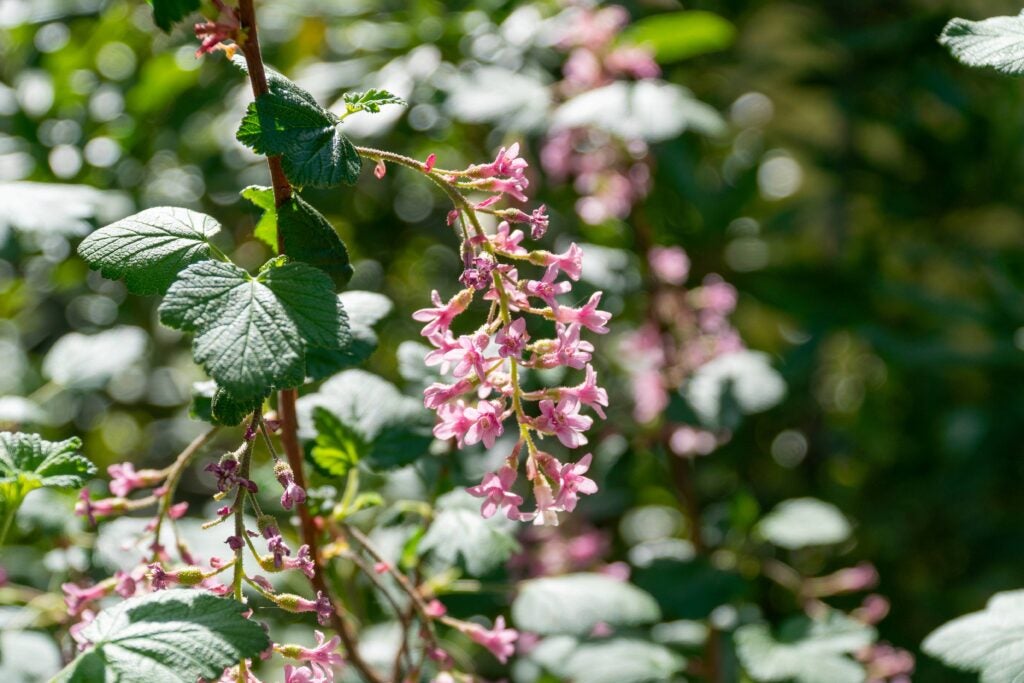
  • R. sanguineum var. glutinosum, pink-flowering currant (5-12’ x 5-12’), deciduous with maple-like leaves, a vase-shaped habit, and long pendulous clusters of pink, reddish, or white flowers in the spring; many available cultivars such as ‘Claremont’ and ‘White Icicle’.
  • R. speciosum, fuchsia-flowered gooseberry (4-8’ x 6-10’), deciduous with spiny, arching stems and bright red fuchsia-like flowers along the stems in the spring that are attractive to hummingbirds.
  • R. viburnifolium, evergreen currant or Catalina perfume (2-4’ x 5-7’), evergreen groundcover that works well under oaks and can provide erosion control to slopes.
  • Water: Very LowLow
  • Light: Partial ShadeShade
  • Soil: Well Drained

Recommended Resources