Purrington’s Pollinator Playground

BACK TO FULL TOUR

Garden Features

1

Drought Tolerant

2

Edible Garden

3

Graywater System

4

California Natives

5

Deer Resistant

6

Pesticide Free

7

Rainwater Harvesting System

8

Sheet Mulching

9

Urban Homestead

10

Wildlife Habitat

11

NWF Wildlife Habitat

12

Honeybees

13

Gopher Resistant

Partner: City of Petaluma

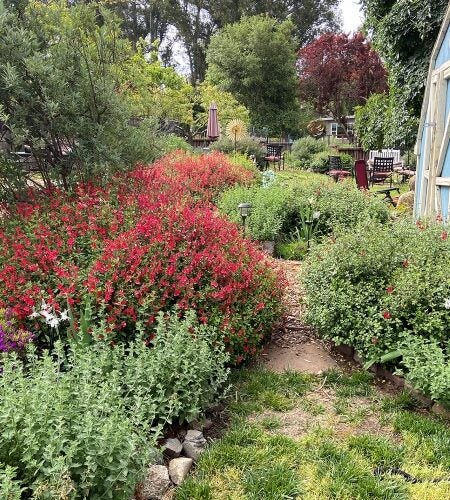
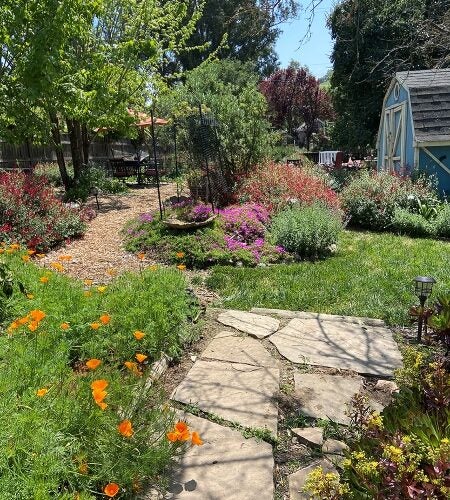
This land was brought back to life for one simple reason: we love our bees. Not long after moving in, we realized how much the wildlife loved it too; especially since the property sits right along a natural wildlife pathway. Deer and other animals wander through on their way from town to the hills, and we knew we needed to accommodate the patterns they had followed for generations.

When my husband and I bought this place, the half acre was in rough shape. The weeds were chest high, the clay soil was compacted, and the fruit trees were barely hanging on. Little by little, our passion as stewards for this small patch led us deep into a seven year adventure to restore it. Joining this tour feels like a chance to share what is possible when you roll up your sleeves and work with the land instead of against it.

We started with a blank canvas and decided to rototill, simply because the clay was so compacted and the Bermuda grass had taken over. After many overflowing green bins, we finally cleared it. From there, we turned our focus to rebuilding the soil. We learned from wonderful teachers and presentations at Garden for the Environment, Daily Acts, Garden Sense, and Gardening for Bees, and we tried to put every lesson into practice.

Sheet mulching: We planted a full season of green manure, chopped it down, and laid it flat to feed the soil. We sheet mulched the whole lot, hoping to build organic matter and help the land hold water better. Because so much water rushes down from the hills, erosion had been a real problem. Thankfully, we found free materials along the way, like cardboard from Costco and woodchips from ChipDrop. Years later, the difference is remarkable. The erosion has slowed, and the weeds that blow in are so much easier to pull.

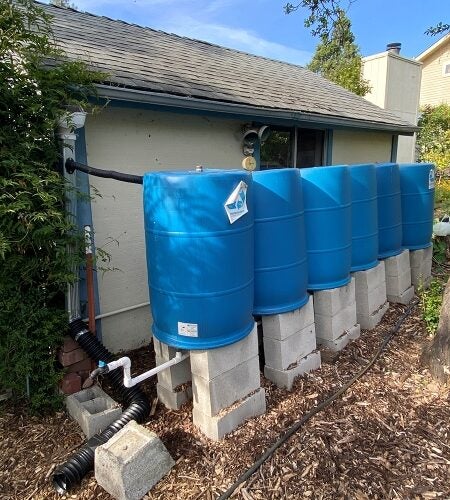
Rain barrels: After learning with Daily Acts, we installed a Blue Barrel rainwater system to collect water from the roof. The drought tolerant plants are now established and barely need watering, but the barrels offer the yard a little extra support during dry spells.

Laundry to landscape: With help from books, tours, and the kind folks at The Urban Farmer Store, we set up a small part of the yard that now benefits from our low-water washing machine.

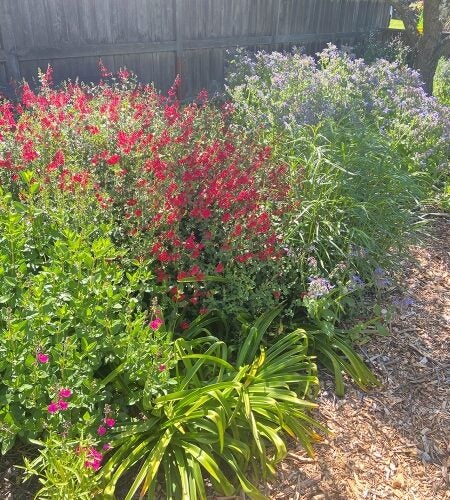
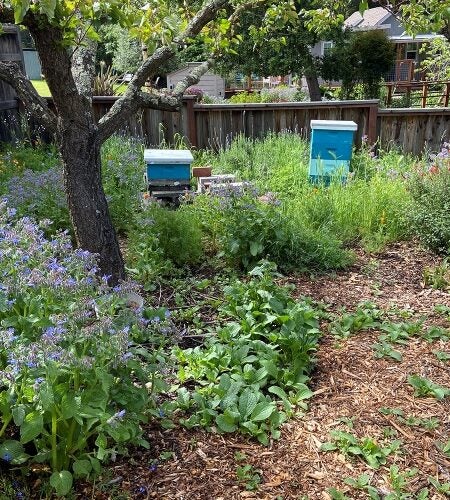
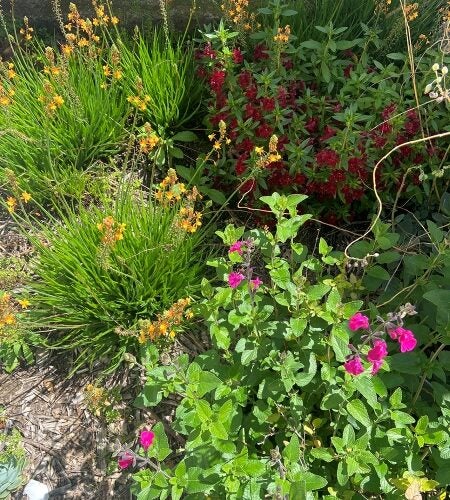
Pollinator plant paradise: We keep honey bee hives, and I joined the Sonoma County Beekeepers Association. Their Gardening for Bees program shaped so much of what grows here. Many of the plants started as tiny cuttings or small pots from their sales and workshops. It took about three years of propagating to fill the space, and now something is blooming every single month of the year.

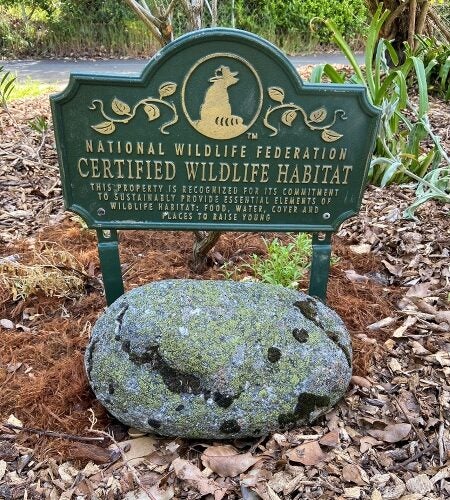
Wildlife haven: All plants had to pass the test! They had to feed pollinators and also stand strong against our small deer herd and the persistent gophers. After six years of trial and error, we feel confident that these plants are some of the hardiest around. Our property now meets the National Wildlife Federation standard for habitat: It offers safe habitat, water, food, and places for wildlife to raise their young.

Garden and chicken area: We also wanted a space to nourish ourselves. We built a tall deer fence and added raised beds for vegetables and medicinal herbs. Over the years we planted more fruit trees and berry bushes, and now we enjoy pomegranate, lemons, limes, oranges, apples, pears, peaches, plums, blueberries, raspberries, and strawberries.

This little half acre has become a sweet homestead, buzzing with life and full of small daily miracles. We invite you to sit with us in the meditation space and take in the gentle rhythm of people, animals, plants, and place all working together. We will have low cost propagated plants and honey from the property, as well as free seeds, tea, and treats from the garden.

PARKING: Please note that parking is not directly available on our street. Nearby parking will be indicated on your official ‘ticket’ once you register for the Tour.

Special Events
Seed Giveaway
Low cost propagated plants for sale
Honey from the garden for sale
Free treats from the garden
Free tea

Plants in this Garden
Plant Picker
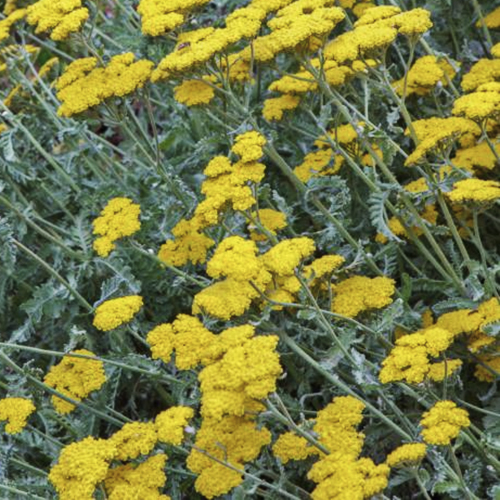
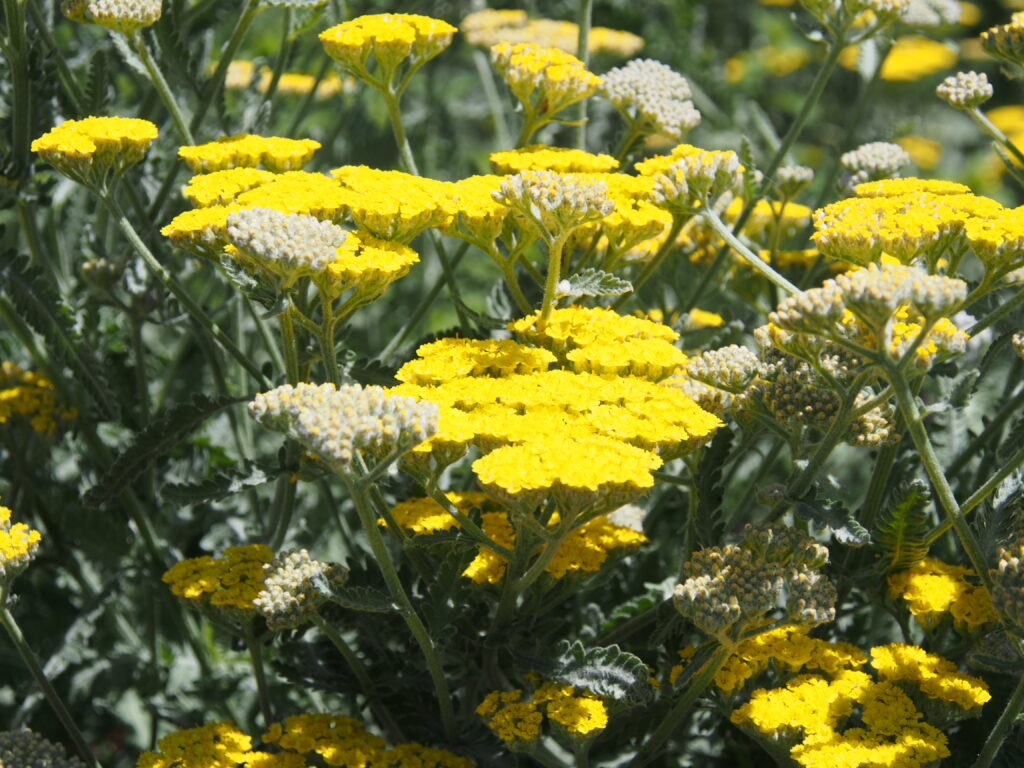
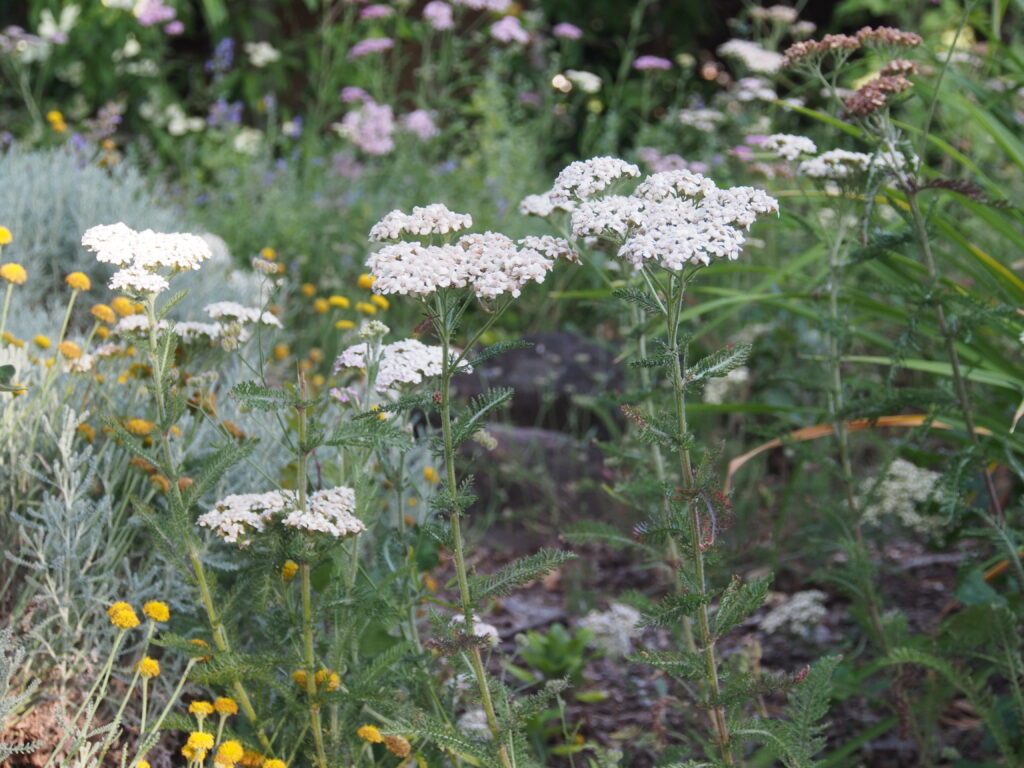
Corymb inflorescent yellow yarrow flowers on gray-green leaves and stems
White yarrow.
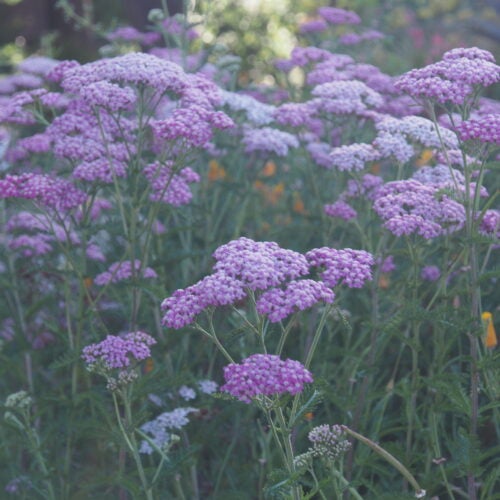
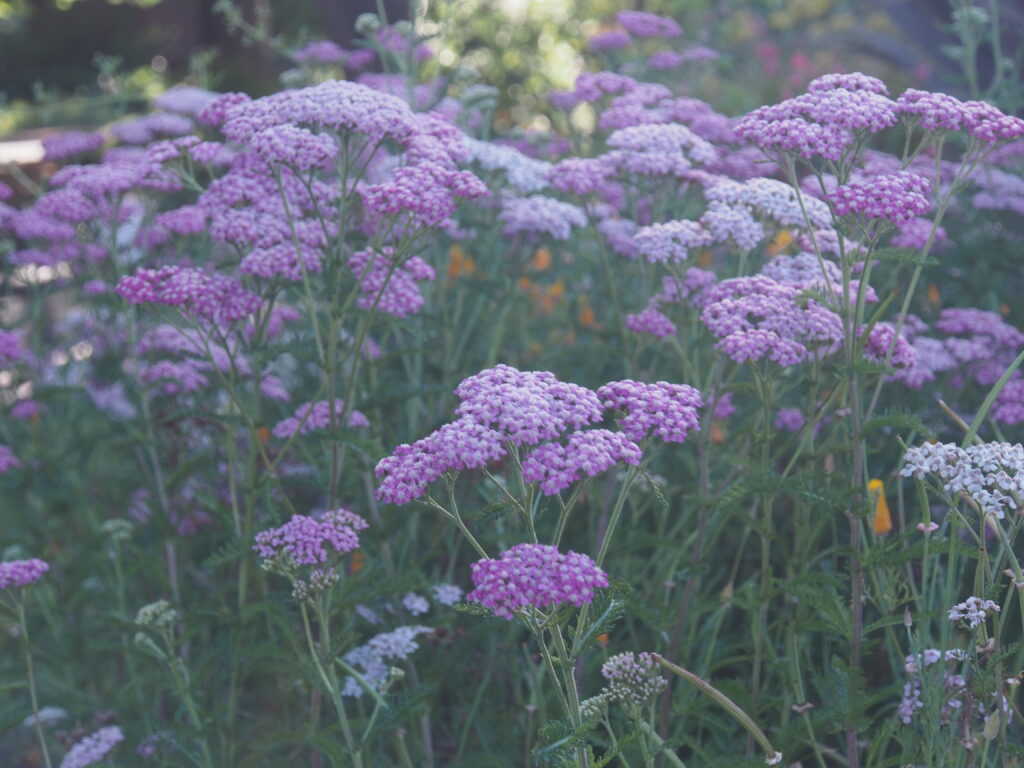
Purple yarrow.
Yellow and white yarrow.

Achillea spp & cvs

Yarrow
Organization

Yarrows are variable low-growing, spreading herbaceous perennials with finely divided leaves that inhabit many temperate regions in the Northern Hemisphere. Flattish clusters of flowers form in spring and well into summer and provide an important nectar source for pollinators and insects. Yarrow can help to stabilize slopes and is a good addition to the upper level of rain gardens and swales. Colors include yellow, pink, and red.

California native spp & cvs: A. millefolium (common yarrow), A. m. ‘Calistoga’, A. m. ‘Island Pink’, A. m. ‘Sonoma Coast’, A. m. ‘Terracotta’.

Other yarrows: A. filipendulina (fern leaf yarrow), A. f. ‘Coronation Gold’, A. ‘Moonshine’, A. tomentosa (woolly yarrow).

  • Water: Low
  • Light: Full SunPartial Shade
  • Soil: Most Soils
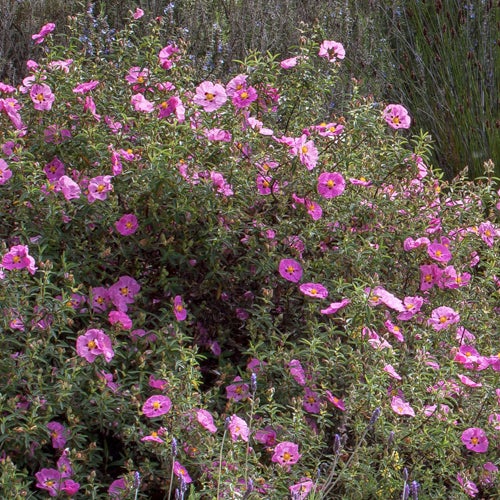
Rockrose bush with gray green leaves and flat, fuschia flowers

Cistus spp

Rockrose
Organization

Mediterranean evergreen flowering shrubs that perform well in California gardens with plenty of sun. Good choice for stabilizing slopes and banks. Flowers appear mid-spring into early summer. Many varieties are low, mounding groundcovers while others are more upright.

Examples: C. ladanifer (crimson spot rockrose, 3-5’ x 3-5’) has white flowers with dark crimson spots. C. x hybridus ‘Mickie’ (white rockrose, 1.5-2’ x 2’) has unique variegated foliage with cherry red stems and white flowers. C. x purpureus (orchid rockrose, 4’ x 4’) flowers are reddish purple with maroon blotches. C. salvifolius (sageleaf rockrose, 2’ x 6’) has white flowers and sage-like leaves. C. x skanbergii (2-4’ x 3-4’) bears pale pink flowers. C. ‘Sunset’ (2’ x 3-5’) flowers in magenta pink and has fuzzy gray-green leaves.

  • Water: Low
  • Light: Full Sun
  • Soil: Most Soils
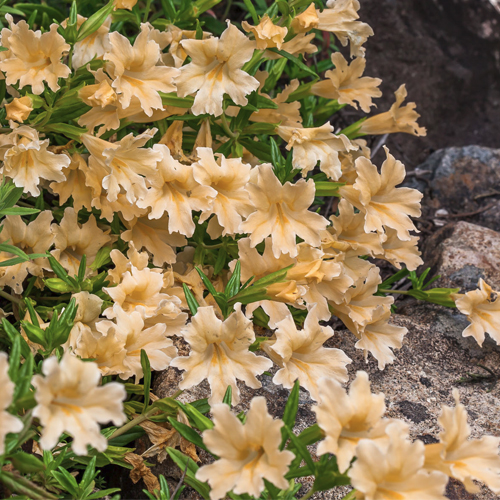
A group of small, peach-colored trumpet flowers with green leaves.

Mimulus aurantiacus and hybrids

Sticky Monkey Flower
Organization

The orange, tubular flowers of sticky monkey flower can be enjoyed in many locations throughout Sonoma and Marin counties in spring and summer, a testament to how well this plant is adapted to hot and dry conditions. The slightly sticky leaves benefit from light pinching and pruning to maintain an attractive appearance and support for the beautiful flowers. Many hybrids provide color variation. Do not confuse this plant with the red-flowered scarlet monkey flower (Mimulus cardinalis), an herbaceous riparian plant that requires regular water to thrive.

  • Water: Very Low
  • Light: Full SunPartial Shade
  • Soil: Sandy

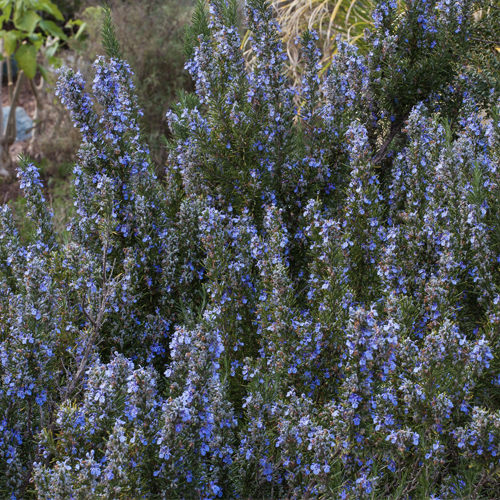
Rosmarinus officinalis

Rosemary
Organization

Classic Mediterranean flowering shrub with aromatic foliage, small blue-lavender flowers in late winter and spring that attract butterflies and bees. Thrives in full sun with well-drained soil and makes a good container plant. Rosemary is an excellent plant to have in the garden for harvesting fresh springs for use in cooking. Cuttings root readily, making it relatively easy to propagate new plants. Many named cultivars provide variation in size, growth form, flavor, and fragrance.

Examples: R. o. ‘Barbeque’ (3-5’ x 2-3’) has tall, upright stems that can be used as skewers for grilling; R. o. ‘Blue Spires’ (4-5’ x 2-3’); R. o. ‘Collingwood Ingram’ (2-3’ x 3-6’) is lower-growing with arching branches; R. o. ‘Huntington Carpet’ (1-2’ x 4-8’) is very low-growing; R. o. ‘Irene’ (1-2’ x 2-3’) has a mounding habit; R. o. ‘Prostratus’ (2’ x 4-8’) has a trailing habit that works well cascading over a retaining wall.

  • Water: Low
  • Light: Full Sun
  • Soil: Well Drained
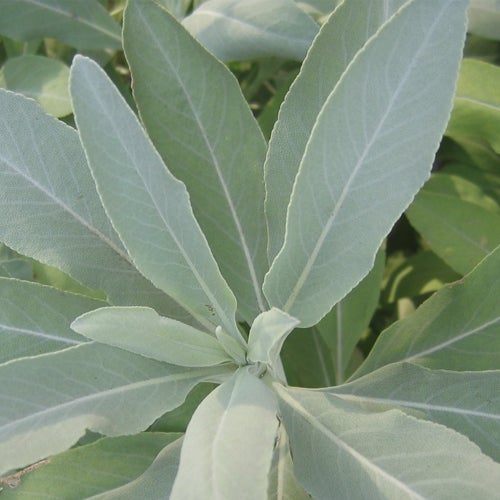
Long, slightly pointed light gray-green sage leaves

Salvia spp

Sage
Organization

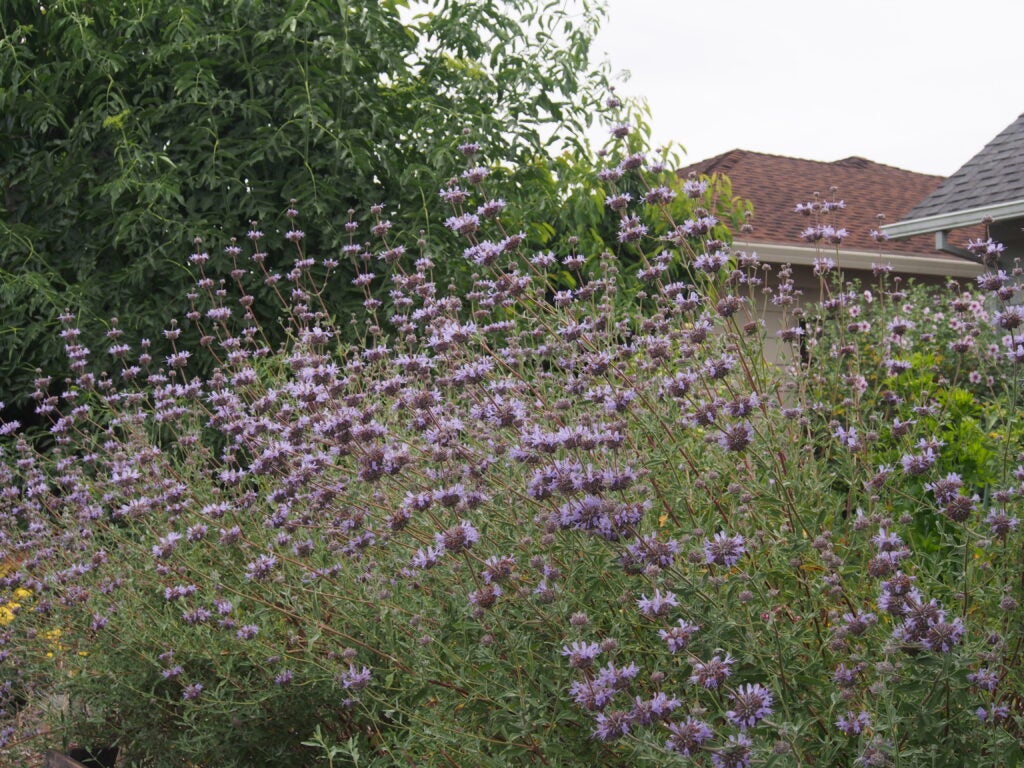
Salvias are a huge group of more than 900 species that include annuals, perennials, and shrubs adapted to a variety of climates and have varying water requirements. Salvias are attractive to hummingbirds, butterflies, and bees, and are generally ignored by deer. Sages that are native to California are generally drought-tolerant, prefer full sun, and little to no fertilizer. Annual pruning in late summer or fall generally helps to keep plants tidy and healthy.

CA native sages:

  • S. apiana, white sage (3-4’ x 4-6’), silvery-white, aromatic leaves with tall flower spikes of white flowers, popular for honey production and in bundles as a natural incense.
  • ‘Bee’s Bliss’ (1-2’ x 6-8’), superb, light gray groundcover with light purple flowers on long spikes; damp conditions can cause mildew which will clear with warm weather and sunny conditions.
  • S. clevelandii, Cleveland sage (3-5’ x 3-5’), medium-sized shrub for hot, dry locations known for pleasant fragrance and deep blue whorls of flowers; popular cultivars include S. c. ‘Allen Chickering’, S. c. ‘Pozo Blue’, and S. c. ‘Winnifred Gilman’.
  • S. leucophylla, purple sage, includes plants with both an upright growth habit, such as S. l. ‘Amethyst Bluff’ (3-5’ x 3-5’) and others with a sprawling form, such as S. l. ‘Point Sal’ (2-3’ x 6’), both of which are from Santa Barbara county.
  • S. sonomaensis, Sonoma sage (1-2’ x 3-4’), groundcover that prefers light shade and will not tolerate damp conditions; cultivars include S. s. ‘Dara’s Choice’, S. s. ‘Greenberg Gray’, and S. s. ‘Hobbit Toes’.
  • S. spathacaea, hummingbird sage (1-2’ spreading), herbaceous groundcover that grows well in dry shade and spreads slowly by underground rhizomes; large leaves have a wonderful fruity fragrance; the only red-flowered native sage.
  • S. mellifera, black sage (6′ x 10′), evergreen shrub that grows well in full sun and well drained soils. Dark green leaves with pale purple flowers in late spring and early summer.

Non-native sages:

  • S. chamaedryoides, germander sage (2-3’)
  • S. chiapensis, Chiapas sage (1-2’ x 3-4’)
  • S. greggii, autumn sage (1-4’ x 1-4’)
  • S. leucantha, Mexican bush sage (3-4’ x 3-6’)
  • S. microphylla, cherry sage (3-4’ x 3-6’)
  • S. officinalis, garden sage (1-3’ x 1-3’)
  • Water: Very LowLowModerate
  • Light: Full SunPartial Shade
  • Soil: Well Drained
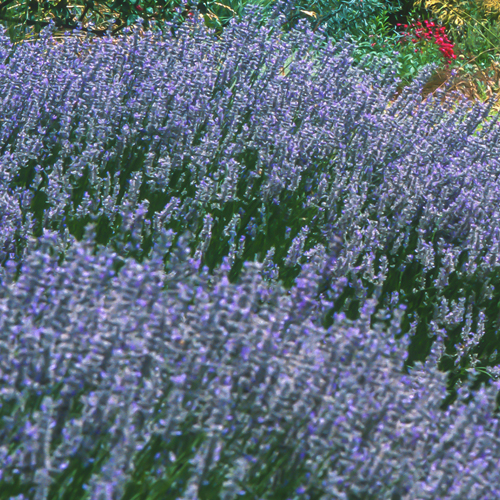
A lavender shrub with dark green leaves and stems, each tipped with a long, skinny cluster of lavender flowers

Lavandula spp

Lavender
Organization

Classic, aromatic, small, Mediterranean evergreen shrub that works well in a mass or mixed planting in a sunny location with good drainage. Blue-to-purple flowers are attractive to bees and butterflies, and seeds provide food to birds. Shear plants by one-third to one-half after flowering to maintain a neat appearance. Vulnerable to root rot in damp locations or if organic mulch is too close to plant crown.

Examples: English lavender (L. angustifolia, 1-2’ x 2-3’) and many cultivars, French Lavender (L. dentata, 3-4’ x 4-6’), hedge lavender (L. x intermedia, 1-2’ x 2-3’), Spanish lavender (L. stoechas, 2-3’ x 2-3’) featuring large and showy bracts on top of flower spikes.

  • Water: Low
  • Light: Full Sun
  • Soil: Well Drained
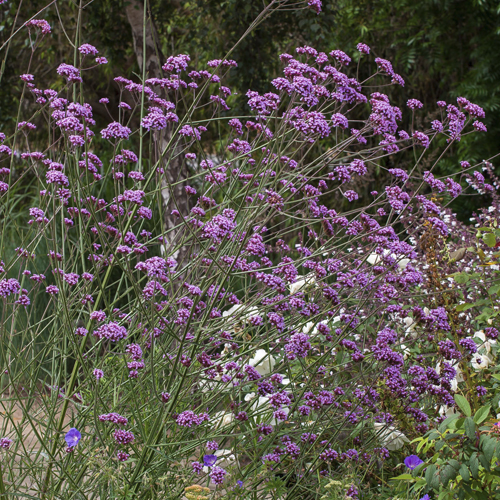
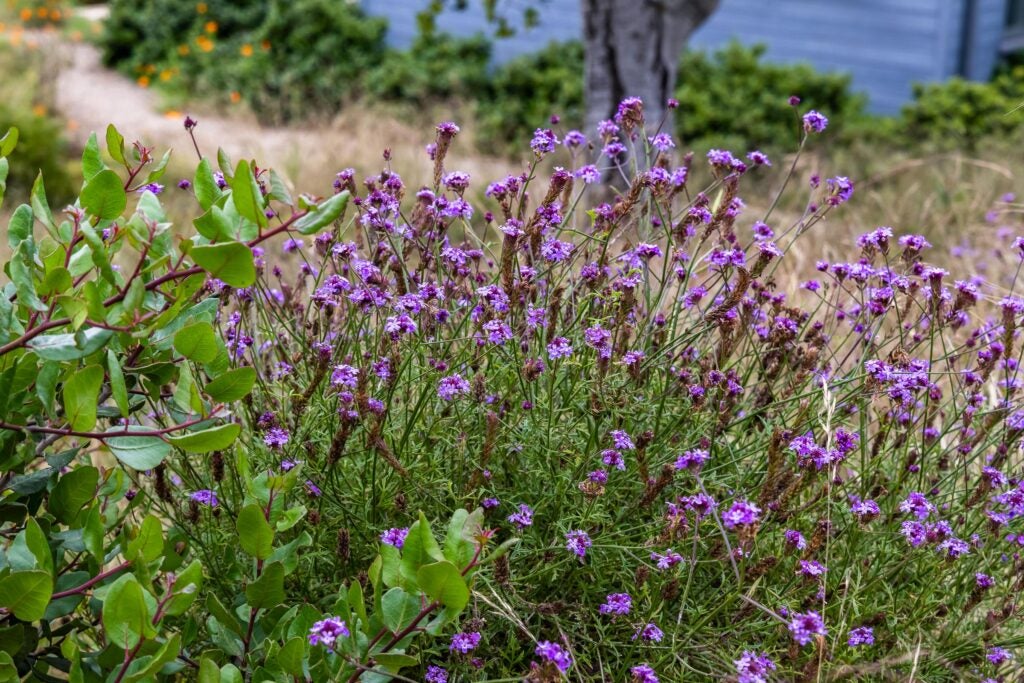
Tall green stems with corymb inflorescent clusters of small, purple flowers

Verbena spp

Verbena
Organization

Fast-growing perennials that thrive in hot locations and produce clusters of small, showy flowers in summer.

Examples:

  • V. bonariensis (3-6’ x 2-3’) is an upright perennial from South America with long, airy flower stalks. Reseeds readily and should not be planted near riparian areas where it can be invasive.
  • Garden verbena (V. x hybrida, 6-12” x 2-3’) is a popular and showy groundcover available in many colors.
  • Cedros Island verbena (V. lilacina ‘De La Mina’, 1-2’ x 2-3’) from the Cedros Island off the coast of Baja California is a popular native for its deep purple flower color and uniform growth habit.
  • Water: Very LowLow
  • Light: Full Sun
  • Soil: Well Drained
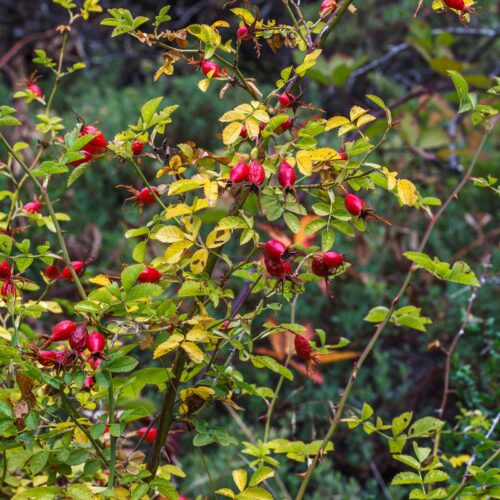
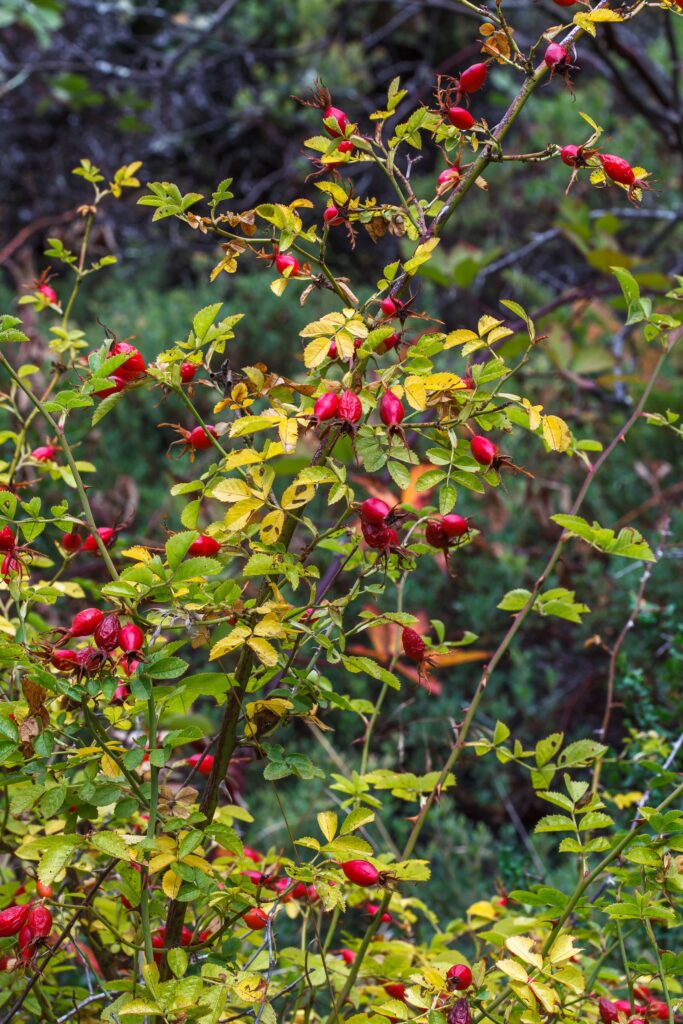
A shrub with small, scattered yellow-green leaves and deep, vibrant red bulbous flowers

Rosa californica

California Wild Rose
Organization

A native, perennial, deciduous shrub with dark green leaves divided into coarsely toothed leaflets. Rose to pink colored flowers containing yellow seeds and grows abundantly in moist soils. Natural habitat for birds and pollinator insects.

  • Water: Low
  • Light: Full SunPartial Shade
  • Soil: Loam

Favorite Plants

1

Pink Common Yarrow

Achillea millefolium

2

California Wild Rose

Rosa californica

3

Sticky Monkey Flower

Mimulus aurantiacus

4

White Sage

Salvia apiana

Favorite Garden Suppliers

Harmony Farm Supply and Nursery

5400 Old Redwood Highway North Petaluma

Recommended Resources

Gardening Tips

1

Amend clay soil

For clay soil the key is to amend, amend, amend!!

2

Buy plants that feed pollinators

Help us create a green river in Petaluma to feed the bees and pollinators.

3

Work with nature

Don’t work against it!

4

Sheetmulching and chipping

This is the fastest and easiest form of weeding and amending the soil at the same time!