Oaks and Sages

BACK TO FULL TOUR

Garden Features

1

Drought Tolerant

2

Edible Garden

3

California Natives

4

Drip Irrigation

5

Pesticide Free

6

Rain Garden

7

Reclaimed/Recycled Materials

8

Sheet Mulching

9

Lawn Conversion

10

Lawn-Free Landscaping

11

Permeable Surfaces

12

Wildlife Habitat

Partner: North Marin Water District

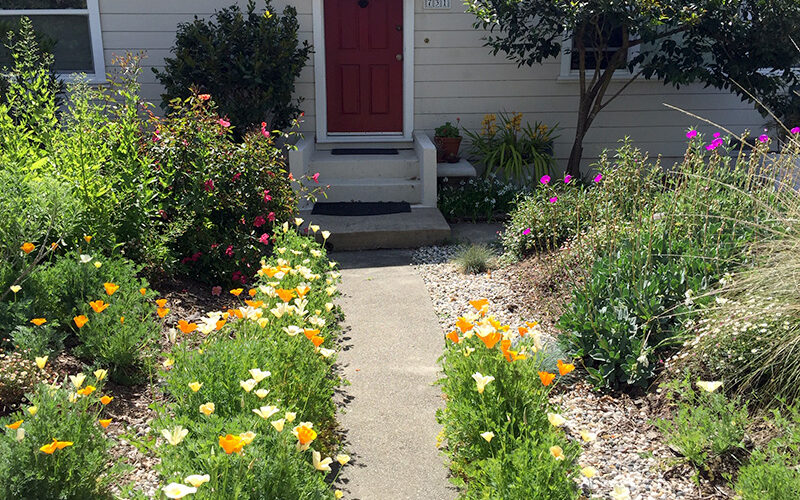
A Master Gardeners Own Native Garden.

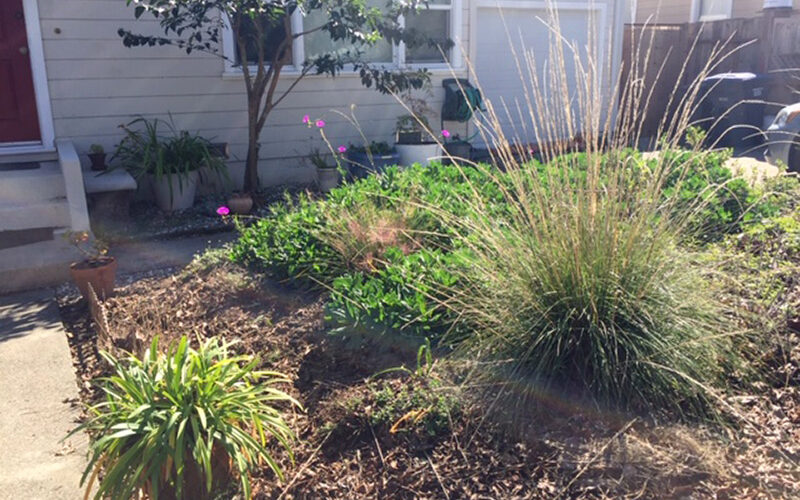
I moved here in 2018 and began my garden by flattening my moving boxes to spread out in both the front and back for sheet mulching. (You may see photos of this process and how it worked. Just ask.)

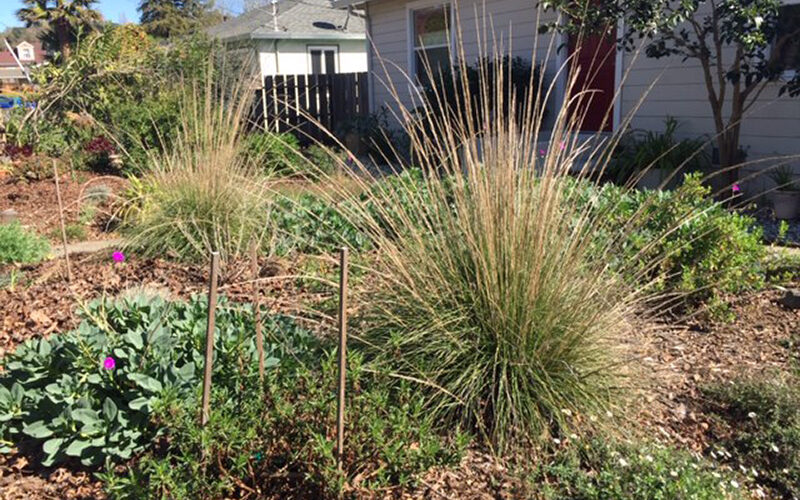
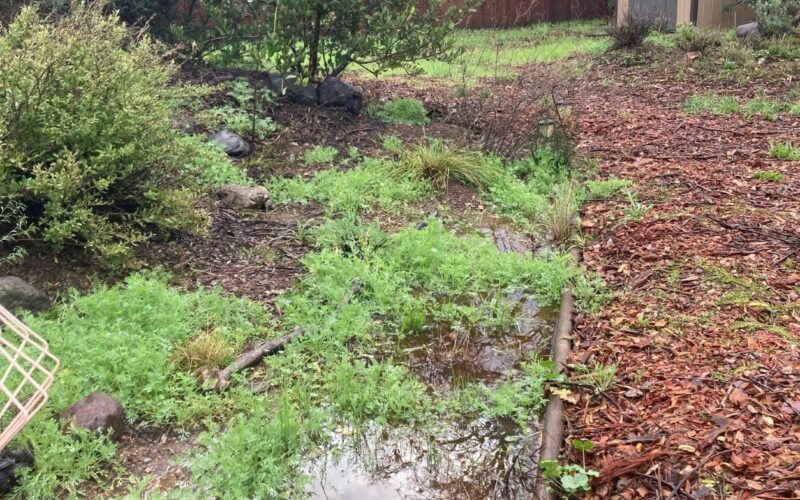
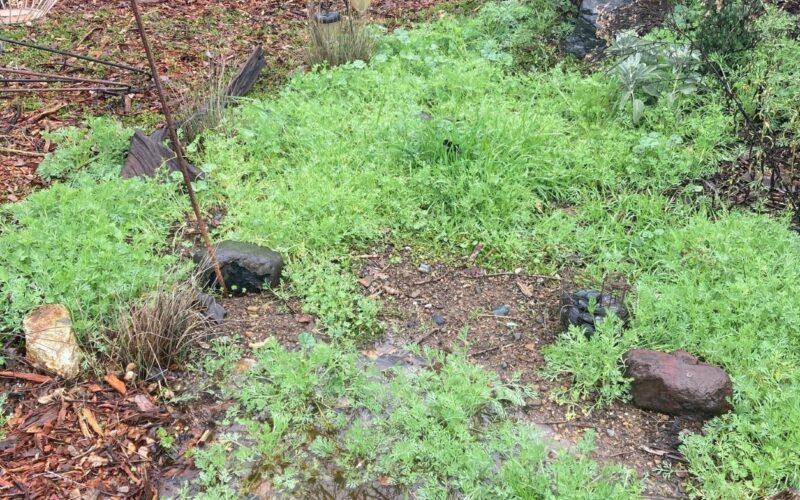
Once the dying lawns were eliminated, I began thinking about what to plant. I knew a bit about California native plants and wanted to know more. So I created different garden levels for a diverse group of mostly native plants. I started with two truckloads of soil and compost to create “hills” in the backyard for plants that required reliable drainage. And I created a place—a rain garden—for the winter rains to slow, spread, and sink into the land, so there wouldn’t be squishy mud everywhere else.

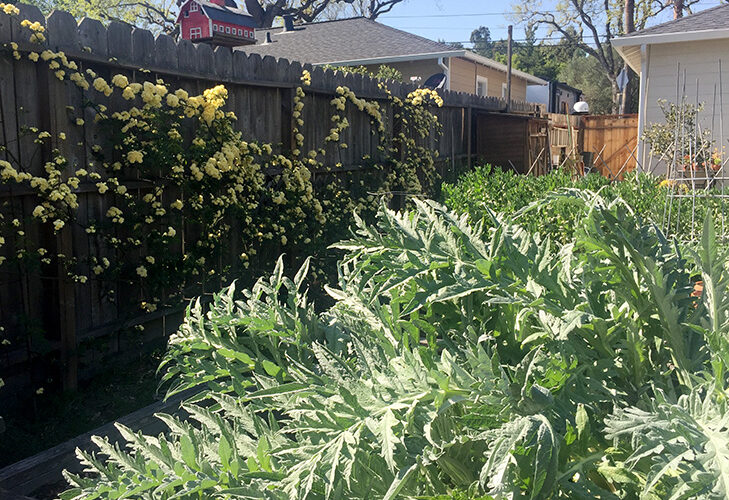
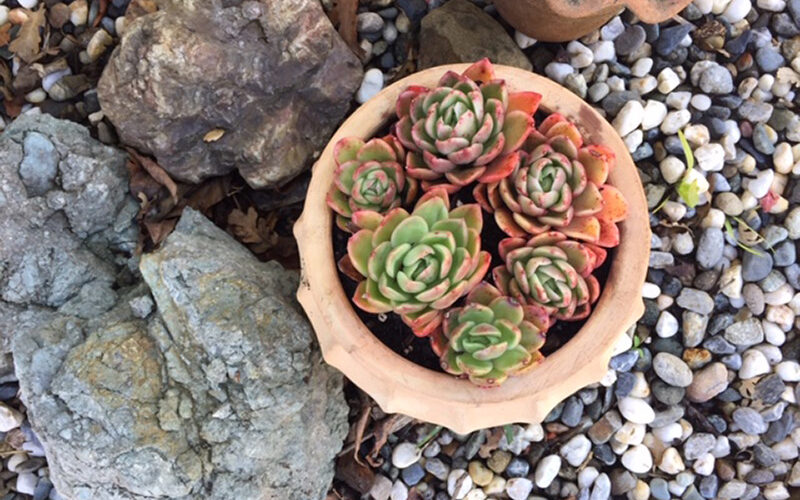
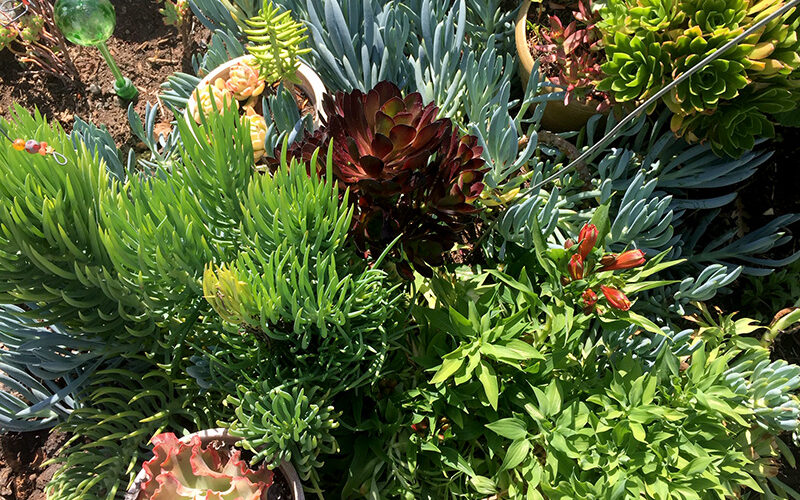
Since then, I’ve planted 28 trees, hundreds of vegetables in gopher-proofed raised beds, and a variety of drought-tolerant flowers, grasses, and succulents. There’s a wild grape arbor for shade, as well as several garden hideaways and storage sheds.

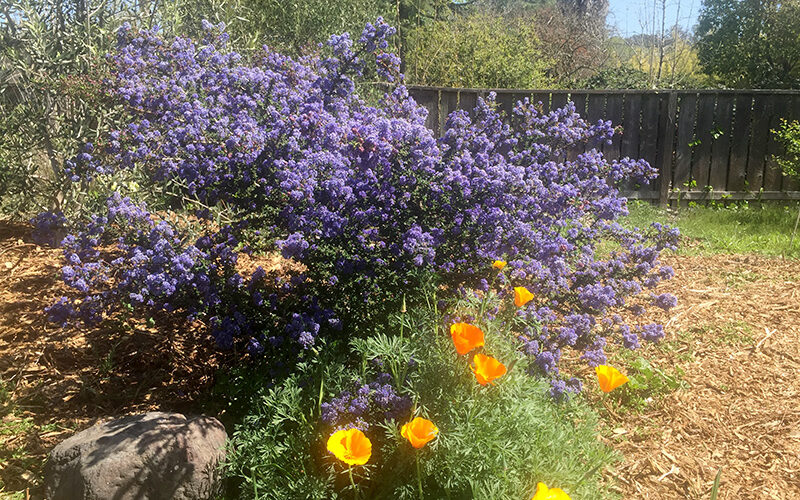
All plants are hand-watered. One advantage of the native plants that I chose, such as the ceanothus in the back, is that after the first two years they really don’t need or want extra water. The several oak trees in my backyard were already here, and they don’t need extra water either.

Along the southeast stretch of the fence, I strongly suspect there’s a high water table. In 2019 I took advantage of this and planted two arroyo willow trees. They were about three feet high when I planted them, and, as you’ll see, they are now at least 30 feet high. Birds and butterflies love these trees. Without sufficient groundwater, that wouldn’t have happened. These plants are still teaching me about water!

Special Events
Free UC Master Gardener Materials
Gardener's Choice of Books for Reading

Plants in this Garden
Plant Picker
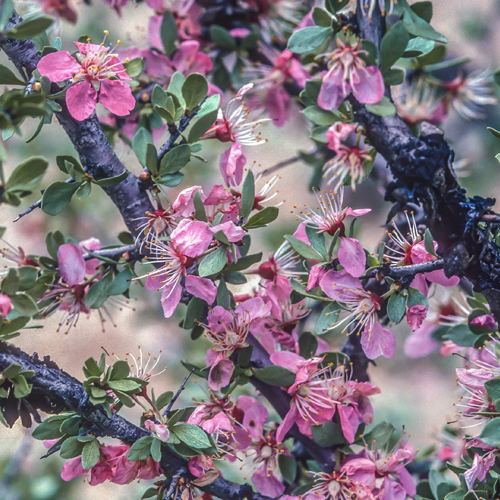
Close-up of light pink blossoms with white stamens poking out of the center.

Prunus spp

Prunus
Organization

Large group of evergreen and deciduous shrubs and trees that includes many ornamental species as well as others that produce edible fruit.

Examples:

  • Apricot, nectarine, peach, and plum trees are all classified as having low-water use in Sonoma and Marin counties. Consult local nurseries for available types and specific growing requirements.
  • Carolina laurel cherry (P. caroliniana, 20-30’ x 15-20’) is an upright, evergreen shrub from North Carolina to Texas where it grows as an understory plant. Its small, white flowers in spring are followed by small black fruit. P. c. ‘Compacta’ (10-15’ x 6-8’) is a popular smaller form.
  • Hollyleaf cherry (P. ilicifolia, 10-25’ x 10-25’) is an evergreen shrub from central California to Baja California. Creamy white flowers in narrow spikes in late spring to early summer are followed by fruits that attract many species of birds. Can be used as a hedge or screen, as well as for erosion control.
  • Catalina cherry (P. ilicifolia spp. Lyonii, 30-45’ x 20-30’) is native to the Channel Islands.
  • Water: Low
  • Light: Full Sun
  • Soil: Well Drained
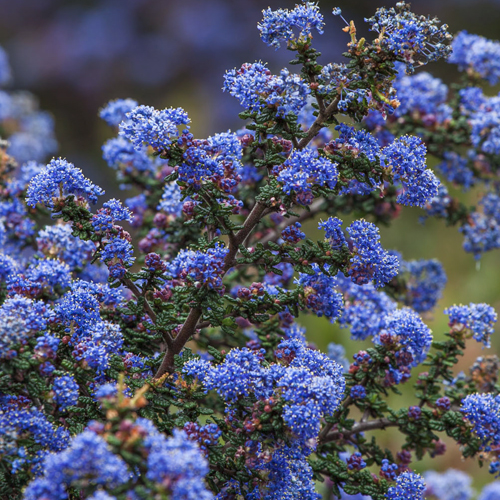
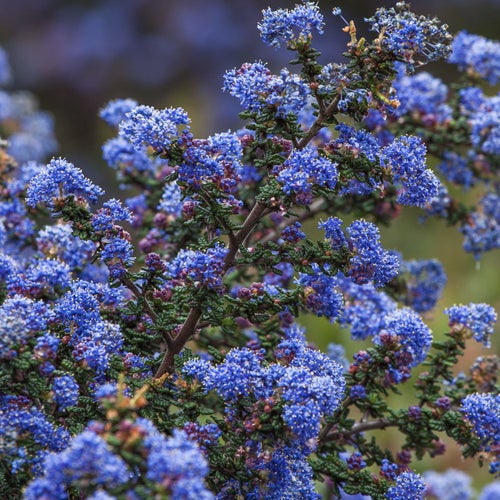
California Lilac ceanothus variety with clusters of small, vibrant blue flowers and dark green leaves

Ceanothus spp & cvs

Ceanothus
Organization

Ceanothus is a group of fast-growing, evergreen shrubs that vary from groundcovers to small trees, many of which are native to California. They provide a spectacular display of flowers in spring that will attract a multitude of pollinators. Flowers are followed by seeds that provide food for birds. The clusters of tiny flowers range from white to deep violet. Plants perform best with good drainage and minimal irrigation once established. Some do best in cooler coastal climates, but many thrive in hotter inland climates. Pay close attention to the mature size when selecting ceanothus to ensure that it has sufficient space for its natural form.

Groundcovers: C. ‘Centennial’ (1’ x 8’), C. gloriosus var. gloriosus ‘Anchor Bay’ (2’ x 8’), C. griseus var. horizontalis ‘Diamond Heights’ (variegated, 1’ x 4’), C. griseus var. horizontalis ‘Yankee Point’ (3’ x 12’), C. maritimus (2’ x 6’).

Shrubs: C. ‘Blue Jeans’ (6’ x 6’), C. Concha (6’ x 6’), C. ‘Dark Star’ (6’ x 8’), C. ‘Joyce Coulter’ (4’ x 12’), C. ‘Julia Phelps’ (8’ x 10’), C. cuneatus (8’ x 8’), C. thyrsiflorus ‘Skylark’ (4’ x 6’).

Large shrubs: C. ‘Frosty Blue’ (10’ x 12’), C. thyrsiflorus (20’ x 20’), C. t. ‘Snow Flurry’ (white flower, 20’ x 20’).

Trees: C. ‘Ray Hartman’ (15′ x 15′)

  • Water: Very LowLow
  • Light: Full SunPartial Shade
  • Soil: Well Drained
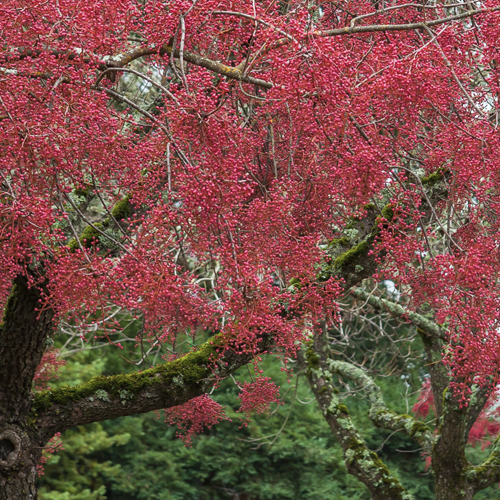
A dark brown trunk of a tree extends branches with fine, magenta leaves.

Pistacia chinensis

Chinese Pistache
Organization

Together with crape myrtle, Chinese pistache is a ubiquitous street tree in Sonoma and Marin counties due to its modest size, attractive foliage, fall color, and ability to withstand heat and drought. May be invasive in riparian areas. P. c. ‘Keith Davey’ is a sexed male that will not produce fruit.

  • Water: Low
  • Light: Full Sun
  • Soil: Well Drained
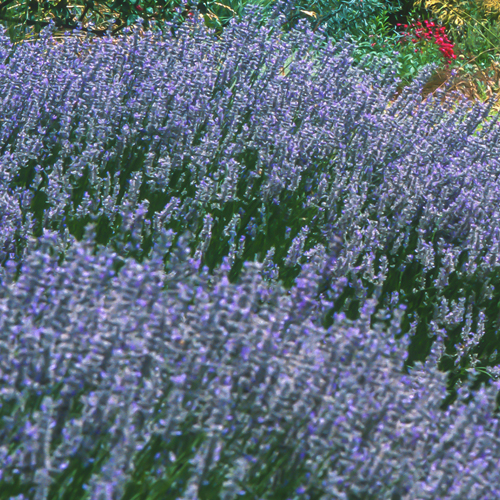
A lavender shrub with dark green leaves and stems, each tipped with a long, skinny cluster of lavender flowers

Lavandula spp

Lavender
Organization

Classic, aromatic, small, Mediterranean evergreen shrub that works well in a mass or mixed planting in a sunny location with good drainage. Blue-to-purple flowers are attractive to bees and butterflies, and seeds provide food to birds. Shear plants by one-third to one-half after flowering to maintain a neat appearance. Vulnerable to root rot in damp locations or if organic mulch is too close to plant crown.

Examples: English lavender (L. angustifolia, 1-2’ x 2-3’) and many cultivars, French Lavender (L. dentata, 3-4’ x 4-6’), hedge lavender (L. x intermedia, 1-2’ x 2-3’), Spanish lavender (L. stoechas, 2-3’ x 2-3’) featuring large and showy bracts on top of flower spikes.

  • Water: Low
  • Light: Full Sun
  • Soil: Well Drained
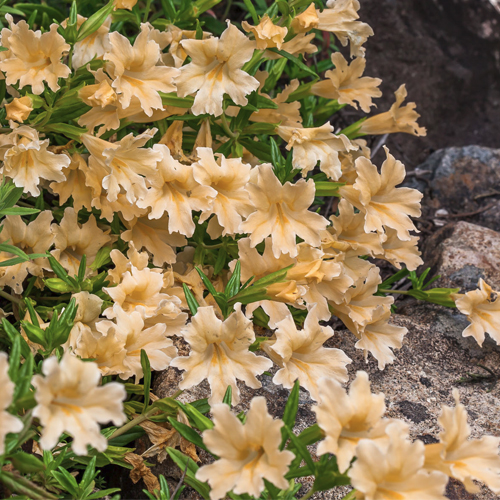
A group of small, peach-colored trumpet flowers with green leaves.

Mimulus aurantiacus and hybrids

Sticky Monkey Flower
Organization

The orange, tubular flowers of sticky monkey flower can be enjoyed in many locations throughout Sonoma and Marin counties in spring and summer, a testament to how well this plant is adapted to hot and dry conditions. The slightly sticky leaves benefit from light pinching and pruning to maintain an attractive appearance and support for the beautiful flowers. Many hybrids provide color variation. Do not confuse this plant with the red-flowered scarlet monkey flower (Mimulus cardinalis), an herbaceous riparian plant that requires regular water to thrive.

  • Water: Very Low
  • Light: Full SunPartial Shade
  • Soil: Sandy
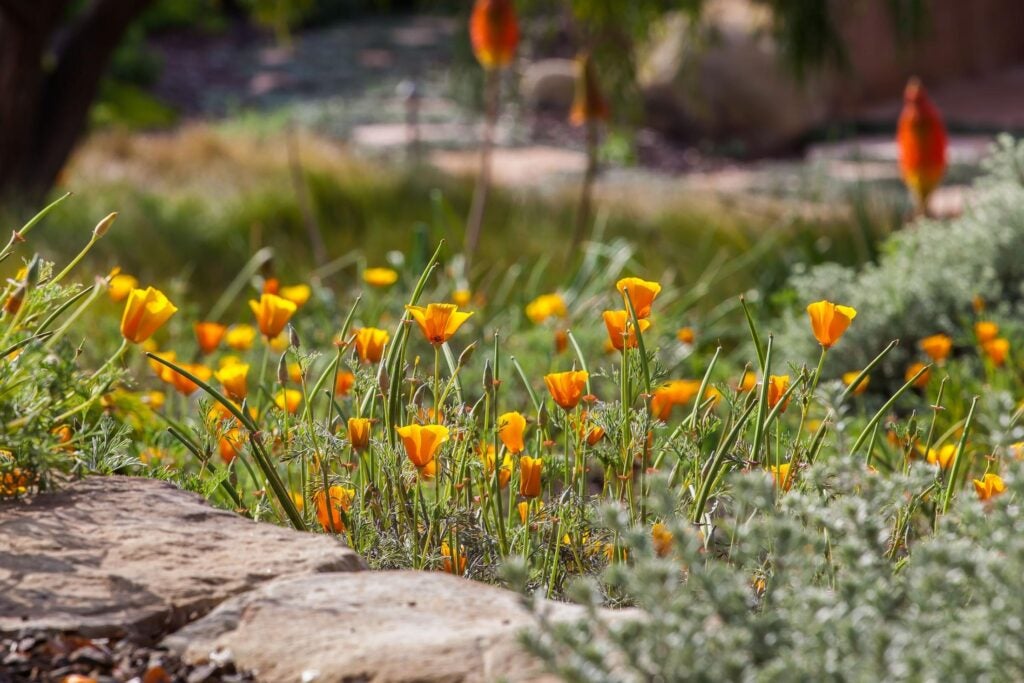
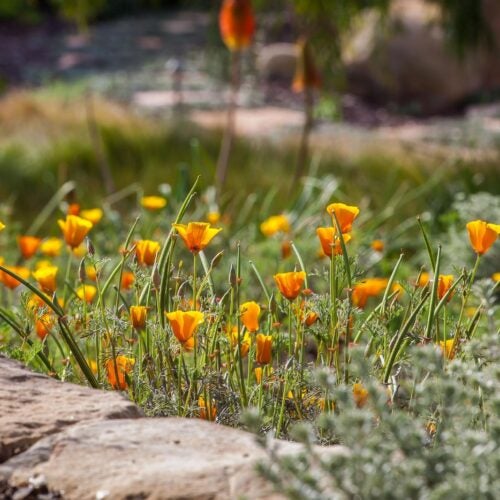
Medium-sized orange flowers with blue green, fine leaves.

Eschscholzia californica

California Poppy
Organization

The California state flower, the California poppy, is a persistent native wildflower. It is best to plant seeds in fall when the rain begins. Once established, the poppy will reseed and spread across your yard. It is great for bees, birds, butterflies, and other pollinators as well as being deer resistant. Poppies prefer well-drained soils but can tolerate most soils including clay.

  • Water: Very Low
  • Light: Full SunPartial Shade
  • Soil: Most Soils
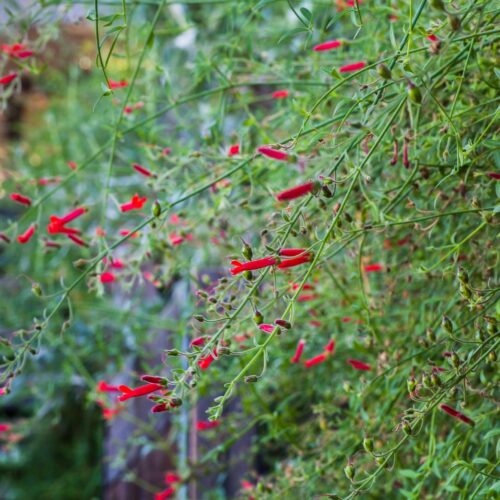
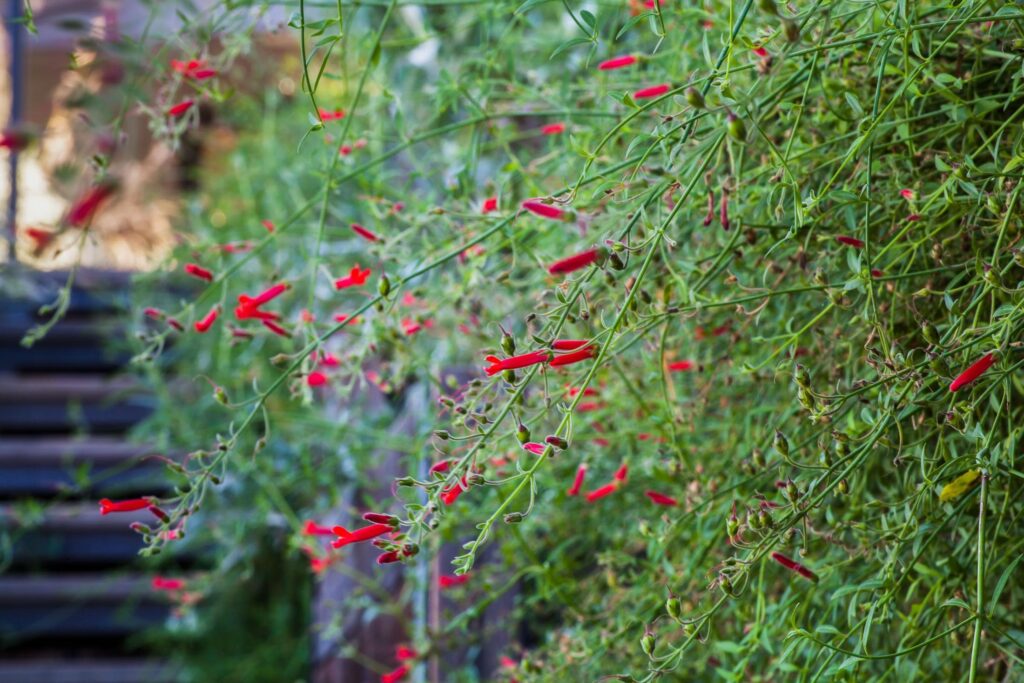
Growing on a wall, long stems with multiple tubular red flowers extend horizontally.

Gambelia speciosa

Island Snapdragon
Organization

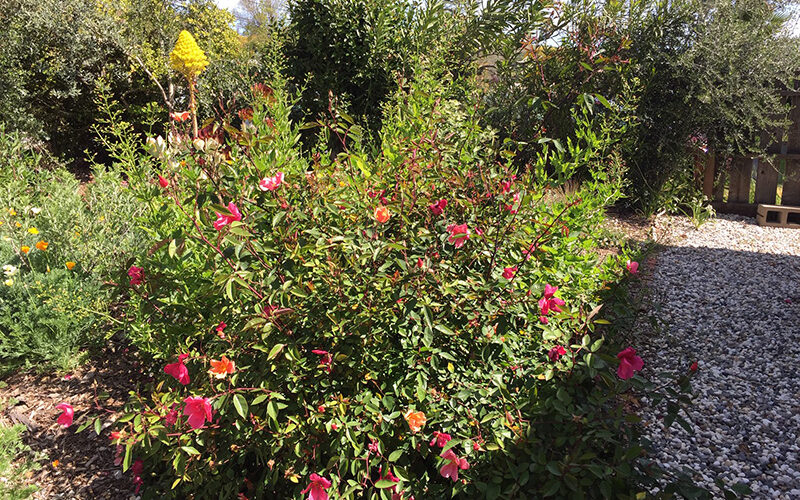
This fast-growing shrub is native to the Channel and Guadalupe islands of California and Mexico. It can grow to 3-4 feet tall and 5-6 feet wide and will bloom nearly yearround in good conditions. It prefers full sun and will produce more flowers if it is placed there, but will also thrive in part shade. ‘Firecracker’ is a compact selection. ‘Bocarosa’ has bright green leaves and masses of red flowers. Will grow well in a container. Cut back in late winter to renew. May be offered as Galvezia.

  • Water: Low
  • Light: Full SunPartial Shade
  • Soil: Well Drained
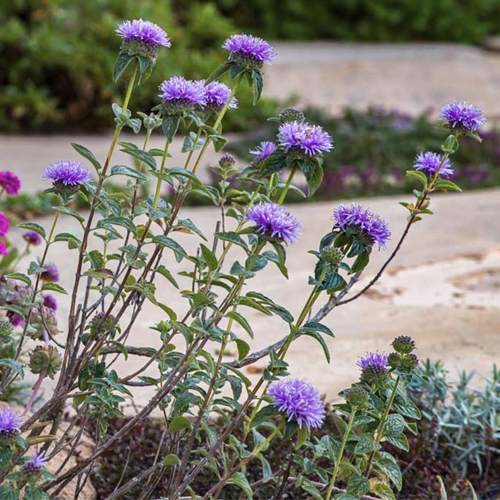
Dark brown stems with pointed green leaves and purple pompom flowers at the top of each stem

Monardella villosa

Coyote Mint
Organization

Coyote Mint is a compact perennial or sub-shrub with aromatic foliage and a sprawling habit. Dense heads of purple flowers form in spring-to-summer that are attractive to butterflies and other insects. The low-growth habit of coyote mint makes it an excellent choice for the front of a border, along the edge of a path, or beneath larger shrubs such as manzanita or ceanothus. Monardella villosa spp. franciscana ‘Russian River’ and Monardella villosa spp. villosa ‘Mark West’ are available selections from Sonoma County.

  • Water: Very Low
  • Light: Full Sun
  • Soil: Most Soils

Favorite Plants

1

Common Lippia

Phyla nodiflora

2

Lemonade Berry

Rhus integrifolia

3

White Sage

Salvia apiana

4

Hollyleaf Cherry

Prunus ilicifolia

5

Azalea-Flowered Monkeyflower

Diplacus aurantiacus var. grandiflorus

Favorite Garden Suppliers

The Watershed Nursery Cooperative

601a Canal Boulevard Richmond

Home Ground Habitats

1875 Indian Valley Road Novato

Cottage Gardens

3995 Emerald Drive Petaluma

Recommended Resources

Gardening Tips

1

Birds love native plants.

California native plants, wherever you can put them!  If you love birds, these are the plants that will encourage, nurture, and shelter them.

2

Start with your soil!

It will probably need some help. Contact your local Master Gardeners for ideas on how to improve it.

3

Visit other gardens for inspiration.

Every year I find great inspiration from visiting other people’s gardens – seeing what works and what hasn’t, talking to the gardeners who are actively creating their beautiful gardens. With the climate changing as rapidly as it is now, we need all the information we can find.