Miles McKey Meditation Garden
BACK TO FULL TOUR
Garden Features
Drought Tolerant
California Natives
Drip Irrigation
Pesticide Free
Permeable Surfaces
Wildlife Habitat
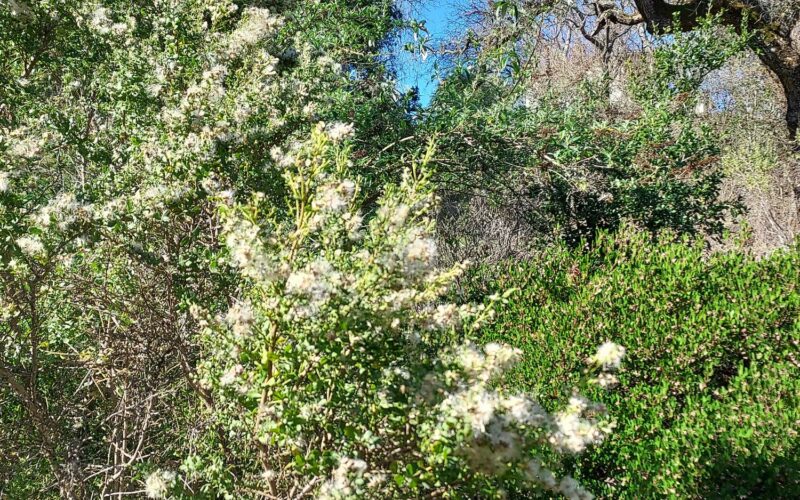
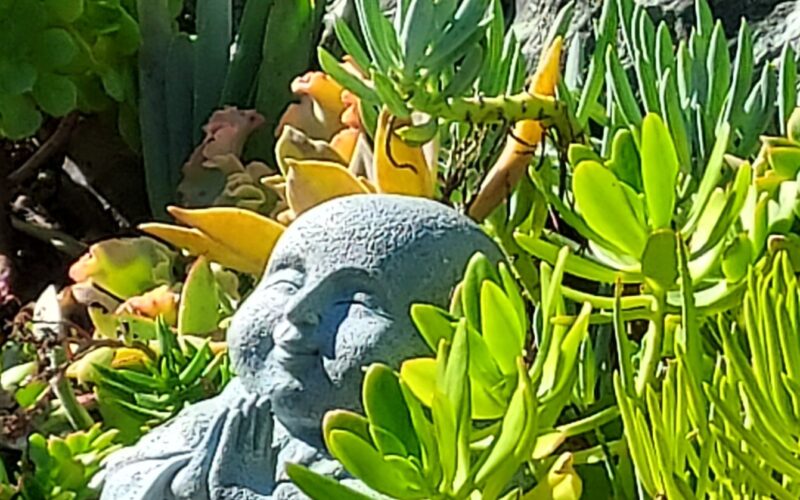
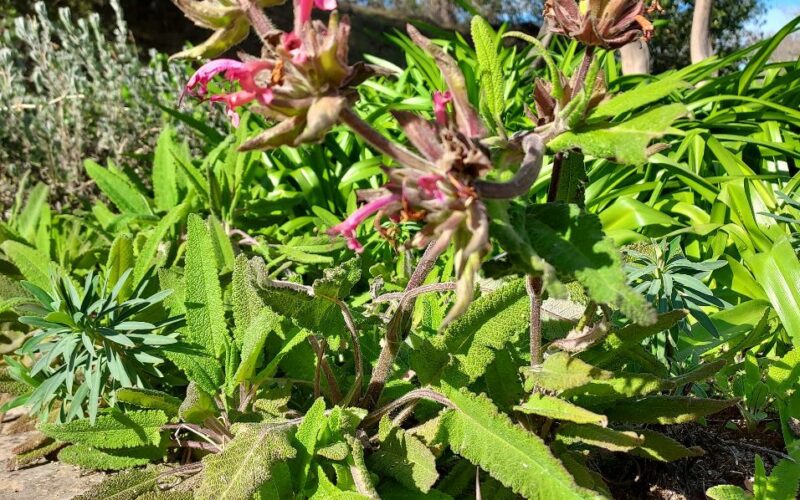
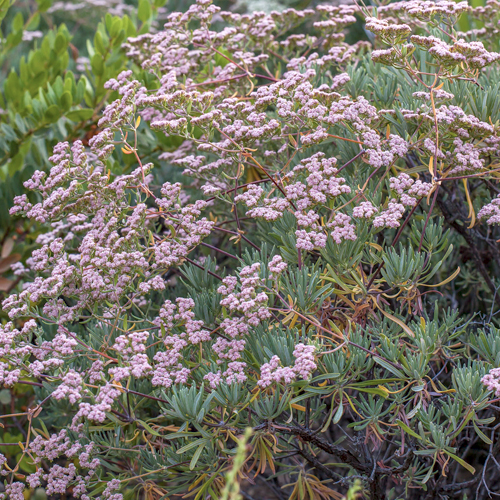
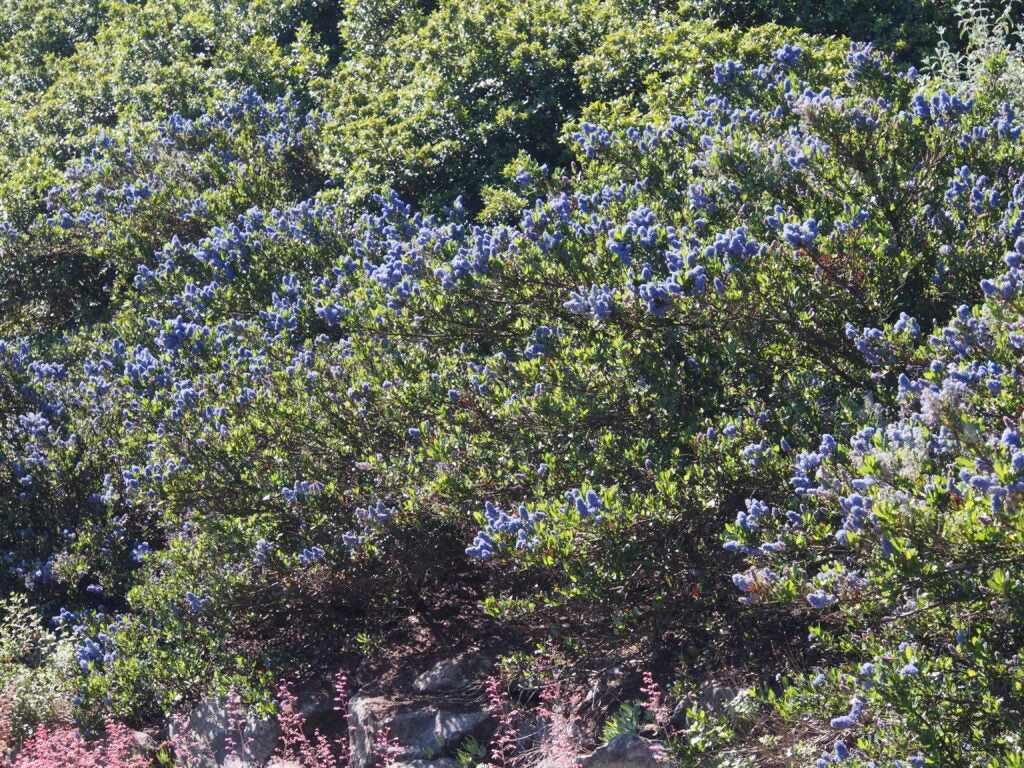
Originally established in 2008, our tranquil sanctuary emerged from a once-tangled patch of Oak woodland chaparral. Purposefully crafted to serve as a sanctuary for prayer, meditation, relaxation, and inspiration, it was meticulously designed to be both low-maintenance and water-efficient. Central to its allure are the resilient Manzanita, Ceanothus, and Coyote Bush, thriving effortlessly with minimal water requirements. Evolving over time, our garden has blossomed into distinct horticultural havens, including a vibrant patch of pollinator plants, a fragrant Sage Garden, and a captivating Succulent Garden, each weaving its unique narrative. As visitors traverse our winding path, framed by the enchanting embrace of a Wisteria arbor, they encounter a succession of tranquil havens: from the ethereal Stairway to Peace, to the intimate embrace of our Podocarpus-enclosed circular garden classroom, and the meandering dry river bed that gracefully traverses the garden’s expanse. Nestled amidst this verdant tapestry are treasures aplenty: a whimsical tea house, a wildlife water station inviting nature’s creatures, a secluded rock grotto, and a fairy circle of majestic Coastal Redwoods, each adding its own enchanting touch. Throughout this journey, native California flora dot the landscape, while inviting benches beckon weary travelers to pause and contemplate. Certified as a Wildlife Habitat, our Meditation Garden teems with life, as deer, quail, coyotes, rabbits, squirrels, and a symphony of birds find solace within its lush embrace, making it a testament to the harmonious coexistence of nature and sanctuary.
Plants in this Garden
-
Quercus agrifolia Coast Live Oak
-
Rhamnus [Frangula] californica Coffeeberry
-
Heteromeles arbutifolia Toyon
-
Ceanothus spp & cvs Ceanothus
-
Monardella villosa Coyote Mint
-
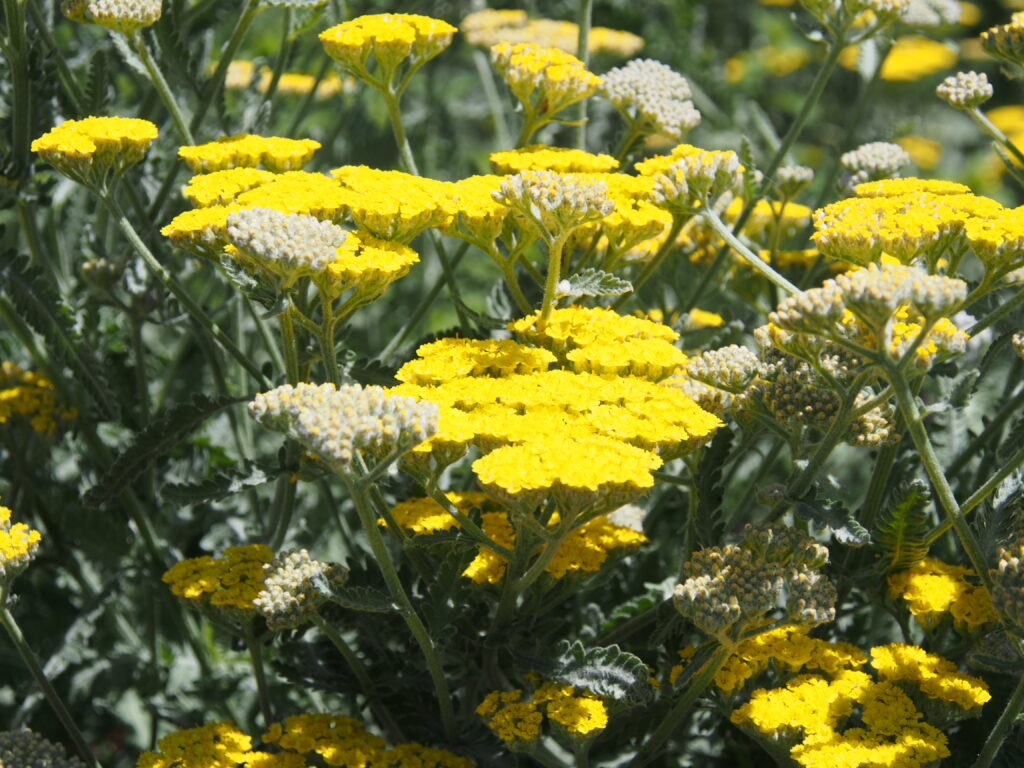
Achillea spp & cvs Yarrow
-
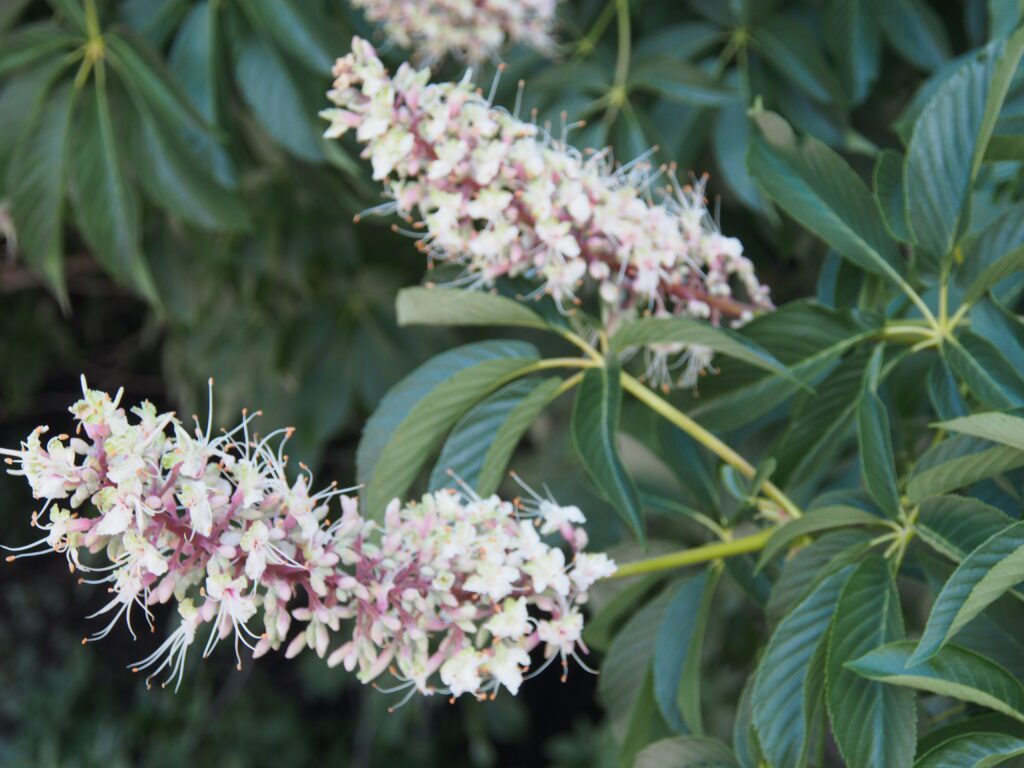
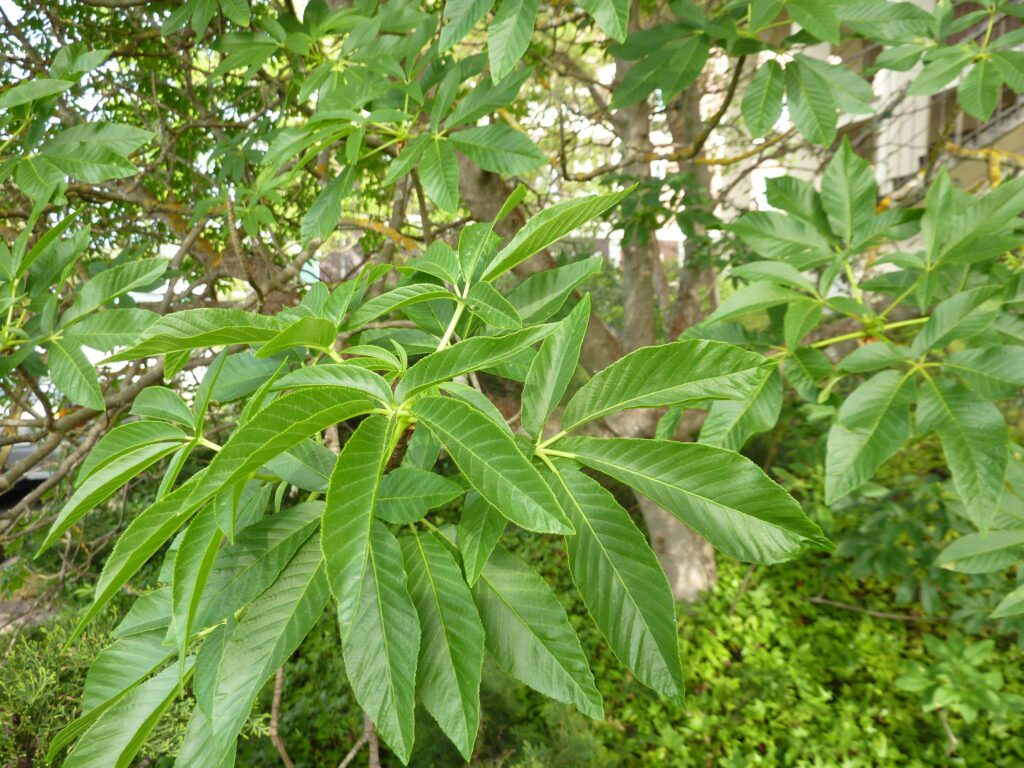
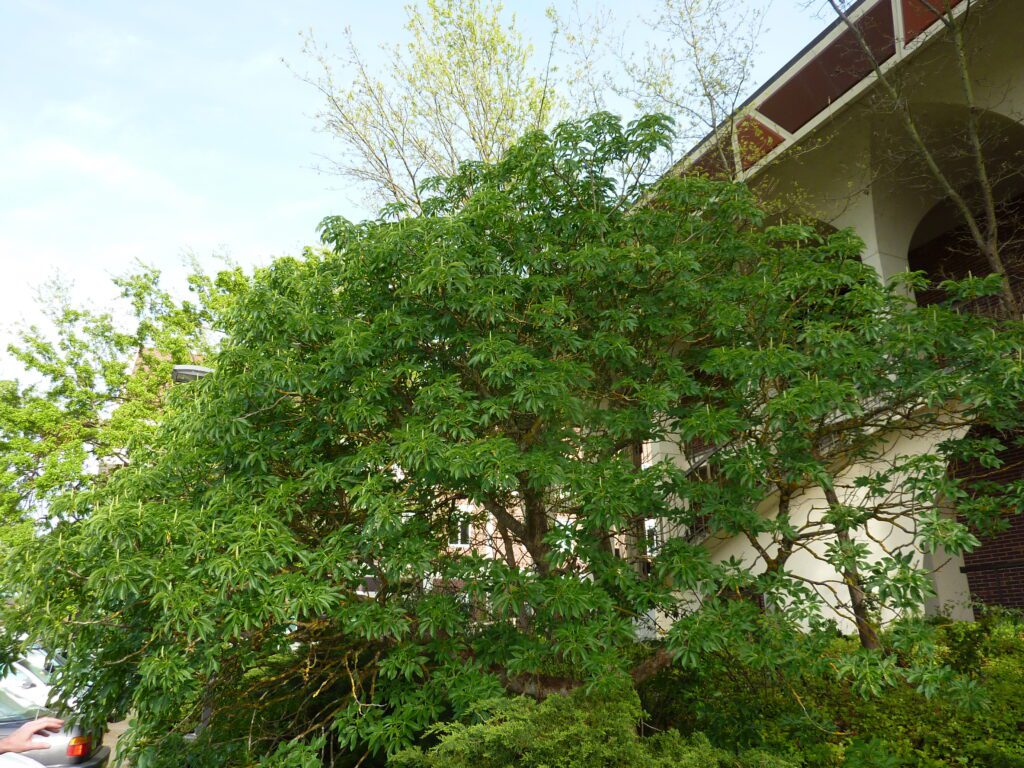
Aesculus californica California Buckeye
-
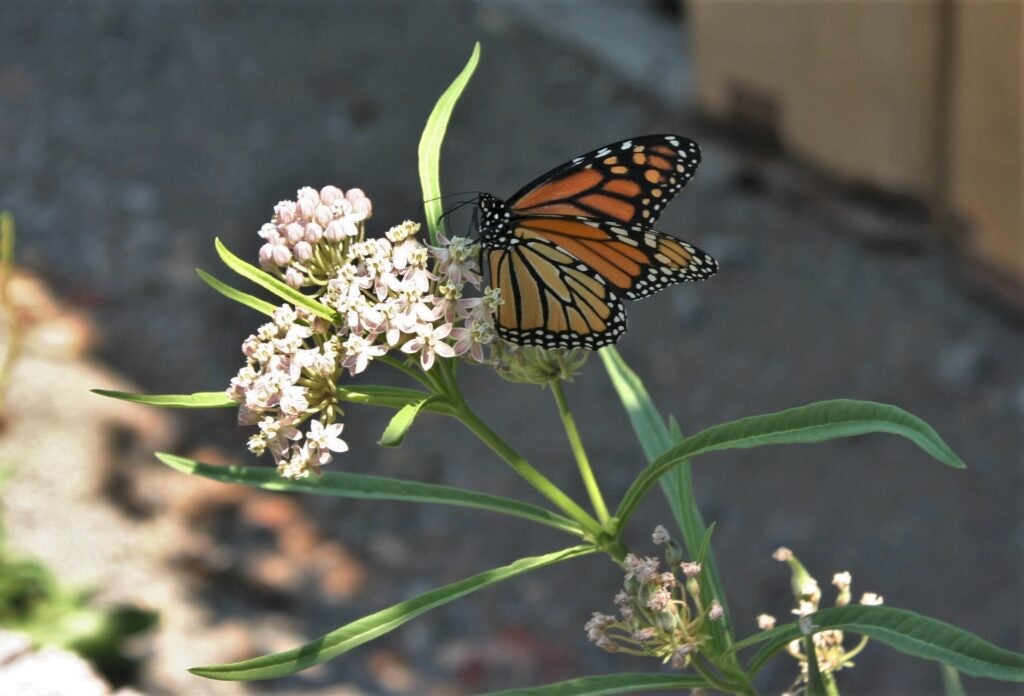
Asclepias spp Milkweed
-
Cercis occidentalis Western Redbud
-
Dudleya spp Cliff Lettuce, Live Forever
-
Erigeron spp Beach Aster, Seaside Daisy
-
Eriogonum spp Buckwheat
-
Juncus patens California Grey Rush
-
Mimulus aurantiacus and hybrids Sticky Monkey Flower
-
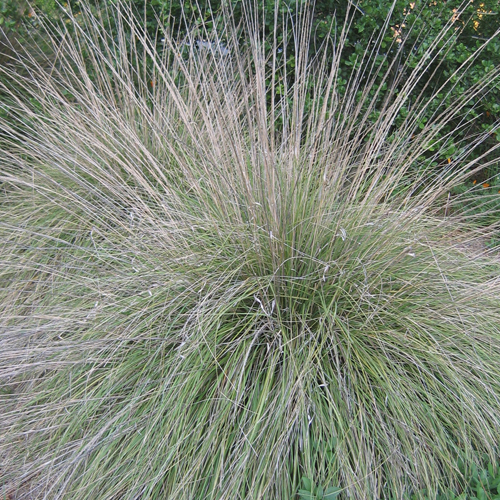
Muhlenbergia spp Muhly Grass, Deer Grass
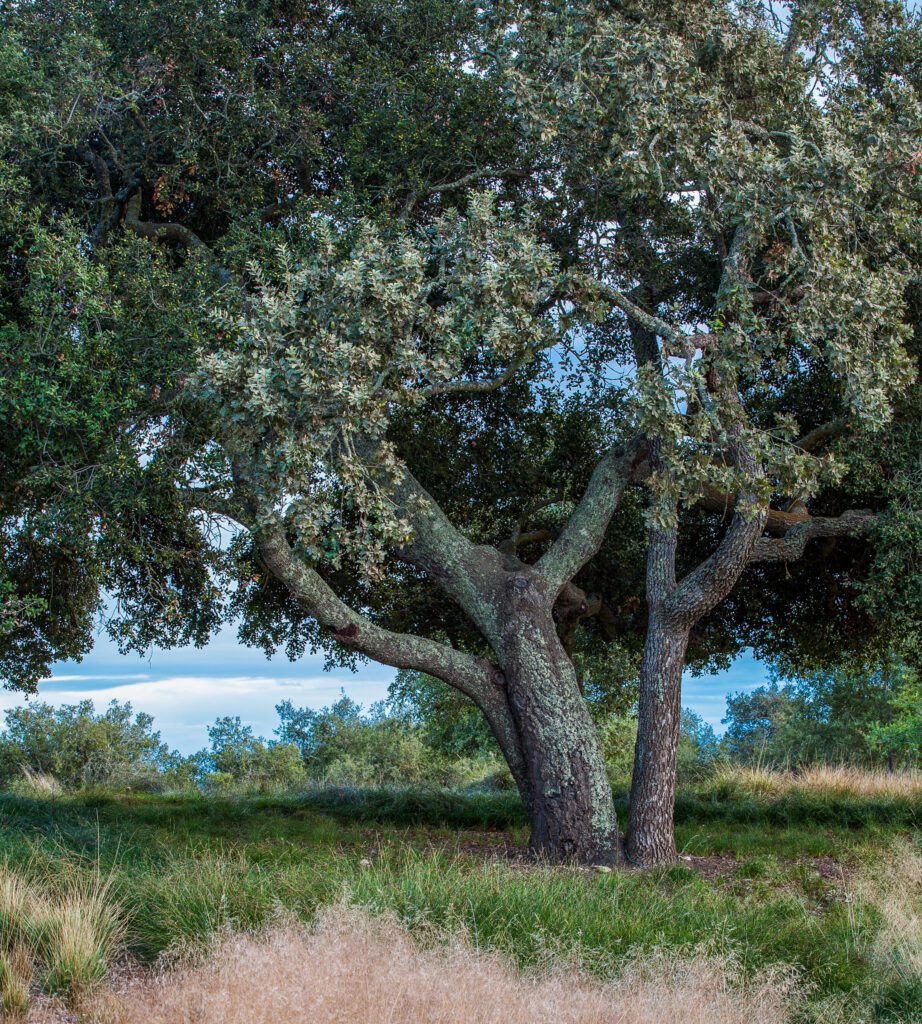
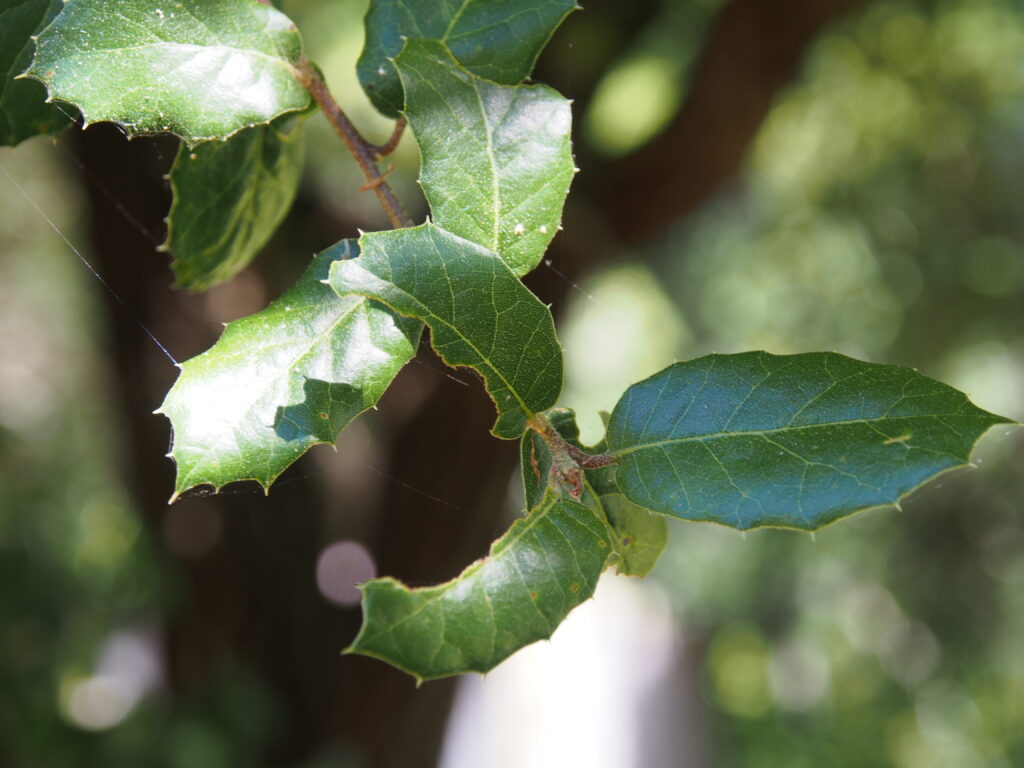
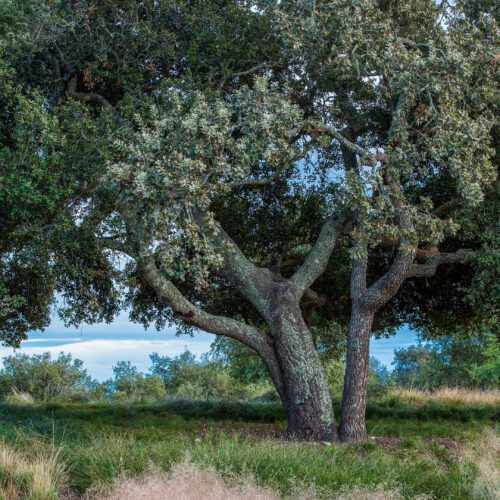
Woody perennial, evergreen tree. Large, dense and broadly rounded with green, spiny margin leaves. Native along coast and coastal mountains from Northern California. One of the best local natives for large properties. Susceptible to Sudden Oak Death.
- Water: Very Low
- Light: Full Sun
- Soil: Well Drained
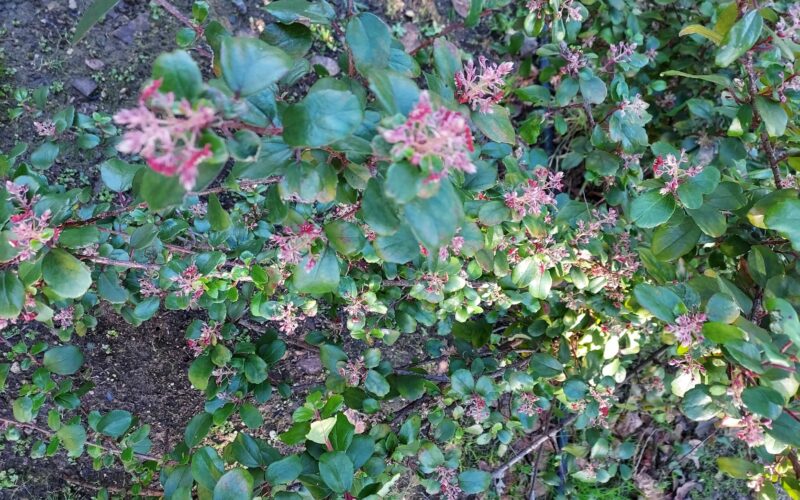
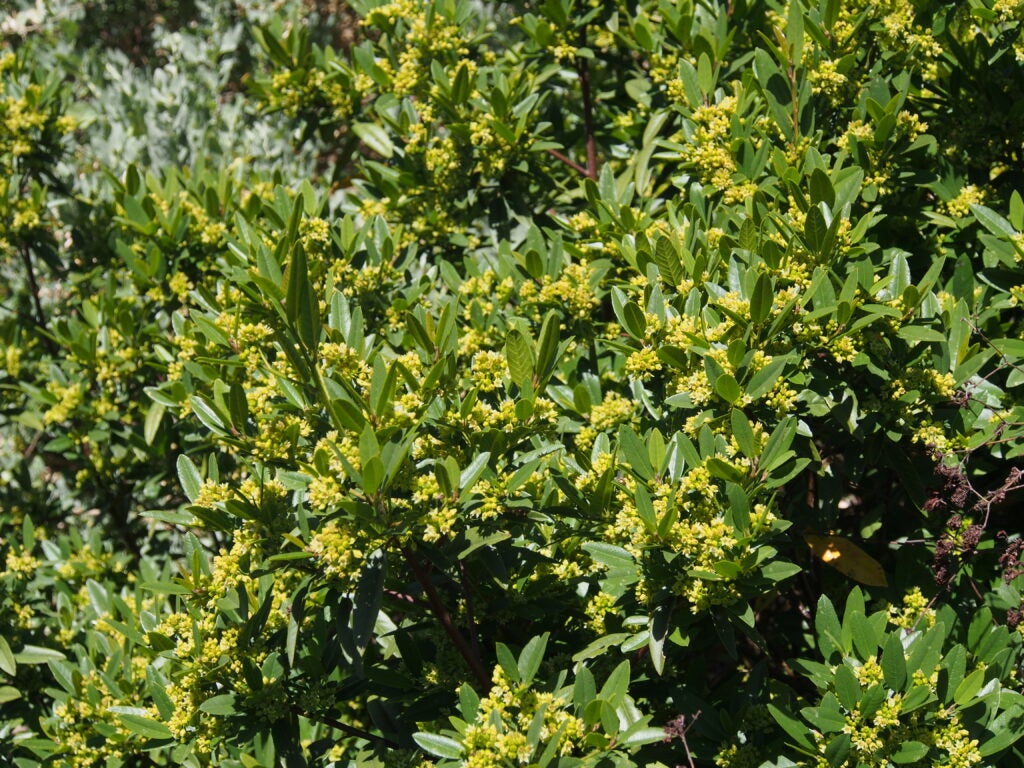
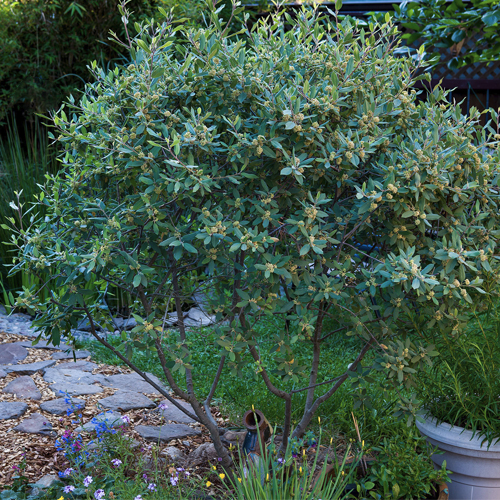
Evergreen shrub that has insignificant flowers followed by black berries. Flowers are attractive to pollinators, especially bees, and berries provide a food source for birds. Cultivars commonly sold in nurseries have differing growth habits and are often smaller than the species which grows 5-18’ x 10-18’.
Examples: F. c. ‘Eve Case’ (6-8’ x 6-8’), R. c. ‘Leatherleaf’ (5-6’ x 5-6’), R. c. ‘Mound San Bruno’ (6-8’ x 6-8’) with a dense, mounding growth habit.
Note: California coffeeberry was formerly classified as Rhamnus californica and is now classified as Frangula californica.
- Water: Low
- Light: Full SunPartial Shade
- Soil: Most Soils
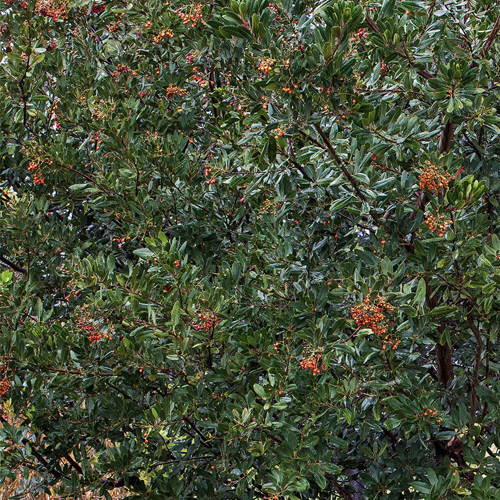
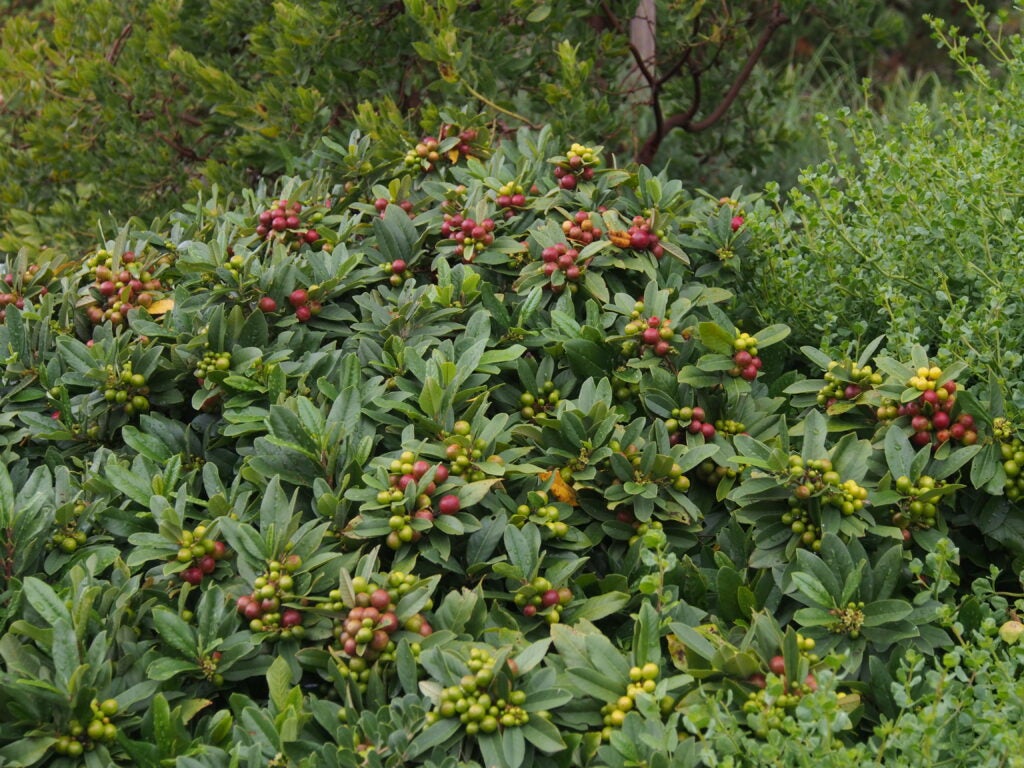
California native, evergreen shrub or small tree often seen growing in Sonoma and Marin county wildlands. Lacy, white flower clusters in spring attract pollinators; red berries in winter provide a splash of color and an important food source for birds. The name “Hollywood” was born from the abundance of toyon in the hills of southern California and its resemblance to European holly. The cultivar ‘Davis Gold’ has yellow berries and may be more disease-resistant than the species.
- Water: Low
- Light: Full SunPartial Shade
- Soil: Well Drained
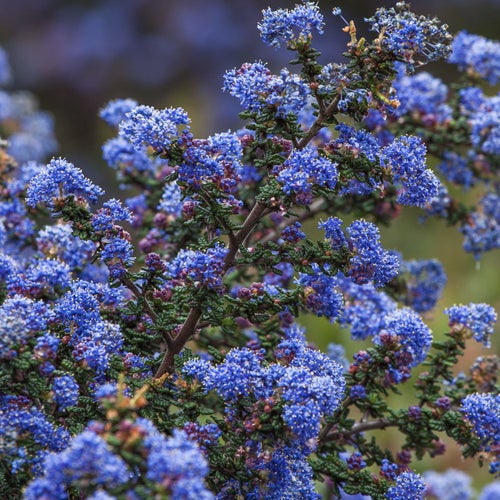
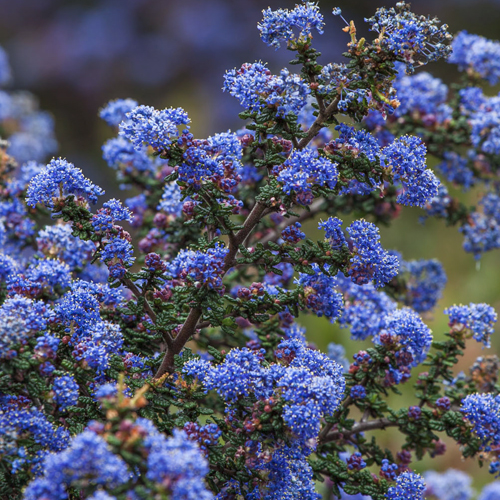
Ceanothus is a group of fast-growing, evergreen shrubs that vary from groundcovers to small trees, many of which are native to California. They provide a spectacular display of flowers in spring that will attract a multitude of pollinators. Flowers are followed by seeds that provide food for birds. The clusters of tiny flowers range from white to deep violet. Plants perform best with good drainage and minimal irrigation once established. Some do best in cooler coastal climates, but many thrive in hotter inland climates. Pay close attention to the mature size when selecting ceanothus to ensure that it has sufficient space for its natural form.
Groundcovers: C. ‘Centennial’ (1’ x 8’), C. gloriosus var. gloriosus ‘Anchor Bay’ (2’ x 8’), C. griseus var. horizontalis ‘Diamond Heights’ (variegated, 1’ x 4’), C. griseus var. horizontalis ‘Yankee Point’ (3’ x 12’), C. maritimus (2’ x 6’).
Shrubs: C. ‘Blue Jeans’ (6’ x 6’), C. Concha (6’ x 6’), C. ‘Dark Star’ (6’ x 8’), C. ‘Joyce Coulter’ (4’ x 12’), C. ‘Julia Phelps’ (8’ x 10’), C. cuneatus (8’ x 8’), C. thyrsiflorus ‘Skylark’ (4’ x 6’).
Large shrubs: C. ‘Frosty Blue’ (10’ x 12’), C. thyrsiflorus (20’ x 20’), C. t. ‘Snow Flurry’ (white flower, 20’ x 20’).
Trees: C. ‘Ray Hartman’ (15′ x 15′)
- Water: Very LowLow
- Light: Full SunPartial Shade
- Soil: Well Drained
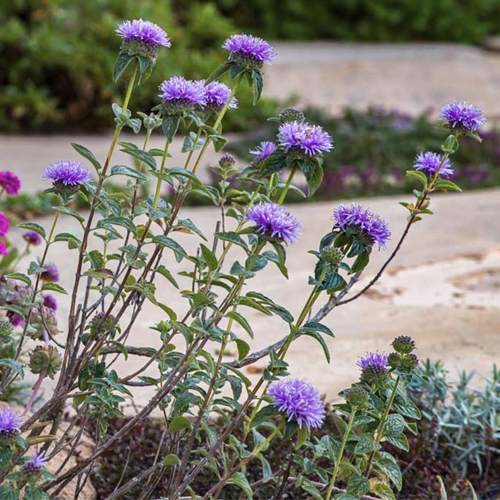
Coyote Mint is a compact perennial or sub-shrub with aromatic foliage and a sprawling habit. Dense heads of purple flowers form in spring-to-summer that are attractive to butterflies and other insects. The low-growth habit of coyote mint makes it an excellent choice for the front of a border, along the edge of a path, or beneath larger shrubs such as manzanita or ceanothus. Monardella villosa spp. franciscana ‘Russian River’ and Monardella villosa spp. villosa ‘Mark West’ are available selections from Sonoma County.
- Water: Very Low
- Light: Full Sun
- Soil: Most Soils
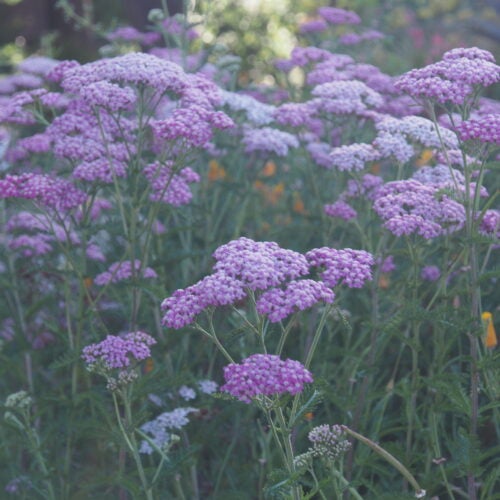
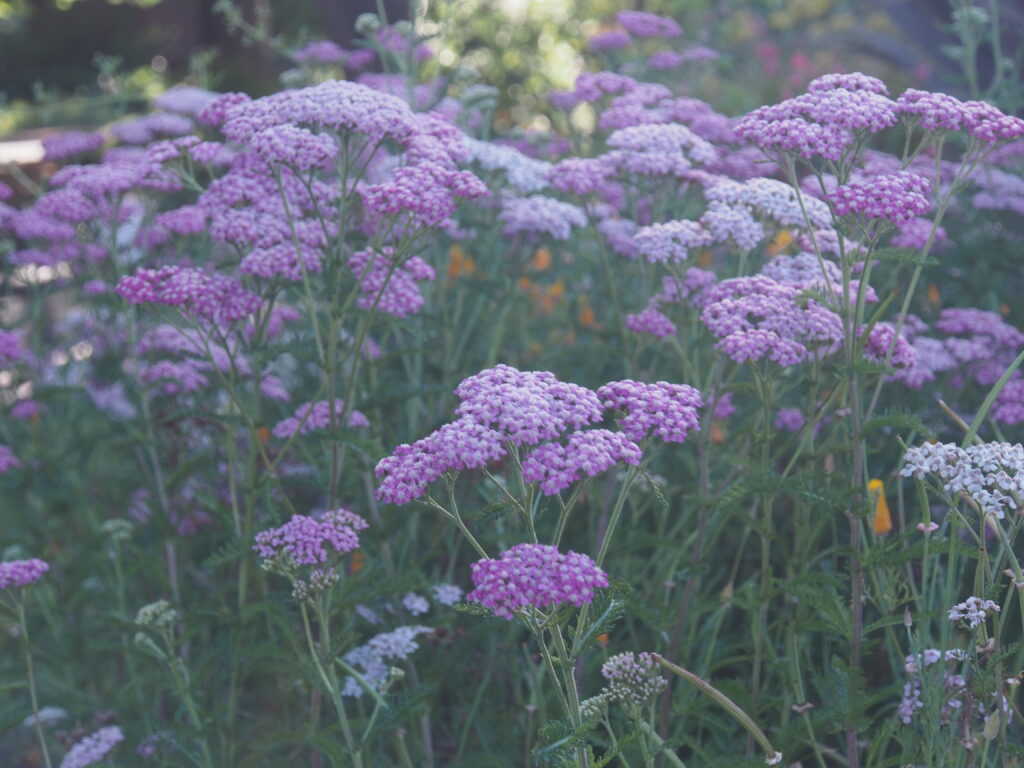
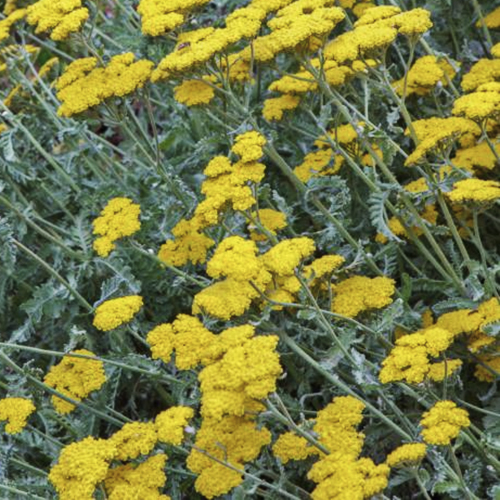
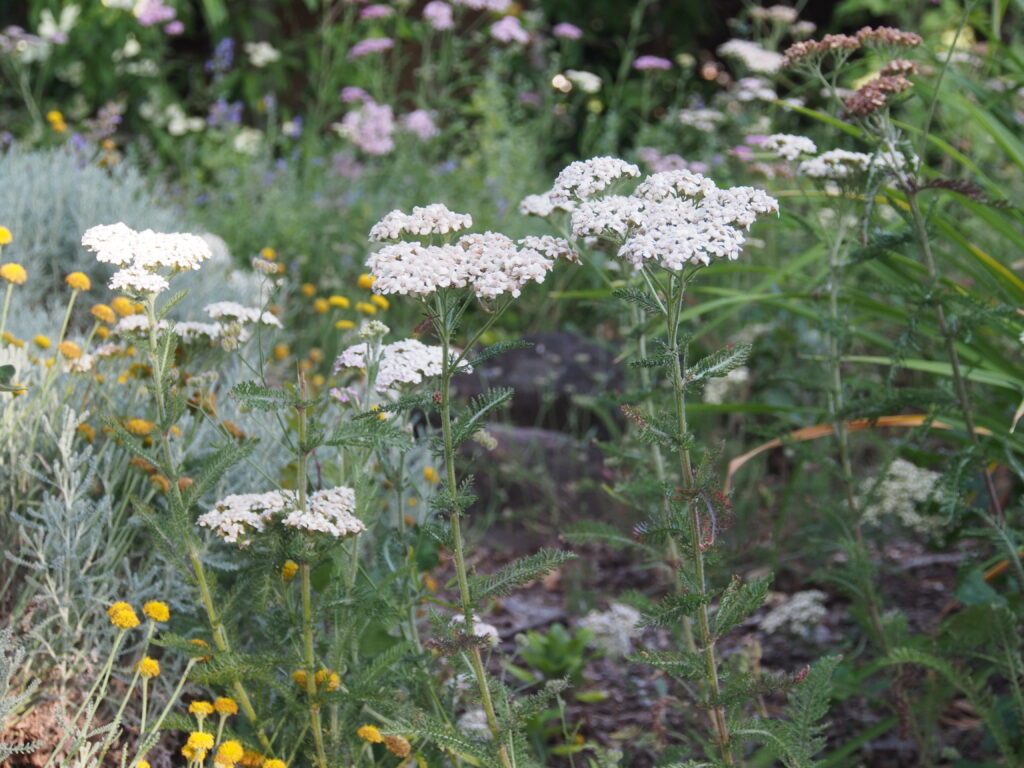
Yarrows are variable low-growing, spreading herbaceous perennials with finely divided leaves that inhabit many temperate regions in the Northern Hemisphere. Flattish clusters of flowers form in spring and well into summer and provide an important nectar source for pollinators and insects. Yarrow can help to stabilize slopes and is a good addition to the upper level of rain gardens and swales. Colors include yellow, pink, and red.
California native spp & cvs: A. millefolium (common yarrow), A. m. ‘Calistoga’, A. m. ‘Island Pink’, A. m. ‘Sonoma Coast’, A. m. ‘Terracotta’.
Other yarrows: A. filipendulina (fern leaf yarrow), A. f. ‘Coronation Gold’, A. ‘Moonshine’, A. tomentosa (woolly yarrow).
- Water: Low
- Light: Full SunPartial Shade
- Soil: Most Soils
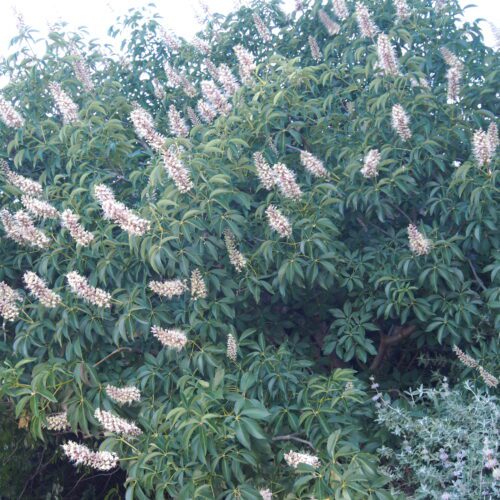
Large, multi-trunked shrub or small tree. Silvery gray bark with green leaves and clusters of fragrant white flowers. Summer deciduous, defoliating in early July and growing during wet winter and spring months. Only buckeye native to California, small trees are found in Southern regions while large shrubs are found in Northern regions.
- Water: Very Low
- Light: Full Sun
- Soil: Well Drained
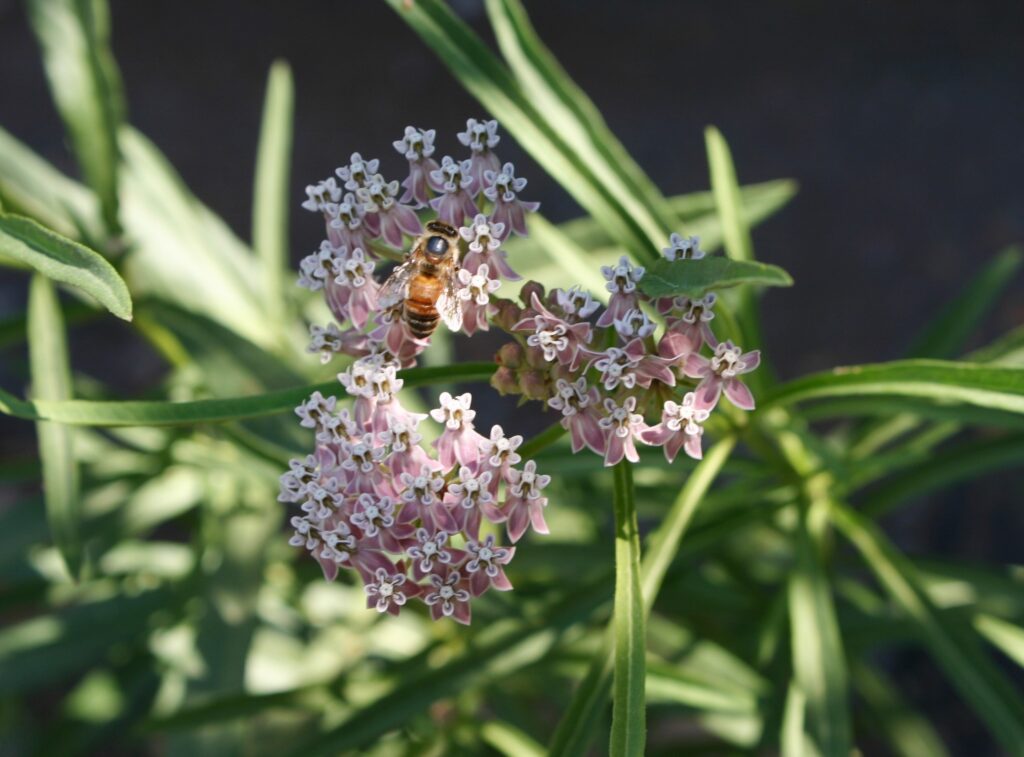
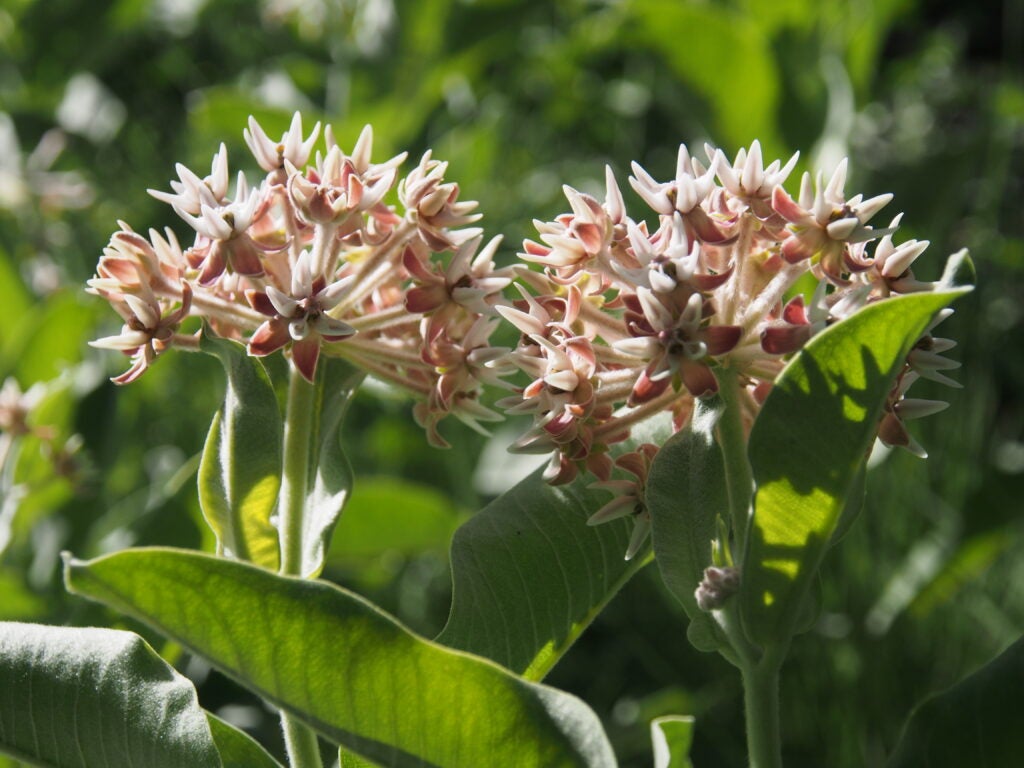
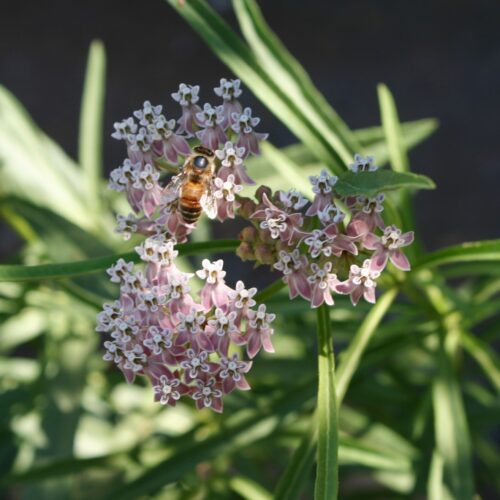
Colony-forming, herbaceous perennials with several species providing important habitat and larval food sources for the monarch butterfly while attracting a diverse array of insects.
California milkweeds remain dormant during the colder months. Stems that emerge in April or May bear clusters of small, star-like flowers in summer followed by silky-tailed seeds that are dispersed by wind. A. fascicularis (narrow-leaved milkweed, 1-3’) is the preferred food source for monarch larvae. A. speciosa (showy milkweed, 2-4’) has larger, soft foliage, showier flower clusters, and is also a food source for monarch larvae. A. cordifolia (heart leaf milkweed, 1-2′) has heart-shaped leaves and is also a food source for monarch larvae.
- Water: Low
- Light: Full SunPartial Shade
- Soil: Most Soils
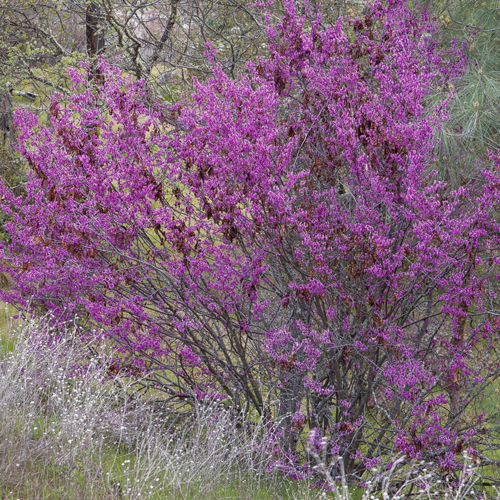
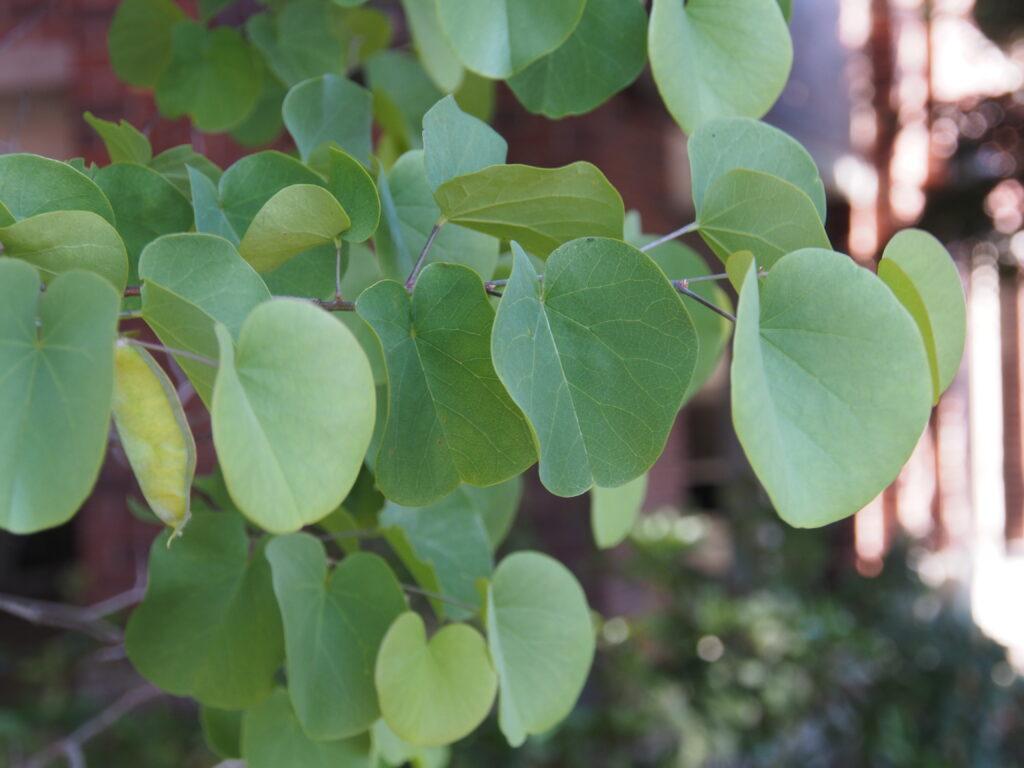
Western redbud is an ornamental, multi-trunked and deciduous, large shrub or small tree with year-round interest that provides a California native and very low-water alternative to the moderate-water Cercis canadensis. Magenta to rosy pink blossoms that resemble pea flowers cover bare branches in late winter to early spring. Apple green, heart-shaped leaves emerge to accompany the flowers. Over the summer, the leaves become more leathery and bluish green, and seed pods mature and remain into the winter months.
- Water: Very Low
- Light: Full SunPartial Shade
- Soil: Most Soils
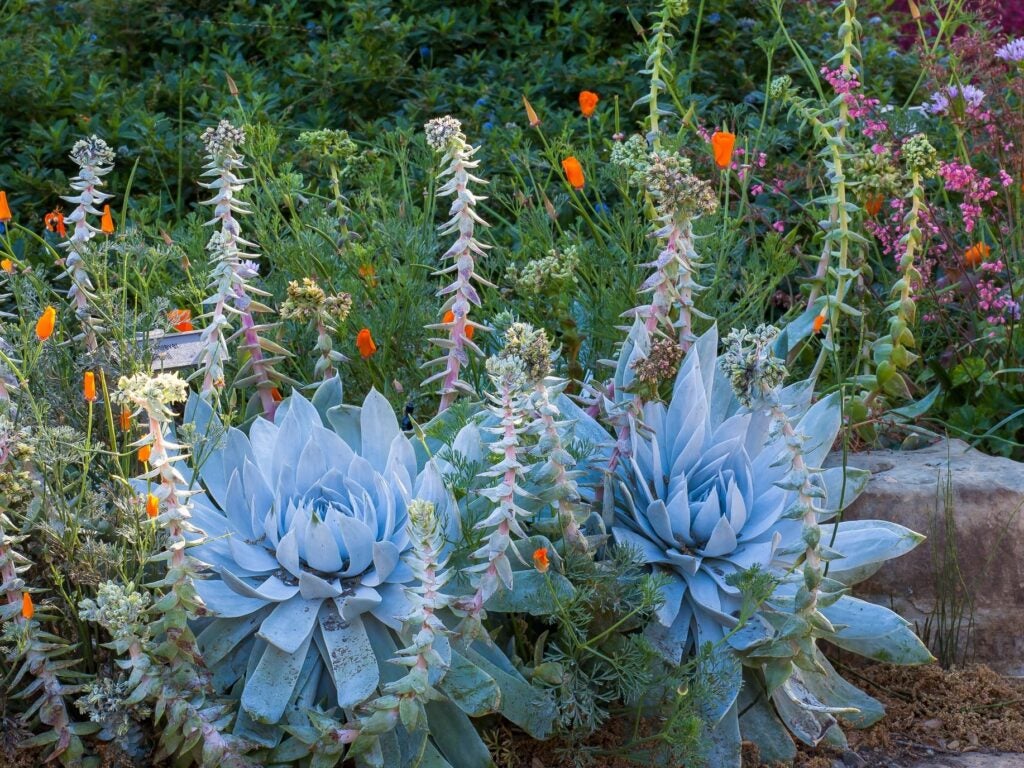
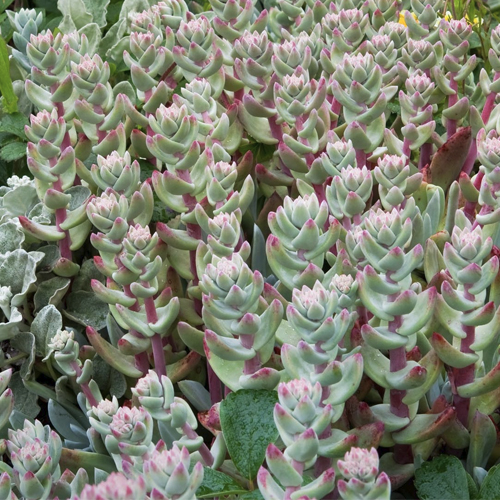
Group of succulent perennials with a characteristic rosette shape and chalky appearance that are mostly native to central and southern California where they grow on rocky outcroppings and coastal cliffs. Provide these plants with good drainage and afternoon shade in hotter areas. Larger forms can provide a striking accent plant in summer-dry gardens. Plant dudleyas at a slight angle to help water drain away.
Examples: giant chalk dudleya (D. brittonii, 12-18”), sand lettuce (D. caespitosa, up to 8”), bluff lettuce (D. farinosa, 4”, forms small colonies), chalk liveforever (D. pulverulenta, up to 2’).
- Water: Low
- Light: Full SunPartial Shade
- Soil: Well Drained
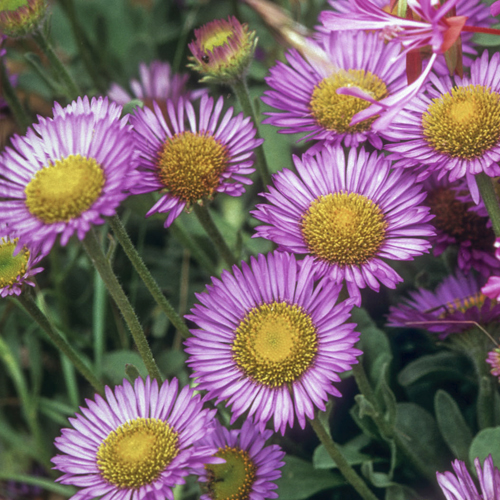
Group of flowering annuals and perennials mostly native to North America. Two species are commonly grown in California gardens. Beach aster (E. glaucus, 12” x 18”) is native to coastal California and Oregon and has purple flowers with yellow centers from spring into summer. Santa Barbara daisy (E. karvinskianus, 10-18” x 2-3’) has white and pink flowers with yellow centers. This plant can self-sow aggressively but is easily pulled.
Examples: E. g. ‘Wayne Roderick’ has deep purple flowers. E. g. ‘White Lights’ is a white- flowering form from Sonoma County.
- Water: Low
- Light: Full SunPartial Shade
- Soil: Most Soils
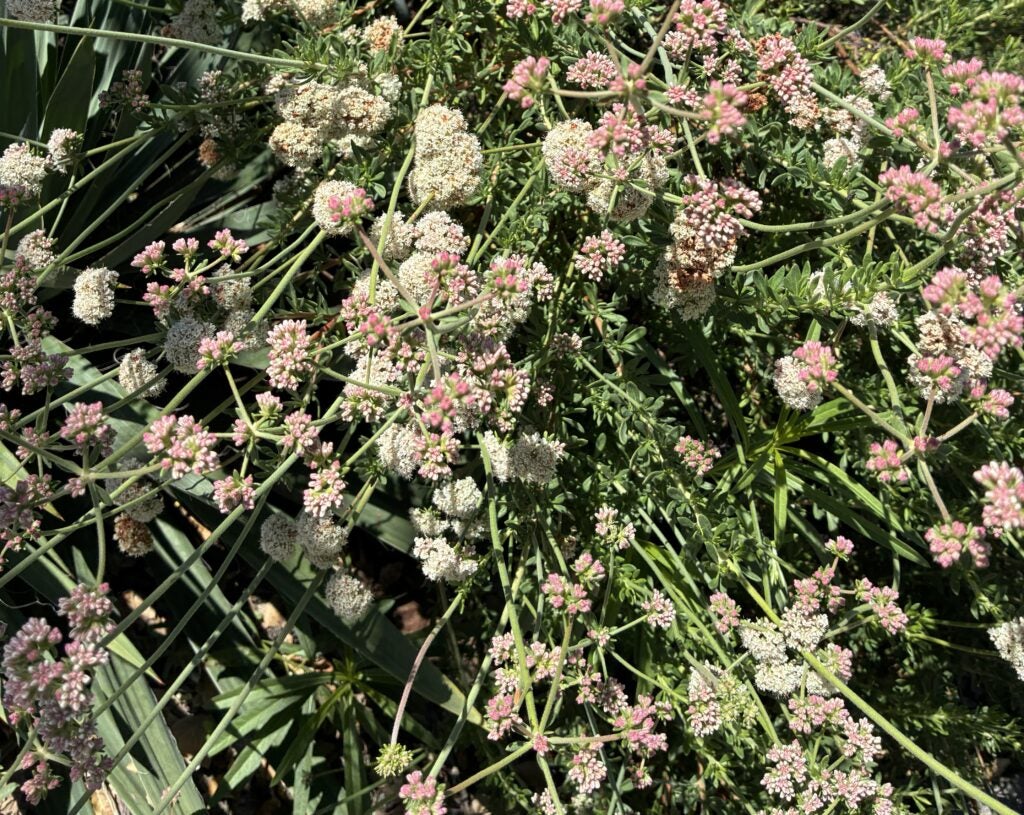
Diverse group of flowering, evergreen shrubs and perennials and annuals found throughout the western United States. Most available in nurseries are native to California and generally prefer drier sites. Flowers colors include yellow, white, pink, and red and are held above foliage in umbels that dry over time and are popular in flower arrangements. Buckwheats provide pollen and nectar for bees and butterflies, larval food for butterflies, seeds for birds, and cover for many creatures.
Examples:
- Santa Cruz Island buckwheat (E. arborescens, 3-4’ x 4-5’) densely mounded with white flowers.
- Saffron buckwheat (E. crocatum, 1-2’ x 2-3’) with chartreuse-yellow flowers and pale leaves.
- California buckwheat (E. fasciculatum, 2-3’ x 3’) and its low-growing cultivars such as E. f. ‘Warriner Lytle.’
- Catherine’s lace (E. giganteum, 4-8’ x 6-10’) with delicate, white flowers and soft pale leaves.
- Red-flowered buckwheat (E. grande var. Rubescens, 1-2’ x 2-3’) low-mounding perennial with rose-pink flowers, coastal bluff buckwheat (E. latifolium, up to 12” x 1-2’.)
- Sulfur buckwheat (E. umbellatum, 6-18” x 1-3’) with intense yellow flowers and cultivars E. u. var. aureum ‘Kannah Creek’ and E. u. Var. ‘Shasta Sulphur’.
- Water: Very LowLow
- Light: Full SunPartial Shade
- Soil: Well Drained
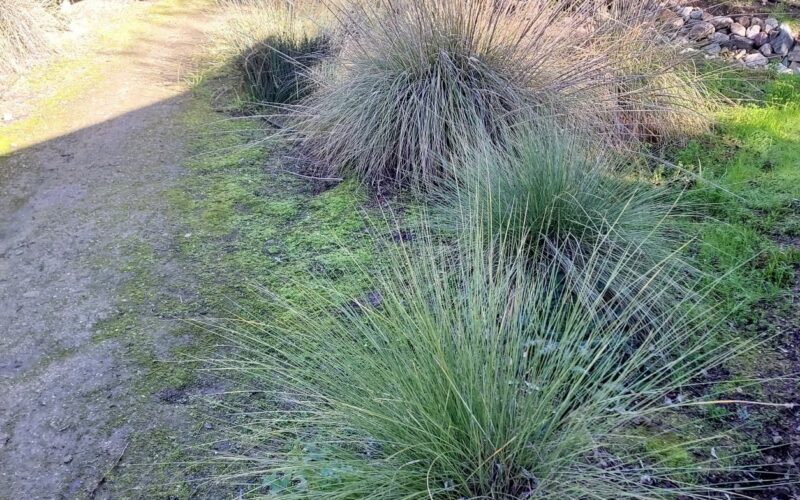
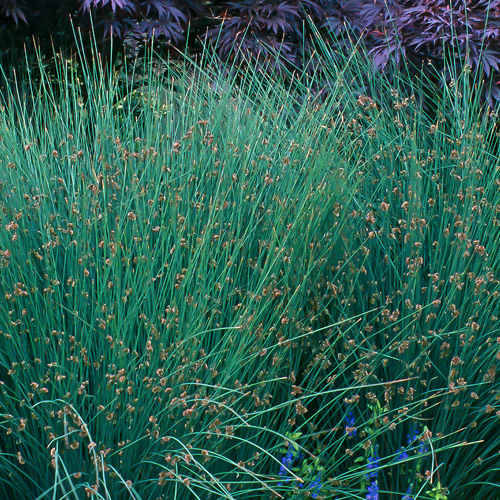
California gray rush is a go-to species for the summer-dry rain garden. It will thrive in moist conditions and its roots will help stabilize soil and filter stormwater runoff. It is also tolerant of extended periods of drought. Clumps of stiff, upright foliage provide an interesting contrast among other perennials. ‘Elk Blue’ is a widely available selection from Mendocino County. Its bluish gray foliage is shorter than the typical gray rush.
- Water: Low
- Light: Full SunPartial Shade
- Soil: Well Drained
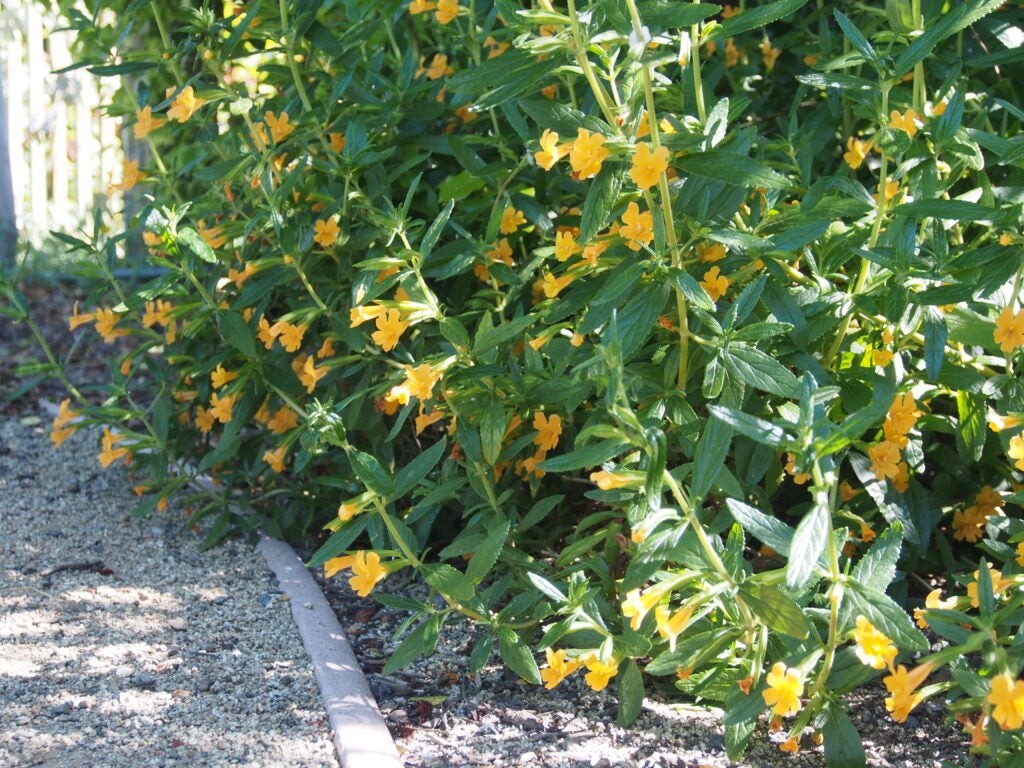
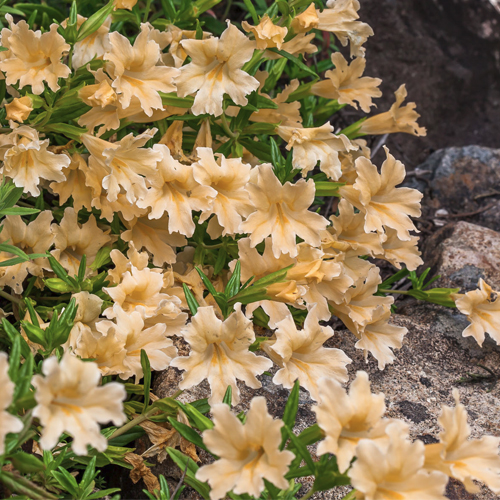
The orange, tubular flowers of sticky monkey flower can be enjoyed in many locations throughout Sonoma and Marin counties in spring and summer, a testament to how well this plant is adapted to hot and dry conditions. The slightly sticky leaves benefit from light pinching and pruning to maintain an attractive appearance and support for the beautiful flowers. Many hybrids provide color variation. Do not confuse this plant with the red-flowered scarlet monkey flower (Mimulus cardinalis), an herbaceous riparian plant that requires regular water to thrive.
- Water: Very Low
- Light: Full SunPartial Shade
- Soil: Sandy
Large, showy, clumping, warm-season grasses native to the Southern United States, Mexico, and Central and South America. Can be grown in masses but require sufficient space for the mature size and form to develop. Arching plumes of flowers on long stalks provide significant ornamental value to these low-maintenance and drought-tolerant grasses.
Examples: Pink muhly (M. capillaris, 2-3′ x 2-3’) with feathery pink flowers; pine muhly (M. dubia, 2-3’ x 2-3’) with light purple flowers; Lindheimer muhly (M. lindheimeri, 3-5’ x 4-5’) with creamy yellow flowers that provide a pronounced display; and the California native deer grass (M. rigens, 3’ x 3-4’).
- Water: Low
- Light: Full SunPartial Shade
- Soil: Well Drained