Hall Middle School Habitat Landscape

BACK TO FULL TOUR

Garden Features

1

Drought Tolerant

2

California Natives

3

Deer Resistant

4

Drip Irrigation

5

Pesticide Free

6

Reclaimed/Recycled Materials

7

Smart Irrigation Controller

8

Lawn Conversion

9

Permeable Surfaces

10

Wildlife Habitat

11

Plant Labels

Partner: Marin Water

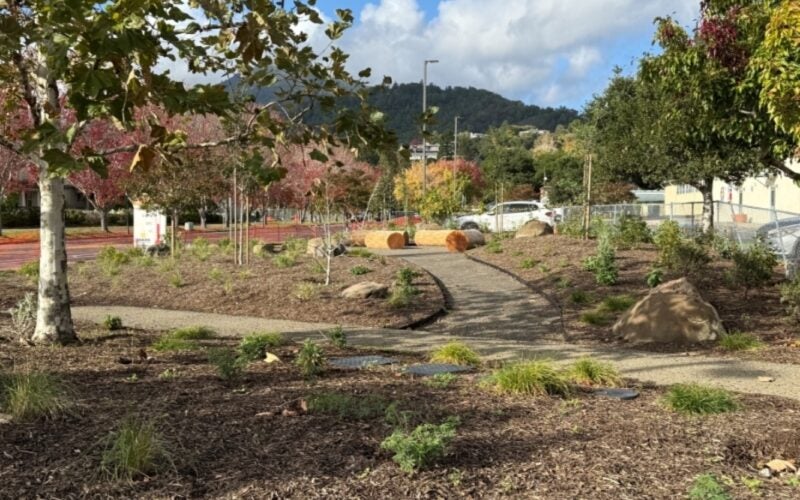
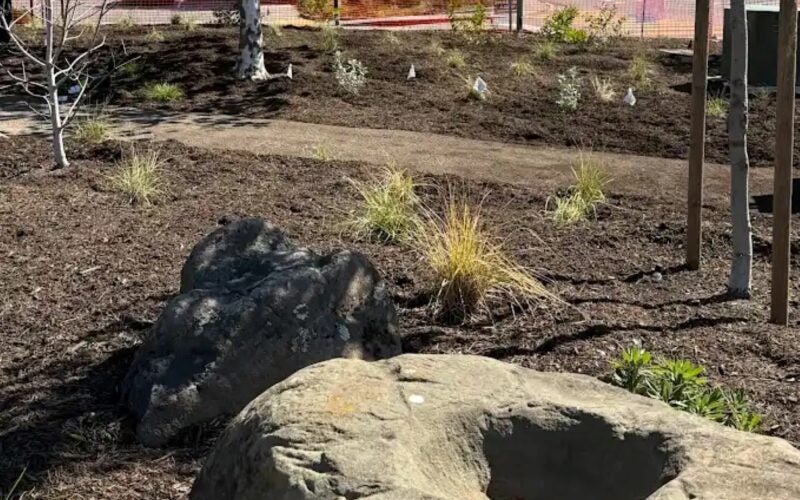
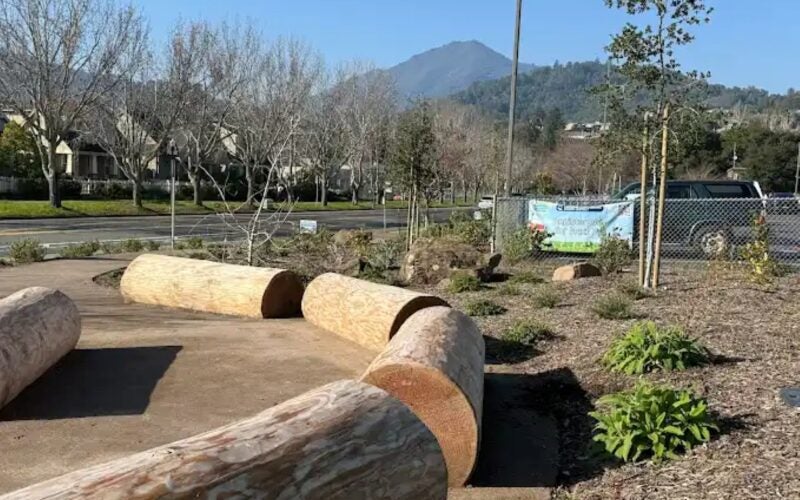
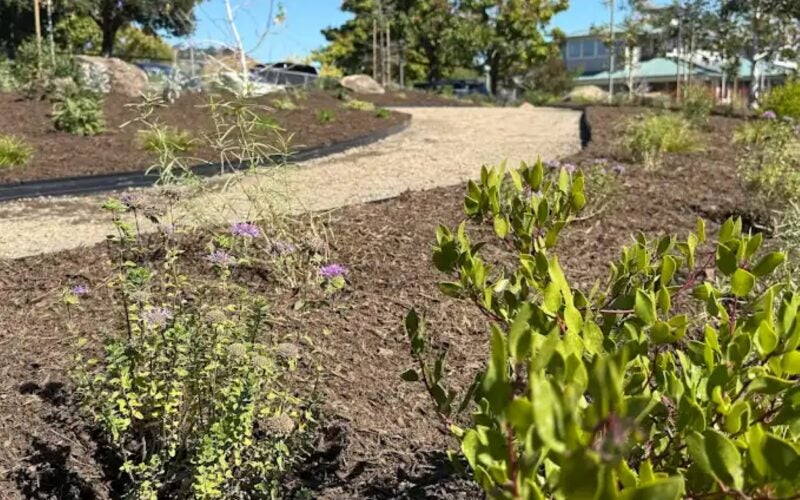
This Native Habitat Landscape in front of Hall Middle School was planted in fall 2025 to show that public landscapes can be both sustainable and beautiful, and showcase that habitat can be part of the local landscape.

The landscape represents a growing footprint in our local habitat corridor, demonstrating what community collaboration, thoughtful design, and student engagement can achieve for biodiversity and environmental resilience.

Transforming what was once fallow land, the garden restores essential native plant communities that expand the Twin Cities’ habitat network. Designed with drought-tolerant species, it provides year-round food, shelter, and nesting opportunities for pollinators, birds, and other wildlife.

As both a public landscape and an outdoor classroom, the garden enriches the school’s curriculum through hands-on exploration of ecosystems, plant science, and sustainability, helping students see firsthand how native plants support healthy environments.

Its creation was made possible through the support of a state environmental grant. This garden ultimately reminds us that with care and creativity, our public landscapes can blossom into powerful pockets of biodiversity.
Plants in this Garden
Plant Picker
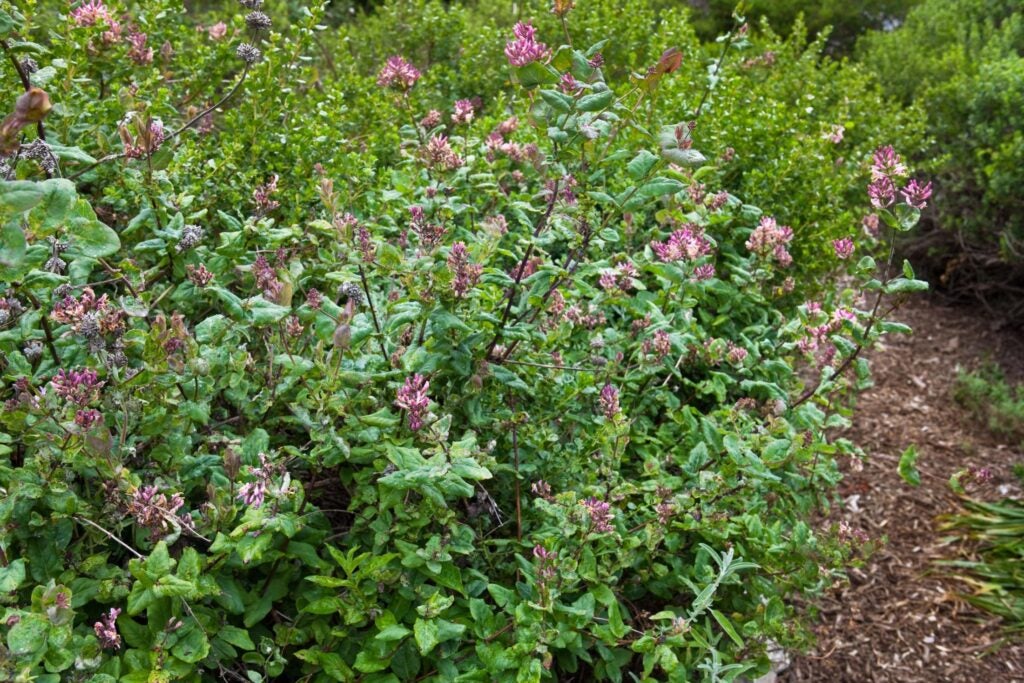
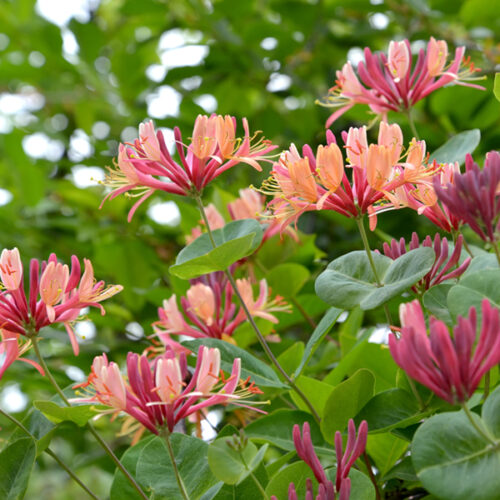
Large, round, green leaves and magenta tubular flowers insides of light pink honeysuckle petals

Lonicera spp

Honeysuckle
Organization

Honeysuckle is a varied group of evergreen and deciduous shrubs and vines with fragrant, tubular flowers. Several species are native to California and are well suited to gardens in Sonoma and Marin counties. Flowers are attractive to bees and hummingbirds and berries provide food for birds.

Examples: California honeysuckle (Lonicera hispidula) is a deciduous, vining shrub often seen growing in woodland environments. Cream and pink flower clusters in spring are followed by red berries in late summer. Twinberry (Lonicera involucrata, 6-10’ x 6-10’) is a deciduous shrub that typically grows along streams and other moist places. Tubular, red and yellow flowers grow in pairs, followed by dark pairs of berries. Provide light shade in warmer locations.

  • Water: Low
  • Light: Full SunPartial Shade
  • Soil: Well Drained
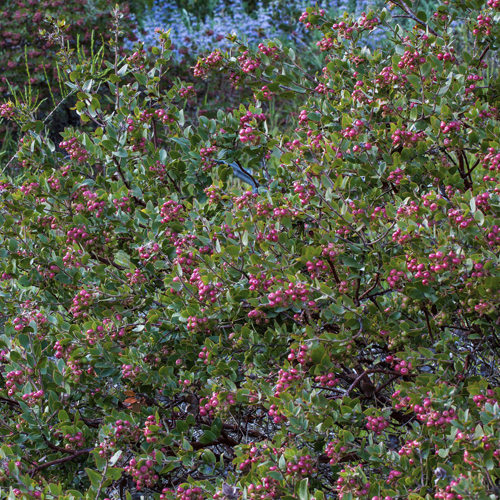
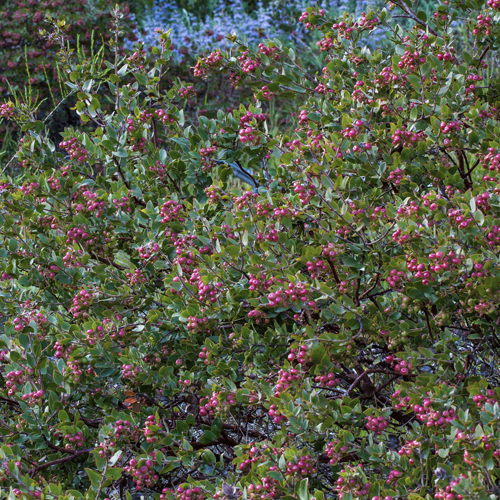
Manzanita bush with deep red fruits

Arctostaphylos spp & cvs

Manzanita, 'Dr. Hurd'
Organization

Manzanitas vary from carpet-forming groundcovers to small trees. Manzanitas have varying shades of striking, reddish brown bark and can provide structure to a garden. These plants have evergreen foliage, small white-to-pink, urn-shaped blossoms in late winter to early spring, and then small fruits that resemble tiny apples.

Groundcovers: A. ‘Emerald Carpet’ (1’ x 3-6’), A. ‘Pacific Mist’ (2-3’ x 6-8’), A. nummularia ‘Bear Belly’ (1’ x 3’), A. uva ursi ‘Radiant’ (6” x 4-6’), A. uva ursi ‘Wood’s Compct’ (1’ x 3’).

Shrubs: A. ‘Howard McMinn’ (5-7’ x 6-10’), A. ‘John Dourly’ (3-4’ x 5-6’), A. ‘Lester Rowntree’ (8-10’ x 10-15’), A. ‘Sunset‘ (5-7’), A. bakeri ‘Louis Edmunds’ (8-10’), A. manzanita ‘Sentinel’ (6-8’ x 5’), A. hookeri ‘Wayside’ (3′ x 8′).

Trees: A. manzanita ‘Dr. Hurd’ (10-15′)

  • Water: Very LowLow
  • Light: Full SunPartial Shade
  • Soil: Well Drained
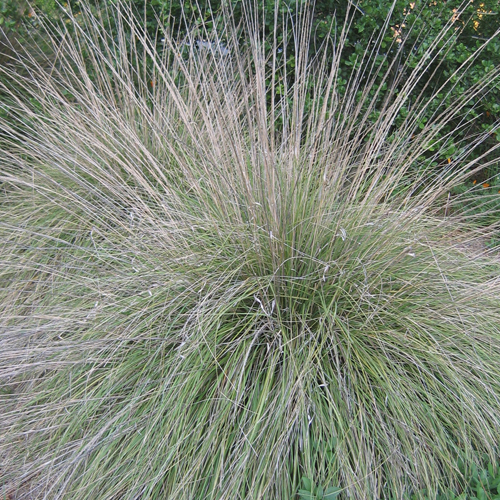
A large bunch of grass with green at the base of each blade and light brown at the tips.

Muhlenbergia spp

Muhly Grass, Deer Grass
Organization

Large, showy, clumping, warm-season grasses native to the Southern United States, Mexico, and Central and South America. Can be grown in masses but require sufficient space for the mature size and form to develop. Arching plumes of flowers on long stalks provide significant ornamental value to these low-maintenance and drought-tolerant grasses.

Examples:  Pink muhly (M. capillaris, 2-3′ x 2-3’) with feathery pink flowers; pine muhly (M. dubia, 2-3’ x 2-3’) with light purple flowers; Lindheimer muhly (M. lindheimeri, 3-5’ x 4-5’) with creamy yellow flowers that provide a pronounced display; and the California native deer grass (M. rigens, 3’ x 3-4’).

  • Water: Low
  • Light: Full SunPartial Shade
  • Soil: Well Drained
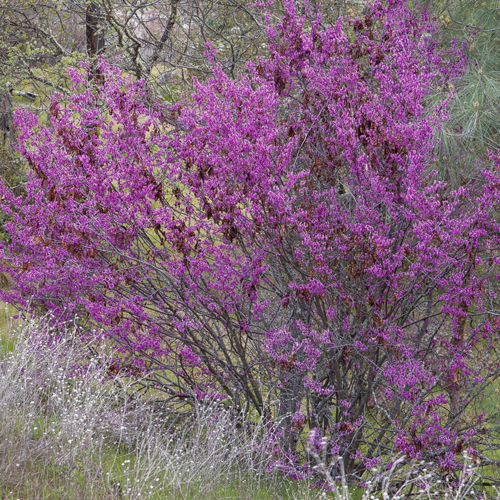
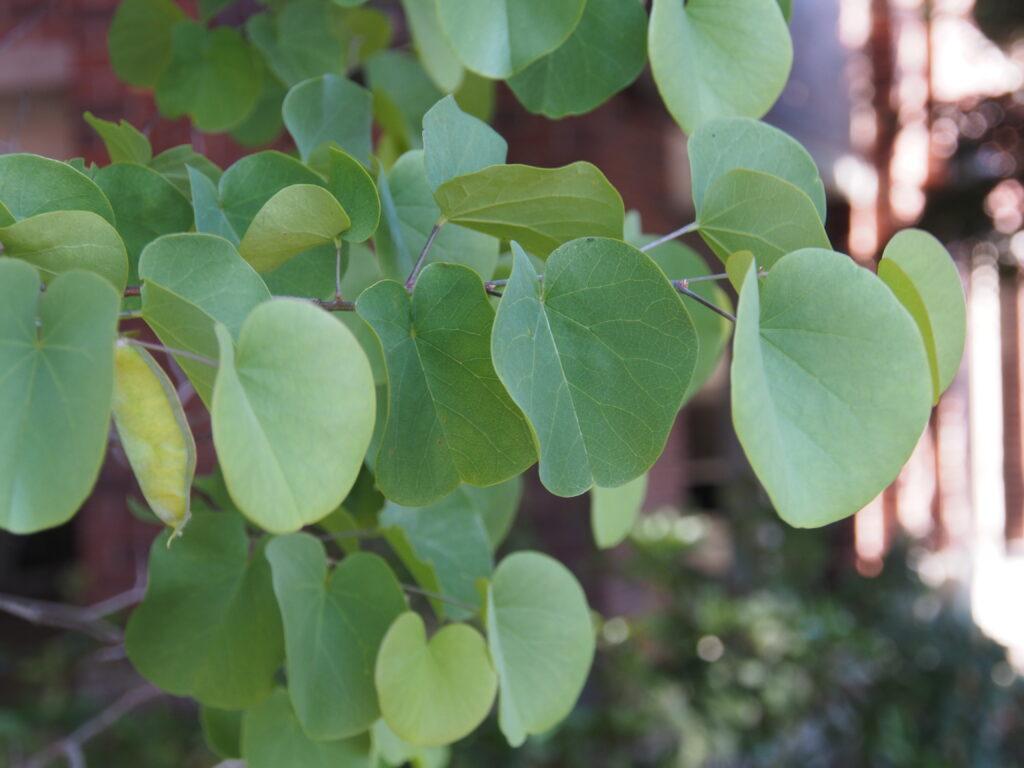
Winter and spring form of western redbud with magenta leaves
Green-blue leaves of the summer form of western redbud

Cercis occidentalis

Western Redbud
Organization

Western redbud is an ornamental, multi-trunked and deciduous, large shrub or small tree with year-round interest that provides a California native and very low-water alternative to the moderate-water Cercis canadensis. Magenta to rosy pink blossoms that resemble pea flowers cover bare branches in late winter to early spring. Apple green, heart-shaped leaves emerge to accompany the flowers. Over the summer, the leaves become more leathery and bluish green, and seed pods mature and remain into the winter months.

  • Water: Very Low
  • Light: Full SunPartial Shade
  • Soil: Most Soils
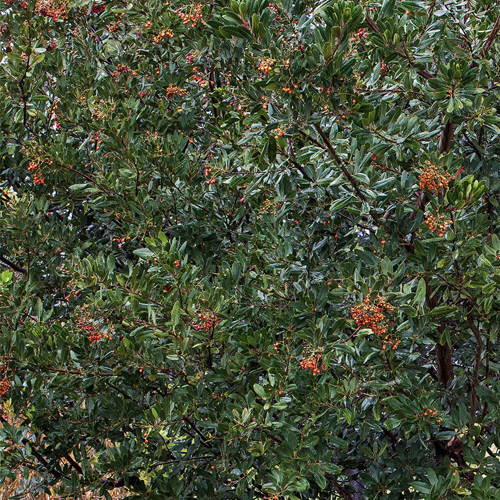
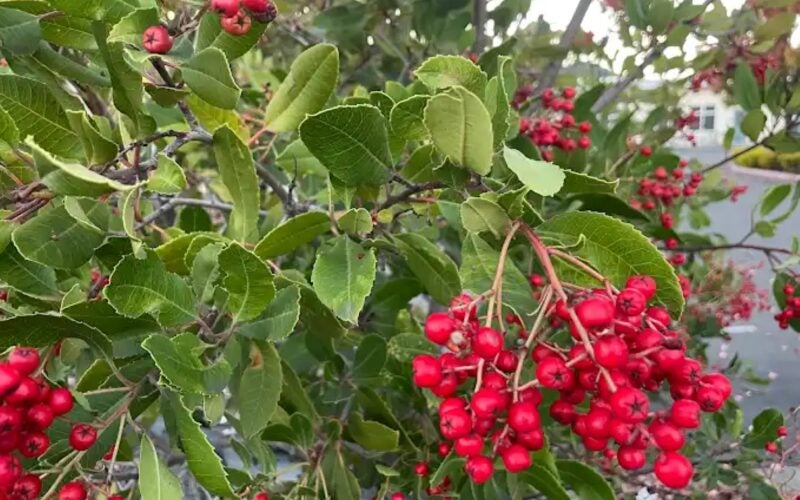
Dark green oval leaves and red berry clusters on dark brown branches

Heteromeles arbutifolia

Toyon
Organization

California native, evergreen shrub or small tree often seen growing in Sonoma and Marin county wildlands. Lacy, white flower clusters in spring attract pollinators; red berries in winter provide a splash of color and an important food source for birds. The name “Hollywood” was born from the abundance of toyon in the hills of southern California and its resemblance to European holly. The cultivar ‘Davis Gold’ has yellow berries and may be more disease-resistant than the species.

  • Water: Low
  • Light: Full SunPartial Shade
  • Soil: Well Drained
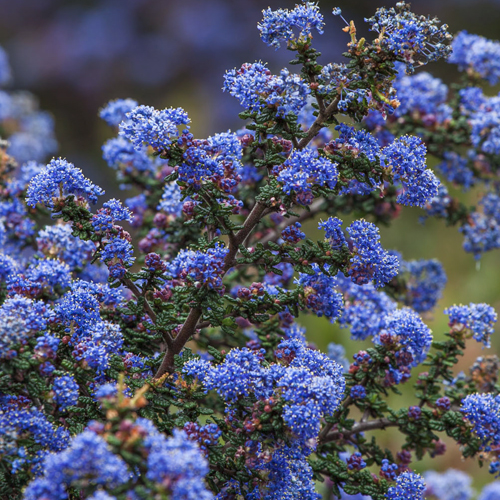
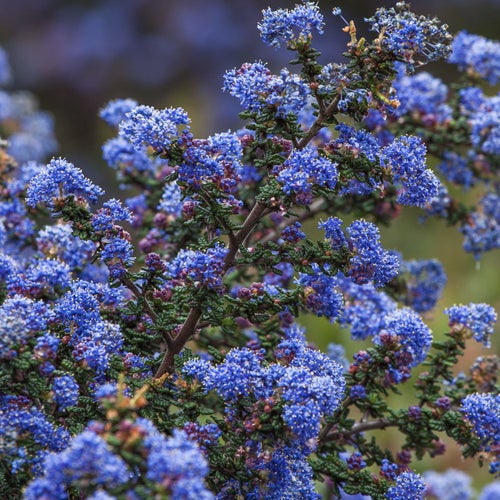
California Lilac ceanothus variety with clusters of small, vibrant blue flowers and dark green leaves

Ceanothus spp & cvs

Ceanothus
Organization

Ceanothus is a group of fast-growing, evergreen shrubs that vary from groundcovers to small trees, many of which are native to California. They provide a spectacular display of flowers in spring that will attract a multitude of pollinators. Flowers are followed by seeds that provide food for birds. The clusters of tiny flowers range from white to deep violet. Plants perform best with good drainage and minimal irrigation once established. Some do best in cooler coastal climates, but many thrive in hotter inland climates. Pay close attention to the mature size when selecting ceanothus to ensure that it has sufficient space for its natural form.

Groundcovers: C. ‘Centennial’ (1’ x 8’), C. gloriosus var. gloriosus ‘Anchor Bay’ (2’ x 8’), C. griseus var. horizontalis ‘Diamond Heights’ (variegated, 1’ x 4’), C. griseus var. horizontalis ‘Yankee Point’ (3’ x 12’), C. maritimus (2’ x 6’).

Shrubs: C. ‘Blue Jeans’ (6’ x 6’), C. Concha (6’ x 6’), C. ‘Dark Star’ (6’ x 8’), C. ‘Joyce Coulter’ (4’ x 12’), C. ‘Julia Phelps’ (8’ x 10’), C. cuneatus (8’ x 8’), C. thyrsiflorus ‘Skylark’ (4’ x 6’).

Large shrubs: C. ‘Frosty Blue’ (10’ x 12’), C. thyrsiflorus (20’ x 20’), C. t. ‘Snow Flurry’ (white flower, 20’ x 20’).

Trees: C. ‘Ray Hartman’ (15′ x 15′)

  • Water: Very LowLow
  • Light: Full SunPartial Shade
  • Soil: Well Drained
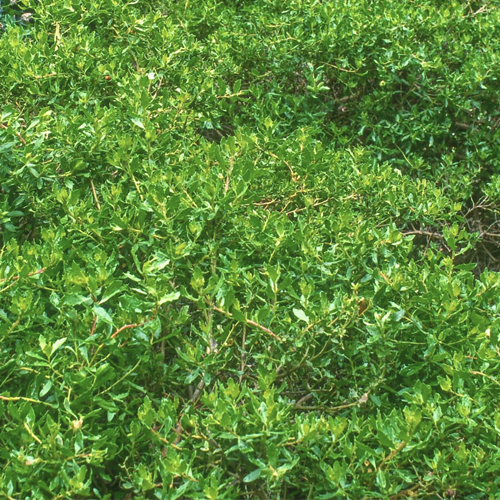
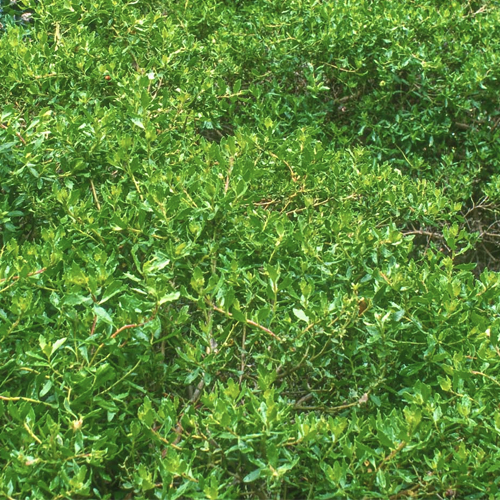
Vibrant, shiny, light green foliage of the dwarf coyote bush

Baccharis pilularis & cvs

Dwarf Coyote Bush
Organization

Flowers are inconspicuous but provide a source of pollen, nectar, and seeds for wildlife. Shrubby varieties can be cut back to maintain a more tidy and compact appearance. Perennial varieties can be divided in fall or early spring. Excellent choice as support for more showy plants in the garden.

  • Water: Low
  • Light: Full Sun
  • Soil: Most Soils
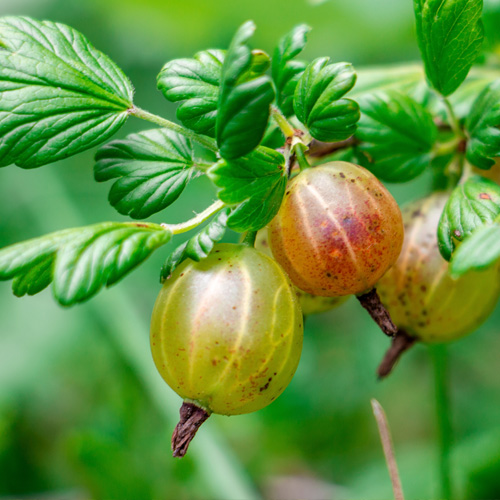
close up of yellow and red gooseberries with a dark brown spine on the bottom of each

Ribes spp

Currant, Gooseberry
Organization

Currants (without spines) and gooseberries (with spines) are grown for their graceful growth habit, attractive foliage, wonderful displays of pendulous flowers in winter-spring that are attractive to hummingbirds, and colorful fruit that provides a food source for birds. Most of the species listed are deciduous, going dormant in the summer months.

Examples: Some of the species suitable for California gardens, preferably with partial shade, are native to the Western United States:

  • aureum, golden currant (5-10’ x 3-6’), deciduous with small clusters of delicate yellow flowers and sprawling habit.
  • malvaceum, chaparral currant (4-8’ x 4-6’), deciduous with early clusters of pink flowers, a slightly vase-shaped habit, and more drought-tolerant than most species.
  • sanguineum var. glutinosum, pink-flowering currant (5-12’ x 5-12’), deciduous with maple-like leaves, a vase-shaped habit, and long pendulous clusters of pink, reddish, or white flowers in the spring; many available cultivars such as ‘Claremont’, ‘Tranquillon Ridge’, and ‘White Icicle’.
  • speciosum, fuchsia-flowered gooseberry (4-8’ x 6-10’), deciduous with spiny, arching stems and bright red fuchsia-like flowers along the stems in the spring that are attractive to hummingbirds.
  • viburnifolium, evergreen currant or Catalina perfume (2-4’ x 5-7’), evergreen groundcover that works well under oaks and can provide erosion control to slopes.
  • Water: Very LowLow
  • Light: Full SunPartial ShadeShade
  • Soil: Well Drained

Recommended Resources

Gardening Tips

1

General Tips:

  • Come volunteer with the Refugia Rangers and you will learn a great deal!
  • Everyone has a green thumb
  • You learn something new every season
  • Gardening is all about trial and error
2

Soil Tips:

  • Good dirt matters! And don’t treat your soil like dirt!
  • When in doubt, compost and mulch
  • Hand pulling weeds is the best method
3

Plant Tips:

  • Be patient with plants. They sometimes take longer to grow than your expectations
  • Right plant, right place
  • Pretty much everything you need to know about a plant you can find on its label
  • Just because it says ‘organic’, doesn’t mean it’s good for you and the environment
  • Not every plant likes every garden, if it’s struggling or dies, move on and find one that does like your conditions.