Embark on a journey through two adjacent, captivating gardens. Visit these two remarkable outdoor spaces to immerse yourself in nature while learning about the wonders of local flora and fauna.
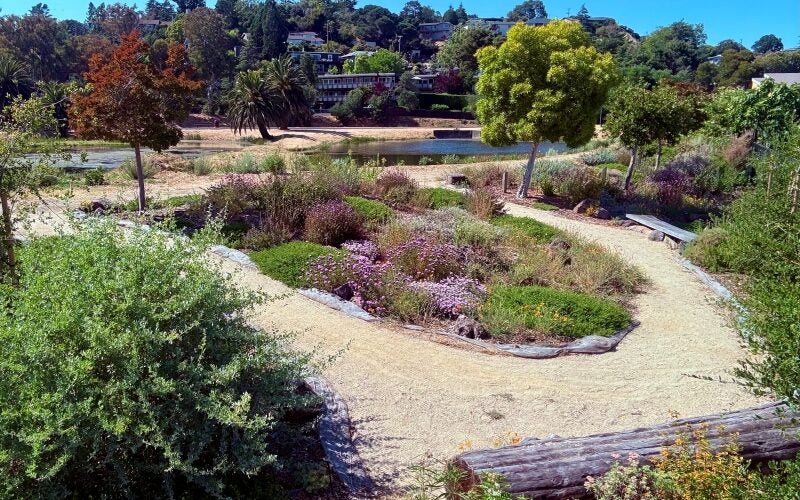
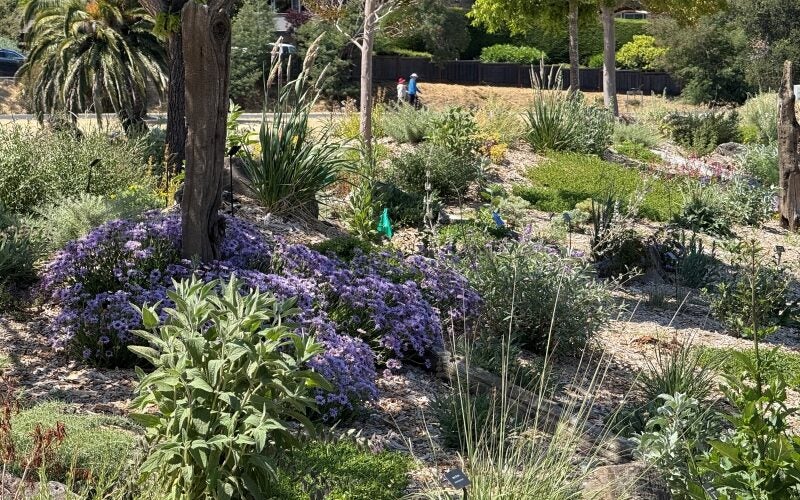
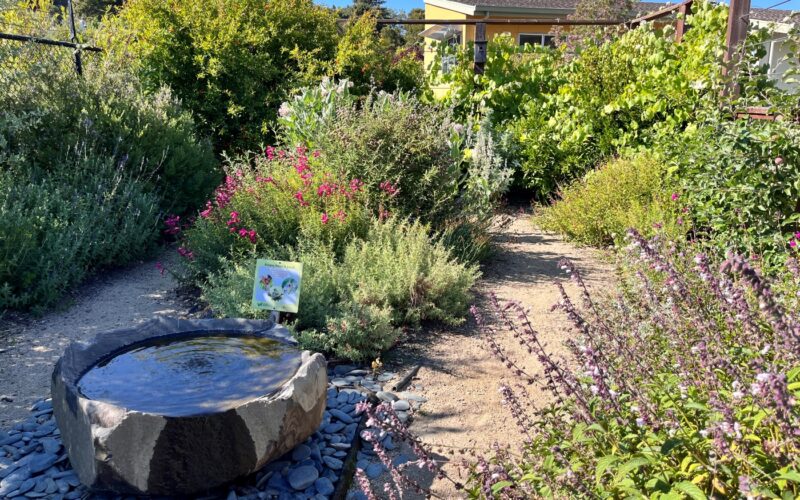
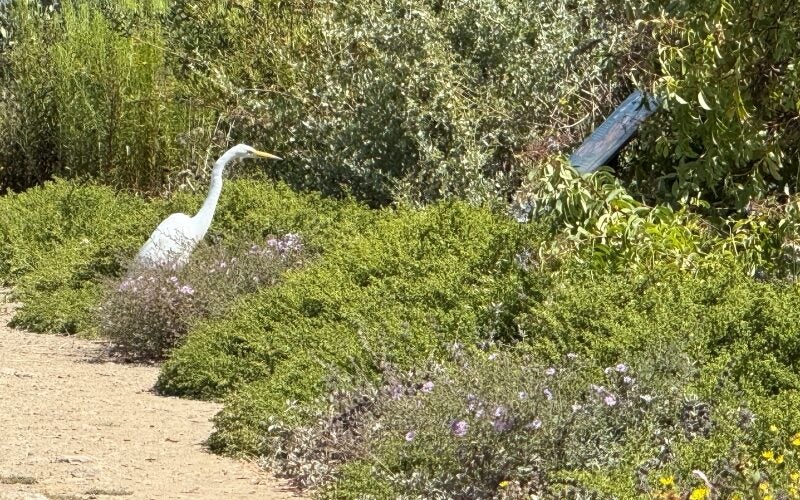
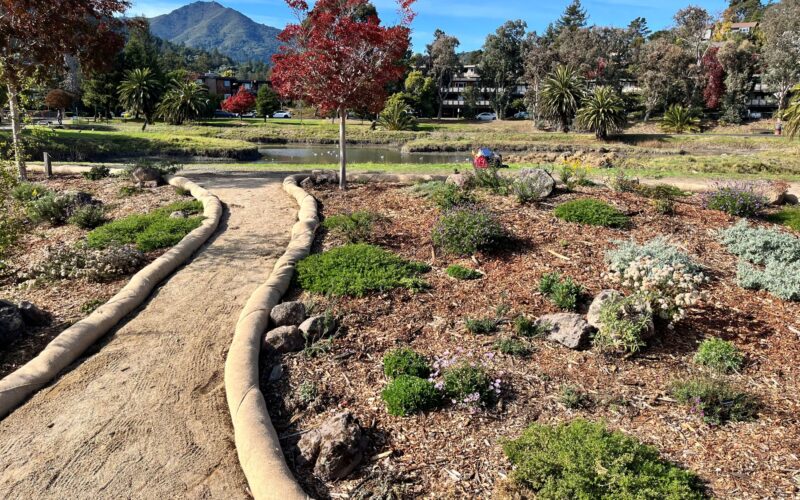
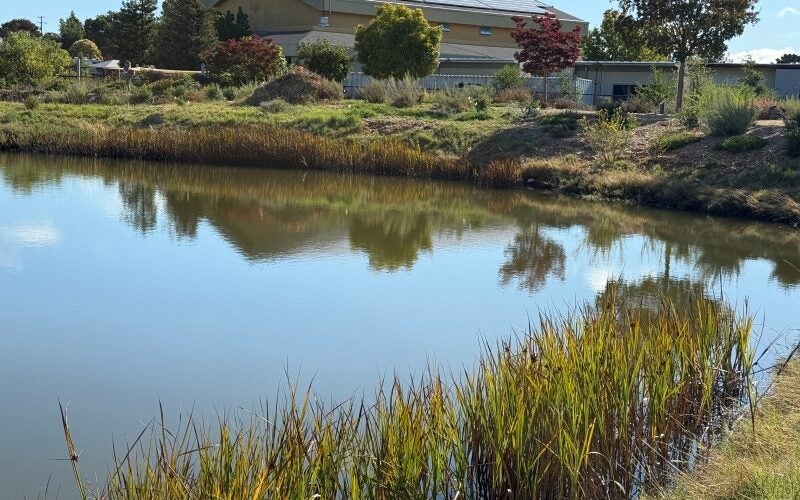
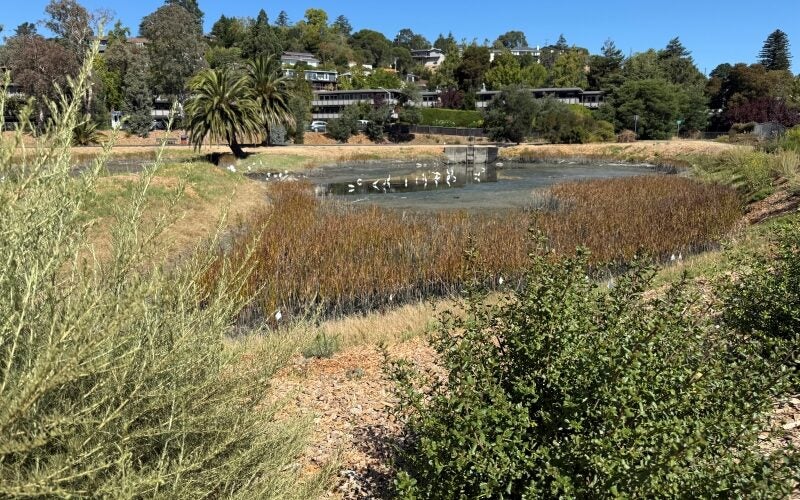
First, the Demonstration Garden and Lagoon Restoration in Town Park has become a sanctuary for wildlife and a model for public sustainable native planting.
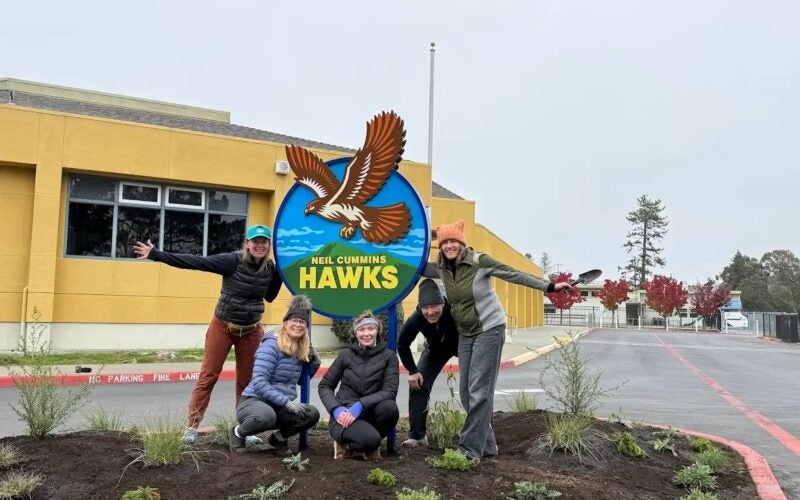
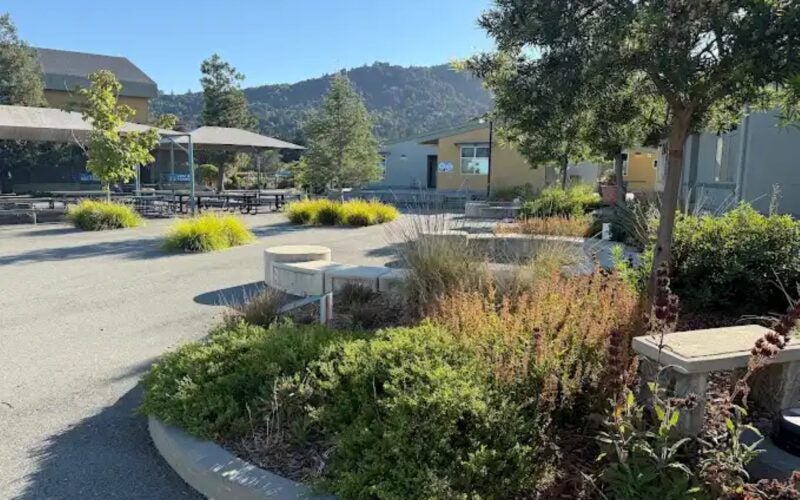
Second, immediately adjacent, is Neil Cummins Elementary School garden that serves as an outdoor classroom throughout the year.
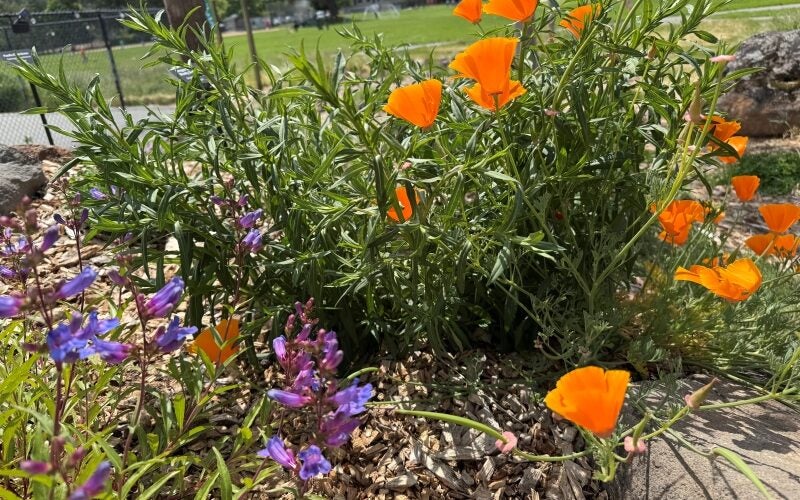
Thriving Demonstration Garden and Lagoon Restoration This garden was designed with sustainability in mind. It boasts drought-tolerant native plants that offer year-round sustenance and shelter for birds and insects. Plants are helpfully labeled, so you can identify and choose your favorites to enjoy in your own yard.
Established between 2021 and 2025 in phases, the garden offers a glimpse into different stages of plant growth, letting visitors see how each species will mature over time.
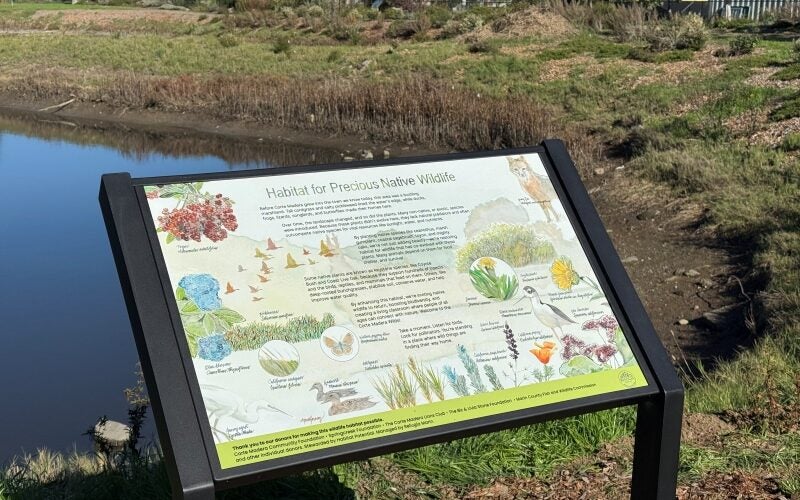
This year, look for two new stunning educational signs illustrated by local writer and naturalist Obi Kaufmann.
The garden was designed by Dan Dufficy of CNL Native Plant Nursery and is managed by Refugia Marin.
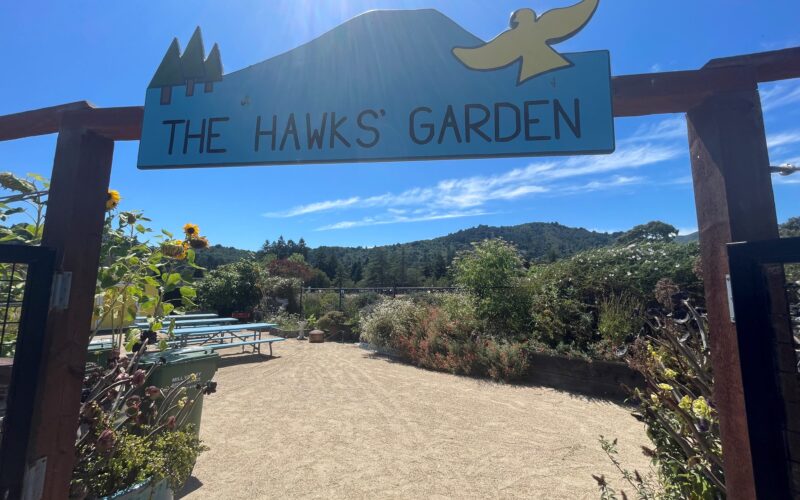
School Garden and Campus Secondly, just beyond the fence lies the Hawks’ Garden, a vibrant outdoor classroom.
Established by the school’s PTO in 2016, and revitalized in 2021, the garden hosts galvanized metal planters, wooden planters, and in-ground beds bursting with edible crops and pollinator-friendly plants, such as borage, nasturtiums. Sunflowers are interspersed with the food crops. Fruit trees, including fig, lemon, lime, pomegranate, and apple, can also be found within the garden. Students learn about food crops and ecosystems, and benefit from science projects folded into their curriculum on campus, along with several fun and educational events throughout the year. This is an ADA compliant garden.
The school values campus beautification and with the help of Refugia Marin has recently replanted several native plant habitats. As part of an afterschool NOAA Ocean Guardian Club, students learn about our local watershed and the value of how native plants help keep it healthy.
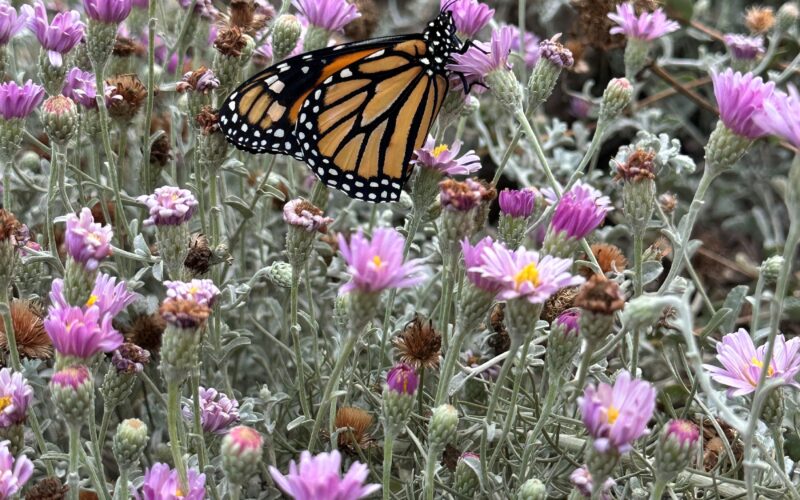
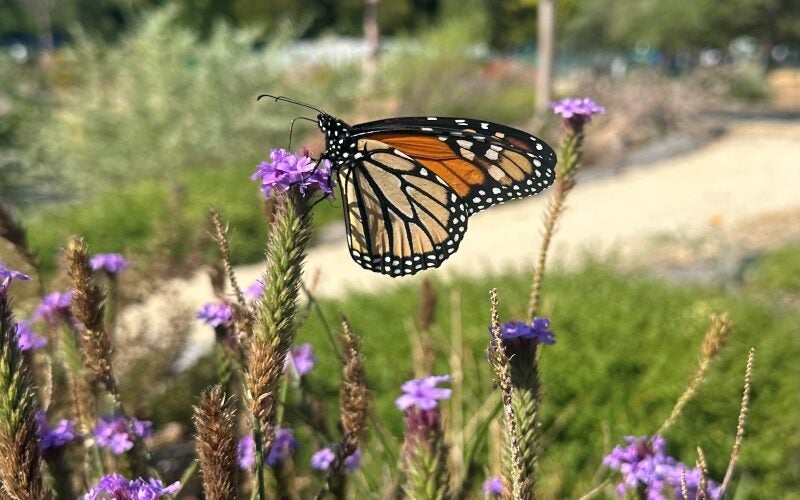
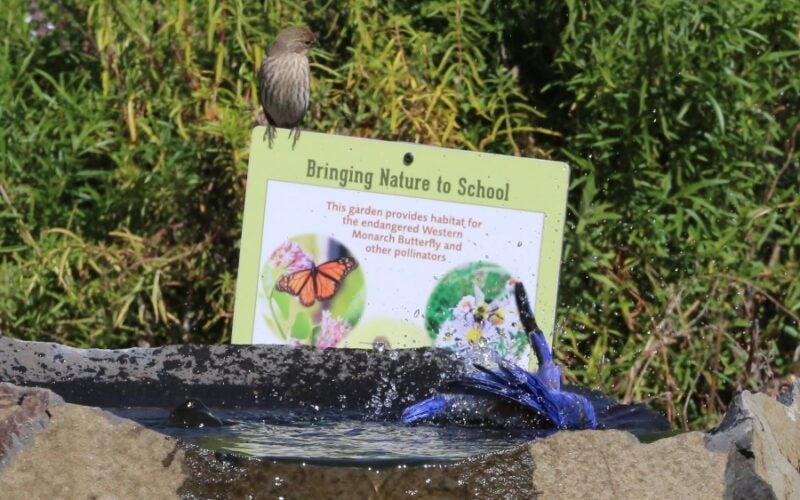
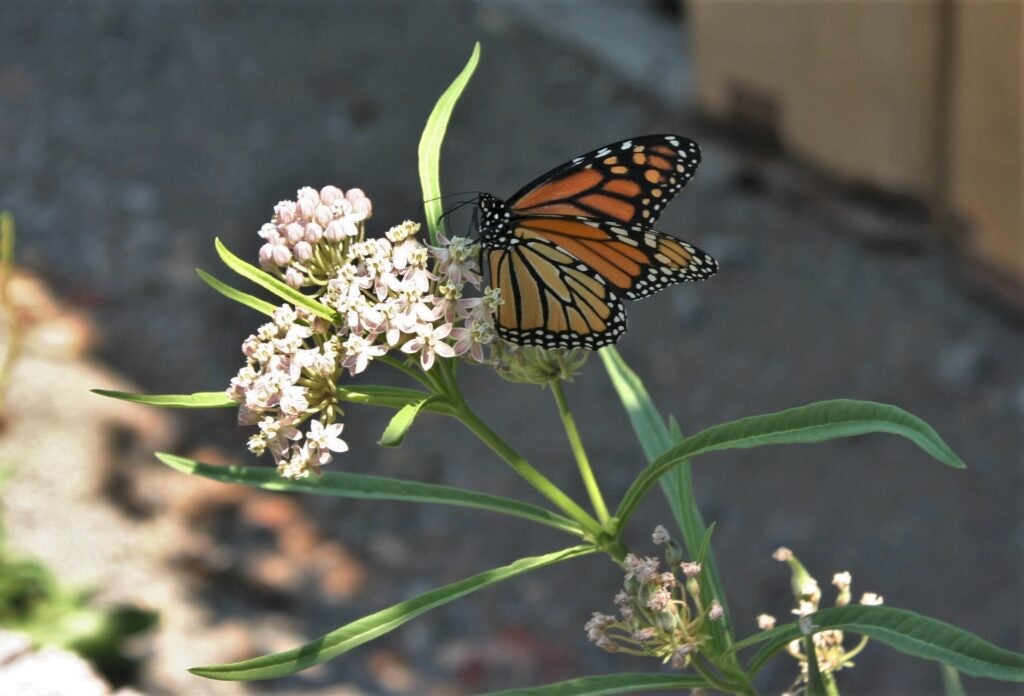
Both the public park and the school garden supports the Western Monarch butterfly with native milkweed for egg-laying and nectar plants for feeding. Educational panels highlight the importance of conservation efforts towards this majestic insect.
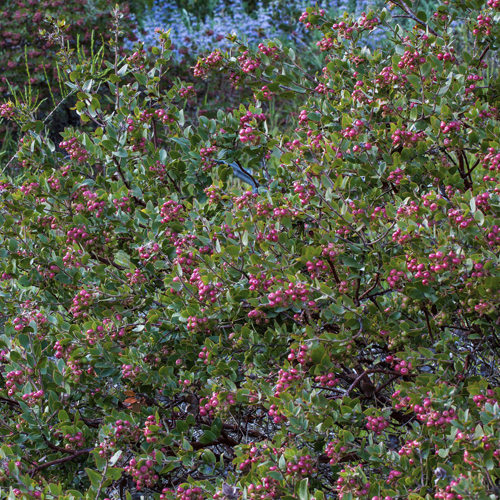
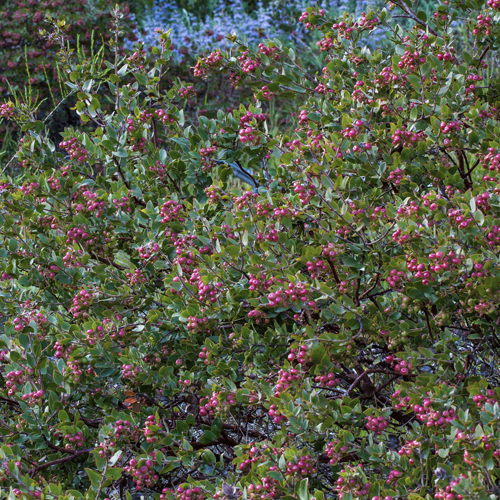
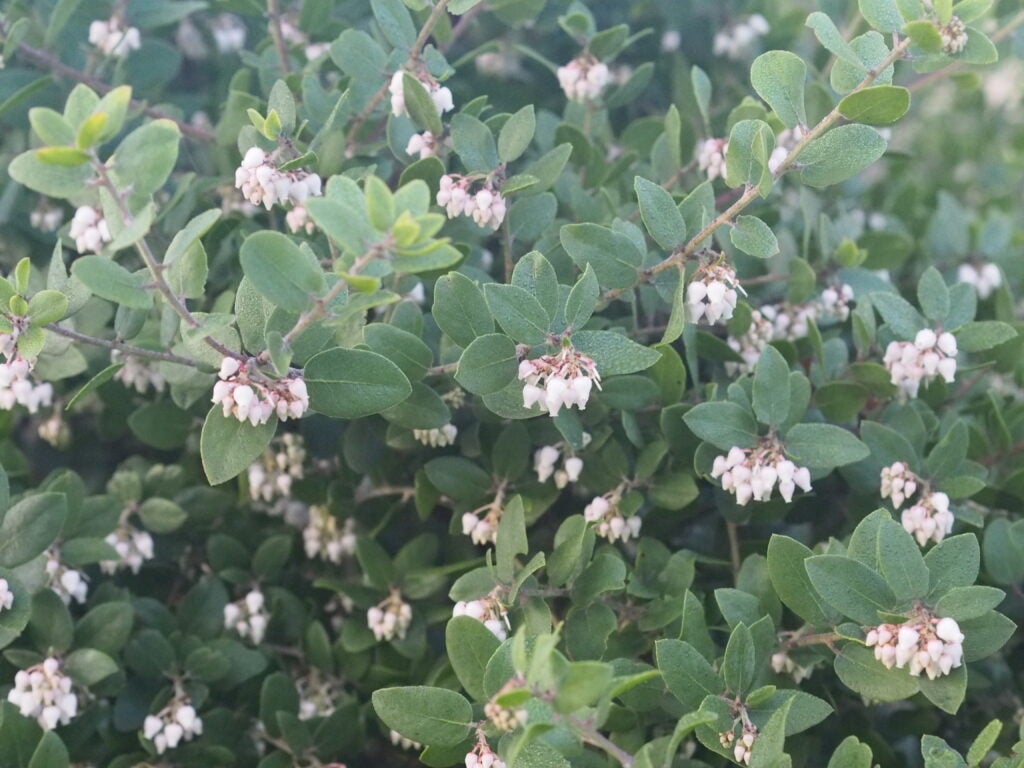
Manzanitas vary from carpet-forming groundcovers to small trees. Manzanitas have varying shades of striking, reddish brown bark and can provide structure to a garden. These plants have evergreen foliage, small white-to-pink, urn-shaped blossoms in late winter to early spring, and then small fruits that resemble tiny apples.
Groundcovers: A. ‘Emerald Carpet’ (1’ x 3-6’), A. ‘Pacific Mist’ (2-3’ x 6-8’), A. nummularia ‘Bear Belly’ (1’ x 3’), A. uva ursi ‘Radiant’ (6” x 4-6’), A. uva ursi ‘Wood’s Compct’ (1’ x 3’).
Shrubs: A. ‘Howard McMinn’ (5-7’ x 6-10’), A. ‘John Dourly’ (3-4’ x 5-6’), A. ‘Lester Rowntree’ (8-10’ x 10-15’), A. ‘Sunset‘ (5-7’), A. bakeri ‘Louis Edmunds’ (8-10’), A. manzanita ‘Sentinel’ (6-8’ x 5’), A. hookeri ‘Wayside’ (3′ x 8′).
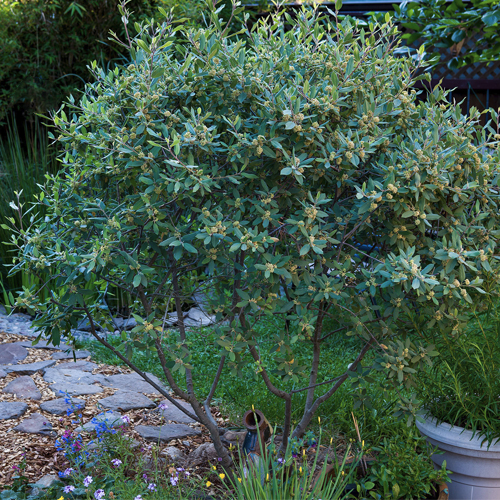
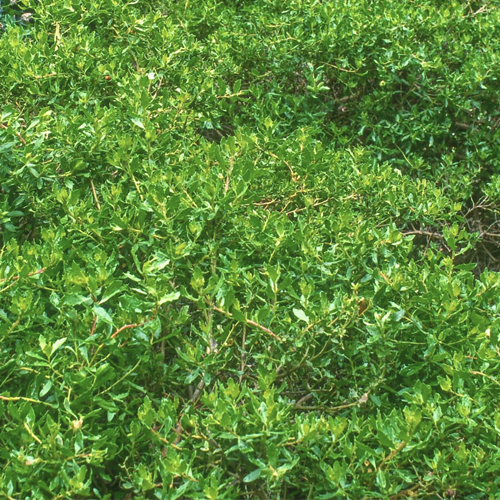
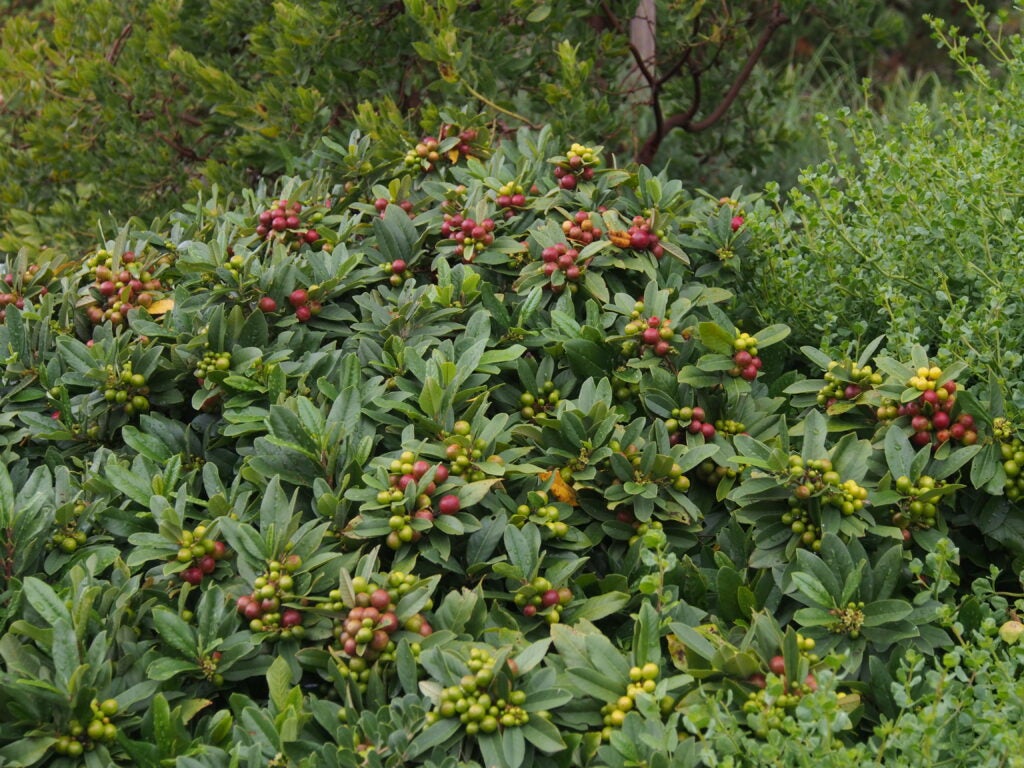
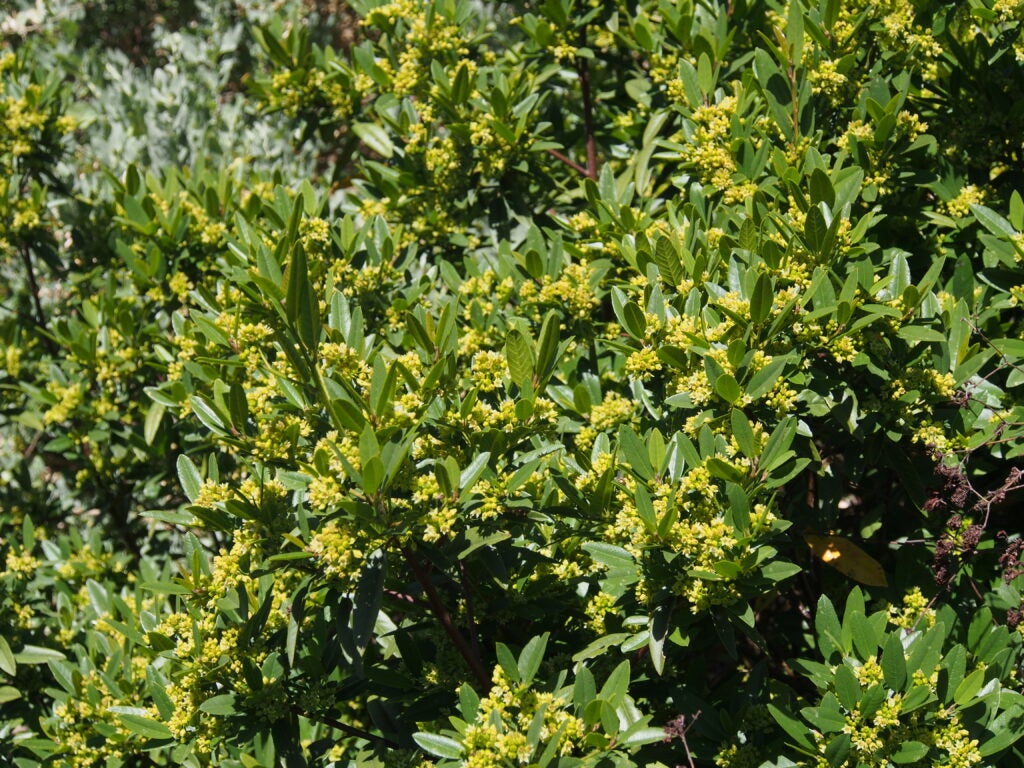
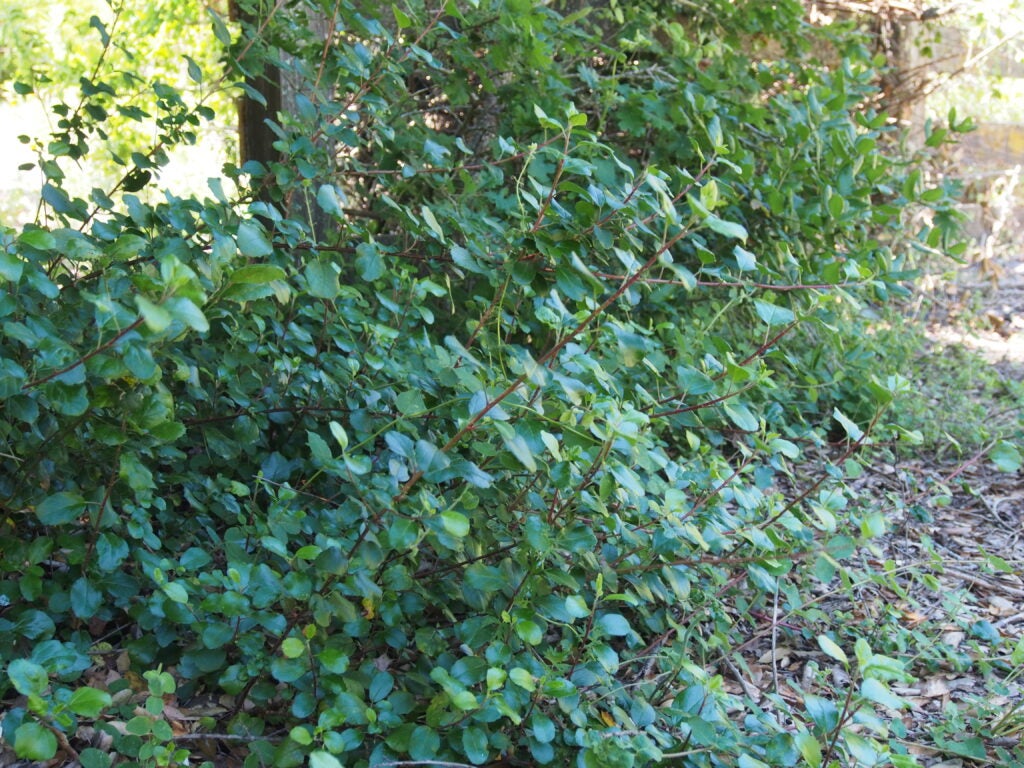
Evergreen shrub that has insignificant flowers followed by berries that age from green to red and then black. Flowers are attractive to pollinators, especially bees, and berries provide a food source for birds. Cultivars commonly sold in nurseries have differing growth habits and are often smaller than the species which grows 5-15’ tall and wide.
Examples:F. c. ‘Eve Case’ (6-8’ x 6-8’), R. c. ‘Leatherleaf’ (5-6’ x 5-6’), R. c. ‘Mound San Bruno’ (6-8’ x 6-8’) with a dense, mounding growth habit.
Note: California coffeeberry was formerly classified as Rhamnus californica and is now classified as Frangula californica.
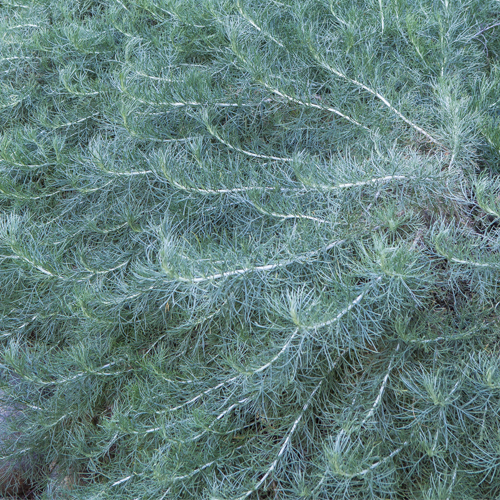
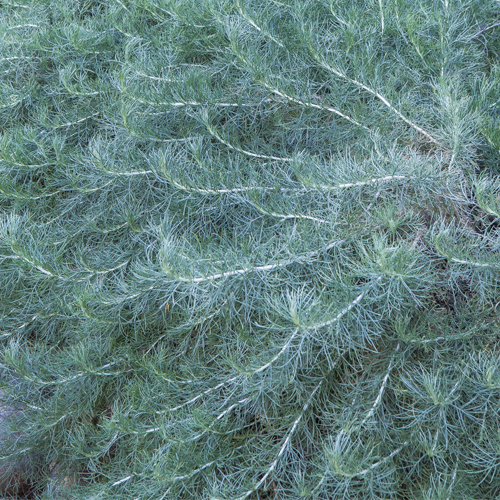
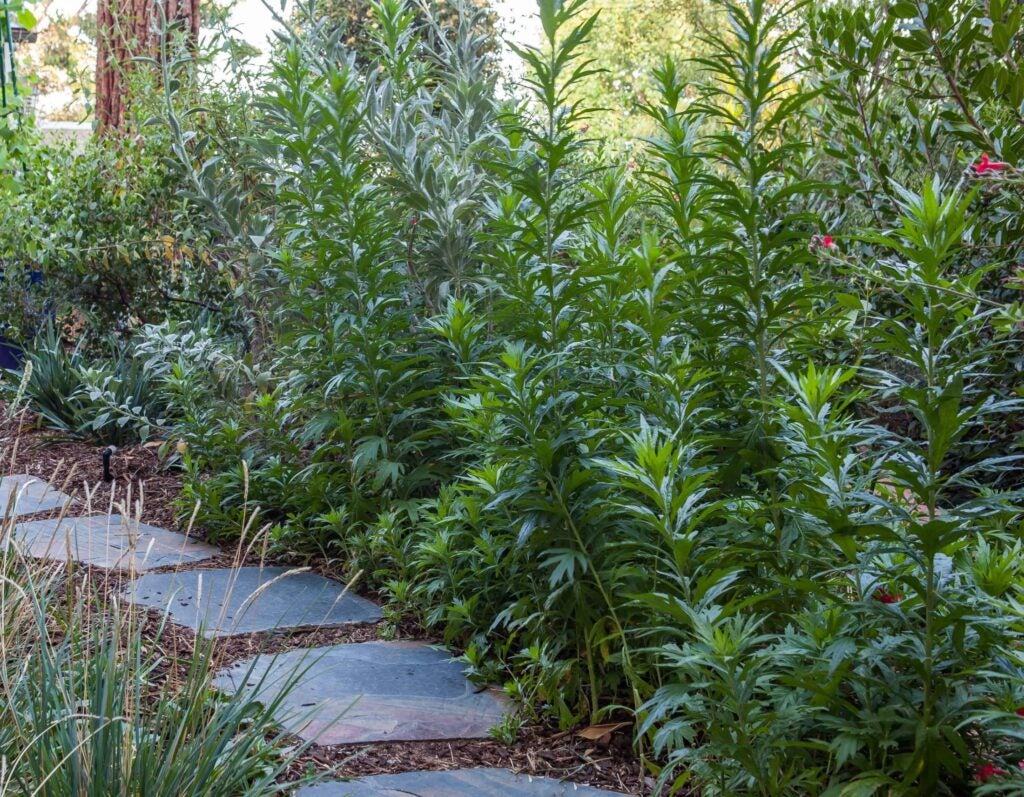
Large group of plants that includes annuals, perennials, and shrubs grown for fine, soft-textured, aromatic, gray-green foliage. Flowers are inconspicuous but provide a source of pollen, nectar, and seeds for wildlife. Shrubby varieties can be cut back to maintain a more tidy and compact appearance. Excellent choice for adding silver aromatic foliage in the garden.
Examples:A. californica (2-4’ tall x 4-5’ wide, California native, gray-green fine foliage), A. douglasiana (2-5′ tall and spreading by rhizomes, California native, good addition to rain gardens), A. ‘Powis Castle’ (2-3’ tall x 4-6’ wide, Mediterranean hybrid with silvery foliage).
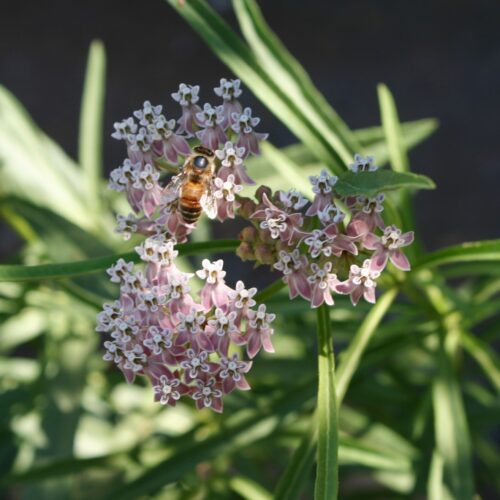
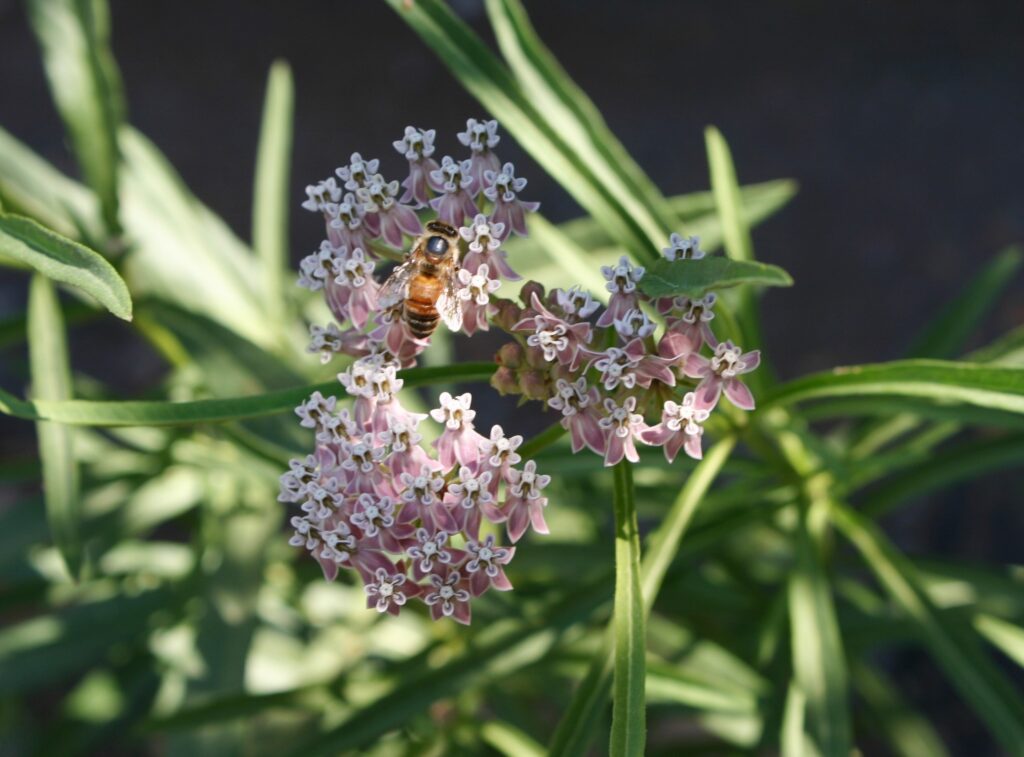
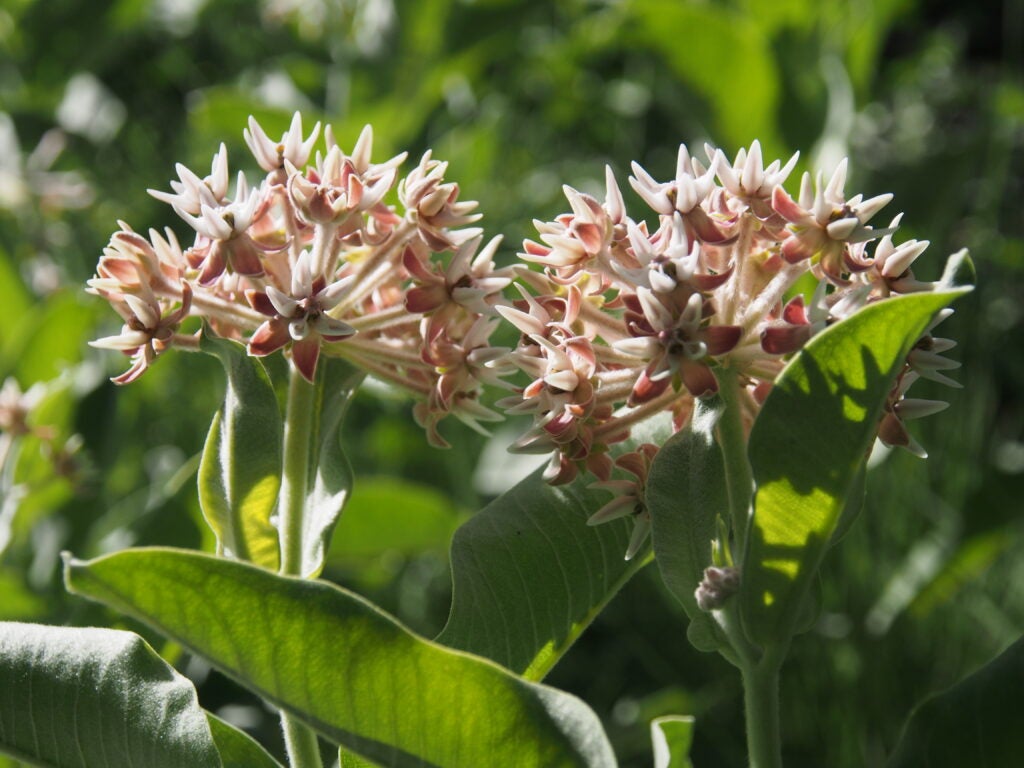
Colony-forming, herbaceous perennials with several species providing important habitat and larval food sources for the monarch butterfly while attracting a diverse array of insects.
California milkweeds go dormant during the colder months. Stems that emerge in April or May bear clusters of small, star-like flowers in summer followed by silky-tailed seeds that are dispersed by wind. Choose a California native species to best support local monarch populations and provide a food source for their larvae.
A. fascicularis (narrow-leaved milkweed, 1-3’) has clusters of lavender or pinkish white flowers; A. speciosa (showy milkweed, 2-4’) has larger, soft foliage, and showier flower clusters; A. cordifolia (heart leaf milkweed, 1-2′) has bluish green heart-shaped leaves, and creamy white and purple flowers.
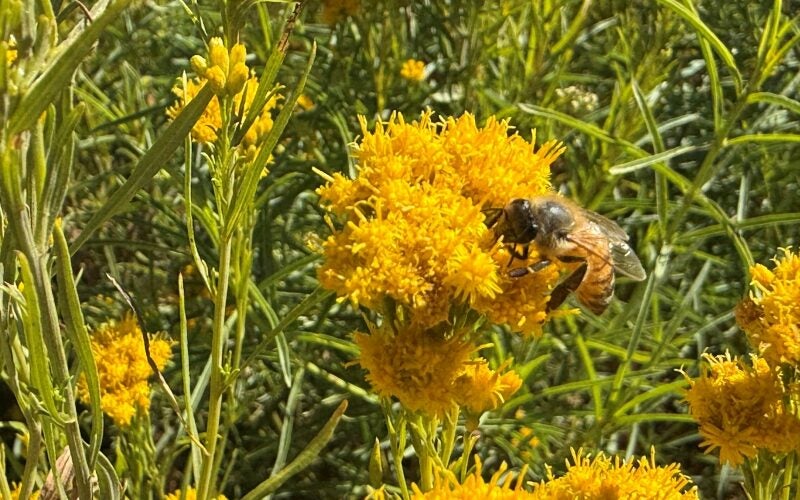
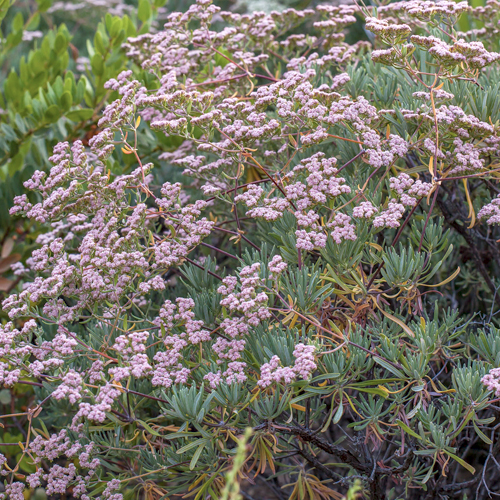
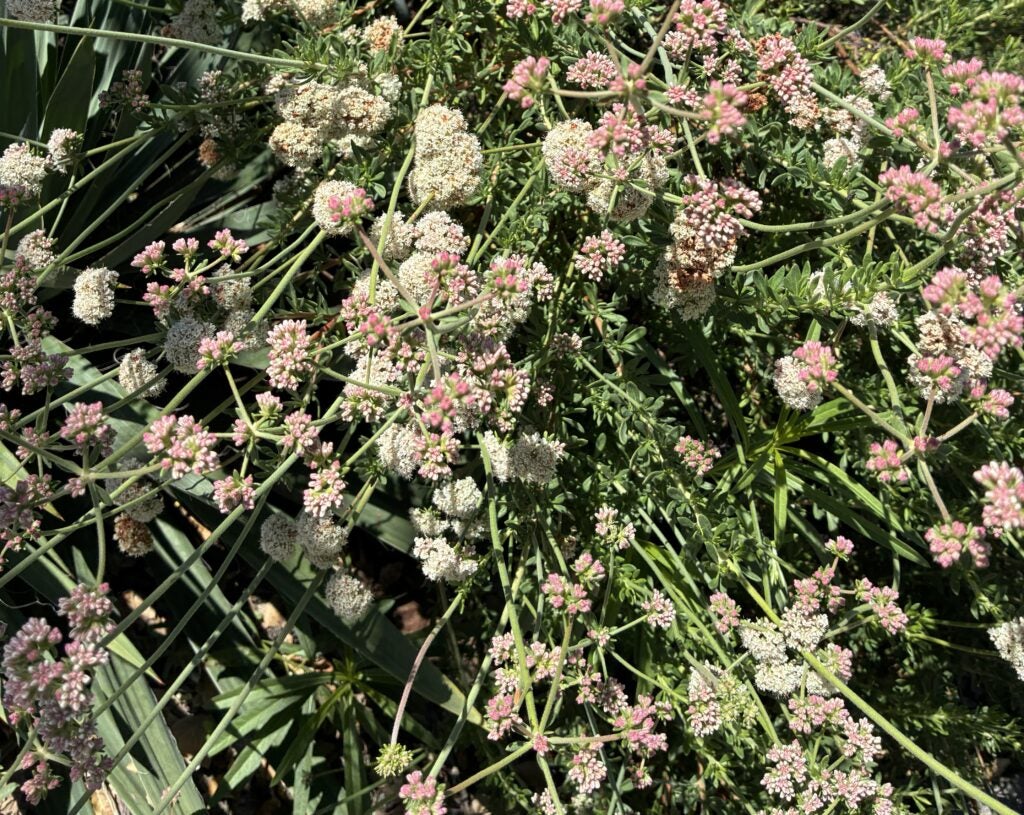
Diverse group of flowering, evergreen shrubs and perennials found throughout the western United States. Most available in nurseries are native to California and generally prefer drier sites. Flowers colors include yellow, white, and pink and are held above foliage in umbels that dry over time and are popular in flower arrangements. Buckwheats provide pollen and nectar for bees and butterflies, larval food for butterflies, seeds for birds, and cover for many creatures.
Examples:
Santa Cruz Island buckwheat (E. arborescens, 3-4’ x 4-5’) densely mounded with white flowers.
Saffron buckwheat (E. crocatum, 1-2’ x 2-3’) with chartreuse-yellow flowers and pale leaves.
California buckwheat (E. fasciculatum, 2-3’ x 3’) and its low-growing cultivars such as E. f. ‘Warriner Lytle.’
Catherine’s lace (E. giganteum, 4-8’ x 6-10’) with delicate, white flowers and soft pale leaves.
Red-flowered buckwheat (E. grande var. Rubescens, 1-2’ x 2-3’) low-mounding perennial with rose-pink flowers, coastal bluff buckwheat (E. latifolium, up to 12” x 1-2’.)
Sulfur buckwheat (E. umbellatum, 6-18” x 1-3’) with intense yellow flowers and cultivars E. u. var. aureum ‘Kannah Creek’ and E. u. Var. ‘Shasta Sulphur’.
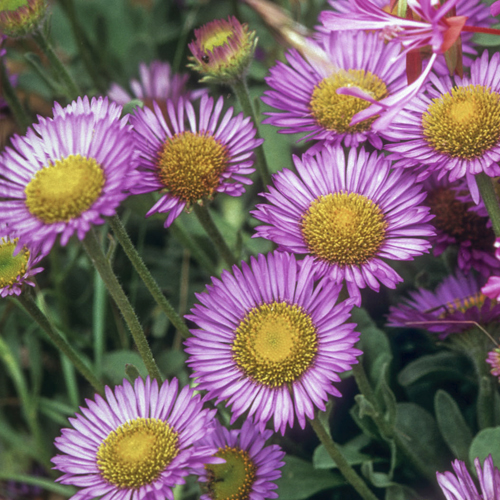
Group of flowering perennials mostly native to North America. Two species are commonly grown in California gardens. Beach aster (E. glaucus, 12” x 2′) is native to coastal California and Oregon and has purple flowers with yellow centers from spring into summer. Santa Barbara daisy (E. karvinskianus, 10-18” x 2-3’) has white and pink flowers with yellow centers. This plant can self-sow aggressively but is easily pulled.
Examples: E. g. ‘Wayne Roderick’ has deep purple flowers. E. g. ‘White Lights’ is a white- flowering form from Sonoma County.
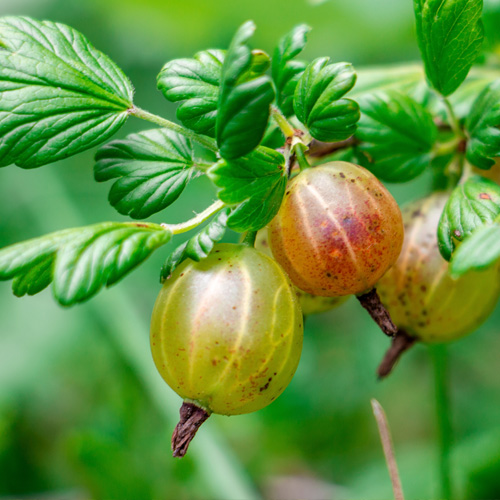
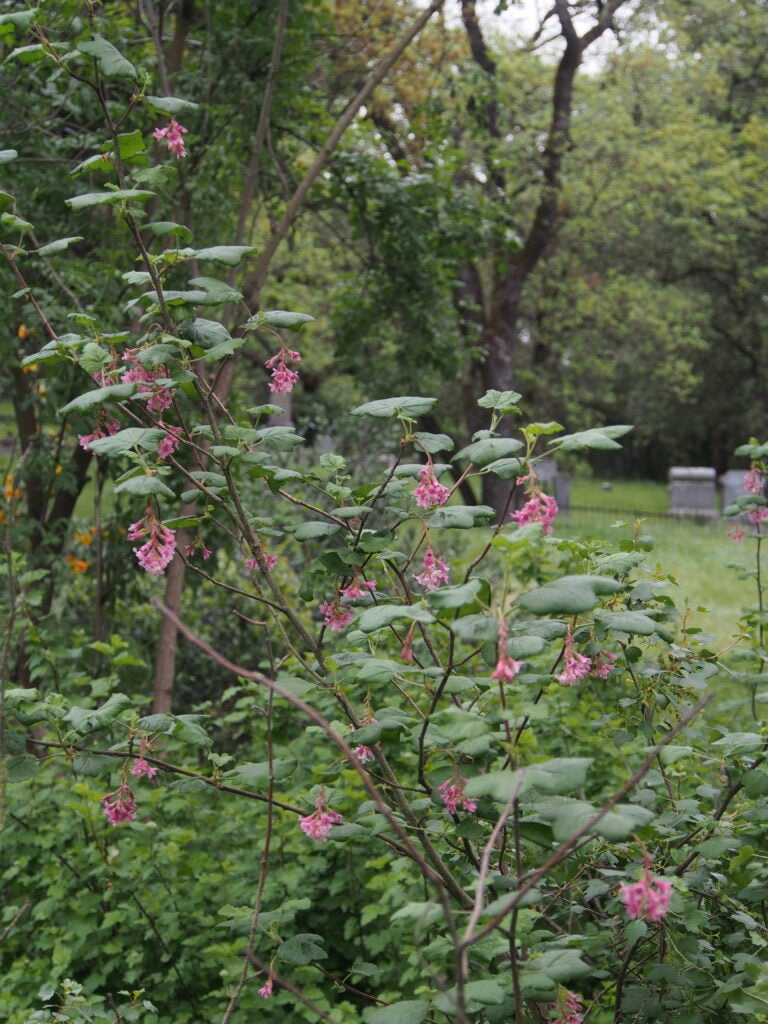
Currants (without spines) and gooseberries (with spines) are grown for their graceful growth habit, attractive foliage, wonderful displays of pendulous flowers in winter-spring that are attractive to hummingbirds, and colorful fruit that provides a food source for birds. Most of the species listed are deciduous, going dormant in the summer months.
Examples: Some of the species suitable for California gardens, preferably with partial shade, are native to the Western United States:
R. aureum, golden currant (5-10’ x 3-6’), deciduous with small clusters of delicate yellow flowers and sprawling habit.
R. malvaceum, chaparral currant (4-8’ x 4-6’), deciduous with early clusters of pink flowers, a slightly vase-shaped habit, and more drought-tolerant than most species.
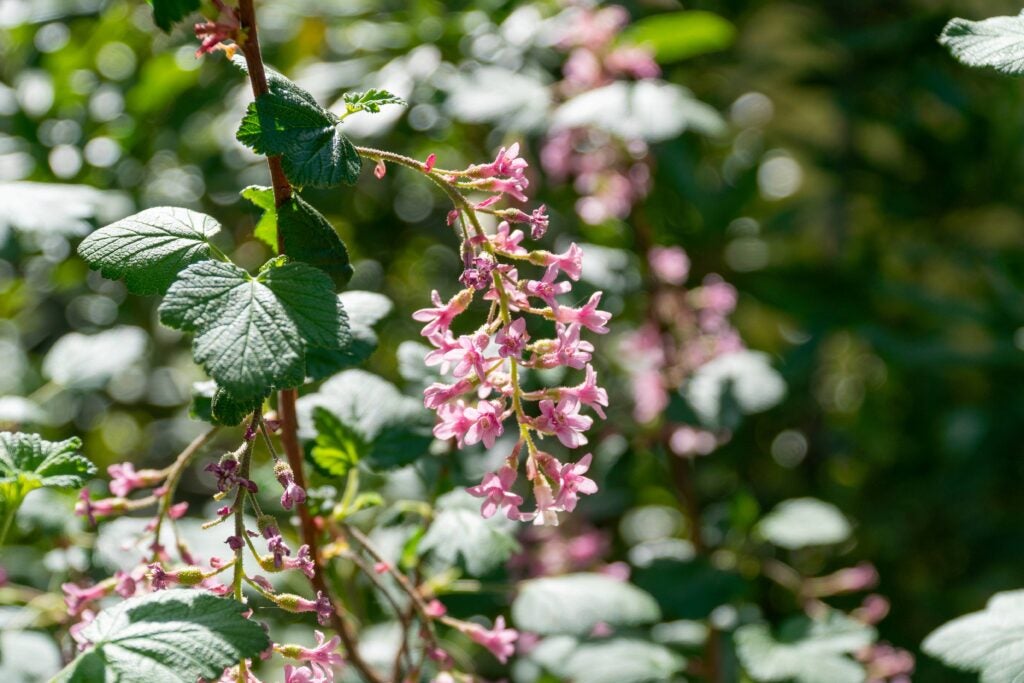
R. sanguineum var. glutinosum, pink-flowering currant (5-12’ x 5-12’), deciduous with maple-like leaves, a vase-shaped habit, and long pendulous clusters of pink, reddish, or white flowers in the spring; many available cultivars such as ‘Claremont’ and ‘White Icicle’.
R. speciosum, fuchsia-flowered gooseberry (4-8’ x 6-10’), deciduous with spiny, arching stems and bright red fuchsia-like flowers along the stems in the spring that are attractive to hummingbirds.
R. viburnifolium, evergreen currant or Catalina perfume (2-4’ x 5-7’), evergreen groundcover that works well under oaks and can provide erosion control to slopes.
Flowers are inconspicuous but provide a source of pollen, nectar, and seeds for wildlife. Shrubby varieties can be cut back to maintain a more tidy and compact appearance. Perennial varieties can be divided in fall or early spring. Excellent choice as support for more showy plants in the garden.