Gardening for Biodiversity

BACK TO FULL TOUR

Garden Features

1

Drought Tolerant

2

Graywater System

3

California Natives

4

Drip Irrigation

5

Pesticide Free

6

Rainwater Harvesting System

7

Smart Irrigation Controller

8

Lawn Conversion

9

Lawn-Free Landscaping

10

Wildlife Habitat

Partner: Santa Rosa Water

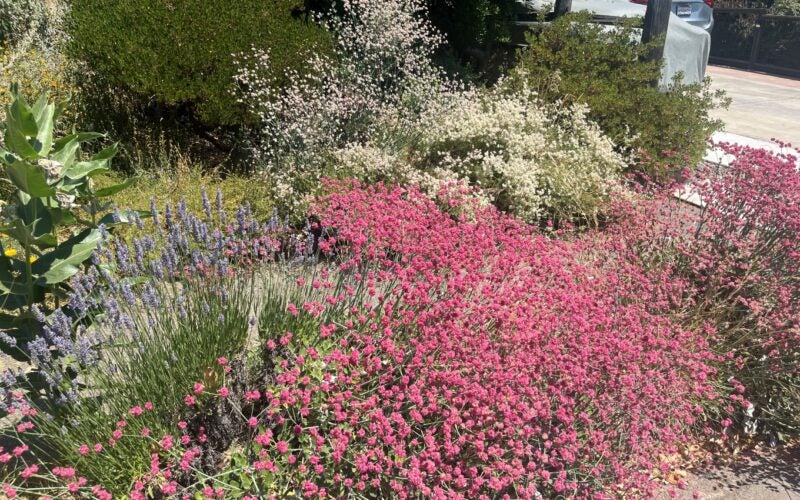
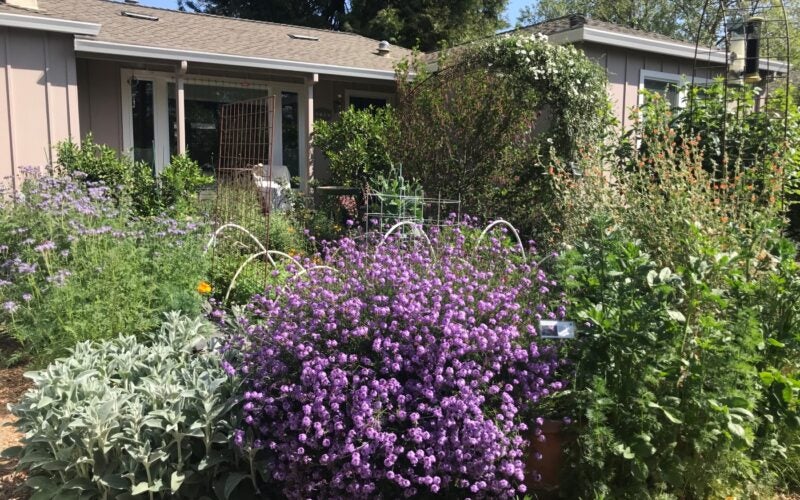
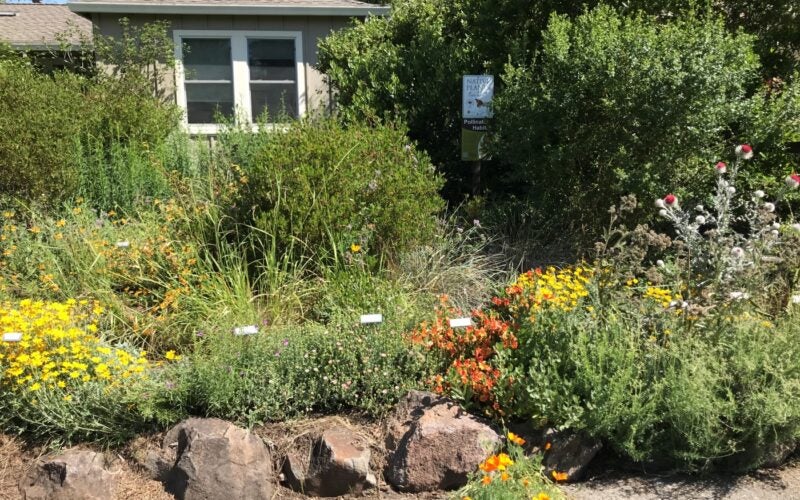
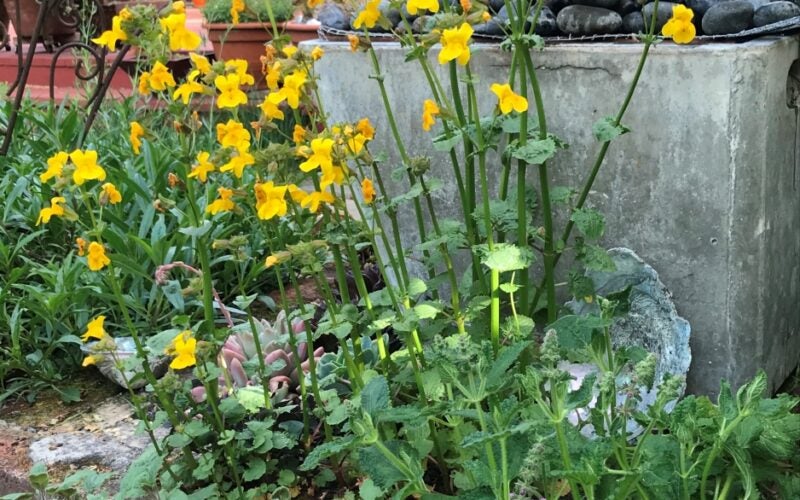
This garden has evolved to mostly native plants that do well in this region of Sonoma County. A variety of native plants increases biodiversity by creating habitats that attract and support insects, pollinators, butterflies, birds, and reptiles. Emphasis on creating pockets of same blooming native species providing quality nectar and pollen resources throughout the year.

Rain waters this garden except for the vegetable beds and ornamentals. With few impermeable surfaces, most rain percolates into the soil and is available to plants throughout the year. Native perennial grasses, shrubs, and trees have deep root systems that hold water in the soil. Native grasses can have roots up to twenty feet deep, bringing water up during the dry season and stabilizing soils.

Native plants in this garden are suited to California’s Mediterranean climate—they may go dormant in dry summers and revive with winter rain.

Water management includes a graywater system and a 3300 gallon pressurized rainwater system with multiple hose bibs. Rain water from the tanks provides summer water where needed and facilitates fall planting. Drip irrigation exists for drought periods or to augment the rain water system.

A layer of leaves are allowed to accumulate in the fall, providing habitat for overwintering invertebrates and protecting and enhancing soil health.

Special Events
Xerces Society for Invertebrate Conservation - Educational Table

Plants in this Garden

Plant Picker
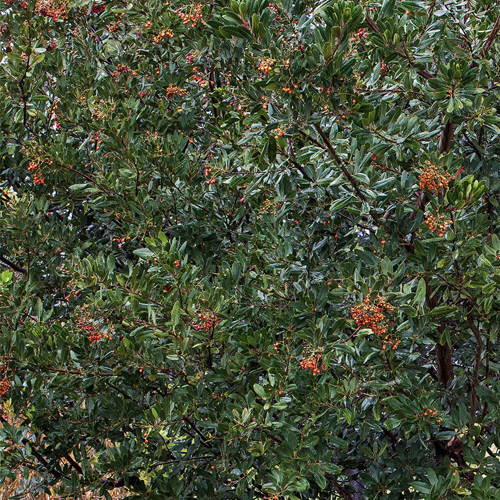
Dark green oval leaves and red berry clusters on dark brown branches

Heteromeles arbutifolia

Toyon
Organization

California native, evergreen shrub or small tree often seen growing in Sonoma and Marin county wildlands. Lacy, white flower clusters in spring attract pollinators; red berries in winter provide a splash of color and an important food source for birds. The name “Hollywood” was born from the abundance of toyon in the hills of southern California and its resemblance to European holly. The cultivar ‘Davis Gold’ has yellow berries and may be more disease-resistant than the species.

  • Water: Low
  • Light: Full SunPartial Shade
  • Soil: Well Drained
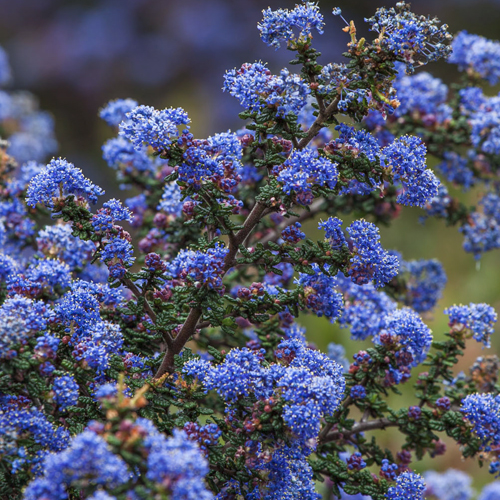
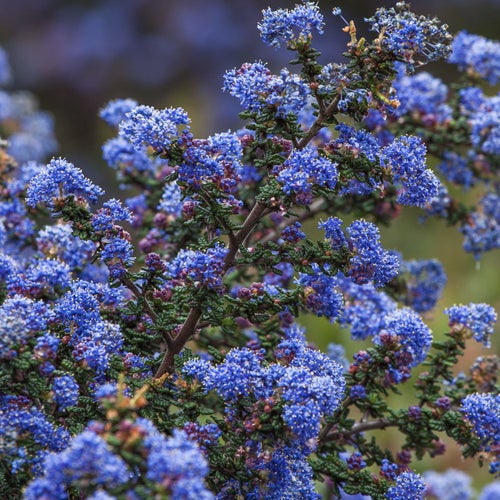
California Lilac ceanothus variety with clusters of small, vibrant blue flowers and dark green leaves

Ceanothus spp & cvs

Ceanothus
Organization

Ceanothus is a group of fast-growing, evergreen shrubs that vary from groundcovers to small trees, many of which are native to California. They provide a spectacular display of flowers in spring that will attract a multitude of pollinators. Flowers are followed by seeds that provide food for birds. The clusters of tiny flowers range from white to deep violet. Plants perform best with good drainage and minimal irrigation once established. Some do best in cooler coastal climates, but many thrive in hotter inland climates. Pay close attention to the mature size when selecting ceanothus to ensure that it has sufficient space for its natural form.

Groundcovers: C. ‘Centennial’ (1’ x 8’), C. gloriosus var. gloriosus ‘Anchor Bay’ (2’ x 8’), C. griseus var. horizontalis ‘Diamond Heights’ (variegated, 1’ x 4’), C. griseus var. horizontalis ‘Yankee Point’ (3’ x 12’), C. maritimus (2’ x 6’).

Shrubs: C. ‘Blue Jeans’ (6’ x 6’), C. Concha (6’ x 6’), C. ‘Dark Star’ (6’ x 8’), C. ‘Joyce Coulter’ (4’ x 12’), C. ‘Julia Phelps’ (8’ x 10’), C. cuneatus (8’ x 8’), C. thyrsiflorus ‘Skylark’ (4’ x 6’).

Large shrubs: C. ‘Frosty Blue’ (10’ x 12’), C. thyrsiflorus (20’ x 20’), C. t. ‘Snow Flurry’ (white flower, 20’ x 20’).

Trees: C. ‘Ray Hartman’ (15′ x 15′)

  • Water: Very LowLow
  • Light: Full SunPartial Shade
  • Soil: Well Drained
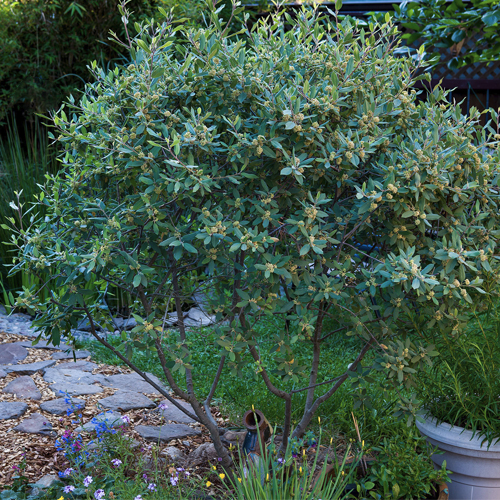
A small multi-trunked shrub with light brown bark, green leaves,, and clusters of tiny star-shaped light green flowers

Rhamnus [Frangula] californica

Coffeeberry
Organization

Evergreen shrub that has insignificant flowers followed by black berries. Flowers are attractive to pollinators, especially bees, and berries provide a food source for birds. Cultivars commonly sold in nurseries have differing growth habits and are often smaller than the species which grows 5-18’ x 10-18’.

Examples: F. c. ‘Eve Case’ (6-8’ x 6-8’), R. c. ‘Leatherleaf’ (5-6’ x 5-6’), R. c. ‘Mound San Bruno’ (6-8’ x 6-8’) with a dense, mounding growth habit.

Note: California coffeeberry was formerly classified as Rhamnus californica and is now classified as Frangula californica.

  • Water: Low
  • Light: Full SunPartial Shade
  • Soil: Most Soils
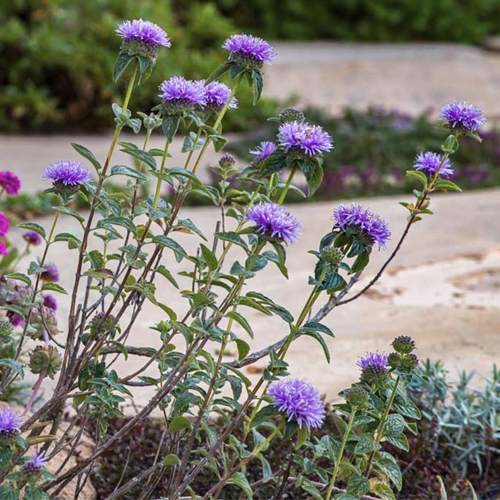
Dark brown stems with pointed green leaves and purple pompom flowers at the top of each stem

Monardella villosa

Coyote Mint
Organization

Coyote Mint is a compact perennial or sub-shrub with aromatic foliage and a sprawling habit. Dense heads of purple flowers form in spring-to-summer that are attractive to butterflies and other insects. The low-growth habit of coyote mint makes it an excellent choice for the front of a border, along the edge of a path, or beneath larger shrubs such as manzanita or ceanothus. Monardella villosa spp. franciscana ‘Russian River’ and Monardella villosa spp. villosa ‘Mark West’ are available selections from Sonoma County.

  • Water: Very Low
  • Light: Full Sun
  • Soil: Most Soils
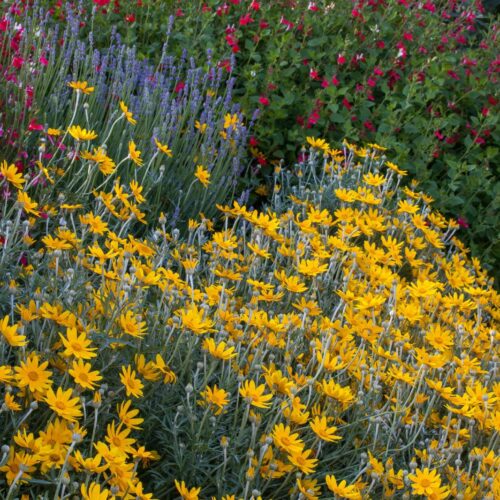
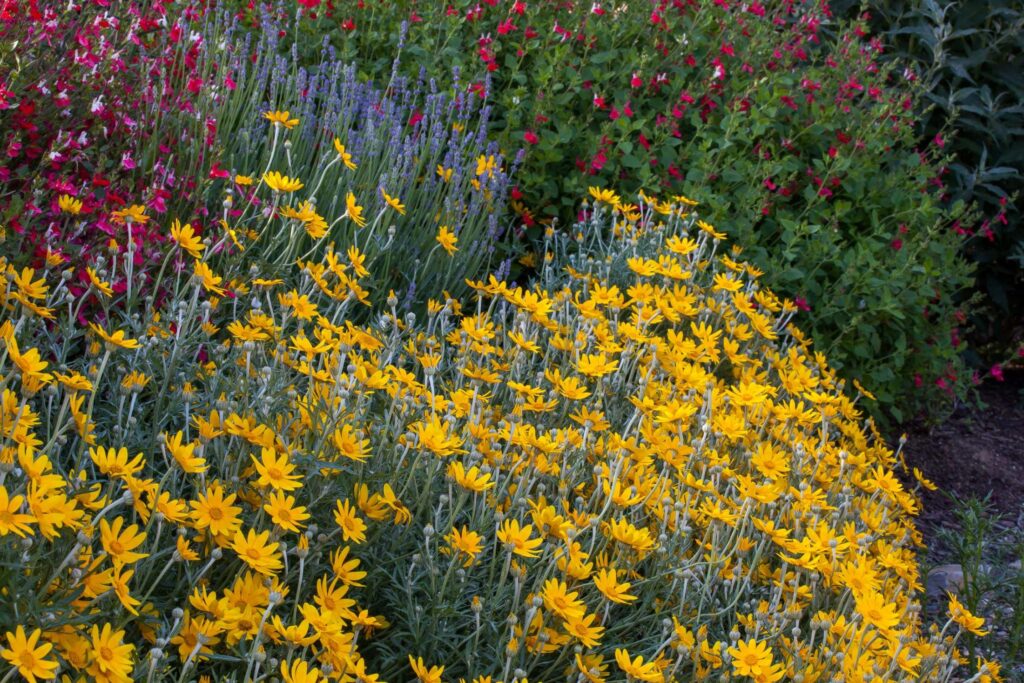
A small shrub with gray green lobed leaves and upright stems with a single yellow sunflower on top.

Eriophyllum lanatum

Common Woolly Sunflower
Organization

The Common Wooly Sunflower is native to northern California up to British Columbia and east to Wyoming. Many cultivars are available. Generally, they grow less than 1 foot to 2 feet tall and 2-3 feet wide. They have upright stems with wooly leaves and a singular sunflower atop each stem. It tolerates a wide variety of well-draining soils. Cut back in late winter to renew.

  • Water: Low
  • Light: Full SunPartial Shade
  • Soil: Well Drained
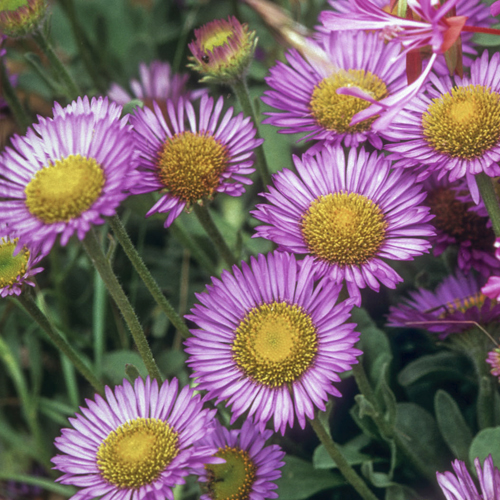
A collection of daisylike, purple flowers with large yellow disk florets and dark green stems

Erigeron spp

Beach Aster, Seaside Daisy
Organization

Group of flowering annuals and perennials mostly native to North America. Two species are commonly grown in California gardens. Beach aster (E. glaucus, 12” x 18”) is native to coastal California and Oregon and has purple flowers with yellow centers from spring into summer. Santa Barbara daisy (E. karvinskianus, 10-18” x 2-3’) has white and pink flowers with yellow centers. This plant can self-sow aggressively but is easily pulled.

Examples: E. g. ‘Wayne Roderick’ has deep purple flowers. E. g. ‘White Lights’ is a white- flowering form from Sonoma County.

  • Water: Low
  • Light: Full SunPartial Shade
  • Soil: Most Soils
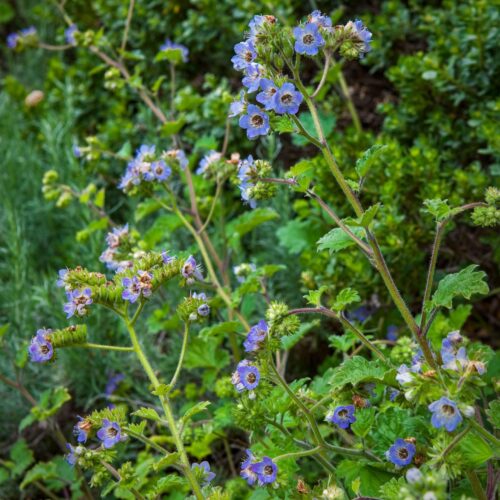
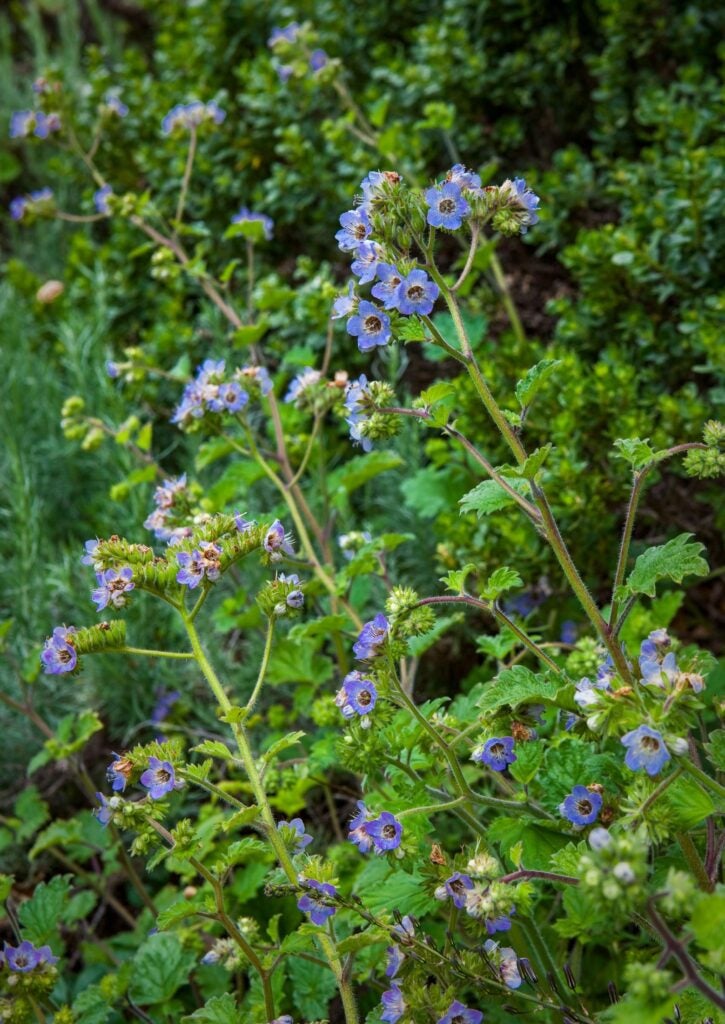
Gray green leaves along upright, brown and green stems with tiny blue-lavender flower clusters on top of each.

Phacelia californica

Rock Phacelia
Organization

As a northern California coastal native, this plant is a favorite of many pollinators, including the endangered Mission blue butterfly from San Francisco. Its hairy leaves and stems give way to tiny blue or lavender flowers, each under a centimeter long. The funnel-shaped flowers grow in one-sided, coiled clusters that uncurl as the flowers open in sequence. It grows to about 1 foot tall and wide and prefers well-drained soil in sun to part shade.

  • Water: Low
  • Light: Full SunPartial Shade
  • Soil: Well Drained
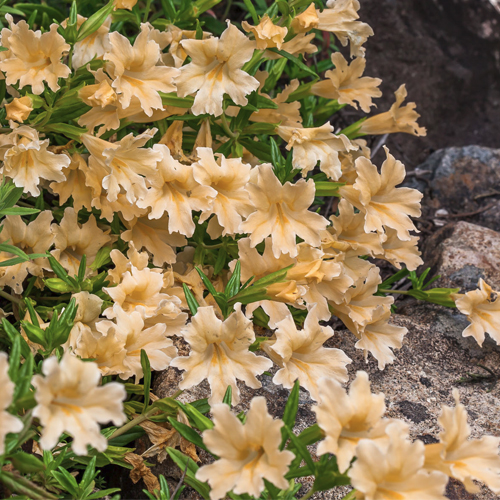
A group of small, peach-colored trumpet flowers with green leaves.

Mimulus aurantiacus and hybrids

Sticky Monkey Flower
Organization

The orange, tubular flowers of sticky monkey flower can be enjoyed in many locations throughout Sonoma and Marin counties in spring and summer, a testament to how well this plant is adapted to hot and dry conditions. The slightly sticky leaves benefit from light pinching and pruning to maintain an attractive appearance and support for the beautiful flowers. Many hybrids provide color variation. Do not confuse this plant with the red-flowered scarlet monkey flower (Mimulus cardinalis), an herbaceous riparian plant that requires regular water to thrive.

  • Water: Very Low
  • Light: Full SunPartial Shade
  • Soil: Sandy

Favorite Plants

1

Valley Oak

Quercus lobata

2

California Fescue

Festuca californica

3

California Buckeye

Aesculus californica

4

California Buckwheat

Eriogonum fasciculatum

5

Seep Monkeyflower

Erythranthe guttata

Favorite Garden Suppliers

California Flora Nursery

2990 Somers Street Fulton

The Watershed Nursery

601a Canal Boulevard Richmond

Recommended Resources

Gardening Tips

1

Enjoy the process.

A garden is never static, enjoy the process, changes and observe it everyday!