Desert Madness

BACK TO FULL TOUR

Garden Features

1

Drought Tolerant

2

Deer Resistant

3

Drip Irrigation

4

Pesticide Free

5

Lawn Conversion

6

Lawn-Free Landscaping

7

Urban Homestead

8

Wildlife Habitat

9

Fire Resistant

10

Xeriscape

11

Firescaping

Partner: Marin Water

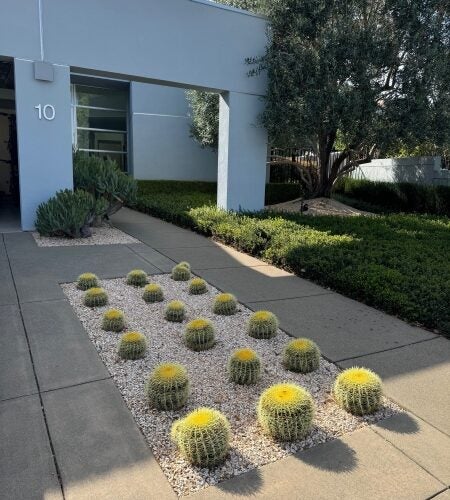
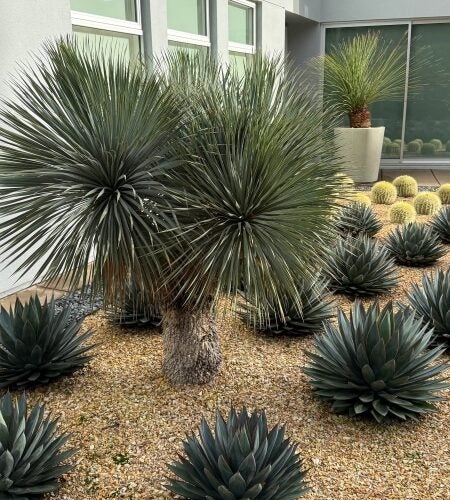
After 20 years of trying to maintain the perfect lawn and the destructive critters that it attracted, we opted for a more natural, drought-tolerant yard. The design was built by firescaping principles to protect the house in case of fires.

When we built the house in 2008, it was inspired by Richard Neutra and Corbusier’s “Machines in the Garden”! We wanted the landscaping to compliment the house’s minimalist architecture. We also wanted plantings that were appropriate for our Mediterranean climate. Our inspiration for the xeriscaping was Sunnylands Gardens in Rancho Mirage, California, as well as the Ruth Bancroft Garden in Walnut Creek.
Plants in this Garden
Plant Picker
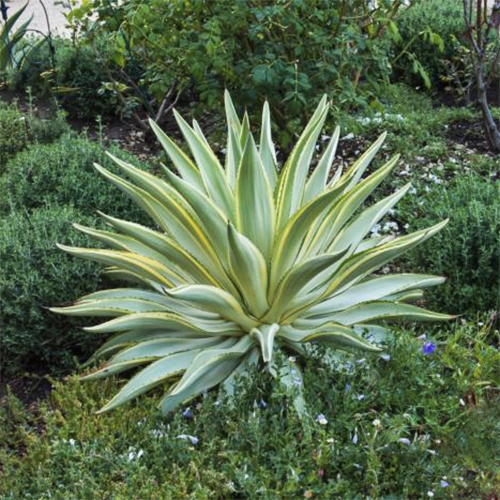
An agave succulent with large, fleshy green leaves forming spikes.

Agave spp

Agave
Organization

Large group of succulents that can provide a sculptural focal point. Mostly from warm, dry areas of the southwestern United States, Mexico, and Central America. Well-adapted to California gardens, especially with well-drained soils.

Examples: A. americana, (century plant, 6’ x 10’), A. filifera (threadleaf agave, 2’ x 2’), A. parryi (artichoke agave, 3’ x 3’), A. shawii (Shaw’s agave, 2’ x 5’), A. weberi (5’ x 10’).

  • Water: Very LowLow
  • Light: Full SunPartial Shade
  • Soil: Well Drained
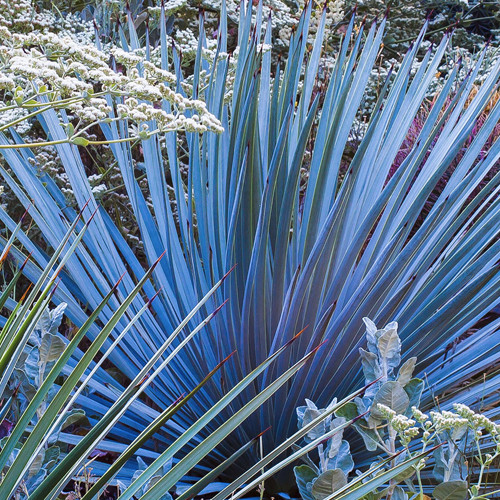
A large yucca with long spikes of blue-gray leaves.

Yucca spp

Yucca
Organization

Evergreen shrubs and perennials that grow over much of North America and feature sword-shaped leaves. Yuccas typically produce flowers on tall stalks in spring. Some yuccas are stemless while others have trunks and grow to tree size.

Examples: Banana yucca (Y. baccata, 3-4’ x 4-5’) eventually forms a short trunk. Adam’s needle (Y. filamentosa, 2-3’ x 4’) has loose fibers at the edge of leaves. Others are Spanish dagger (Y. gloriosa, 10’ x 8’), beaked yucca (Y. rostrata, 12-15’), and our Lord’s candle (Y. whipplei, 2-4’ x 3-6’), native to Southern California and Baja California.

  • Water: Very LowLow
  • Light: Full SunPartial Shade
  • Soil: Well Drained
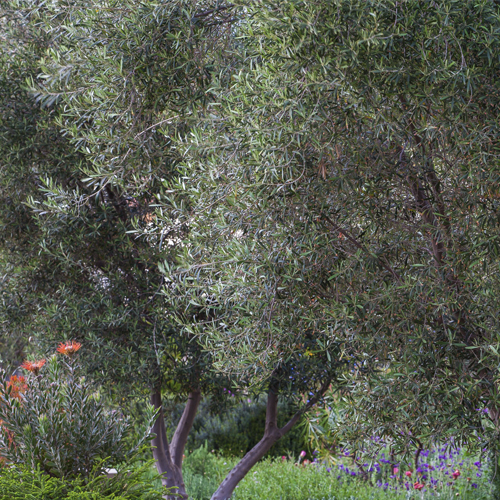
Gray-green foliage and dark brown multi-stemmed trunk.

Olea europaea 'Swan Hill'

Swan Hill Olive
Organization

Classic, slow-growing Mediterranean evergreen tree with willow-like foliage that can be grown as a standard or multi-trunk. Trunks of younger trees are generally smooth and become more gnarled as they age. Pollen is highly allergenic to many people, and fruit and seeds can be messy and even invasive. Seeds can be spread by birds and mammals and have become invasive in parts of southern California and the Central Valley. Low-flowering and non-fruiting cultivars are available.

Examples: O. e. ‘Bonita’ (25-30’ x 25-30’) is nearly fruitless; O. e. ‘Franz Fruitless’ (25-30’ x 25-30’) produces no pollen and nearly no fruit; O. e. ‘Little Ollie’ (6-8’ x 6-8’) is a dwarf non-fruiting hybrid with dense foliage; O. e. ‘Majestic Beauty’ (25’ x 20’) only develops small amounts of fruit; O. e. ‘Swan Hill’ (25-30’ x 25-30’) is a non-fruiting olive free of airborne pollen.

  • Water: Very Low
  • Light: Full SunPartial Shade
  • Soil: Well Drained
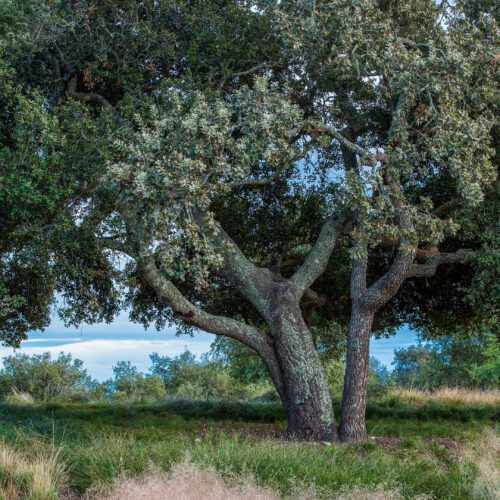
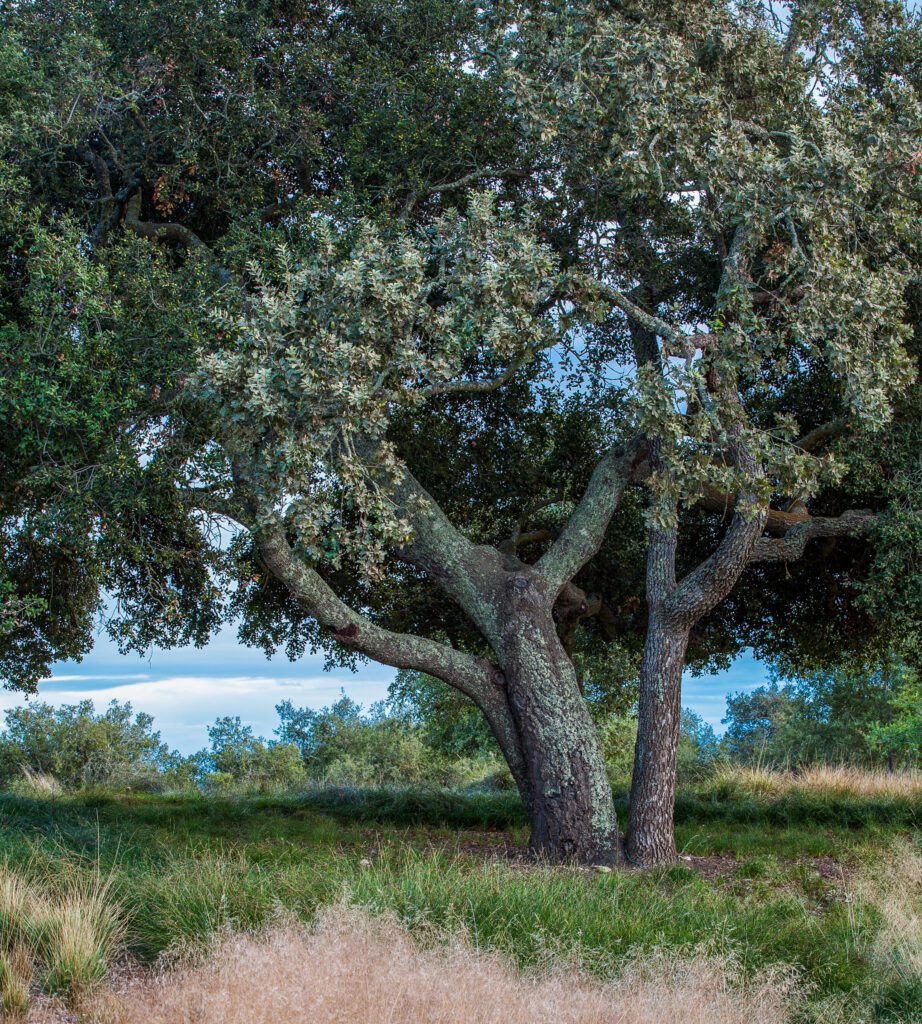
A multi-trunked coast live oak tree with desaturated brown bark and green leaves
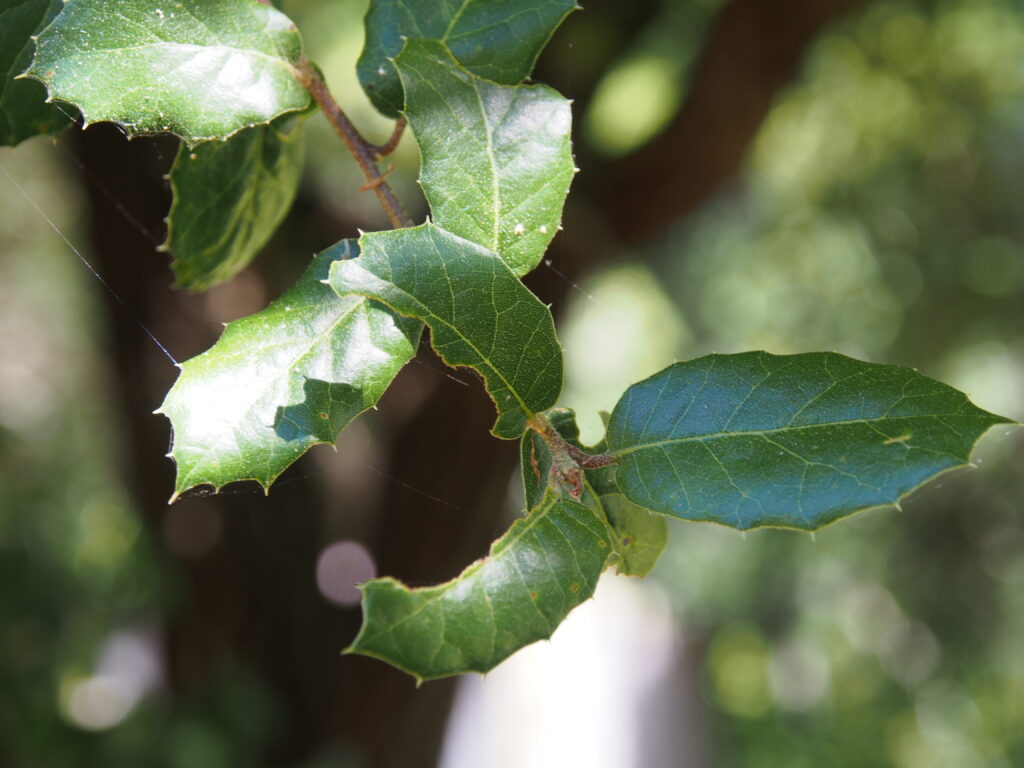
A close-up of classic oak leaves with spines

Quercus agrifolia

Coast Live Oak
Organization

Woody perennial, evergreen tree. Large, dense and broadly rounded with green, spiny margin leaves. Native along coast and coastal mountains from Northern California. One of the best local natives for large properties. Susceptible to Sudden Oak Death.

  • Water: Very Low
  • Light: Full Sun
  • Soil: Well Drained
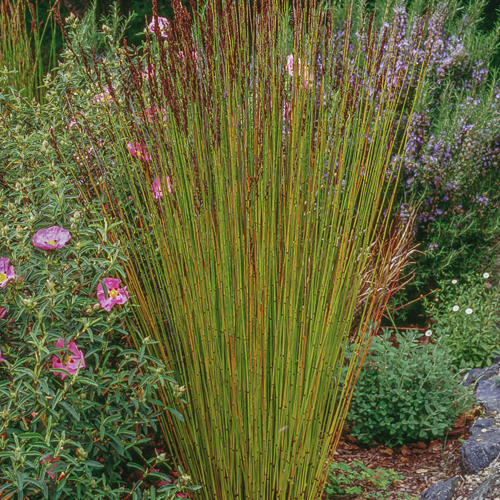
Cape Reed bushel of yellowish green stems with reddish tips

Chondropetalum tectorum

Cape Reed, Cape Rush
Organization

Clumping perennial with stiff, upright, jointed stems that contrast well with other plants. Tan-colored bracts form at the stem joints in summer and fall, providing a striking display. Two species from South Africa grow well in California gardens, especially in rain gardens and swales since they will tolerate both standing water and dry conditions, once established. C. elephantinum (4-5’ x 4-10’) is the larger of the two, C. tectorum (3-4’ x 3-5’) is more suitable for smaller spaces.

  • Water: Low
  • Light: Full SunPartial Shade
  • Soil: Well Drained
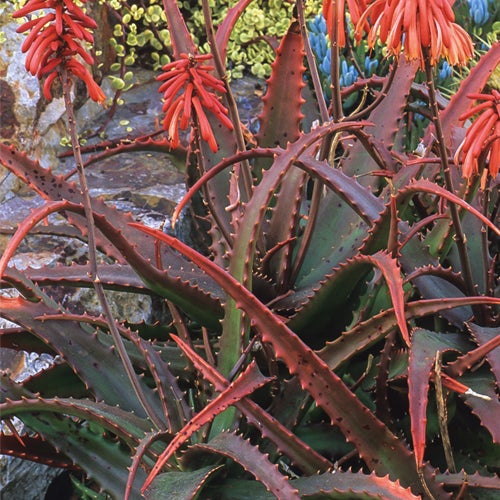
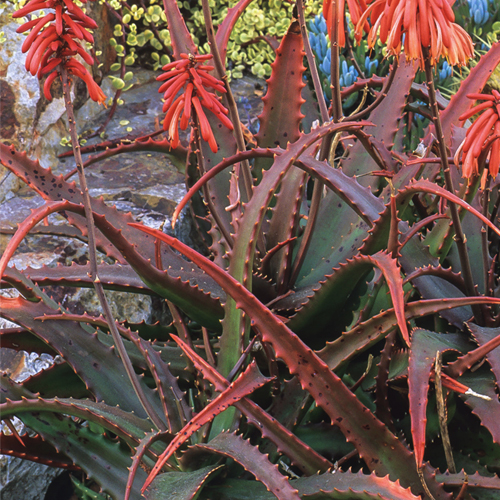
large, dark green, spined, fleshy leaves with red tips and red tubular flowers on tall, upright stems

Aloe spp

Aloe
Organization

Large, variable group of succulents, primarily from South Africa, that produce yellow, orange, or red tubular flowers. Many are somewhat tender and are best grown in mostly frost-free areas. Plant in well-drained soils in full sun in coastal areas and with partial shade in hot locations.
Examples: A. arborescens (tree aloe, 6-8’ x 5-6’), A. ferox (bitter aloe, 3-5’ x 3-5’), A. maculata (soap aloe, 18” x 2-3’), A. striata (coral aloe, 2’ x 2’), A. vera (medicinal aloe, 2’ x 3-4’).

  • Water: Low
  • Light: Full SunPartial Shade
  • Soil: Well Drained
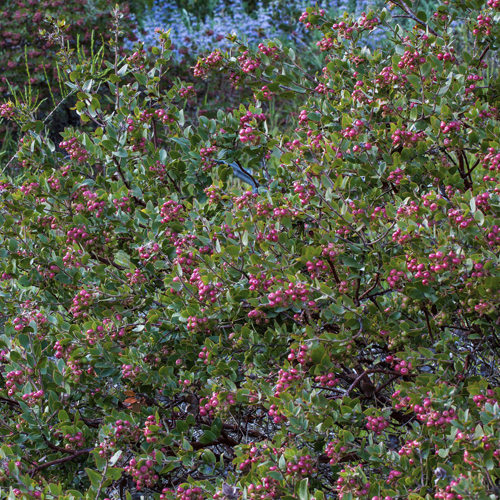
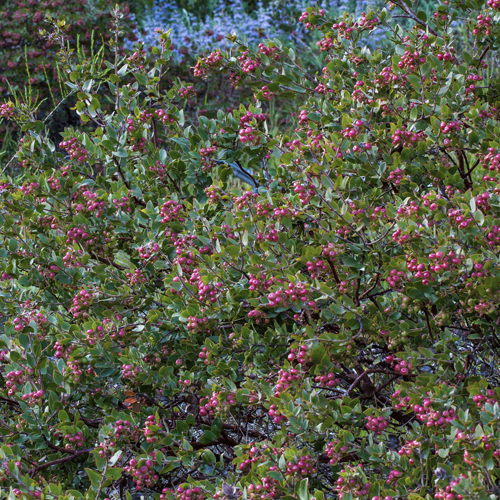
Manzanita bush with deep red fruits

Arctostaphylos spp & cvs

Manzanita, 'Dr. Hurd'
Organization

Manzanitas vary from carpet-forming groundcovers to small trees. Manzanitas have varying shades of striking, reddish brown bark and can provide structure to a garden. These plants have evergreen foliage, small white-to-pink, urn-shaped blossoms in late winter to early spring, and then small fruits that resemble tiny apples.

Groundcovers: A. ‘Emerald Carpet’ (1’ x 3-6’), A. ‘Pacific Mist’ (2-3’ x 6-8’), A. nummularia ‘Bear Belly’ (1’ x 3’), A. uva ursi ‘Radiant’ (6” x 4-6’), A. uva ursi ‘Wood’s Compct’ (1’ x 3’).

Shrubs: A. ‘Howard McMinn’ (5-7’ x 6-10’), A. ‘John Dourly’ (3-4’ x 5-6’), A. ‘Lester Rowntree’ (8-10’ x 10-15’), A. ‘Sunset‘ (5-7’), A. bakeri ‘Louis Edmunds’ (8-10’), A. manzanita ‘Sentinel’ (6-8’ x 5’), A. hookeri ‘Wayside’ (3′ x 8′).

Trees: A. manzanita ‘Dr. Hurd’ (10-15′)

  • Water: Very LowLow
  • Light: Full SunPartial Shade
  • Soil: Well Drained
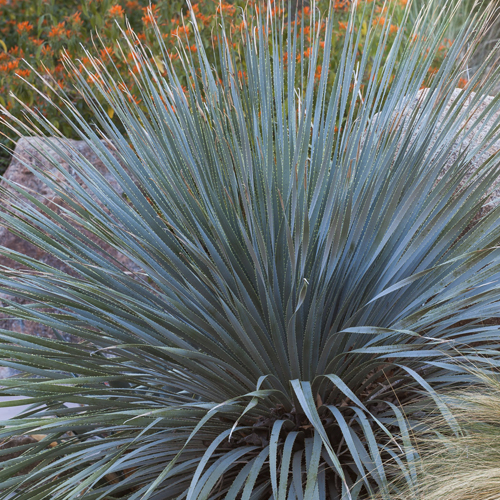
Blue-green grasslike shrub with large, neat blades.

Dasylirion spp

Desert Spoon
Organization

Group of highly drought-tolerant evergreen shrubs with long, narrow leaves and tall flower spikes from southwestern U.S. and northwestern Mexico. Dasylirion wheeleri is perhaps the most commonly available species for planting in Northern California and grows 3-5’ x 4-5’.

  • Water: Very Low
  • Light: Partial Shade
  • Soil: Most Soils

Favorite Plants

1

Coastal Oak

Quercus agrifolia

2

Manzanita Emerald Carpet Ground Cover

Arctostaphylos ‘Emerald Carpet’

Recommended Resources