Curb Core Rain Garden

BACK TO FULL TOUR

Garden Features

1

Drought Tolerant

2

California Natives

3

Deer Resistant

4

Drip Irrigation

5

Pesticide Free

6

Rainwater Harvesting System

7

Rain Garden

8

Smart Irrigation Controller

9

Lawn-Free Landscaping

10

Permeable Surfaces

11

Wildlife Habitat

Partner: City of Petaluma

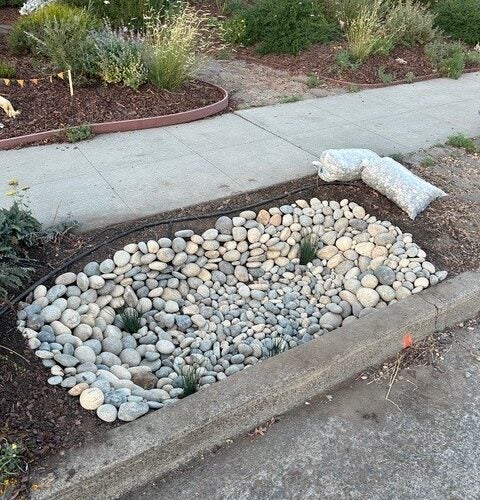
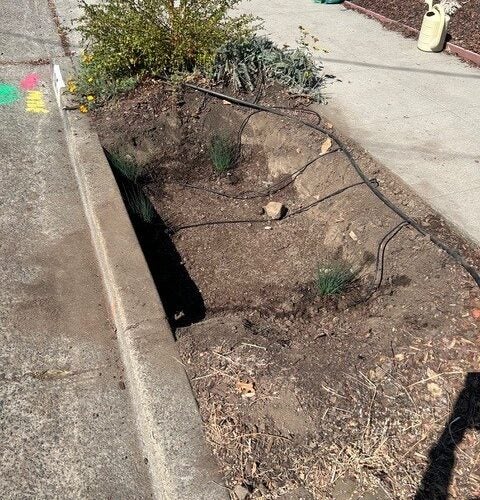
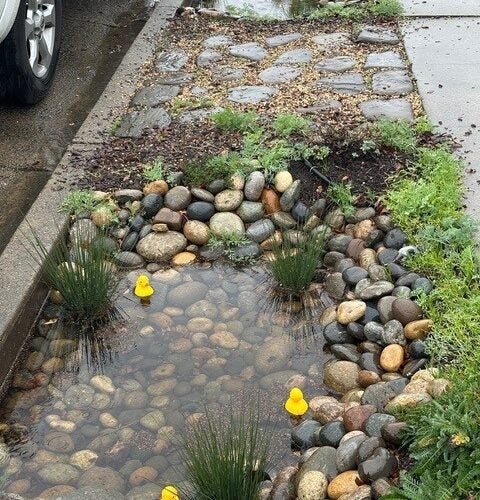
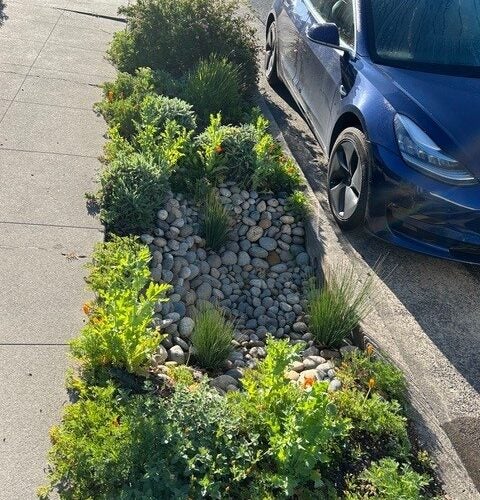
I am new to gardening and this yard is a combination of cuttings from neighbors, inherited plants, volunteer poppies and whatever the deer and gophers leave alone to grow. I take an organic approach and don’t use any pesticides, and try to choose plants that pollinators love. Our house was identified as a candidate for a Curb-Core Rain Garden pilot program, and we thought it was a wonderful idea to capture excess water which often floods the intersections on our street, and divert it into the yard. When it rains and the ponds fill up, I float rubber ducks which add a cheery element to the grey day and draws attention to a project that is fairly easy to execute oneself. Other irrigation is provided by a drip system. Our yard is an everchanging experiment in partnership with wildlife and weather.
Plants in this Garden
Plant Picker
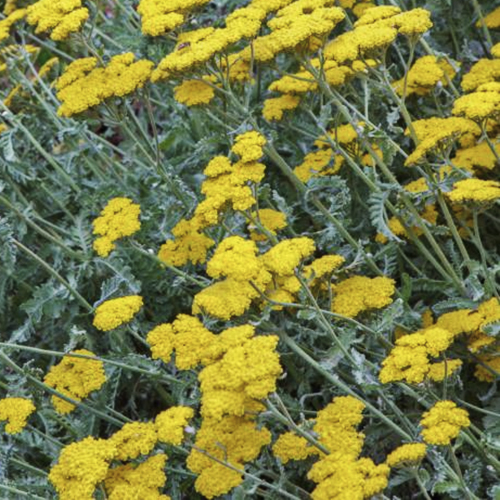
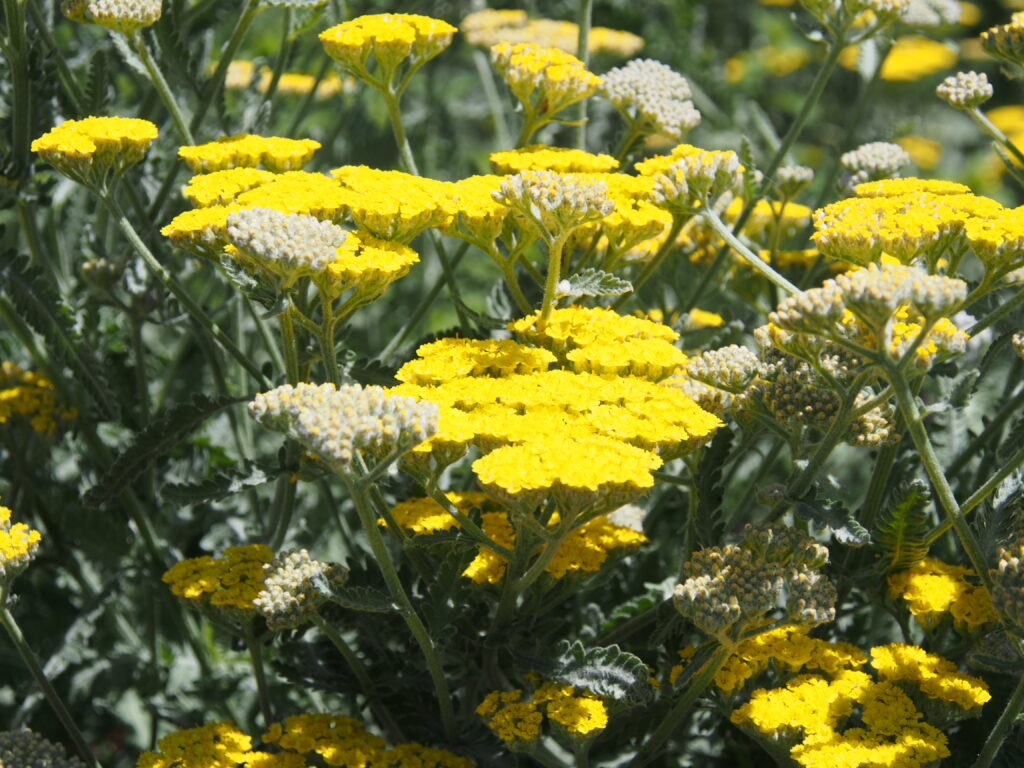
Corymb inflorescent yellow yarrow flowers on gray-green leaves and stems
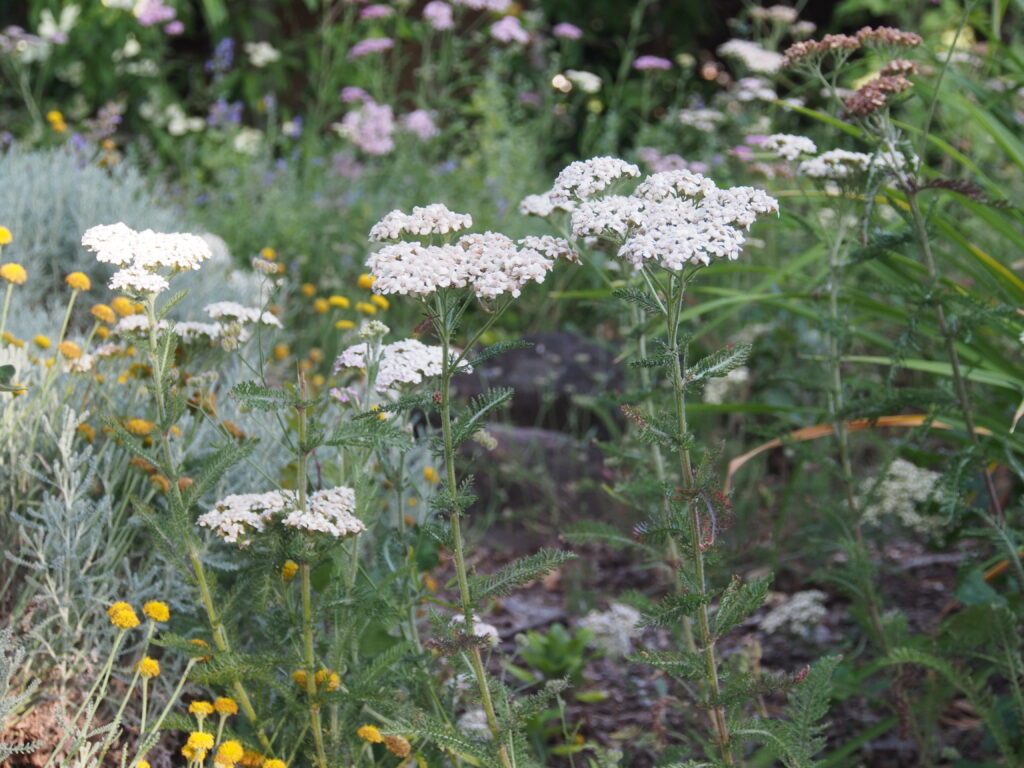
White yarrow.
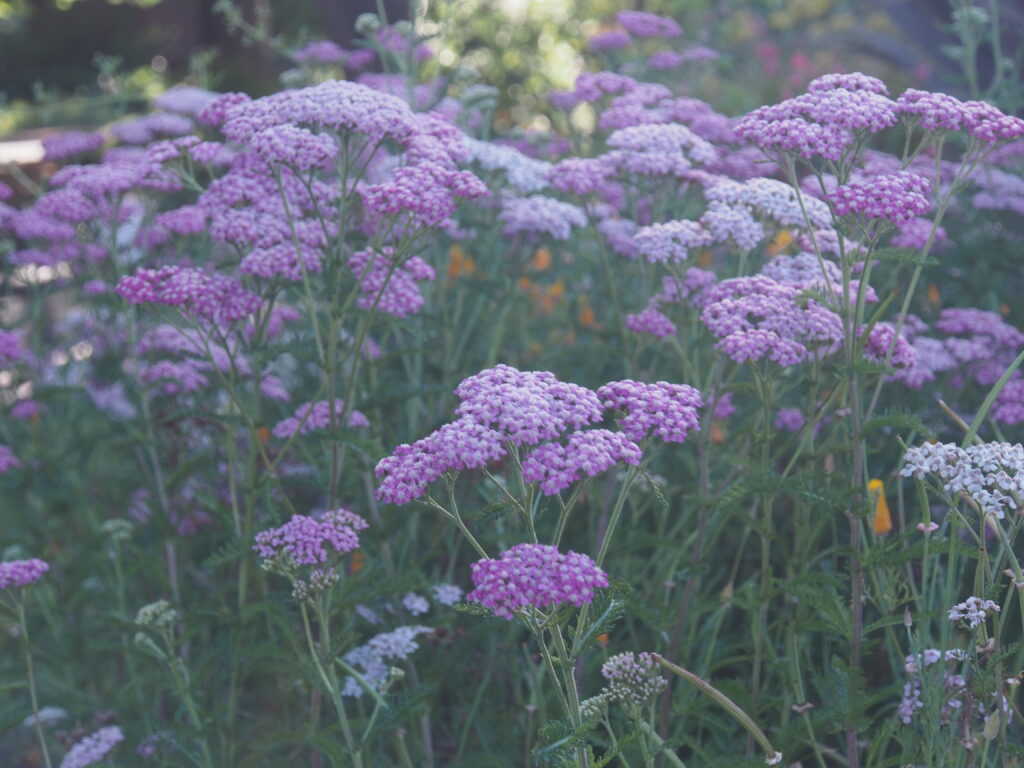
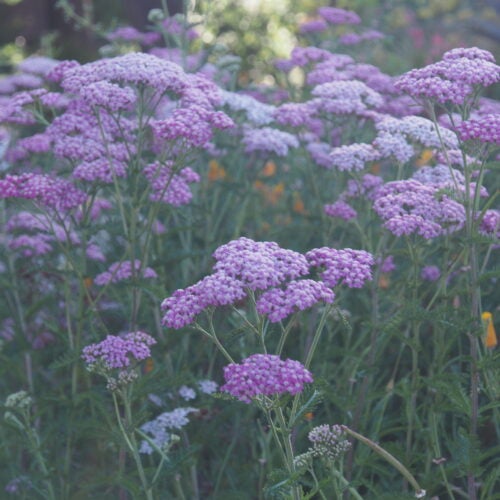
Purple yarrow.
Yellow and white yarrow.

Achillea spp & cvs

Yarrow
Organization

Yarrows are variable low-growing, spreading herbaceous perennials with finely divided leaves that inhabit many temperate regions in the Northern Hemisphere. Flattish clusters of flowers form in spring and well into summer and provide an important nectar source for pollinators and insects. Yarrow can help to stabilize slopes and is a good addition to the upper level of rain gardens and swales. Colors include yellow, pink, and red.

California native spp & cvs: A. millefolium (common yarrow), A. m. ‘Calistoga’, A. m. ‘Island Pink’, A. m. ‘Sonoma Coast’, A. m. ‘Terracotta’.

Other yarrows: A. filipendulina (fern leaf yarrow), A. f. ‘Coronation Gold’, A. ‘Moonshine’, A. tomentosa (woolly yarrow).

  • Water: Low
  • Light: Full SunPartial Shade
  • Soil: Most Soils
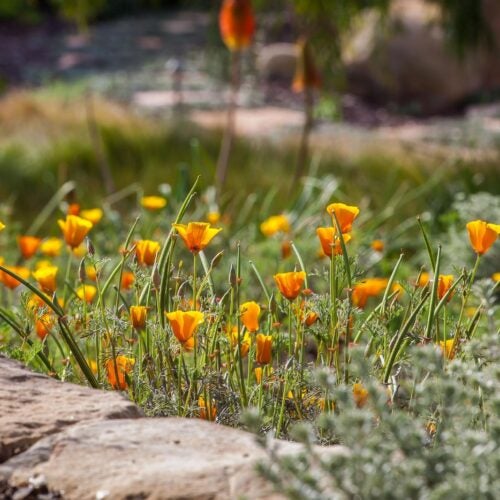
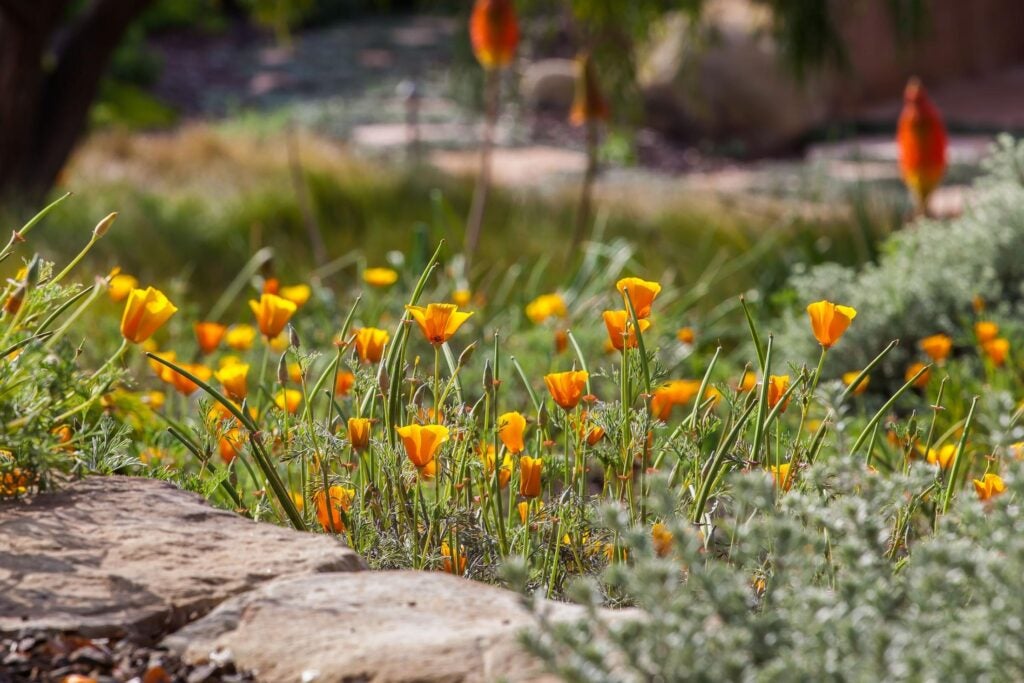
Medium-sized orange flowers with blue green, fine leaves.

Eschscholzia californica

California Poppy
Organization

The California state flower, the California poppy, is a persistent native wildflower. It is best to plant seeds in fall when the rain begins. Once established, the poppy will reseed and spread across your yard. It is great for bees, birds, butterflies, and other pollinators as well as being deer resistant. Poppies prefer well-drained soils but can tolerate most soils including clay.

  • Water: Very Low
  • Light: Full SunPartial Shade
  • Soil: Most Soils
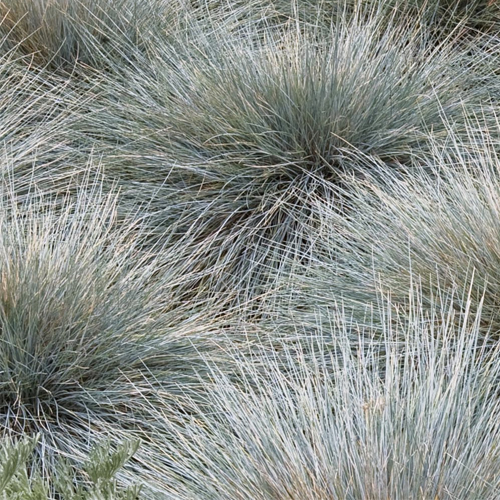
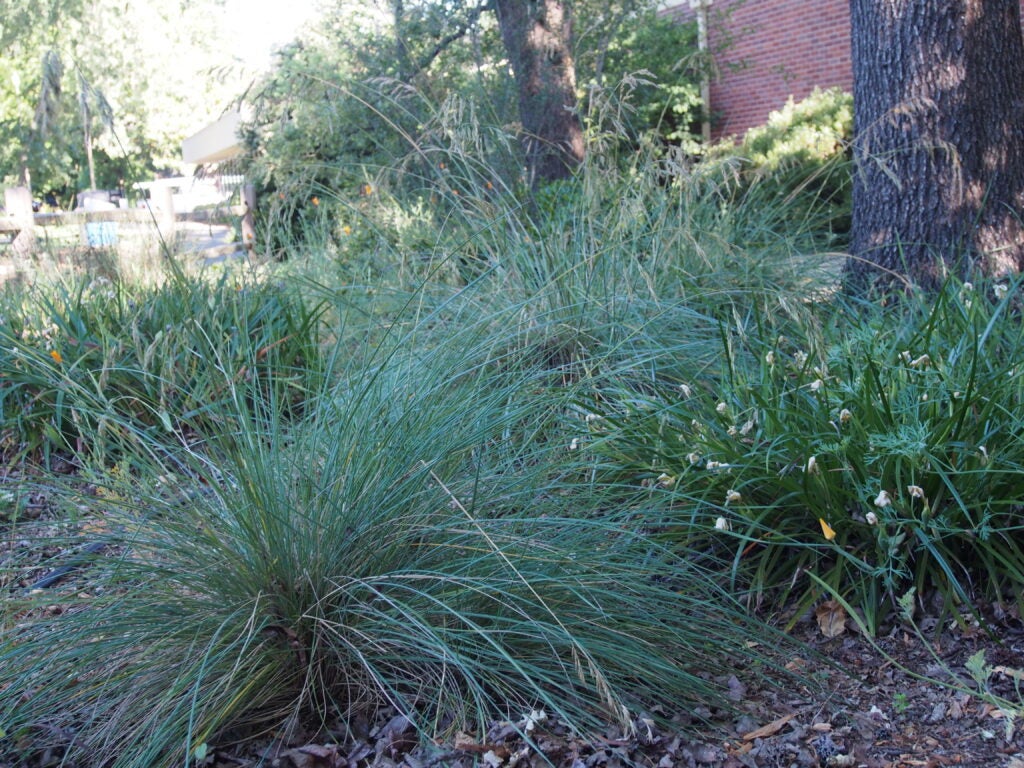
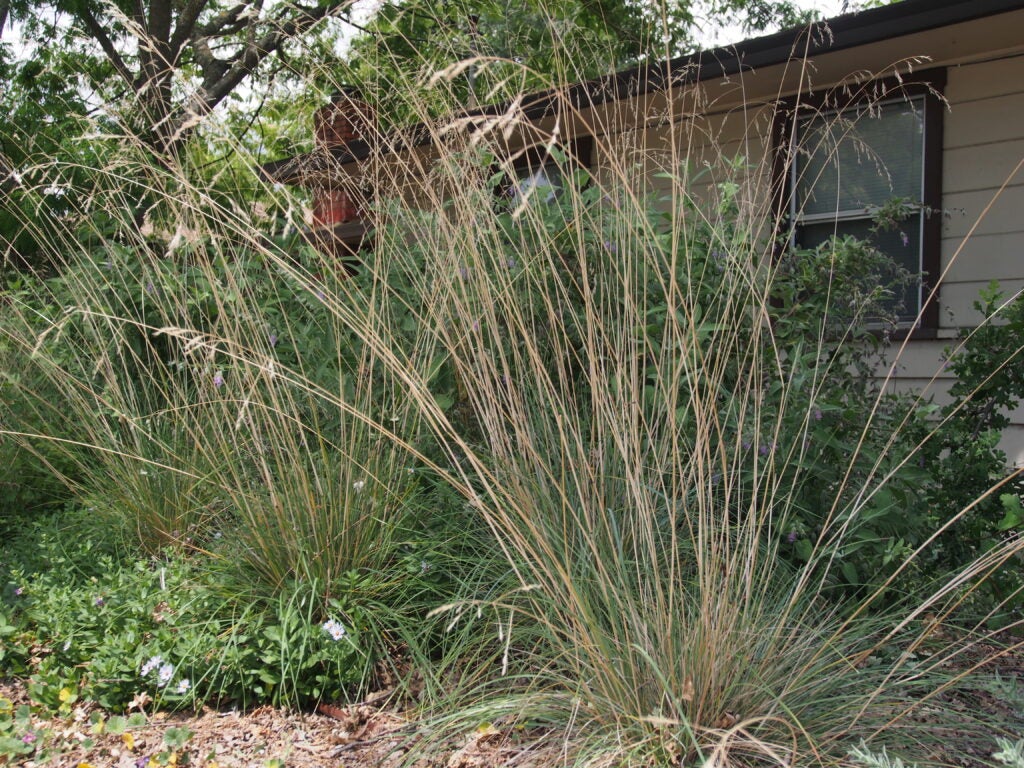
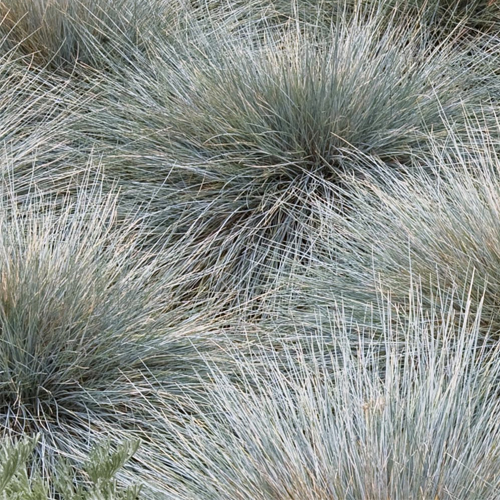
Grayish green bushes of long, thin grass

Festuca spp

Fescue
Organization

Large group of mostly cool-season, perennial, bunching or spreading grasses. Bunch grass varieties can be used as a no-mow lawn replacement, help to stabilize slopes, and have ornamental value. Festuca californica (California fescue, 1-2’ wide x 2’) prefers part shade and works wonderfully massed under the dry shade of native oaks. Festuca glauca (blue fescue, 1’ x 1’) is a small, clumping grass with bluish gray-green leaves. Festuca idahoenis (Idaho fescue, 1-2’ wide x 1’) also has bluish gray-green leaves and is more drought-tolerant and longer lived than blue fescue. Festuca rubra (red fescue) grows from rhizomes and has long, fine-textured leaves that lay over to form a pleasing drift effect as a no-mow lawn.

  • Water: Very LowLow
  • Light: Full SunPartial Shade
  • Soil: Well Drained
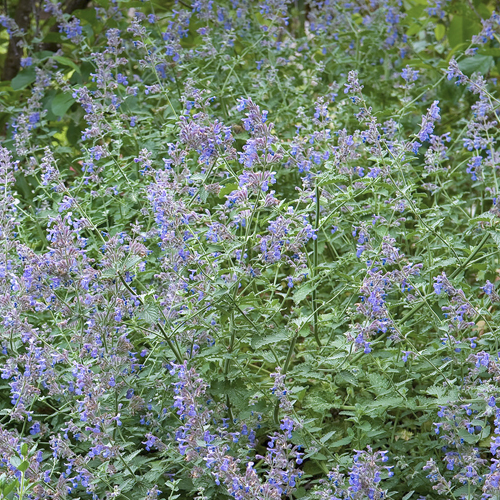
Green foliage and raceme inflorescent lavendar colored flowers.

Nepeta spp

Catmint, Catnip
Organization

Low-growing, flowering perennial from the mint family that produces many spikes of lavender flowers in the summer that are attractive to bees, butterflies, and hummingbirds. Soft, gray-green, aromatic foliage is attractive to cats. Nepeta species seed freely and may become invasive. Nepeta x faassenii is a sterile hybrid that is widely available and grows well in Northern California gardens. Available cultivars have flowers ranging from deep blue to white.

  • Water: Low
  • Light: Full SunPartial Shade
  • Soil: Most Soils

Favorite Plants

1

Salvia

Salvia spp. & cvs.

Favorite Garden Suppliers

Urban Tree Farm

3010 Fulton Road Santa Rosa

Cottage Gardens

3995 Emerald Drive Petaluma

Recommended Resources

Gardening Tips

1

Keep up with the weeds!

2

You can’t fight the deer.

3

Look closely at what you are planting.

4

Gopher baskets are a must!