Best Hope Garden

BACK TO FULL TOUR

Garden Features

1

Drought Tolerant

2

California Natives

3

Drip Irrigation

4

Pesticide Free

5

Reclaimed/Recycled Materials

6

Sheet Mulching

7

Smart Irrigation Controller

8

Lawn Conversion

9

Lawn-Free Landscaping

10

Urban Homestead

11

Wildlife Habitat

12

Monarch Waystation

13

Native Bee Boat

14

Bat Box

15

Sonoma County Native Plants

Partner: Town of Windsor

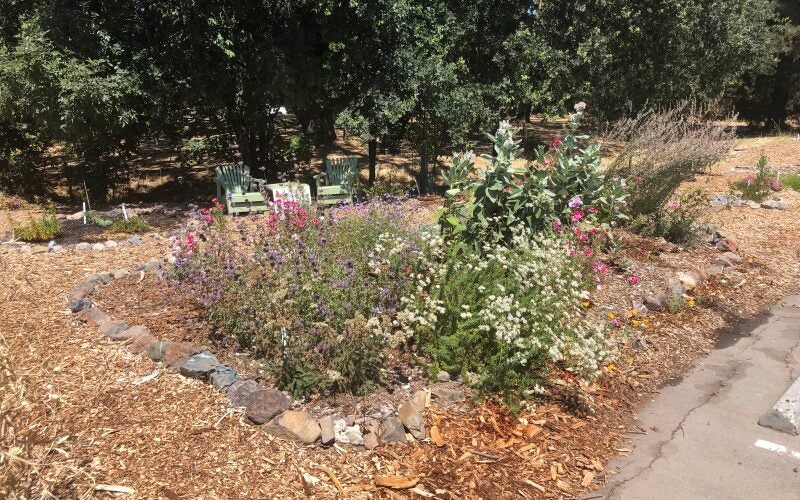
Our mission is to inspire and educate our Windsor Family-Friendly Community to become a Pollinator-Friendly Community using Sonoma County Area Native Plants. Our aim is to see individuals create ecosystems in neighborhoods, private yards and public spaces. This is a Windsor contribution to the worldwide extreme decline of bird, bee, butterfly, moth, insect and bat populations.

This garden was inspired by Doug Tallamy’s book, Nature’s Best Hope. The three founders of this garden met and realized that reading this book changed their lives. They created this space to inspire the homeowners of Sonoma County to have their own “Best Hope” garden in their yards using Sonoma County area native plants that have evolved here. Native plants help ensure that the wildlife in our county is healthy and can thrive while offering less water usage, as these plants have survived here on their own for many years.

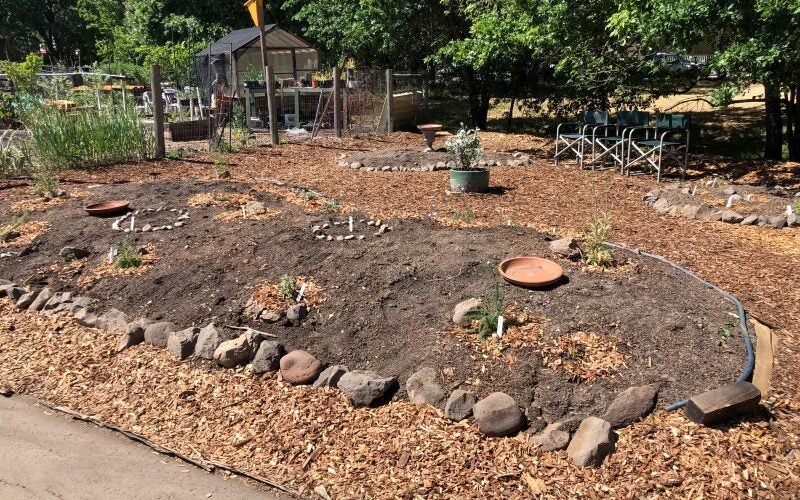
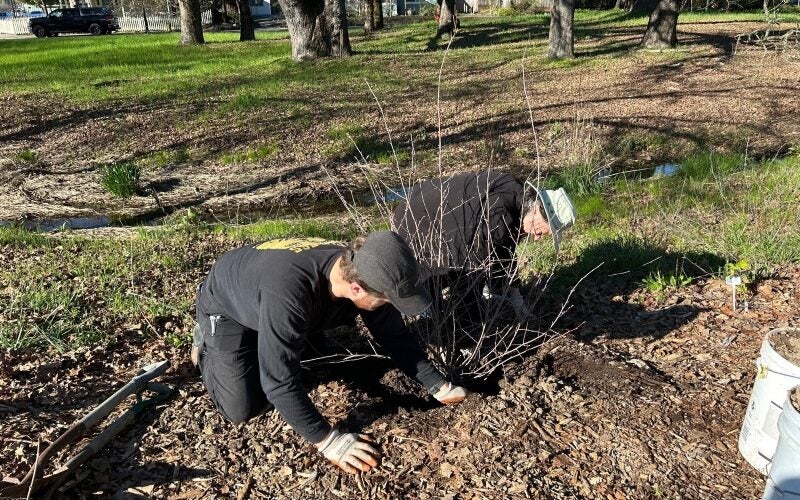
The project to create the pollinator garden, started in March of 2022 when volunteers sheet mulched a large unused field north of the Community Garden by directly placing overlapping pieces of cardboard on top of the un-mowed field. Next, a 3” layer of mulch was added on top of the cardboard. Planting small plants and trees could begin! The effort was very successful, even though it was an extreme drought year. The weeds didn’t come back and the newly planted native plants survived. We keep all invasive plants off the area in order to keep it remaining native.

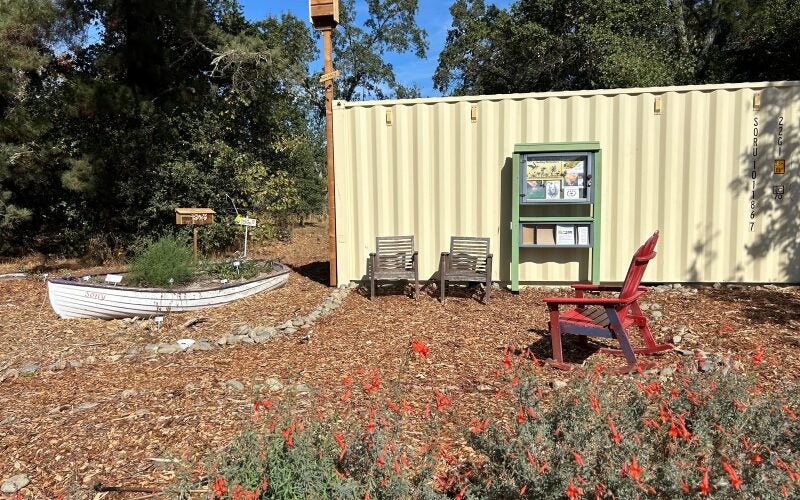
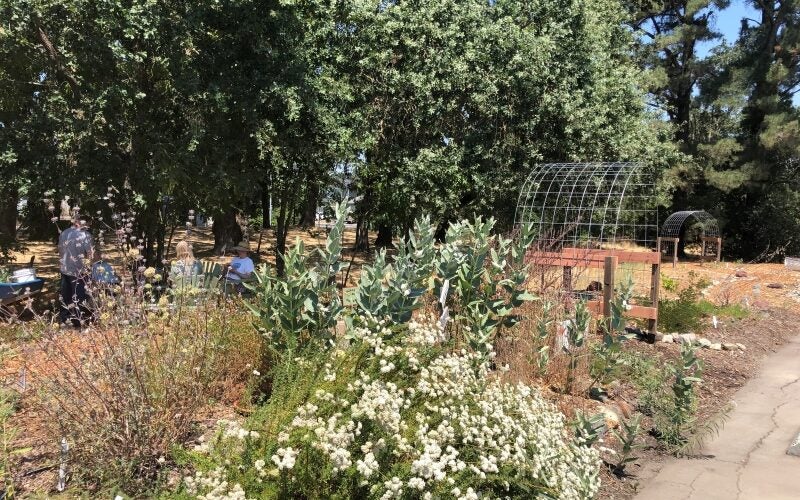
There are no gates, so it is open day or evening to the public and we have provided chairs and tables for people to sit and enjoy the peace of the garden. We have seen people enjoying the garden many times, including a group of four playing cards together and often people playing musical instruments like flutes or guitars.

Two tall arches were added, as entrances, to support native vining plants and be more visually interesting and engaging. The Monarch Waystation, bat house, and native bee boat were added to support more critters who will make the garden their home. There are approximately 60 native Sonoma County area plants and trees currently planted. This is a young garden which will takes years to fully develop.

We have plenty of parking right in front of the garden and the lot is always open. We are currently discussing adding a swale in the garden to avoid pollutants from the parking lot entering the bordering creek during heavy rains.

Special Events
Seed Giveaway
Wildflower Crowns for Kids
Free Raffle Tickets with Prizes
Make-Your-Own-Monarchs for Kids
Pollinator and Sheet Mulching Informational Booths

Plants in this Garden

Plant Picker
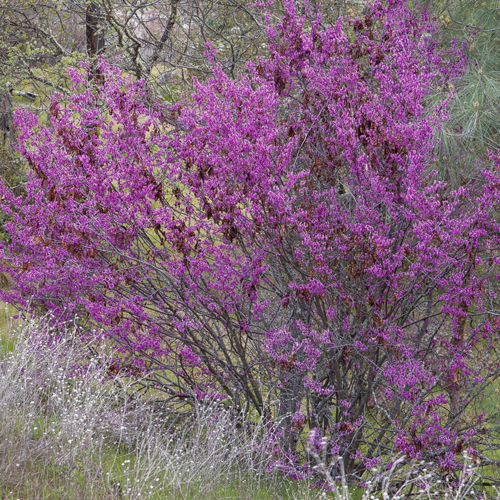
Winter and spring form of western redbud with magenta leaves
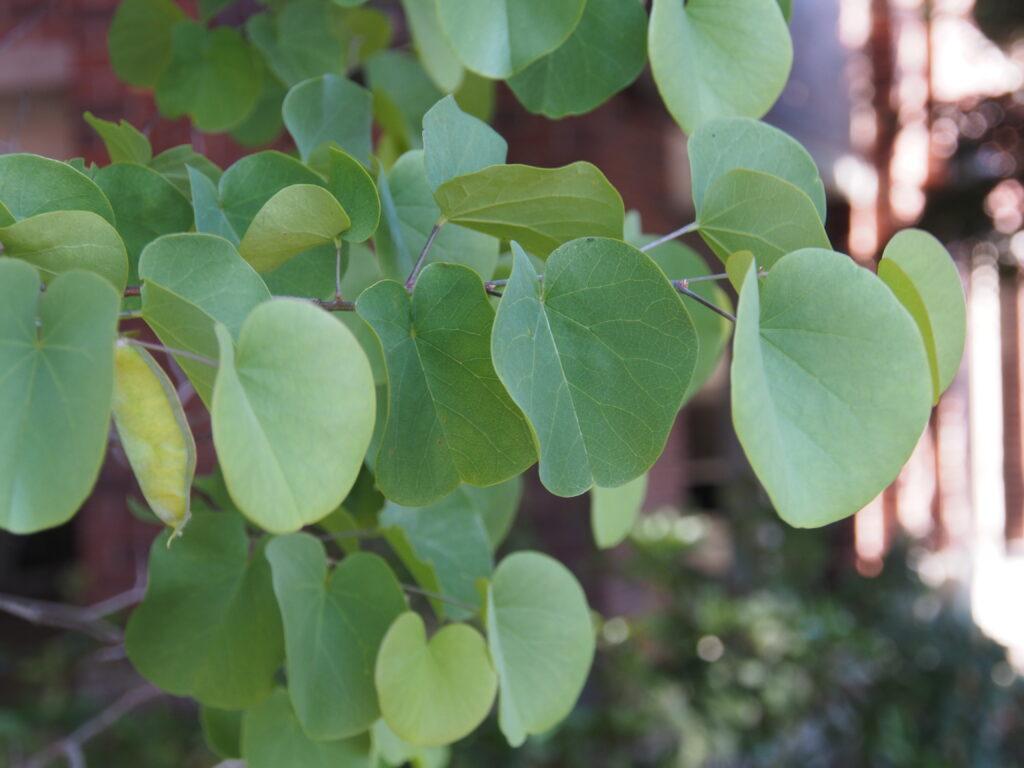
Green-blue leaves of the summer form of western redbud

Cercis occidentalis

Western Redbud
Organization

Western redbud is an ornamental, multi-trunked and deciduous, large shrub or small tree with year-round interest that provides a California native and very low-water alternative to the moderate-water Cercis canadensis. Magenta to rosy pink blossoms that resemble pea flowers cover bare branches in late winter to early spring. Apple green, heart-shaped leaves emerge to accompany the flowers. Over the summer, the leaves become more leathery and bluish green, and seed pods mature and remain into the winter months.

  • Water: Very Low
  • Light: Full SunPartial Shade
  • Soil: Most Soils
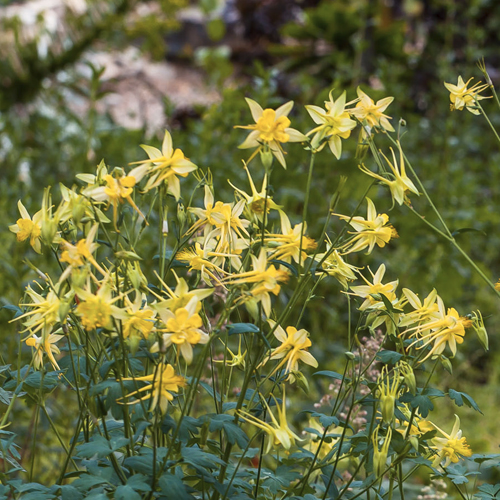
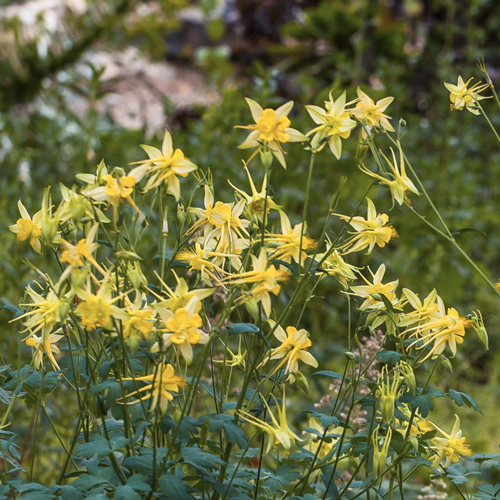
columbine plant with light yellow, star-shaped flowers

Aquilegia spp

Columbine
Organization

This woodland perennial has blue-green, deeply divided leaves and delicate, nodding flowers. Leave spent flowers to form seed heads for a crop of new seedlings. There are many species and hybrids, but the red-and-yellow flowering Aquilegia formosa (western columbine) is perhaps the most fitting for gardens in Sonoma and Marin. Excellent companion for other shade-loving plants such as coffeeberry and currants.

  • Water: Low
  • Light: Partial Shade
  • Soil: Most Soils
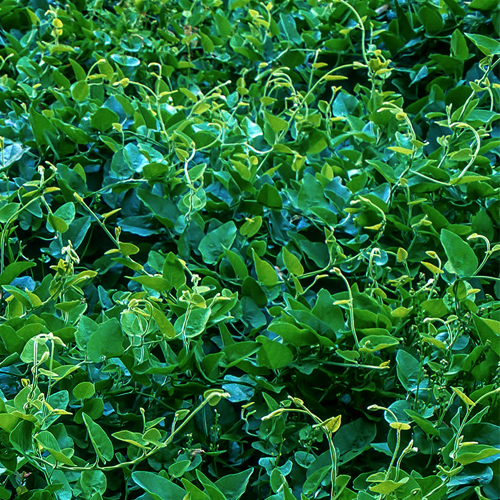
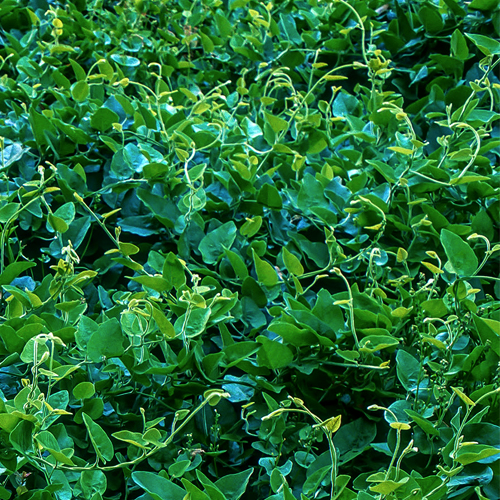
light green leaves of the California pipe vine

Aristolochia californica

California Pipevine
Organization

Important northern California native habitat plant that is the sole larval food source for the pipevine swallowtail butterfly. This deciduous vine grows naturally along stream banks and in woodlands and performs well under native oaks. Dutchman’s pipevine is relatively slow-growing and takes a few years to establish. Pendulous pipe-shaped flowers bloom in early spring, followed by soft, bright green, heart-shaped leaves. Best grown as a groundcover to provide protection for pipevine swallowtail larvae but will also twine up other plants and structures. The real show comes in late spring as larvae feed on the plant and grow into spectacular horned, black caterpillars with red spots!

  • Water: Low
  • Light: Partial ShadeShade
  • Soil: Most Soils
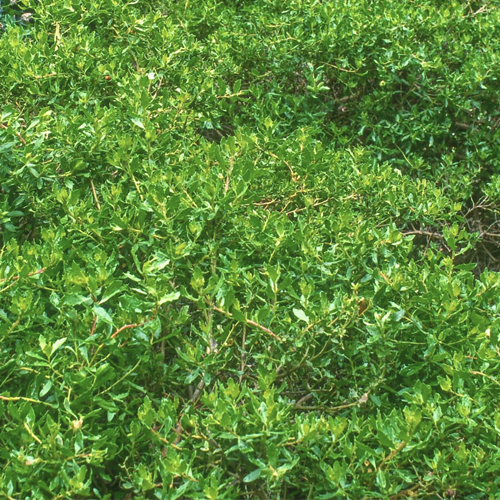
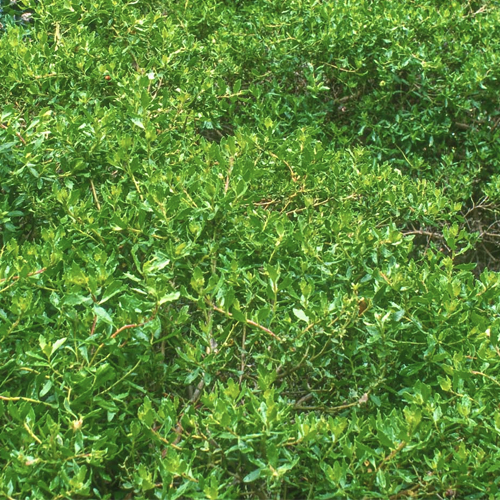
Vibrant, shiny, light green foliage of the dwarf coyote bush

Baccharis pilularis & cvs

Dwarf Coyote Bush
Organization

Flowers are inconspicuous but provide a source of pollen, nectar, and seeds for wildlife. Shrubby varieties can be cut back to maintain a more tidy and compact appearance. Perennial varieties can be divided in fall or early spring. Excellent choice as support for more showy plants in the garden.

  • Water: Low
  • Light: Full Sun
  • Soil: Most Soils
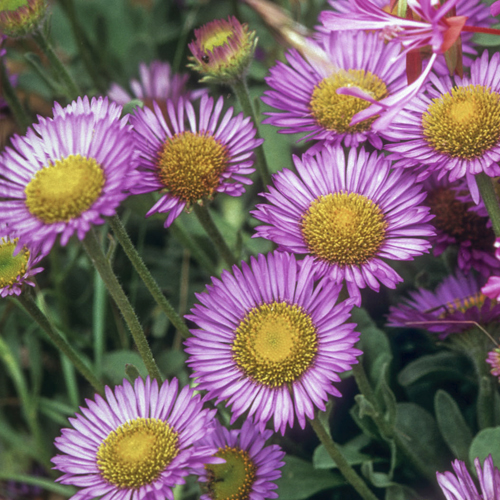
A collection of daisylike, purple flowers with large yellow disk florets and dark green stems

Erigeron spp

Beach Aster, Seaside Daisy
Organization

Group of flowering annuals and perennials mostly native to North America. Two species are commonly grown in California gardens. Beach aster (E. glaucus, 12” x 18”) is native to coastal California and Oregon and has purple flowers with yellow centers from spring into summer. Santa Barbara daisy (E. karvinskianus, 10-18” x 2-3’) has white and pink flowers with yellow centers. This plant can self-sow aggressively but is easily pulled.

Examples: E. g. ‘Wayne Roderick’ has deep purple flowers. E. g. ‘White Lights’ is a white- flowering form from Sonoma County.

  • Water: Low
  • Light: Full SunPartial Shade
  • Soil: Most Soils
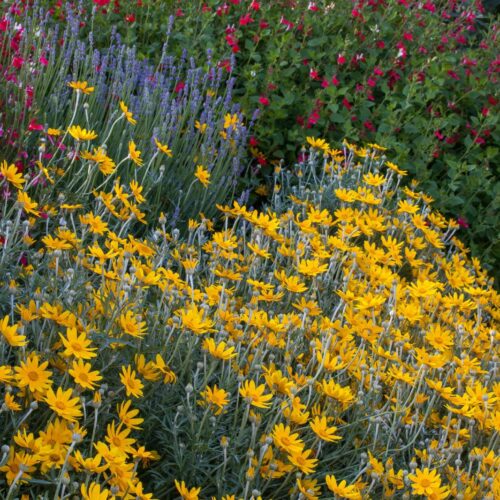
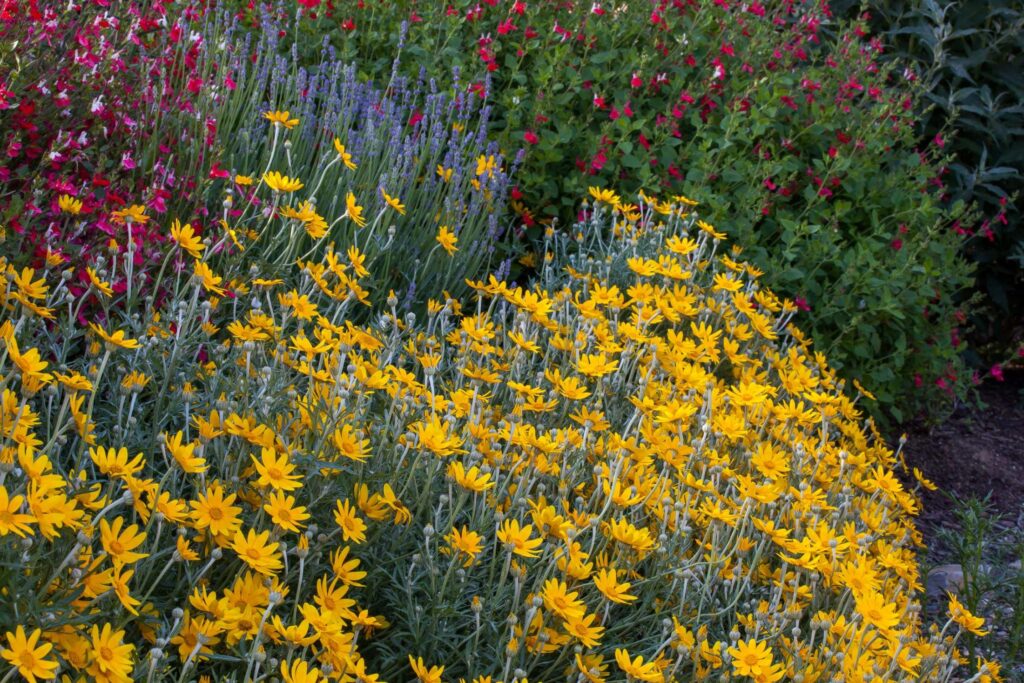
A small shrub with gray green lobed leaves and upright stems with a single yellow sunflower on top.

Eriophyllum lanatum

Common Woolly Sunflower
Organization

The Common Wooly Sunflower is native to northern California up to British Columbia and east to Wyoming. Many cultivars are available. Generally, they grow less than 1 foot to 2 feet tall and 2-3 feet wide. They have upright stems with wooly leaves and a singular sunflower atop each stem. It tolerates a wide variety of well-draining soils. Cut back in late winter to renew.

  • Water: Low
  • Light: Full SunPartial Shade
  • Soil: Well Drained
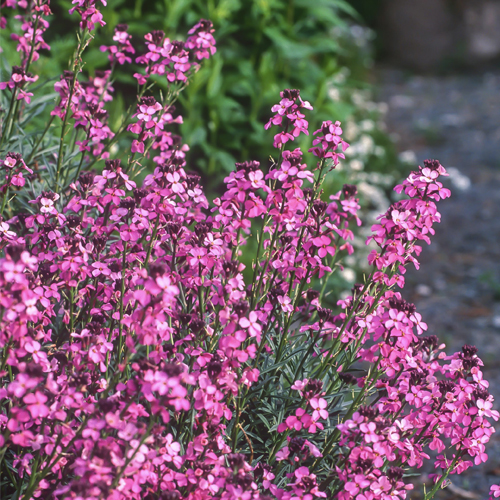
Bright pink flowers clustered along their stems with dark green leaves

Erysimum spp

Wallflower
Organization

Short-lived perennials with differing growth habits with flower spikes of small flowers. Erysimum ‘Bowles Mauve’ is a popular hybrid that grows 3’ x 3-4’ and blooms from winter and into spring. Many hybrids with different flower colors are available.

  • Water: Low
  • Light: Full SunPartial Shade
  • Soil: Most Soils
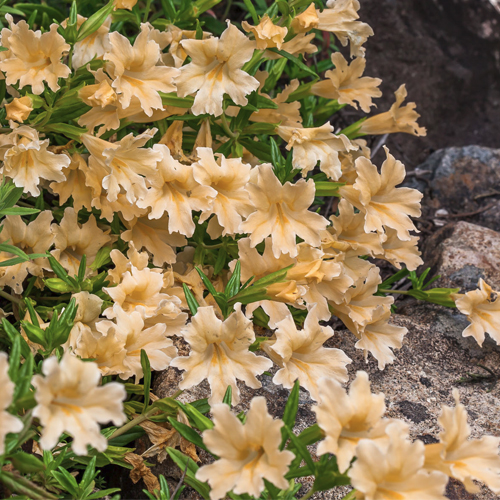
A group of small, peach-colored trumpet flowers with green leaves.

Mimulus aurantiacus and hybrids

Sticky Monkey Flower
Organization

The orange, tubular flowers of sticky monkey flower can be enjoyed in many locations throughout Sonoma and Marin counties in spring and summer, a testament to how well this plant is adapted to hot and dry conditions. The slightly sticky leaves benefit from light pinching and pruning to maintain an attractive appearance and support for the beautiful flowers. Many hybrids provide color variation. Do not confuse this plant with the red-flowered scarlet monkey flower (Mimulus cardinalis), an herbaceous riparian plant that requires regular water to thrive.

  • Water: Very Low
  • Light: Full SunPartial Shade
  • Soil: Sandy

Favorite Garden Suppliers

California Flora Nursery

2990 Somers Street Fulton

Laguna de Santa Rosa Foundation

900 Sanford Road Santa Rosa

Hallberg Butterfly Gardens

8687 Oak Grove Avenue Sebastopol

Recommended Resources

Nature's Best Hope

by Doug Tallamy

Silvohorticulture

by Andy Dibber and Ben Raskin

Braiding Sweetgrass

by Robin Wall Kimmerer

Gardening Tips

1

Allow caterpillars to LIVE and munch your leaves so the baby birds can have some protein to eat!

2

Scatter wildflower seeds in the fall, winter or very early spring

3

California natives DO need weekly water the first year because they are babies!

4

Plant Sonoma County natives during the rainy season

5

Leave the leaves (and stalks) until April for nesting insects