Bee and Butterfly Friendly

BACK TO FULL TOUR

Garden Features

1

Drought Tolerant

2

California Natives

3

Deer Resistant

4

Drip Irrigation

5

Pesticide Free

6

Rainwater Harvesting System

7

Lawn Conversion

8

Lawn-Free Landscaping

9

Wildlife Habitat

Partner: Marin Water

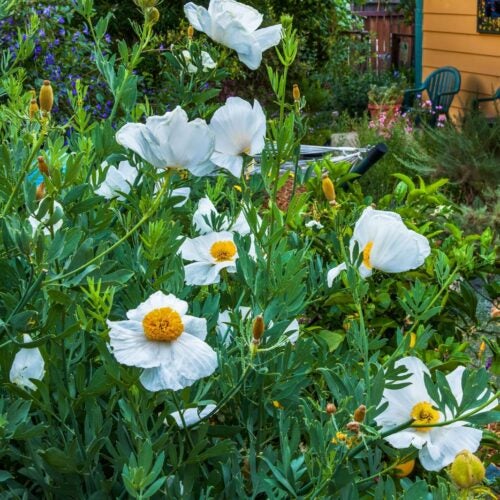
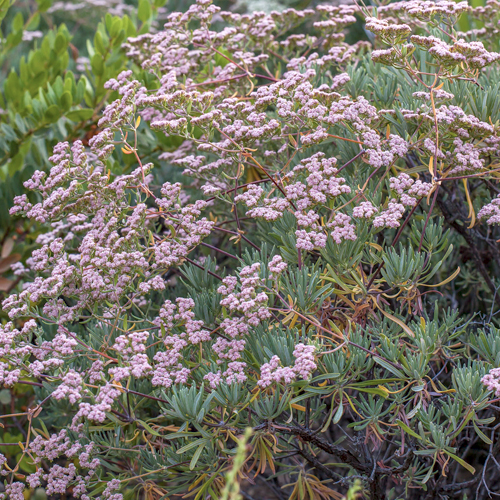
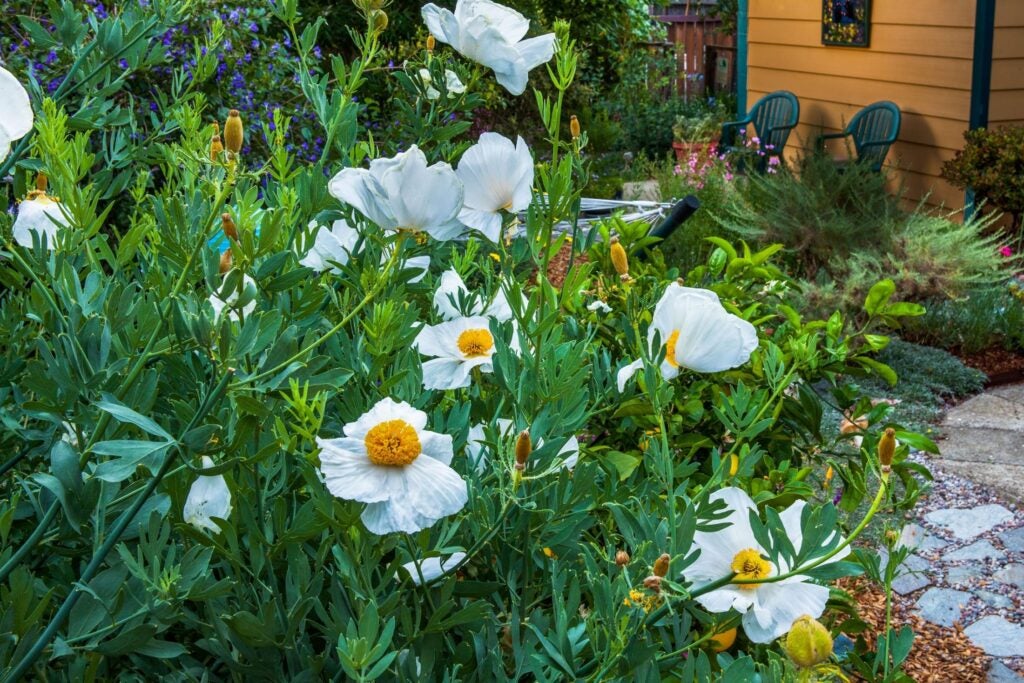
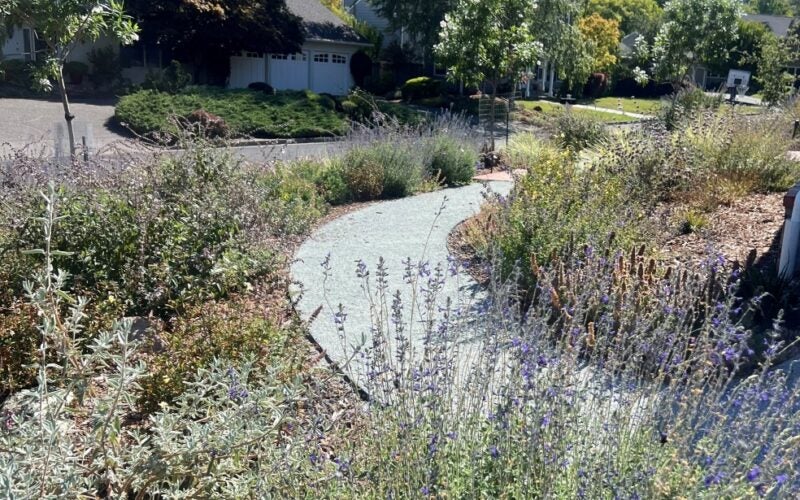
Planted in 2024, our garden has blossomed into a haven for bees, butterflies, and birds.  We planted a lot of different California natives and drought tolerant plants. Some survived, some did not, but now we know what works in our garden!  Over the next few years, we plan to fill in the remaining gaps as our existing natives continue to spread and mature.  

Come visit to learn more about gardening for pollinators and see the joy of native plants thriving!
Plants in this Garden
Plant Picker
sweet smelling Agastache flowers in magenta, red, and yellow

Agastache spp

Hyssop, Licorice Mint
Organization

Shrubby perennial in the mint family with aromatic gray-green leaves from southern Arizona and northern Mexico. Tubular orange and lavender flowers from midsummer to fall. Can be short-lived in clay soils.

  • Water: Low
  • Light: Full SunPartial Shade
  • Soil: Well Drained
California Lilac ceanothus variety with clusters of small, vibrant blue flowers and dark green leaves

Ceanothus spp & cvs

Ceanothus
Organization

Ceanothus is a group of fast-growing, evergreen shrubs that vary from groundcovers to small trees, many of which are native to California. They provide a spectacular display of flowers in spring that will attract a multitude of pollinators. Flowers are followed by seeds that provide food for birds. The clusters of tiny flowers range from white to deep violet. Plants perform best with good drainage and minimal irrigation once established. Some do best in cooler coastal climates, but many thrive in hotter inland climates. Pay close attention to the mature size when selecting ceanothus to ensure that it has sufficient space for its natural form.

Groundcovers: C. ‘Centennial’ (1’ x 8’), C. gloriosus var. gloriosus ‘Anchor Bay’ (2’ x 8’), C. griseus var. horizontalis ‘Diamond Heights’ (variegated, 1’ x 4’), C. griseus var. horizontalis ‘Yankee Point’ (3’ x 12’), C. maritimus (2’ x 6’).

Shrubs: C. ‘Blue Jeans’ (6’ x 6’), C. Concha (6’ x 6’), C. ‘Dark Star’ (6’ x 8’), C. ‘Joyce Coulter’ (4’ x 12’), C. ‘Julia Phelps’ (8’ x 10’), C. cuneatus (8’ x 8’), C. thyrsiflorus ‘Skylark’ (4’ x 6’).

Large shrubs: C. ‘Frosty Blue’ (10’ x 12’), C. thyrsiflorus (20’ x 20’), C. t. ‘Snow Flurry’ (white flower, 20’ x 20’).

Trees: C. ‘Ray Hartman’ (15′ x 15′)

  • Water: Very LowLow
  • Light: Full SunPartial Shade
  • Soil: Well Drained
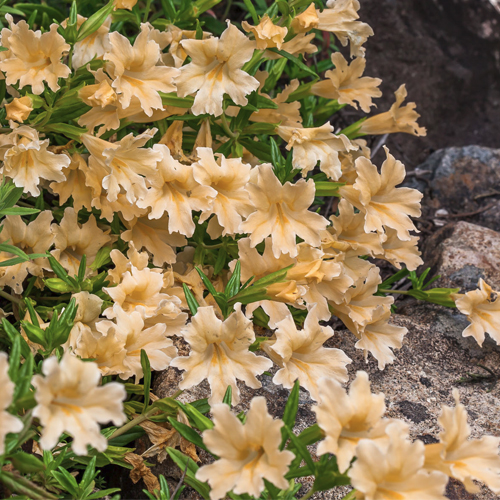
A group of small, peach-colored trumpet flowers with green leaves.

Mimulus aurantiacus and hybrids

Sticky Monkey Flower
Organization

The orange, tubular flowers of sticky monkey flower can be enjoyed in many locations throughout Sonoma and Marin counties in spring and summer, a testament to how well this plant is adapted to hot and dry conditions. The slightly sticky leaves benefit from light pinching and pruning to maintain an attractive appearance and support for the beautiful flowers. Many hybrids provide color variation. Do not confuse this plant with the red-flowered scarlet monkey flower (Mimulus cardinalis), an herbaceous riparian plant that requires regular water to thrive.

  • Water: Very Low
  • Light: Full SunPartial Shade
  • Soil: Sandy
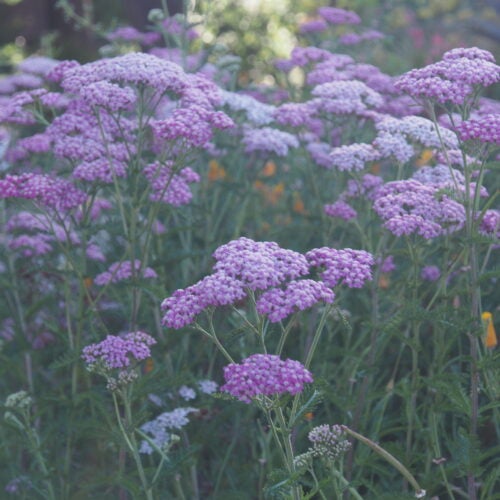
Corymb inflorescent yellow yarrow flowers on gray-green leaves and stems
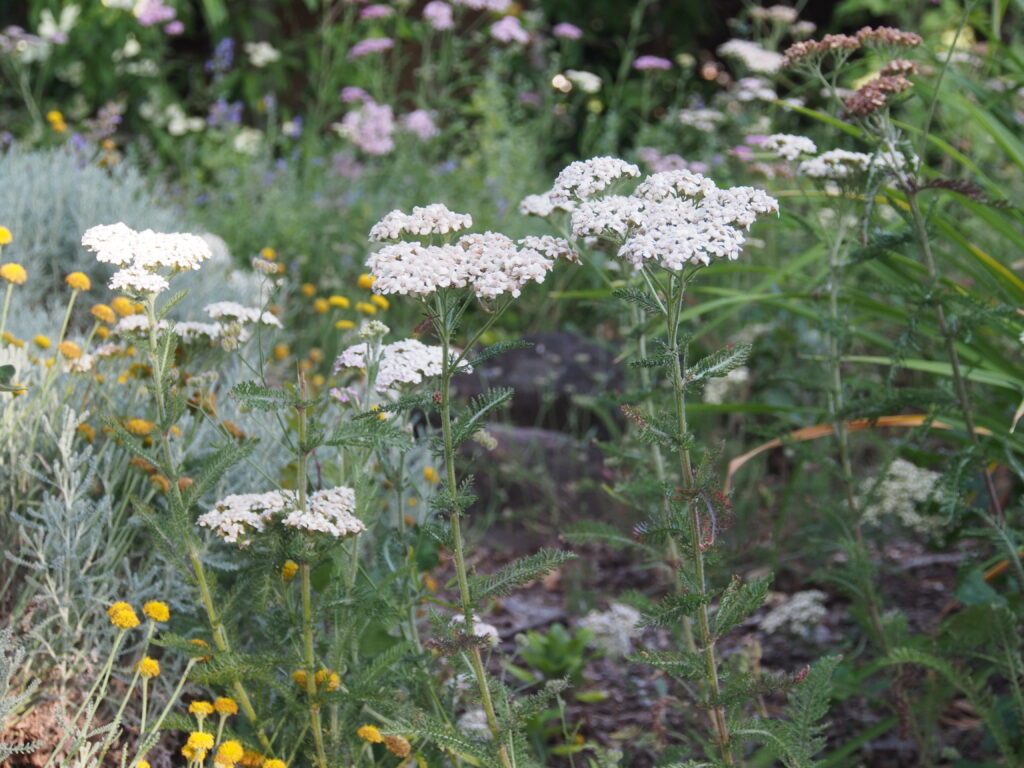
White yarrow.
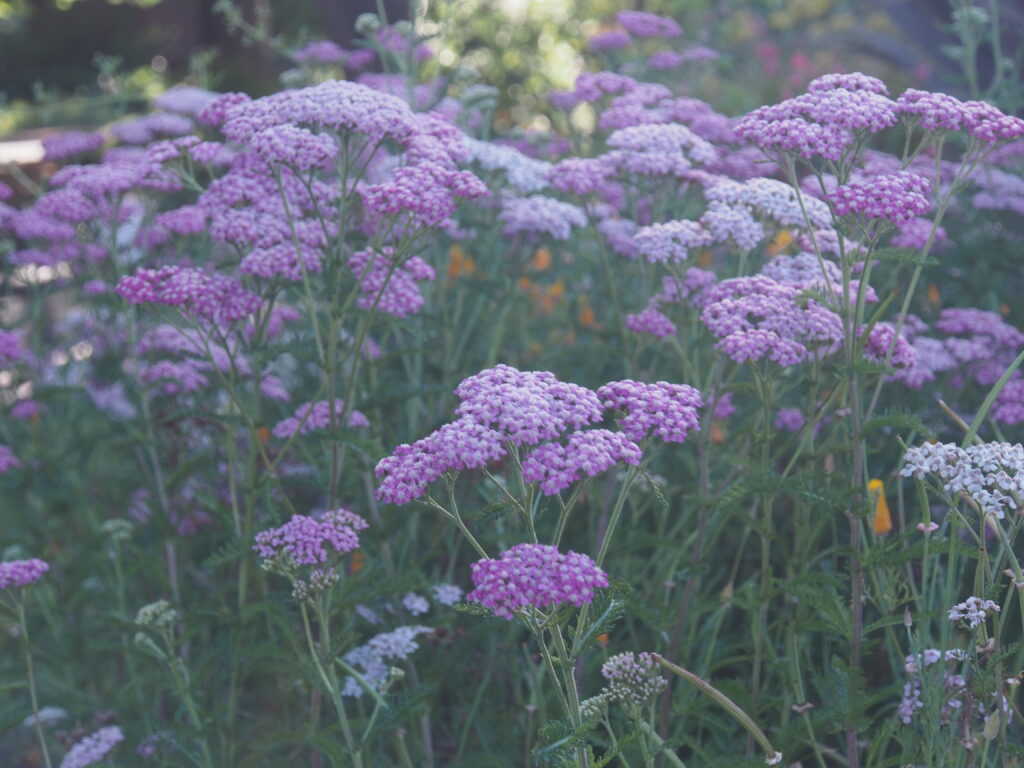
Purple yarrow.
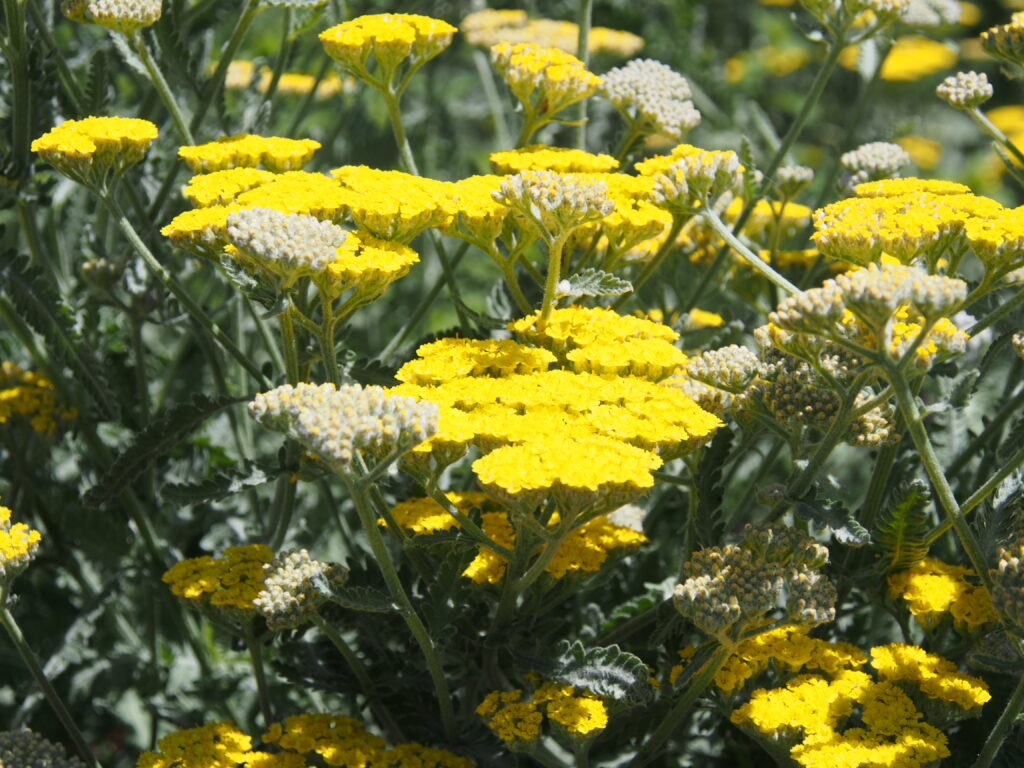
Yellow and white yarrow.

Achillea spp & cvs

Yarrow
Organization

Yarrows are variable low-growing, spreading herbaceous perennials with finely divided leaves that inhabit many temperate regions in the Northern Hemisphere. Flattish clusters of flowers form in spring and well into summer and provide an important nectar source for pollinators and insects. Yarrow can help to stabilize slopes and is a good addition to the upper level of rain gardens and swales. Colors include yellow, pink, and red.

California native spp & cvs: A. millefolium (common yarrow), A. m. ‘Calistoga’, A. m. ‘Island Pink’, A. m. ‘Sonoma Coast’, A. m. ‘Terracotta’.

Other yarrows: A. filipendulina (fern leaf yarrow), A. f. ‘Coronation Gold’, A. ‘Moonshine’, A. tomentosa (woolly yarrow).

  • Water: Low
  • Light: Full SunPartial Shade
  • Soil: Most Soils
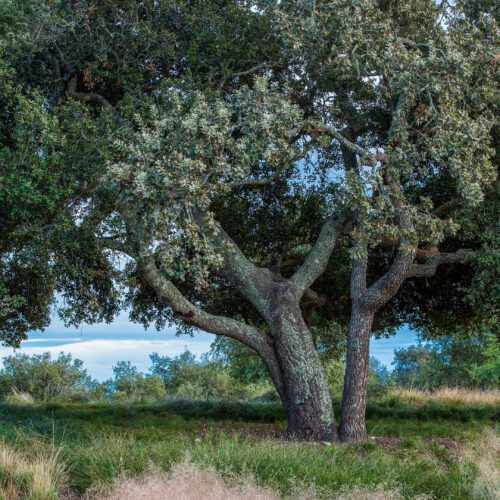
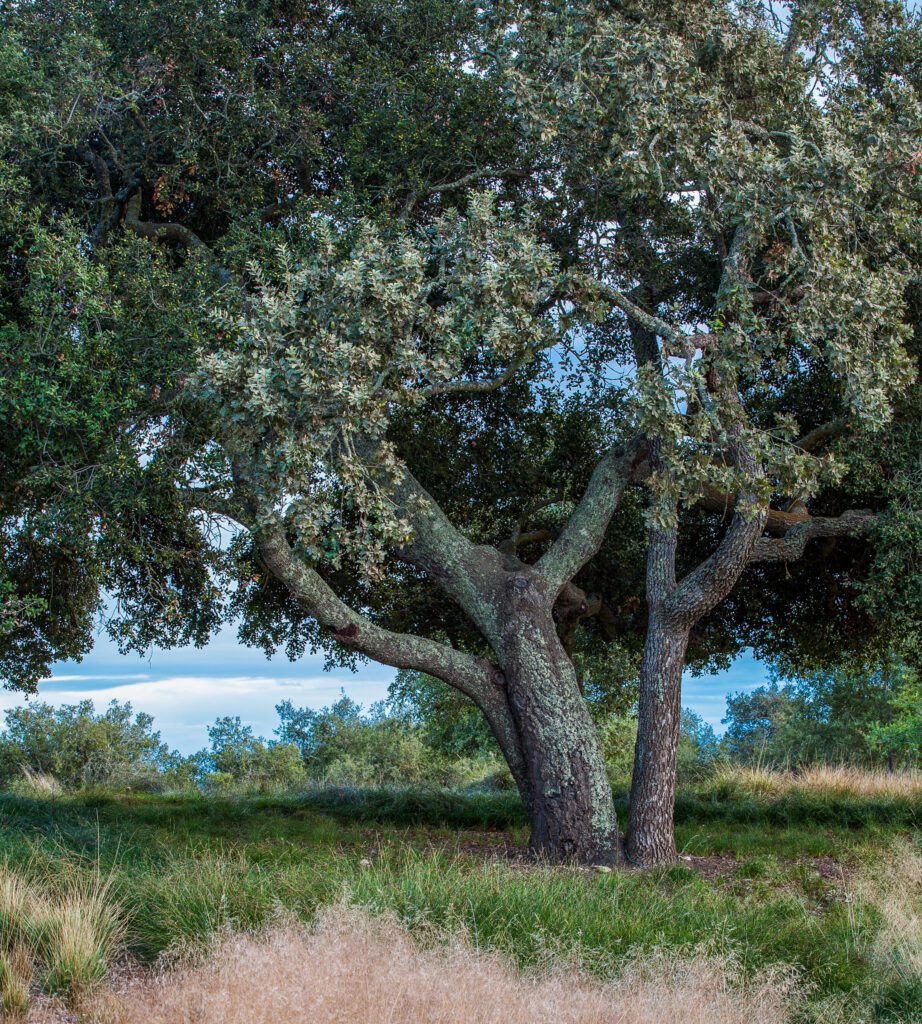
A multi-trunked coast live oak tree with desaturated brown bark and green leaves
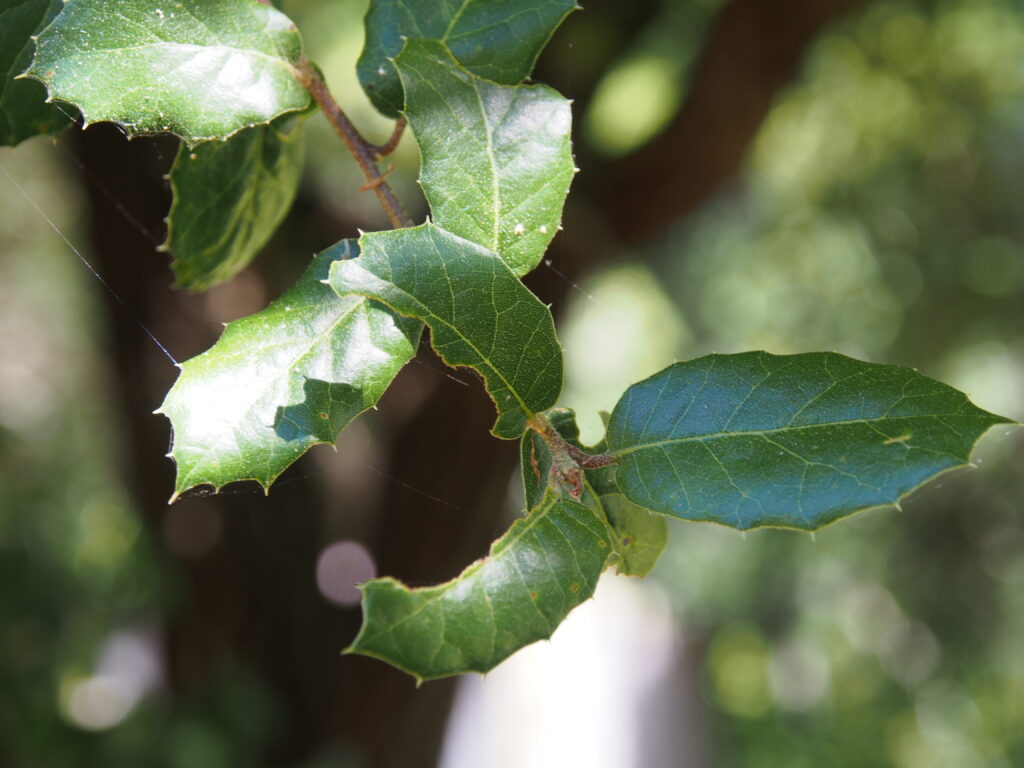
A close-up of classic oak leaves with spines

Quercus agrifolia

Coast Live Oak
Organization

Woody perennial, evergreen tree. Large, dense and broadly rounded with green, spiny margin leaves. Native along coast and coastal mountains from Northern California. One of the best local natives for large properties. Susceptible to Sudden Oak Death.

  • Water: Very Low
  • Light: Full Sun
  • Soil: Well Drained
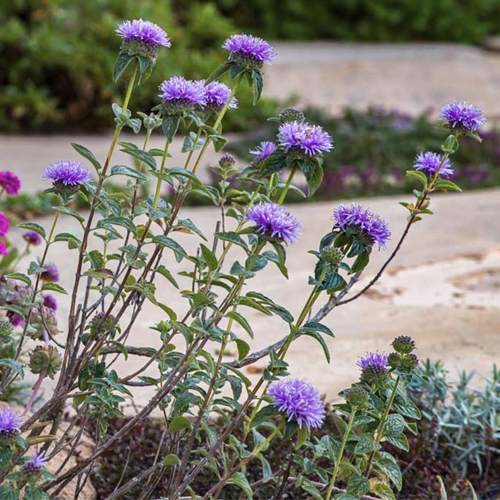
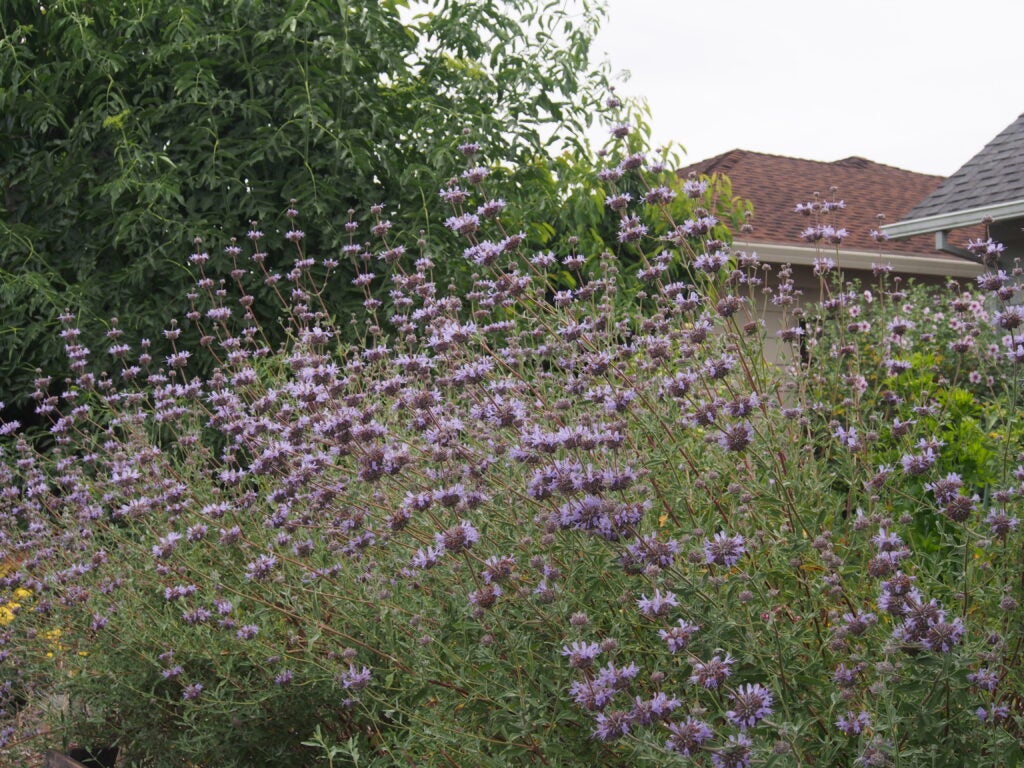
Dark brown stems with pointed green leaves and purple pompom flowers at the top of each stem

Monardella villosa

Coyote Mint
Organization

Coyote Mint is a compact perennial or sub-shrub with aromatic foliage and a sprawling habit. Dense heads of purple flowers form in spring-to-summer that are attractive to butterflies and other insects. The low-growth habit of coyote mint makes it an excellent choice for the front of a border, along the edge of a path, or beneath larger shrubs such as manzanita or ceanothus. Monardella villosa spp. franciscana ‘Russian River’ and Monardella villosa spp. villosa ‘Mark West’ are available selections from Sonoma County.

  • Water: Very Low
  • Light: Full Sun
  • Soil: Most Soils
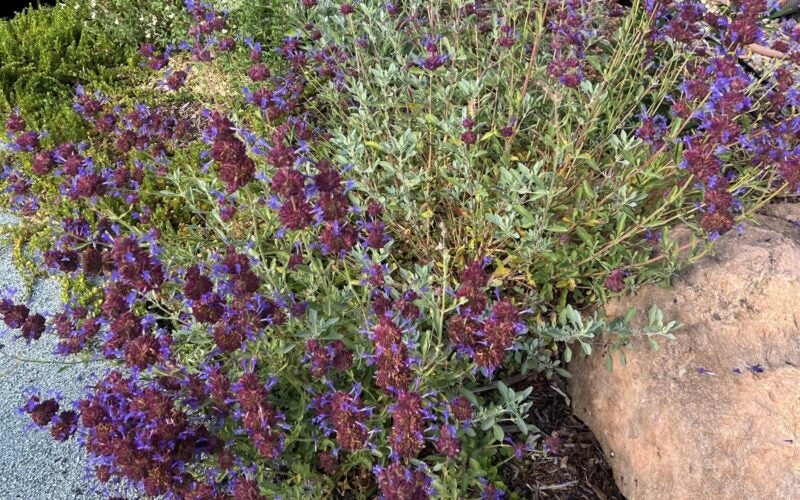
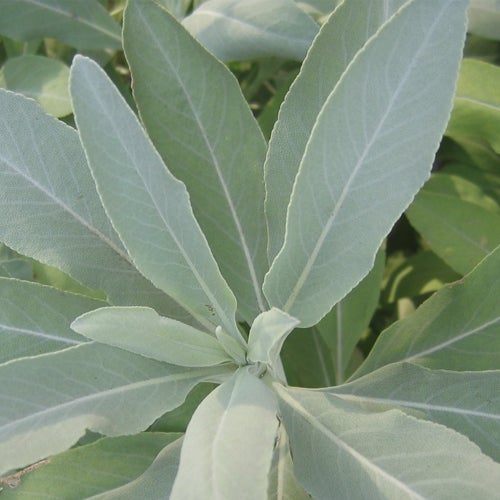
Long, slightly pointed light gray-green sage leaves

Salvia spp

Sage
Organization

Salvias are a huge group of more than 900 species that include annuals, perennials, and shrubs adapted to a variety of climates and have varying water requirements. Salvias are attractive to hummingbirds, butterflies, and bees, and are generally ignored by deer. Sages that are native to California are generally drought-tolerant, prefer full sun, and little to no fertilizer. Annual pruning in late summer or fall generally helps to keep plants tidy and healthy.

CA native sages:

  • S. apiana, white sage (3-4’ x 4-6’), silvery-white, aromatic leaves with tall flower spikes of white flowers, popular for honey production and in bundles as a natural incense.
  • ‘Bee’s Bliss’ (1-2’ x 6-8’), superb, light gray groundcover with light purple flowers on long spikes; damp conditions can cause mildew which will clear with warm weather and sunny conditions.
  • S. clevelandii, Cleveland sage (3-5’ x 3-5’), medium-sized shrub for hot, dry locations known for pleasant fragrance and deep blue whorls of flowers; popular cultivars include S. c. ‘Allen Chickering’, S. c. ‘Pozo Blue’, and S. c. ‘Winnifred Gilman’.
  • S. leucophylla, purple sage, includes plants with both an upright growth habit, such as S. l. ‘Amethyst Bluff’ (3-5’ x 3-5’) and others with a sprawling form, such as S. l. ‘Point Sal’ (2-3’ x 6’), both of which are from Santa Barbara county.
  • S. sonomaensis, Sonoma sage (1-2’ x 3-4’), groundcover that prefers light shade and will not tolerate damp conditions; cultivars include S. s. ‘Dara’s Choice’, S. s. ‘Greenberg Gray’, and S. s. ‘Hobbit Toes’.
  • S. spathacaea, hummingbird sage (1-2’ spreading), herbaceous groundcover that grows well in dry shade and spreads slowly by underground rhizomes; large leaves have a wonderful fruity fragrance; the only red-flowered native sage.
  • S. mellifera, black sage (6′ x 10′), evergreen shrub that grows well in full sun and well drained soils. Dark green leaves with pale purple flowers in late spring and early summer.

Non-native sages:

  • S. chamaedryoides, germander sage (2-3’)
  • S. chiapensis, Chiapas sage (1-2’ x 3-4’)
  • S. greggii, autumn sage (1-4’ x 1-4’)
  • S. leucantha, Mexican bush sage (3-4’ x 3-6’)
  • S. microphylla, cherry sage (3-4’ x 3-6’)
  • S. officinalis, garden sage (1-3’ x 1-3’)
  • Water: Very LowLowModerate
  • Light: Full SunPartial Shade
  • Soil: Well Drained
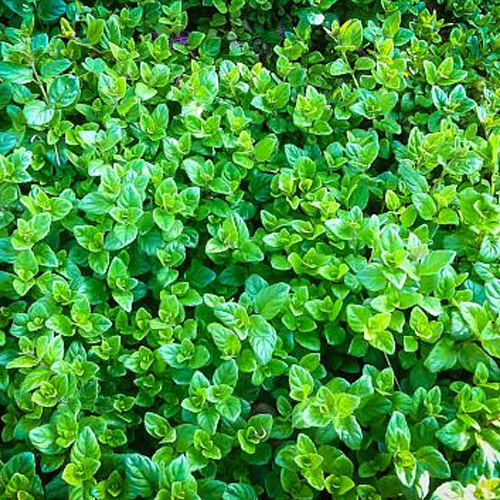
bright shiny green leaves with pointed tips cover the ground

Satureja [Clinopodium] douglasii

Yerba Buena
Organization

Yerba buena is Spanish for “good herb” due to its medicinal qualities as a tea. This trailing herbaceous perennial has a minty fragrance and is native from British Columbia to Los Angeles County. Prefers a woodland setting with light shade and well-drained soil.

  • Water: Low
  • Light: Full SunPartial Shade
  • Soil: Most Soils

Favorite Plants

1

Celestial Blue Sage

Salvia ‘Celestial Blue’

2

Pozo Blue Sage

Salvia ‘Pozo Blue’

3

Western Redbud

Cercis occidentalis

4

Midnight Magic Blue Curls

Trichostema ‘Midnight Magic’

5

Russian River Coyote Mint

Monardella villosa ‘Russian River’

Favorite Garden Suppliers

California Flora Nursery

2990 Somers Street Fulton

Recommended Resources