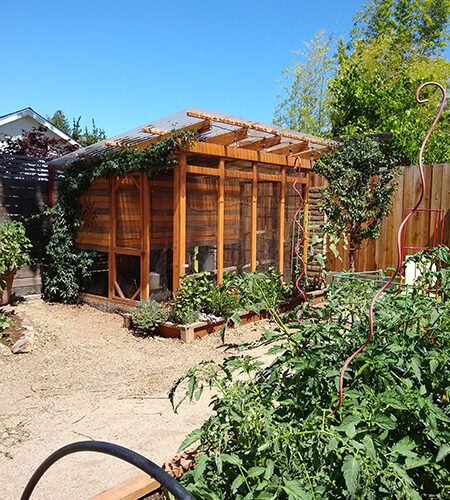
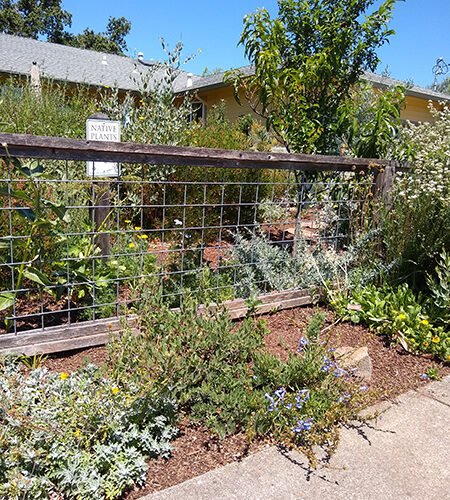
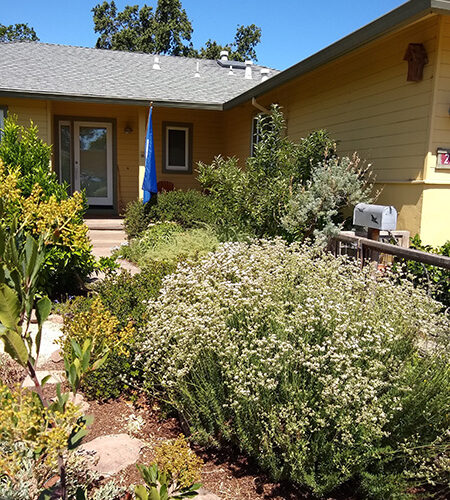
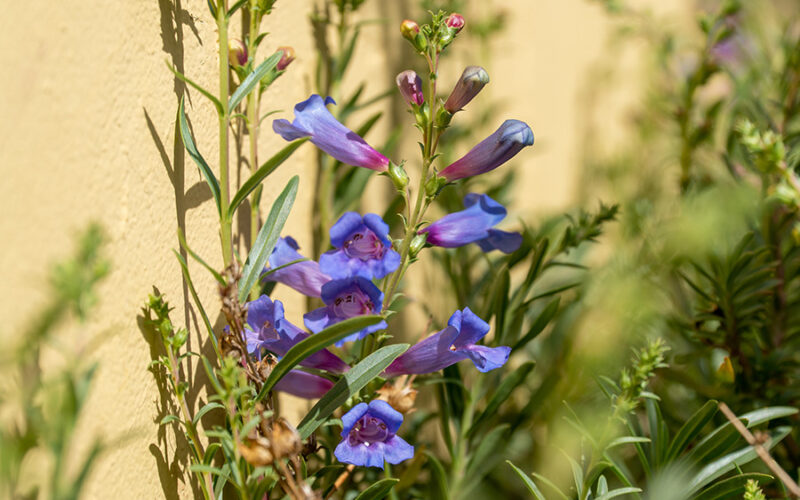
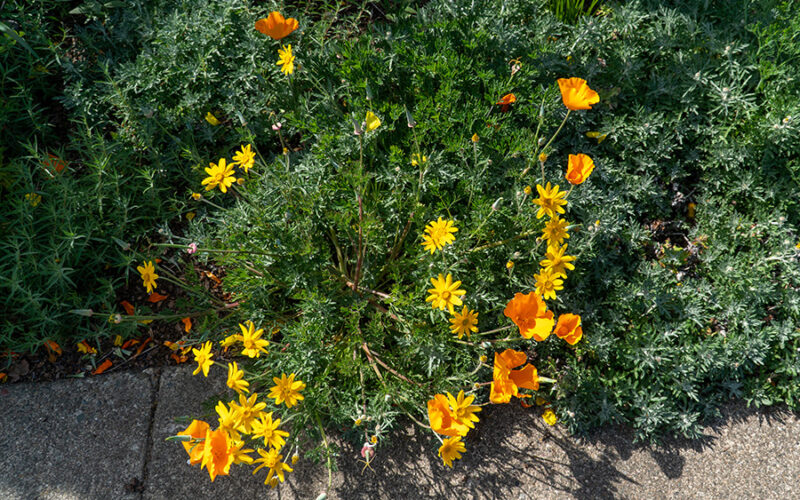
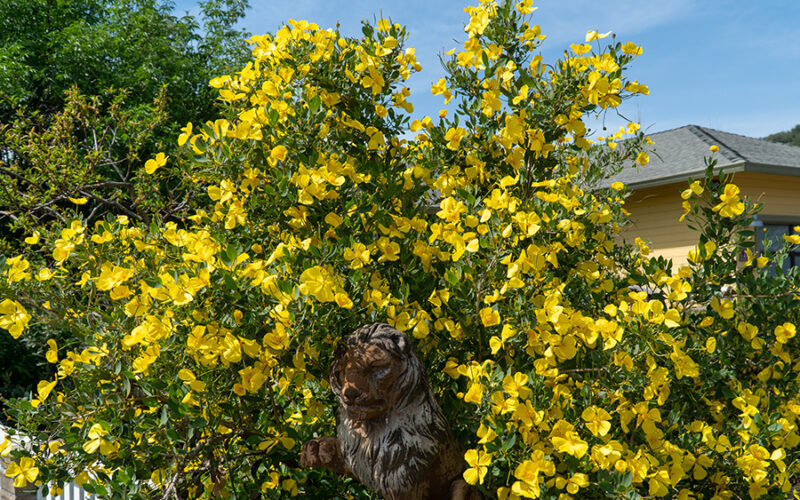
Since moving to our home in the City of Sonoma 10 years ago, we have worked to maximize native plant diversity and wildlife habitat value in a yard previously dominated by lawn and ornamentals.
The sight of a pipevine swallowtail outside the kitchen window, a Hermit Thrush bathing in our fountain, and the delicate night-opening flowers of our soap plant bring us immense joy. Native plant gardening is a journey and an adaptive process, with lots of trial and error, fine tuning, and adjusting involved, but we are really happy with what we’ve been able to do in our limited, suburban space. We hope our garden inspires you to recreate even a small piece of habitat within your own yards.
Native Plant Diversity
Our primary goals have been to maximize native plant diversity and habitat value for wildlife. In addition to choosing plants that provide resources to birds, bees, and butterflies, we have included a broad array of species with different phenologies to maximize the flowering season. From the early-flowering manzanitas and currents to the late-flowering California fuchsia, we have native plants in flower nearly year-round.
We’ve used our combined knowledge as a wildlife biologist and botanist to select a variety of native shrubs, forbs and grasses, creating an array of habitat elements inspired by those found in local wildland areas and using the different microclimates that naturally occur in our front and back yards (shade, partial shade, full sun) as a guide.
Garden Aesthetics
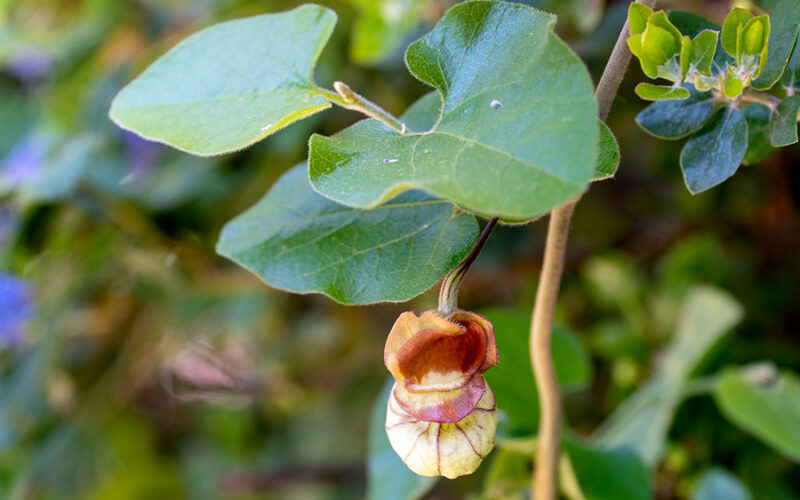
We also had aesthetics in mind, and have included many of the species we love best from the protected natural areas where we work and recreate, like blue-eyed grass, California pipevine, wavy-leaf soap plant, and California lomatium. By planting these species and the wildlife they encourage right outside our windows, our garden has helped connect us, our children, and our neighbors to the native flora and fauna in our region.
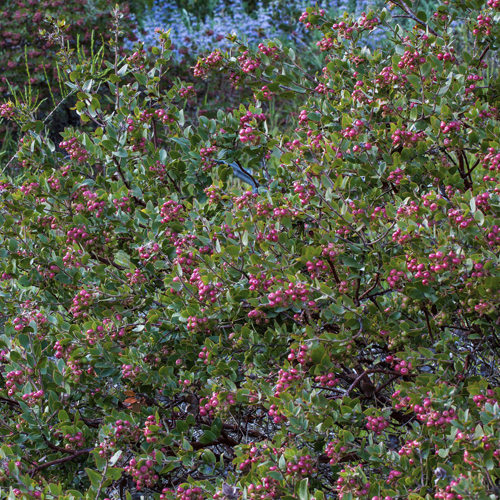
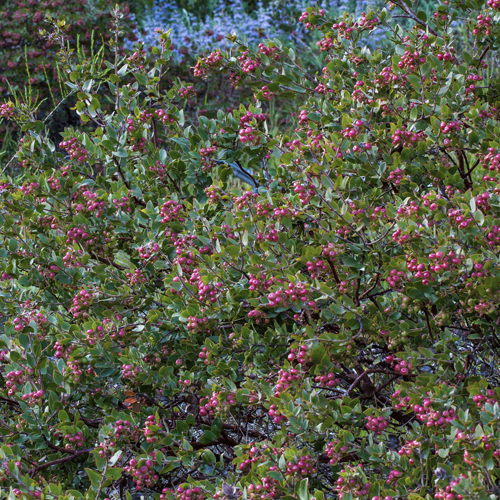
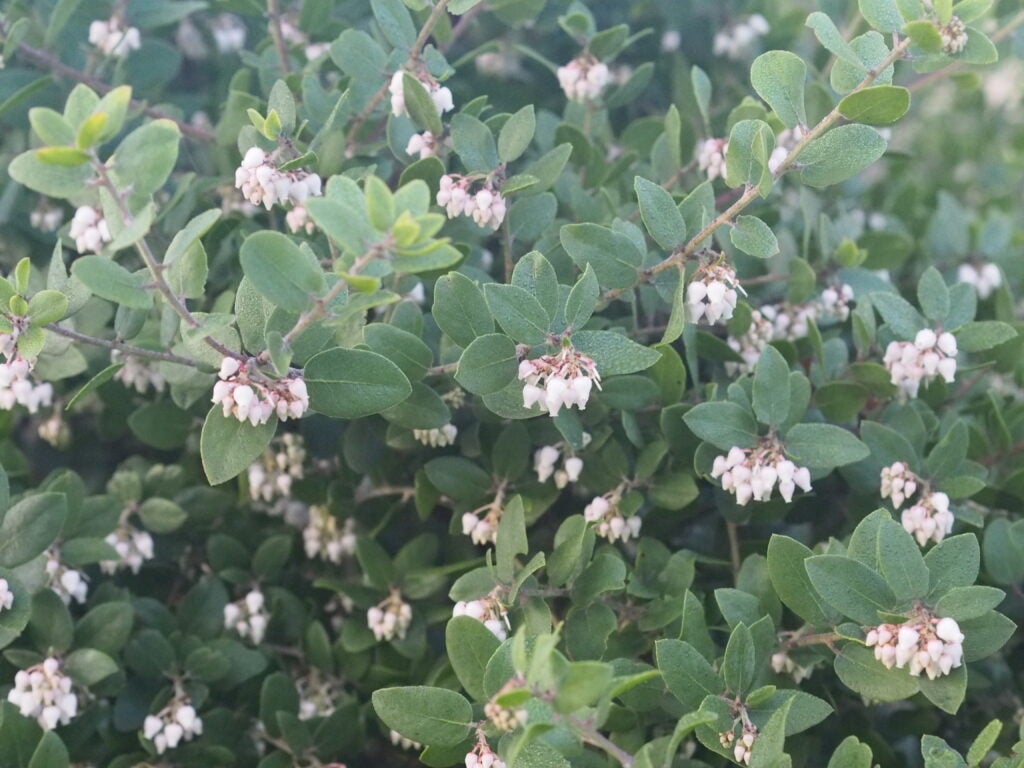
Manzanitas vary from carpet-forming groundcovers to small trees. Manzanitas have varying shades of striking, reddish brown bark and can provide structure to a garden. These plants have evergreen foliage, small white-to-pink, urn-shaped blossoms in late winter to early spring, and then small fruits that resemble tiny apples.
Groundcovers: A. ‘Emerald Carpet’ (1’ x 3-6’), A. ‘Pacific Mist’ (2-3’ x 6-8’), A. nummularia ‘Bear Belly’ (1’ x 3’), A. uva ursi ‘Radiant’ (6” x 4-6’), A. uva ursi ‘Wood’s Compct’ (1’ x 3’).
Shrubs: A. ‘Howard McMinn’ (5-7’ x 6-10’), A. ‘John Dourly’ (3-4’ x 5-6’), A. ‘Lester Rowntree’ (8-10’ x 10-15’), A. ‘Sunset‘ (5-7’), A. bakeri ‘Louis Edmunds’ (8-10’), A. manzanita ‘Sentinel’ (6-8’ x 5’), A. hookeri ‘Wayside’ (3′ x 8′).
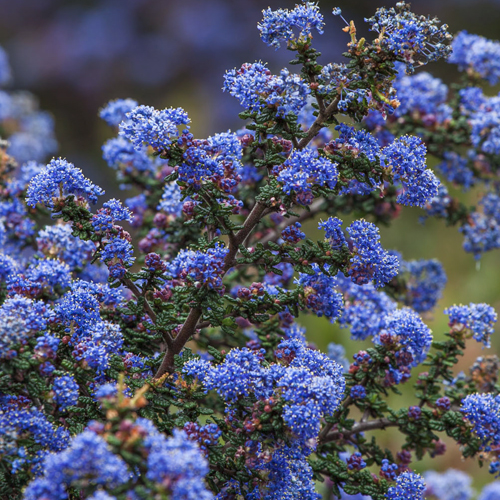
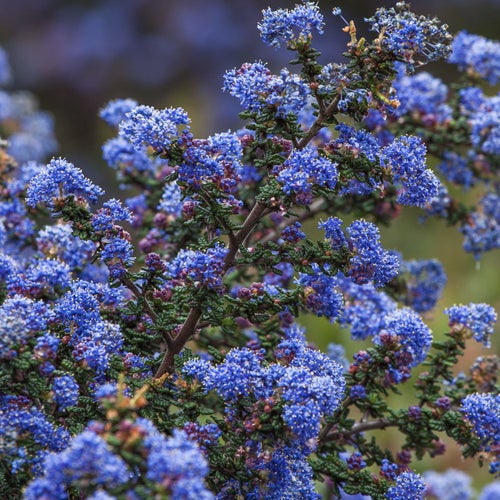
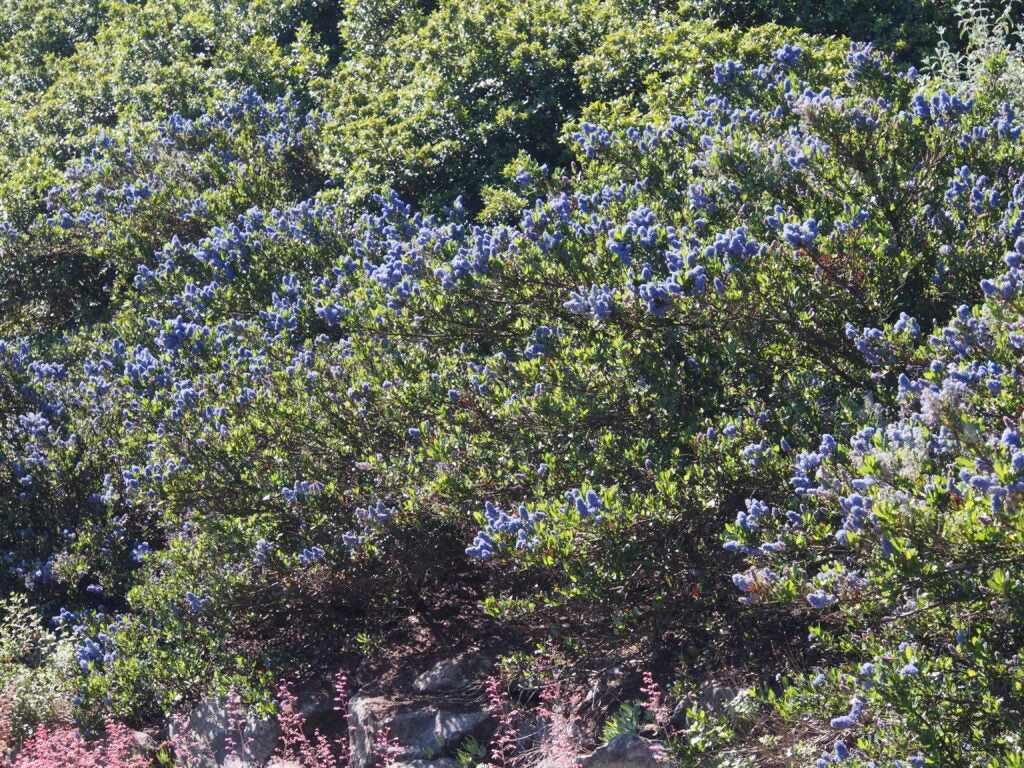
Ceanothus is a group of fast-growing, evergreen shrubs that vary from groundcovers to small trees, many of which are native to California. They provide a spectacular display of flowers in spring that will attract a multitude of pollinators. Flowers are followed by seeds that provide food for birds. The clusters of tiny flowers range from white to deep violet. Plants perform best with good drainage and minimal irrigation once established. Some do best in cooler coastal climates, but many thrive in hotter inland climates. Pay close attention to the mature size when selecting ceanothus to ensure that it has sufficient space for its natural form.
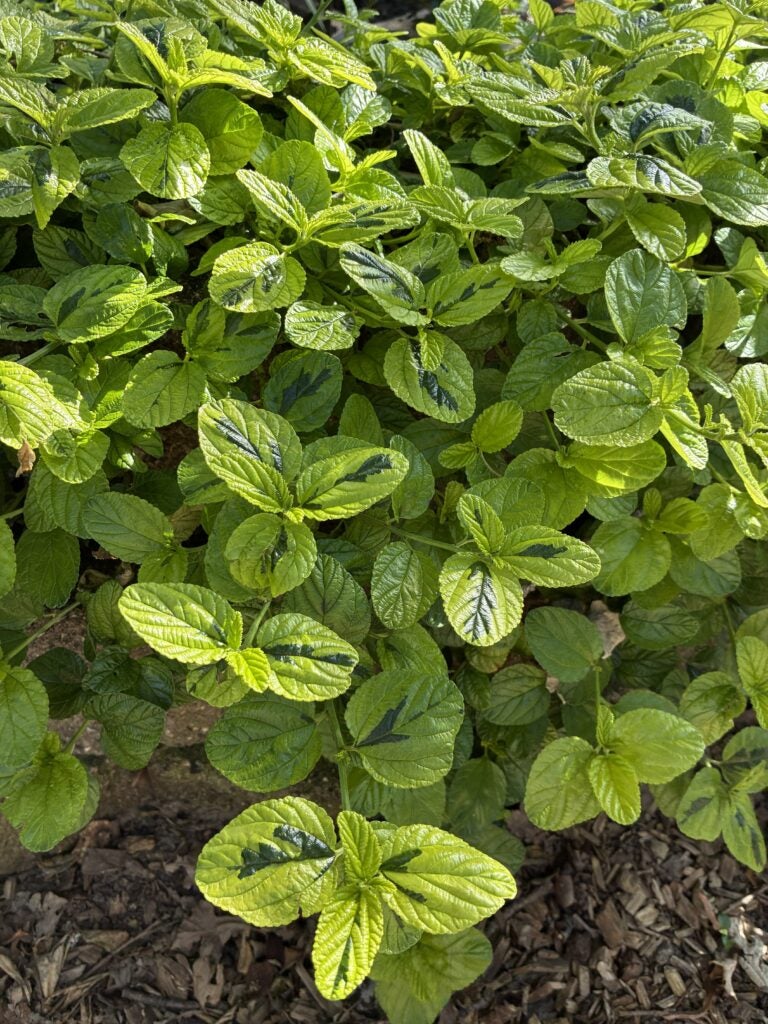
Groundcovers: C. ‘Centennial’ (1’ x 8’), C. gloriosus var. gloriosus ‘Anchor Bay’ (2’ x 8’), C. griseus var. horizontalis ‘Diamond Heights’ (variegated, 1’ x 4’), C. griseus var. horizontalis ‘Yankee Point’ (3’ x 12’), C. maritimus (2’ x 6’).
Shrubs: C. ‘Blue Jeans’ (6’ x 6’), C. Concha (6’ x 6’), C. ‘Dark Star’ (6’ x 8’), C. ‘Joyce Coulter’ (4’ x 12’), C. ‘Julia Phelps’ (8’ x 10’), C. cuneatus (8’ x 8’), C. thyrsiflorus ‘Skylark’ (4’ x 6’).
Large shrubs: C. ‘Frosty Blue’ (10’ x 12’), C. thyrsiflorus (20’ x 20’), C. t. ‘Snow Flurry’ (white flower, 20’ x 20’).
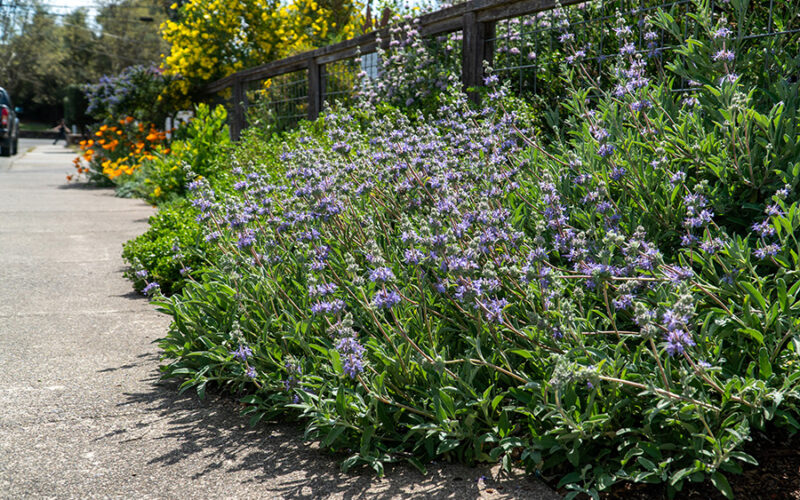
Salvias are a huge group of more than 900 species that include annuals, perennials, and shrubs adapted to a variety of climates and have varying water requirements. Salvias are attractive to hummingbirds, butterflies, and bees, and are generally ignored by deer. Sages that are native to California are generally drought-tolerant, prefer full sun, and little to no fertilizer. Annual pruning in late summer or fall generally helps to keep plants tidy and healthy.
CA native sages:
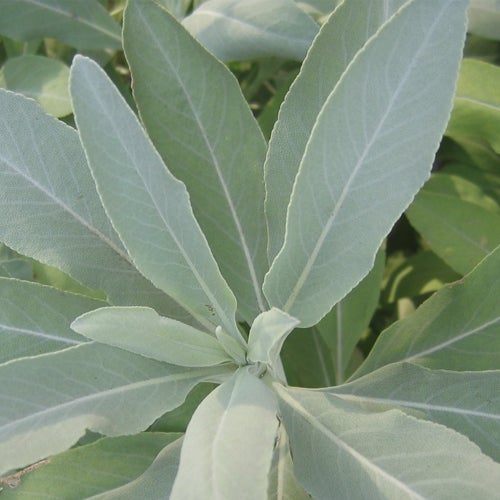
S. apiana, white sage (3-4’ x 4-6’), silvery-white, aromatic leaves with tall flower spikes of white flowers, popular for honey production and in bundles as a natural incense.
S. ‘Bee’s Bliss’, (1-2’ x 6-8’), superb, light gray groundcover with light purple flowers on long spikes; damp conditions can cause mildew which will clear with warm weather and sunny conditions.
S. clevelandii, Cleveland sage (3-5’ x 3-5’), medium-sized shrub for hot, dry locations known for pleasant fragrance and deep blue whorls of flowers; popular cultivars include S. c. ‘Allen Chickering’, S. c. ‘Pozo Blue’, and S. c. ‘Winnifred Gilman’.
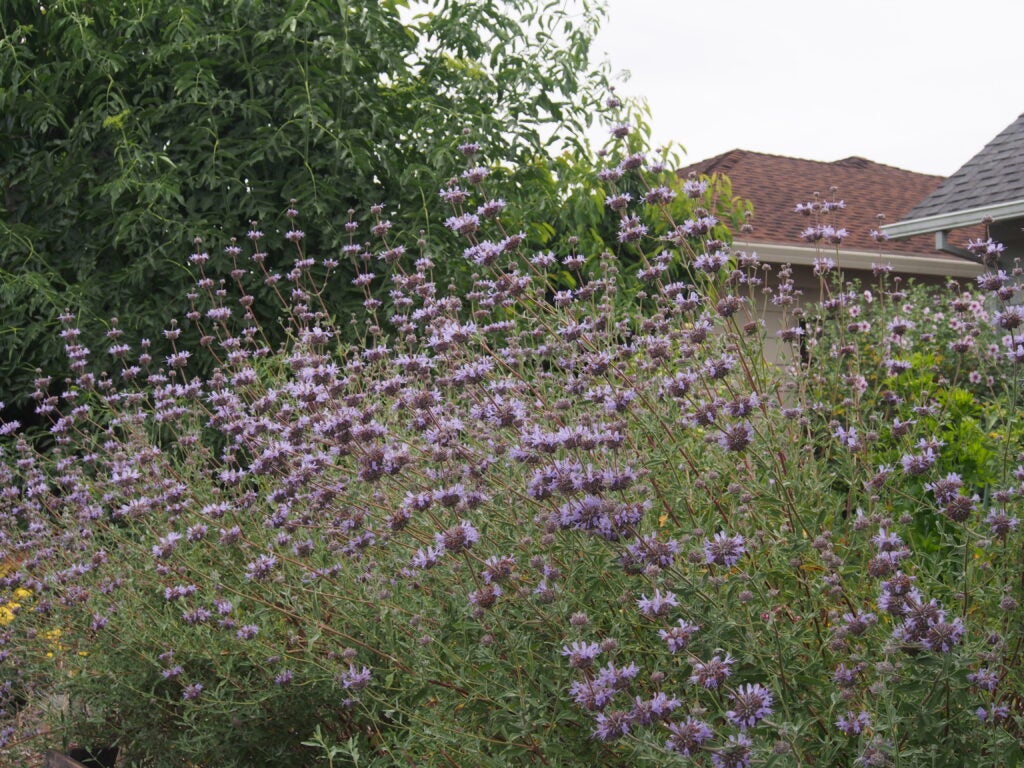
S. leucophylla, purple sage, includes plants with both an upright growth habit, such as S. l. ‘Amethyst Bluff’ (3-5’ x 3-5’) and others with a sprawling form, such as S. l. ‘Point Sal’ (2-3’ x 6’), both of which are from Santa Barbara county.
S. sonomaensis, Sonoma sage (1-2’ x 3-4’), groundcover that prefers light shade and will not tolerate damp conditions; cultivars include S. s. ‘Dara’s Choice’ and S. s. ‘Greenberg Gray’.
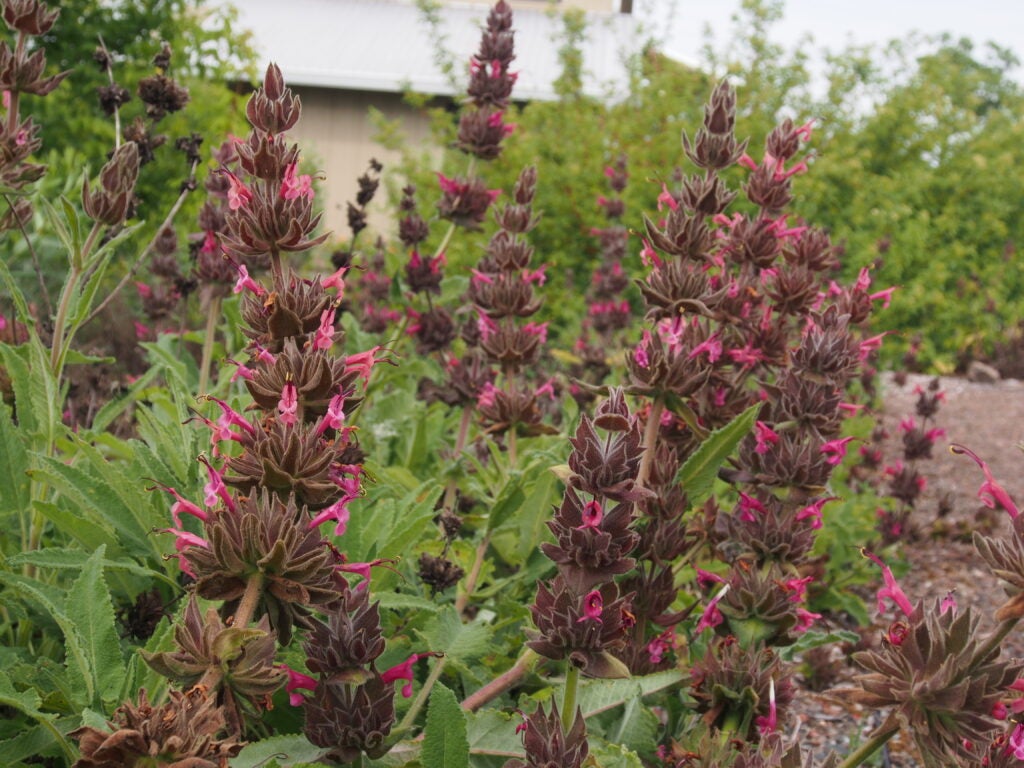
S. spathacaea, Hummingbird Sage (1-2’ tall and 4-5 feet wide), herbaceous groundcover that grows well in dry shade and spreads slowly by underground rhizomes; large leaves have a wonderful fruity fragrance. Pink to dark rose flowers from late winter into summer. It is drought tolerant and can survive without summer irrigation once established. Some supplemental water will keep the foliage green.
S. mellifera, black sage (6′ x 10′), evergreen shrub that grows well in full sun and well drained soils. Dark green leaves with pale purple flowers in late spring and early summer.
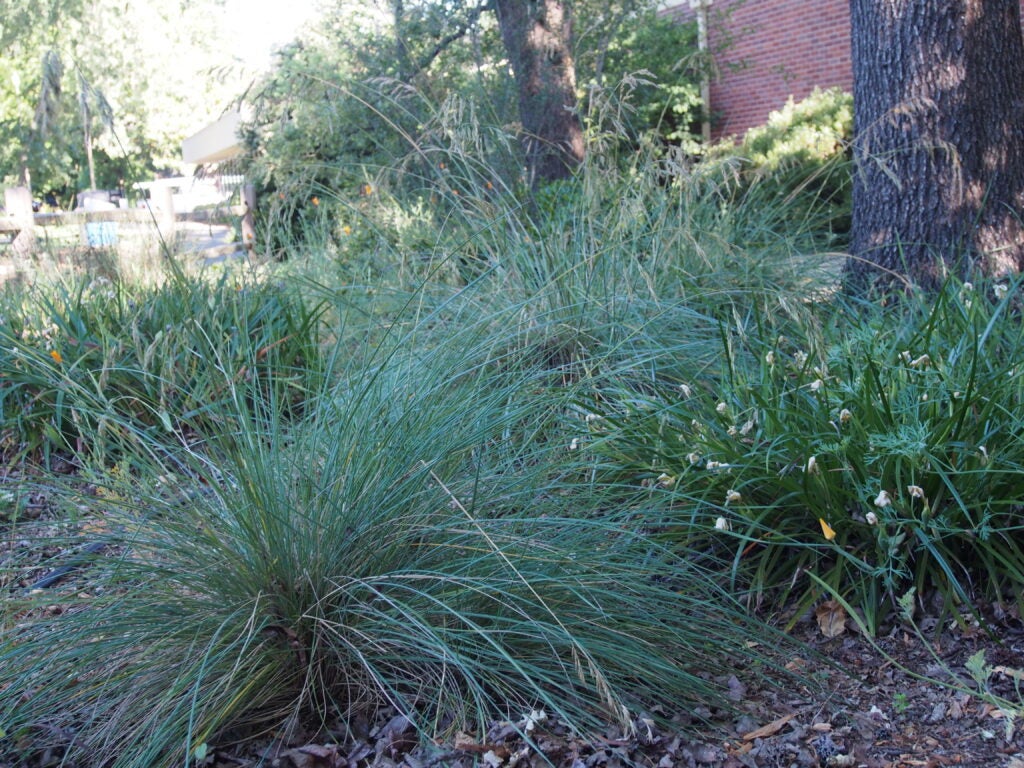
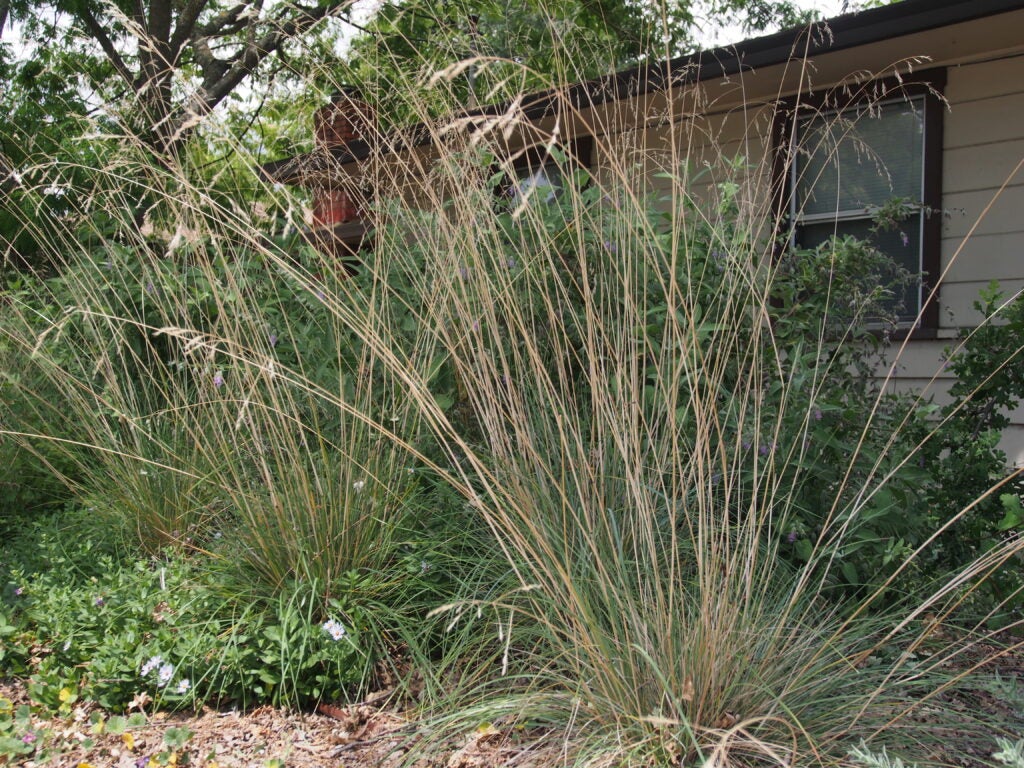
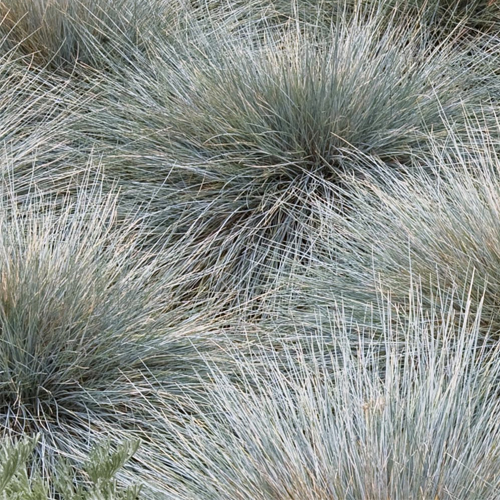
Large group of mostly cool-season, perennial, bunching or spreading grasses. Bunch grass varieties can be used as a no-mow lawn replacement, help to stabilize slopes, and have ornamental value. Festuca californica (California fescue, 1-2’ wide x 2’) prefers part shade and works wonderfully massed under the dry shade of native oaks. Festuca glauca (blue fescue, 1’ x 1’) is a small, clumping grass with bluish gray-green leaves. Festuca idahoenis (Idaho fescue, 1-2’ wide x 1’) also has bluish gray-green leaves and is more drought-tolerant and longer lived than blue fescue. Festuca rubra (red fescue) grows from rhizomes and has long, fine-textured leaves that lay over to form a pleasing drift effect as a no-mow lawn.
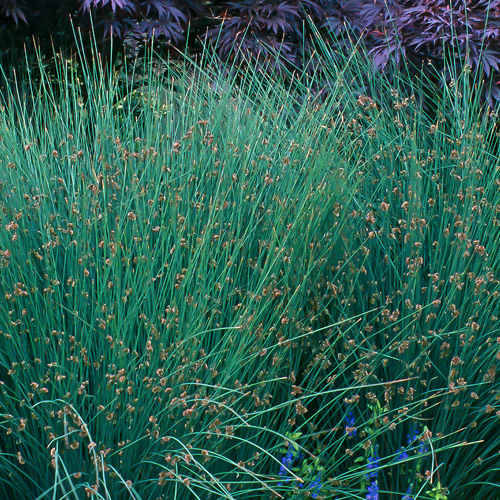
California gray rush is a go-to species for the summer-dry rain garden. It will thrive in moist conditions and its roots will help stabilize soil and filter stormwater runoff. It is also tolerant of extended periods of drought. Clumps of stiff, upright foliage provide an interesting contrast among other perennials. ‘Elk Blue’ is a widely available selection from Mendocino County. Its bluish gray foliage is shorter than the typical gray rush.
Water: Low
Light: Full SunPartial Shade
Soil: Well Drained
Favorite Garden Suppliers
Cal Flora
2990Somers StreetFulton
Mostly Natives
54B StreetPoint Reyes Station
Recommended Resources
California Native Plants for the Garden
By Carol Bornstein, David Fross & Bart O'Brien. Published December 1, 2005.
California Native Gardening: A Month-by-month guide
Native plants can give great structure and color year-round with little maintenance. They are adapted to local soils, precipitation and temperatures. Choose native plants whose preferences match the conditions in your yard for optimum plant and gardener happiness. For inspiration, go hiking visit a native plant nursery like CalFlora.